Nvidia investigates Huang, Apple pushes Siri, and music rights holders sue Suno
Get this by email →
Nvidia will investigate Jensen Huang’s relationship with a possible Chinese spy. Apple is pushing Siri toward ongoing tasks and app control. Elvis Presley rights holders and an Eminem publisher are suing Suno over alleged music imitations.
News
Nvidia will investigate CEO Jensen Huang’s relationship with possible Chinese spy
Nvidia’s board has announced an independent investigation into CEO Jensen Huang’s relationship with an alleged Chinese spy. Huang admitted in a company memo to an affair with Alice Huang, a former executive at Singapore-based chip company Megaspeed. The investigation puts that relationship under independent scrutiny.
The board reports no reason to believe secrets were compromised
The memo claimed Alice Huang was recruited by China’s Ministry of State Security to spy on Nvidia’s CEO. That recruitment is an allegation in the memo. Nvidia’s board said it has no reason to believe national security or company secrets were compromised. Huang apologized for being unfaithful to his wife. He said his actions hurt her and their children and offered no excuse. He also acknowledged falling short of his responsibility to the company. (TechCrunch)
thinkidiot take: Nvidia’s board has commissioned an independent investigation while reporting no reason to believe secrets were compromised. I would keep those statements together when assessing the company’s response. The board’s current position does not supply the investigation’s findings. Independent scrutiny is the right response to an allegation involving the CEO and company secrets.
Apple is racing to make Siri more agentic
Apple is accelerating work on Siri as an agent that performs ongoing tasks. Bloomberg’s Mark Gurman says CEO John Ternus is pressuring AI chief Craig Federighi to speed up the roadmap. Federighi has delivered a functional version of Siri AI on a very short timeline. Apple wants future versions to control third-party apps.
Photos edits and Safari tabs come into focus
Fine-grained control of Apple’s own apps is expected with iOS 27.3. Planned actions include rotating and cropping images in Photos. Organizing Safari tabs is also part of that expected control. Gurman reports that third-party integration is likely in spring. Grubhub and OpenTable are among the apps named. Apple wants its agent to compete with OpenAI’s Dots and Meta’s Muse. (The Verge)
thinkidiot take: Siri’s expected iOS 27.3 controls include cropping photos and organizing Safari tabs. I would start with those concrete jobs when trying the new version. They give me specific actions to judge before moving on to ongoing tasks. For my use, getting those everyday controls right matters more than matching a rival’s agent ambitions.
Elvis and Eminem rights holders are suing Suno
Elvis Presley rights holders and a publisher of Eminem’s records are suing Suno. The lawsuits allege that the AI music company illegally generates music and lyrics that imitate the artists. The pair of suits brings further legal challenges over Suno’s artist imitations.
Voice protections meet Suno’s screening policies
Lawyers in the Presley suit claim Suno violated Tennessee’s Ensuring Likeness Voice and Image Security Act, known as the ELVIS Act. They argue that Suno has encoded artists’ identities, work and creativity into its system. They also accuse the company of pursuing a race to make human creativity obsolete. A Suno spokesperson said the company prohibits unauthorized use of artist names and likenesses. The spokesperson also said Suno screens uploaded audio and lyrics for potential misuse. The suits mirror an earlier case brought by Jason Isbell and others alleging imitations of the plaintiffs. (The Verge)
thinkidiot take: Suno faces imitation lawsuits despite its stated prohibitions and upload screening. I would treat those policies as claims about safeguards, not evidence that the allegations have been answered. The rights holders challenge generated music and lyrics, while Suno points to restrictions and screening. My judgement is that the response must address the alleged imitations themselves.
Andrej Karpathy built a curated video platform in a weekend using Claude and 20 years of Hacker News
Andrej Karpathy built HackerTube over a weekend using Claude’s Opus 5.5. The model filtered 43 million comments from 20 years of Hacker News into 6,454 curated videos. The resulting platform offers a video selection that Karpathy says beats YouTube’s own recommendations.
A mid-video frame replaces the optimized thumbnail
HackerTube displays a single frame from the middle of each video instead of an optimized thumbnail. It stores state locally in the browser. Karpathy also built TristanTube, which contains 47,000 videos. He said Claude Code produced that project from one prompt in 3 minutes. His only manual steps were obtaining a Google Cloud API key, renting a server and buying the domain. According to Karpathy, projects that once took weeks now take a few hours. (The Decoder)
thinkidiot take: Claude distilled 43 million Hacker News comments into 6,454 videos for HackerTube. I would try that selection alongside YouTube’s recommendations to judge Karpathy’s claim for myself. The mid-video frames also give me a concrete interface choice to compare. For my use, the selection and presentation matter more than how quickly the site was built.
The brain-as-computer metaphor shaped modern AI but may be misleading the consciousness debate
Anil Seth, Ned Block and Giulio Tononi argue in a Nature commentary that today’s AI systems are not conscious. They also argue that consciousness probably cannot arise on silicon hardware. Their challenge targets the assumption that computation alone determines consciousness. They warn against granting rights to AI systems.
A 14-indicator checklist found no strong candidate
The Butlin report developed 14 indicators for assessing AI consciousness. None of the systems it examined was judged a strong candidate. Language models such as GPT-4 showed only weak signs of meeting consciousness indicators. The report’s team assumed consciousness depends solely on the type of information processing. Under that assumption, processing in nerve cells and computer chips is treated alike. The human cerebellum contains nearly four-fifths of the brain’s neurons and plans movements without consciousness. (The Decoder)
thinkidiot take: The Butlin report found no strong candidate for consciousness among the systems it examined. I would give that finding more weight than GPT-4’s weak signs of meeting its indicators. The checklist also depends on an assumption about information processing that Seth, Block and Tononi dispute. My judgement is that these results do not justify treating the examined systems as conscious.
Trending AI Papers
Ranking source: Hugging Face Papers for 2026-11-08.
From Autonomous Agents to Cognitive Symbionts: Toward AI-Augmented Human Intelligence
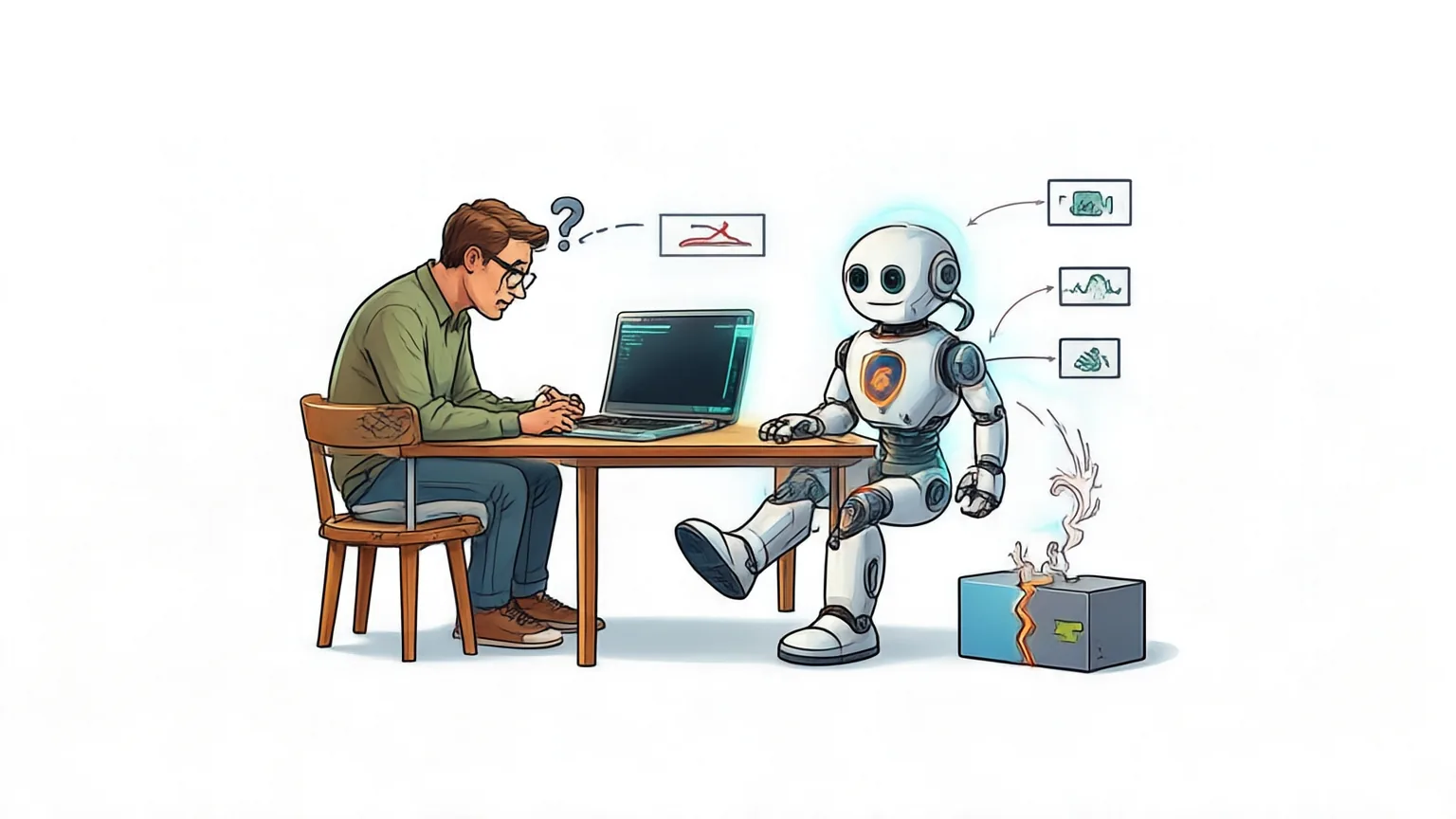
This paper proposes AI that helps people use more of what they know in daily life. The aim is to support a person's memory, attention and judgment as events unfold. Such a companion would learn about its user over time and draw on that history when help is useful. The paper sets out how this could work and the social problems it could create.
- Problem: People cannot bring everything they know to mind when they need it. AI built to complete tasks independently can lack the personal history and immediate awareness needed to help someone think through a situation.
- New idea: The authors propose a cognitive symbiont, an AI companion that stays involved in a person's life and learns their circumstances over time. It would address the cognitive gap, meaning the difference between knowledge a person could use and what they can hold in mind at once. Through external devices, it would observe their surroundings, retain relevant history and help with thoughts or tasks when needed. Privacy and trust would be central to its design.
- Simple example: Imagine struggling to find the words for something you already understand. The proposed companion would use what it knows about you and the situation to help you express it.
- Evidence: The abstract presents a conceptual framework for a personal AI companion, including its functions and governance risks. It reports no experimental results or measured gains in human ability.
- Limitation: The abstract leaves untested whether such a companion can improve people's thinking while remaining private and trustworthy. It also identifies risks such as hidden help in examinations and pressure to adopt the technology.
- Why it matters: This work asks how AI could help people make better use of their own knowledge in everyday situations.
- Paper: From Autonomous Agents to Cognitive Symbionts: Toward
WeLM-Image: A Unified Image Generation Model towards Visual Intelligence
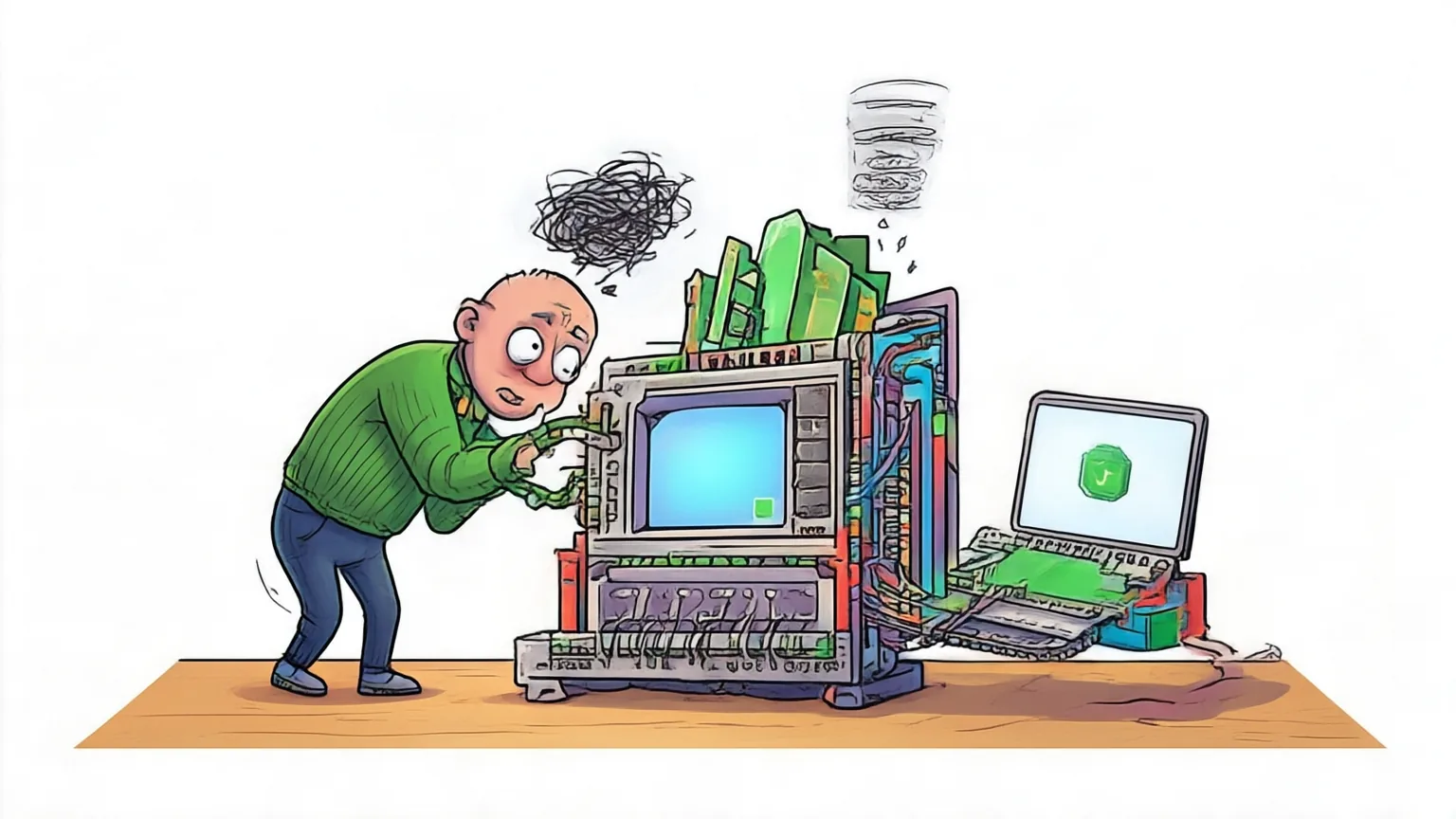
WeLM-Image brings several image tasks into one AI system. It can make pictures from written requests, revise existing pictures and combine material from reference images. The researchers aim to make these abilities practical for WeChat's consumer applications on a single graphics processor. They also introduce a faster version for shorter generation times.
- Problem: A model that both interprets requests and produces images must learn skills whose training can interfere with each other. WeLM-Image addresses that conflict while targeting deployment on a single graphics processor.
- New idea: WeLM-Image processes written requests, reference pictures and a compressed representation of the output picture together. Its understanding and image creation components share attention, the mechanism that relates parts of the input, but keep separate learned settings to reduce training interference. Each component uses experts, specialized groups of learned settings that activate selectively instead of all at once. The researchers train image creation and editing separately, then transfer those specialized behaviors into a combined model.
- Simple example: Think of giving an illustrator a written brief and several reference pictures, then asking for changes to the result. WeLM-Image is designed to handle those kinds of requests within one model.
- Evidence: The 1536-resolution model is top-ranked among the evaluated open-source models on PRISM-Bench, Qwen-Image-Bench and UnicBench. WeLM-Image-Turbo generates a 1024 by 1024 image in 4.98 seconds on a single NVIDIA H20 GPU using eight steps without guidance. The model stores 31.7 billion parameters and activates approximately 5.4 billion generation parameters per target latent token, a unit of its compressed image representation.
- Limitation: The rankings cover the evaluated open-source models, and the abstract gives no score margins. It reports a speed result on one GPU type but does not establish performance across other hardware or the quality cost of the faster version.
- Why it matters: Combining image creation and revision in a model designed for one graphics processor could make these tools easier to deploy in consumer applications.
- Paper: WeLM-Image: A Unified Image Generation Model towards Visual
TailSteer: Trajectory-Tail Steering for Drift-Resistant Multi-turn Image Editing
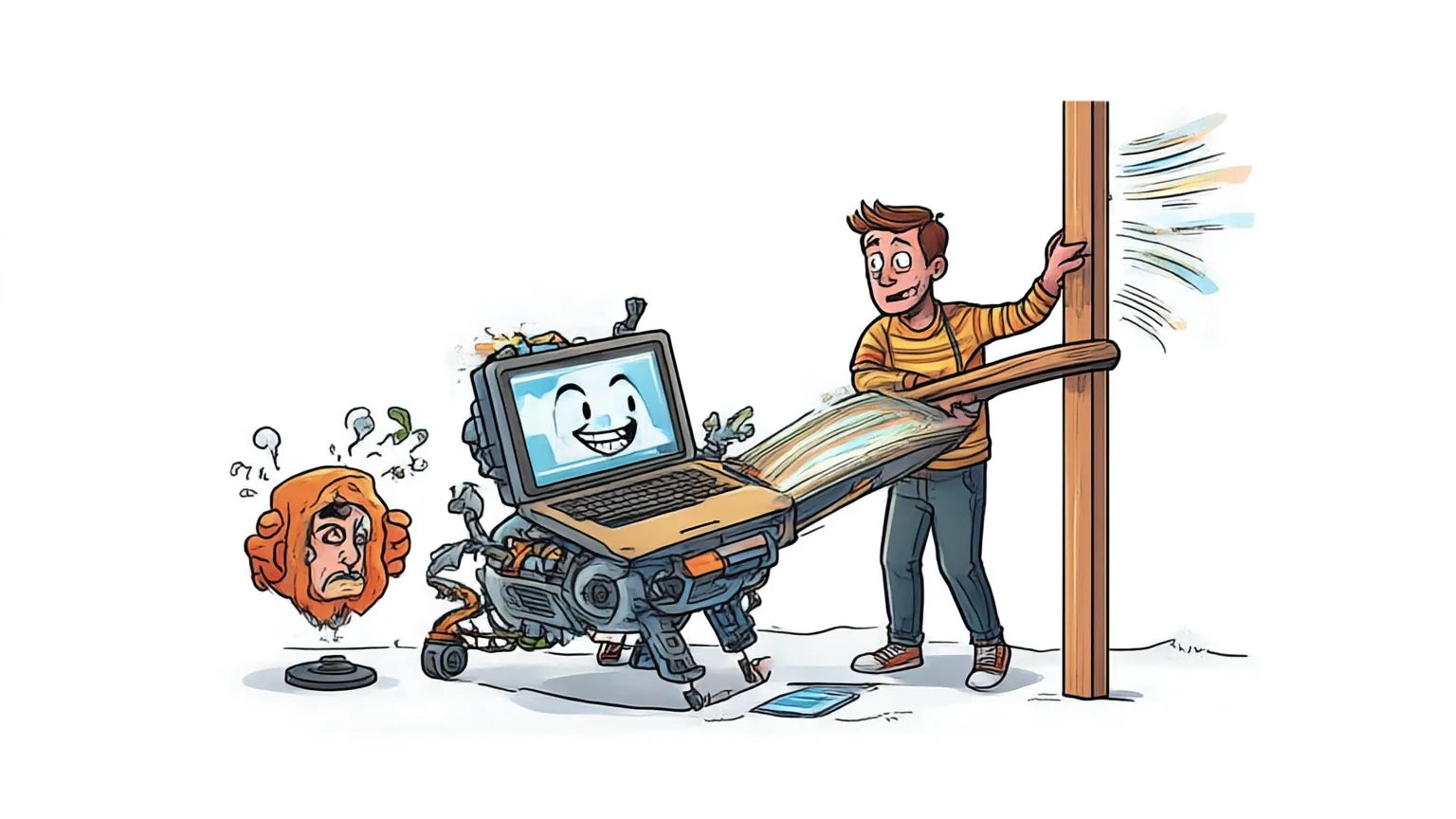
An image can gradually lose details when an AI edits it again and again. TailSteer adds a training stage intended to keep those unintended changes from building up. It teaches an existing image model to protect content that a request leaves untouched. The aim is to support longer editing sessions while keeping the model's established abilities.
- Problem: Small accidental changes can accumulate when each edited image becomes the starting point for the next request. Existing remedies can change what a model has already learned or require special generation procedures that are hard to apply to large general-purpose models.
- New idea: TailSteer adds training that focuses corrections near the end of denoising, the process of turning noise into an image. Earlier steps stay close to the original model's behavior, while later steps learn to protect fine details. Training uses image generation sequences produced by the editor itself and treats unchanged source content as the reference to preserve. It does not require curated pairs showing an input image and its correct edited result.
- Simple example: Think of repeatedly revising a picture while trying to leave everything outside each requested change alone. TailSteer acts like a final detail check on each revision, helping prevent small unwanted alterations from piling up.
- Evidence: Experiments across the FLUX, SenseNova and Qwen model families report substantially less accumulated visual drift over 15 to 20 editing turns. Performance on text-to-image generation and single-image editing benchmarks was largely preserved. The abstract gives no numerical size for the drift reduction.
- Limitation: The abstract does not quantify the improvement or any remaining loss in the original models' abilities. It also does not establish whether the benefit holds beyond 20 editing turns.
- Why it matters: Keeping untouched details stable would make repeated AI image edits more dependable.
- Paper: TailSteer: Trajectory-Tail Steering for Drift-Resistant
Trending AI Repositories
Ranking source: GitHub Trending.
dsx-ai-factory/nvke
NVKE lets platform teams offer a managed Kubernetes service on their own NVIDIA GPU infrastructure. Each workload cluster gets its own control plane, etcd and node pools.
- What it is: Written in Go, NVKE sits above the workload clusters that platform teams create and operate for customers.
- What it does: NVIDIA Kubernetes Engine (NVKE). A management plane for GPU Kubernetes on bare metal.
- Who it helps: It serves platform teams with their own NVIDIA GPU infrastructure. They can install it to create and operate Kubernetes clusters for their customers.
- Limitation: You need your own NVIDIA GPU infrastructure.
- Repository: dsx-ai-factory/nvke
anthropics/claude-quickstarts
Claude Quickstarts gives developers foundations they can build on and customize. The useful starting point is application code they can adapt to their own needs.
- What it is: These Python quickstarts sit at the application layer, using the Claude API.
- What it does: A collection of projects designed to help developers quickly get started with building deployable applications using the Claude API
- Who it helps: They help developers building applications with Claude. Developers can take a quickstart and customize it for their specific needs.
- Limitation: Using the quickstarts requires a Claude API key.
- Repository: anthropics/claude-quickstarts
meta/astryx
Astryx is a design system built on React 19+ and StyleX. It is currently in beta, with an explicit rule that architecture changes require documentation updates.
- What it is: This TypeScript project sits in the React and StyleX UI stack.
- What it does: An open source design system that's fully customizable and agent ready
- Who it helps: Astryx is built for people and the agents working alongside them. They can customize the design system for their work.
- Limitation: Astryx is currently in beta.
- Repository: meta/astryx
Sources
- 01Hugging Face Papers · Hugging Face Papers
- 02GitHub Trending · GitHub Trending
- 03Nvidia will investigate CEO Jensen Huang’s relationship with possible Chinese spy · TechCrunch
- 04Apple is racing to make Siri more agentic · The Verge
- 05Elvis and Eminem rights holders are suing Suno · The Verge
- 06Andrej Karpathy built a curated video platform in a weekend using Claude and 20 years of Hacker News · The Decoder
- 07The brain-as-computer metaphor shaped modern AI but may be misleading the consciousness debate · The Decoder
- 08From Autonomous Agents to Cognitive Symbionts: Toward AI-Augmented Human Intelligence · arXiv
- 09WeLM-Image: A Unified Image Generation Model towards Visual Intelligence · arXiv
- 10TailSteer: Trajectory-Tail Steering for Drift-Resistant Multi-turn Image Editing · arXiv