Google buys a campus, OpenAI reaches $1.25 trillion
Get this by email →
The supplied source does not verify SageMaker GPU partitioning. Crusoe sells its troubled Wyoming data center project to Google. OpenAI reaches a $1.25 trillion valuation as Anthropic nears its IPO.
News
SageMaker Inference now supports Multi-Instance GPU to maximize GPU utilization for model endpoints
Amazon SageMaker Inference now supports NVIDIA Multi-Instance GPU, or MIG. The feature divides a GPU into hardware-isolated partitions. Users can run a different model in each partition or use a right-sized fraction of a newer accelerator.
The supplied announcement summary describes MIG support, hardware-isolated GPU partitions and model placement within them, but the captured source does not verify those claims.
The supplied summary describes two optional API fields for placing models, an example assigning one model to each partition and measurements against a whole older GPU. It supplies no performance figures from that comparison. The captured source contains only cookie text, so it does not verify those technical details. It reports a problem saving cookie preferences and says only essential cookies would be stored. (AWS Machine Learning)
thinkidiot take: The captured source does not verify the GPU partitioning claims in the supplied announcement summary. It contains only cookie text, leaving the API fields, placement example and older-GPU comparison unchecked. I would want the announcement's technical details verified before using them to plan model placement. A performance verdict would also require the missing measurements.
Crusoe sells troubled Wyoming data center project to Google
Crusoe confirmed it sold an unfinished data center project in southeastern Wyoming to Google. Google announced plans to invest $17 billion in developing the campus. The purchase gives Google control of the project, though the sale price was not disclosed.
Crusoe still has Google and Microsoft campuses underway
Crusoe originally announced the Wyoming project with Tallgrass. Their plan called for eventually reaching 10 gigawatts of power capacity. Crusoe raised $3.9 billion in September and was recently valued at $30.9 billion. It is also developing a data center for Google near Amarillo, Texas. A separate campus for Microsoft near its Abilene campus is planned at 900 megawatts. The first building there is expected online in mid-2027. (TechCrunch)
thinkidiot take: Google's $17 billion development plan starts with an unfinished campus. For my own capacity planning, I would keep that investment announcement separate from usable infrastructure. Crusoe's Microsoft project provides a more concrete milestone: a first building expected online in mid-2027. An opening milestone deserves more weight than an eventual power target.
OpenAI valued at $1.25 trillion, as rival Anthropic nears its IPO
OpenAI raised another $11 billion at a $1.25 trillion valuation, according to Bloomberg. The new funding follows a $122 billion raise in March at an $852 billion valuation. OpenAI has secured more private funding while its public listing is delayed.
The fundraising target and the listing timetable diverge
Bloomberg reports that OpenAI is seeking additional investments to bring the new round to $20 billion. The report says its initial ambition was to raise up to $30 billion. That plan targeted a $1.4 trillion valuation. Anthropic filed its S-1 to go public the week before the November 6, 2026 article. Sam Altman said OpenAI was delaying its IPO until it was able to make more confident claims about model safety. He gave no specific timeline. (The Verge)
thinkidiot take: OpenAI has raised another $11 billion while delaying its IPO over confidence in model safety claims. I would keep that financing result separate from any decision to trust a model in my own tools. Altman's stated condition concerns safety claims, and the funding report does not resolve it. A $1.25 trillion valuation should carry no weight in that technical judgement.
China reportedly recruited AI exec to spy on Jensen Huang
China's Ministry of State Security recruited Megaspeed executive Alice Huang to spy on Nvidia CEO Jensen Huang, according to The New York Times. The reported aims included gathering information about American AI chips. The report also describes an effort to influence Nvidia to make its most advanced chips available to China.
The reported aims included potentially influencing Nvidia to make its most advanced chips available to China.
Megaspeed is an Nvidia customer. The New York Times reports that Alice Huang has relationships with senior chip-industry executives. Those contacts include Gigabyte leaders. The article says President Trump was briefed about her relationship with Jensen Huang the previous year but took no action. Three House committees requested a joint briefing with Jensen Huang the day before the November 6, 2026 article. They asked for a closed-door session about his interactions with Alice Huang. (The Verge)
thinkidiot take: Three House committees have requested a closed-door briefing about Jensen Huang's interactions with Alice Huang. I would want that scrutiny to address the reported potential aim of influencing chip availability, alongside the reported information gathering. For someone choosing hardware, the availability question is the most concrete part of this story. That makes the briefing a justified step, while the espionage allegations still belong clearly to the reporting.
Ripple-65B Preview delivers strong agentic coding results as a fully Apache 2.0 open US model
Ricursive Intelligence is releasing Ripple-65B Preview, an open-weight language model with 65 billion parameters. The model is available on Hugging Face under the Apache 2.0 license. Ricursive reports a TerminalBench 2.1 score of 80.52, which it describes as the best result among open US models.
The reported $32 million bill includes research
Ricursive pretrained the model on 12 trillion tokens. It uses a dense Transformer architecture optimized for Nvidia hardware. Ripple uses Terminus 2 and OpenCode as harnesses. Ricursive puts total development and training costs at $32 million. That figure includes all research and development expenses. The Decoder reports that Ripple trails the newly released western open model Inkling 2 Small on other benchmarks. (The Decoder)
thinkidiot take: Ripple-65B Preview puts Apache 2.0 weights behind a reported TerminalBench 2.1 score of 80.52. I would test it on my own coding tasks and record which harness I used, since the release names both Terminus 2 and OpenCode. Its weaker results against Inkling 2 Small on other benchmarks make the coding lead a specific result rather than an overall ranking. This release earns a trial, not an automatic place as my default model.
Trending AI Papers
Ranking source: Hugging Face Papers for 2026-11-07.
SLA: Scaling Spatial-Language-Action Model via Continual Pre-training
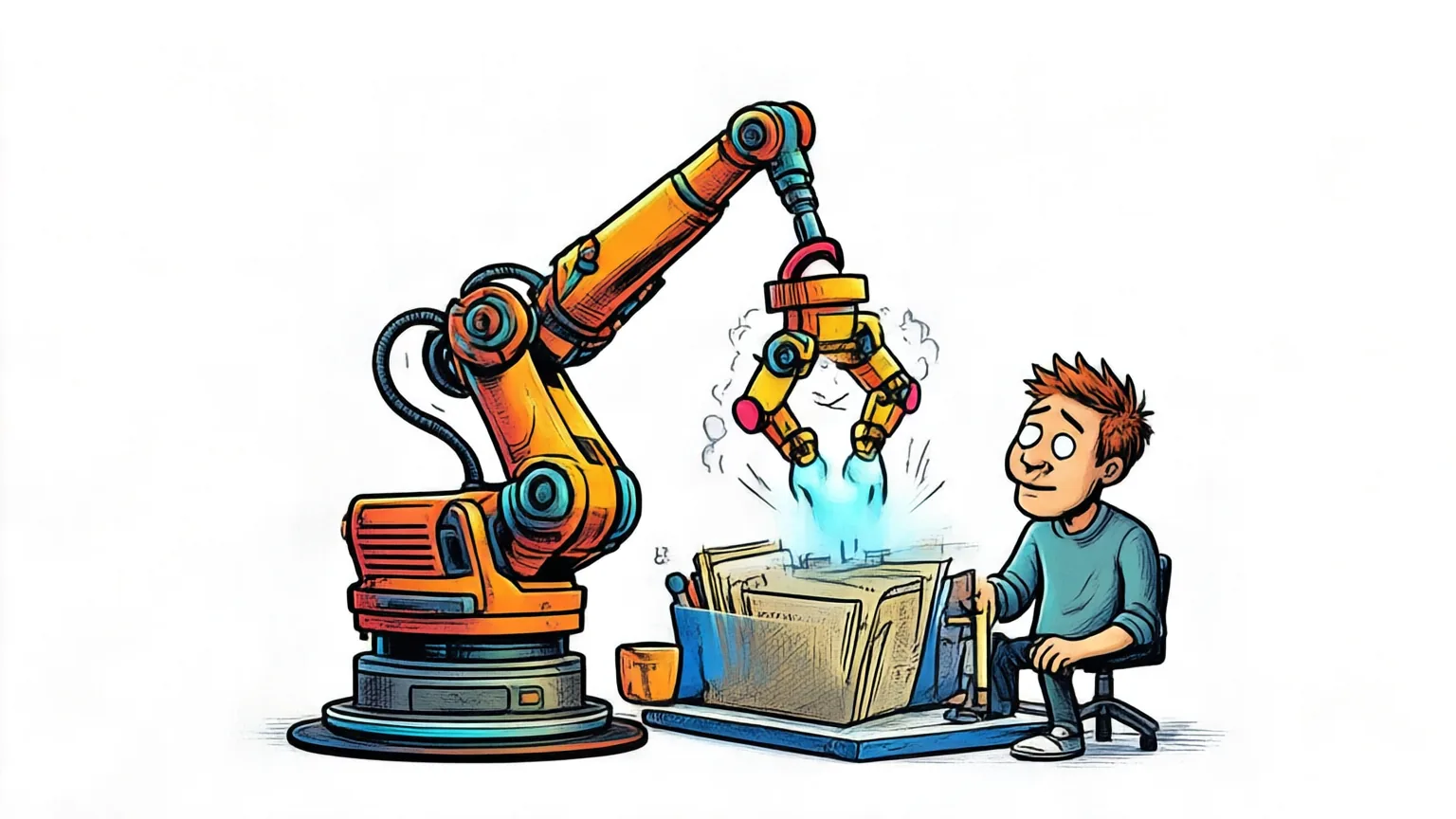
A robot needs to understand where things are before it can handle them reliably. SLA teaches a robot control model about space while it learns from varied robot recordings. It uses a separate model that understands three-dimensional scenes to guide that learning. The aim is to carry useful spatial knowledge into later tasks without adding machinery when the robot runs.
- Problem: Many robot models start with image understanding learned from flat pictures paired with text. They receive explicit lessons about depth and geometry only when adapted to particular tasks. That leaves spatial understanding dependent on narrow task training.
- New idea: SLA starts with pi05, an existing model for choosing robot actions, and continues training it on varied robot datasets. Alongside learning actions, it learns to make its internal image features agree with spatial features supplied by a separate, fixed model that interprets three-dimensional scenes. Adjustable gates select and combine features from different stages of the action model for this guidance. Training also sometimes hides robot state information to encourage the model to use what it sees.
- Simple example: Think of learning to place a cup on a shelf: recognizing the cup is only part of the job. You also need to judge its position and the space around it. SLA's extra training guidance plays the role of a teacher drawing attention to those spatial relationships.
- Evidence: The abstract reports that the extra components are needed only during training, leaving the model's running architecture intact. It gives no numerical results or task success comparisons.
- Limitation: The abstract does not show whether the added spatial training improves manipulation success or carries over to unfamiliar tasks and scenes.
- Why it matters: Teaching spatial understanding earlier could help robots reuse that knowledge across different manipulation tasks.
- Paper: SLA: Scaling Spatial-Language-Action Model via Continual
VFlash: Fast, Accurate Visual Planning via Flash Primitive Decoding
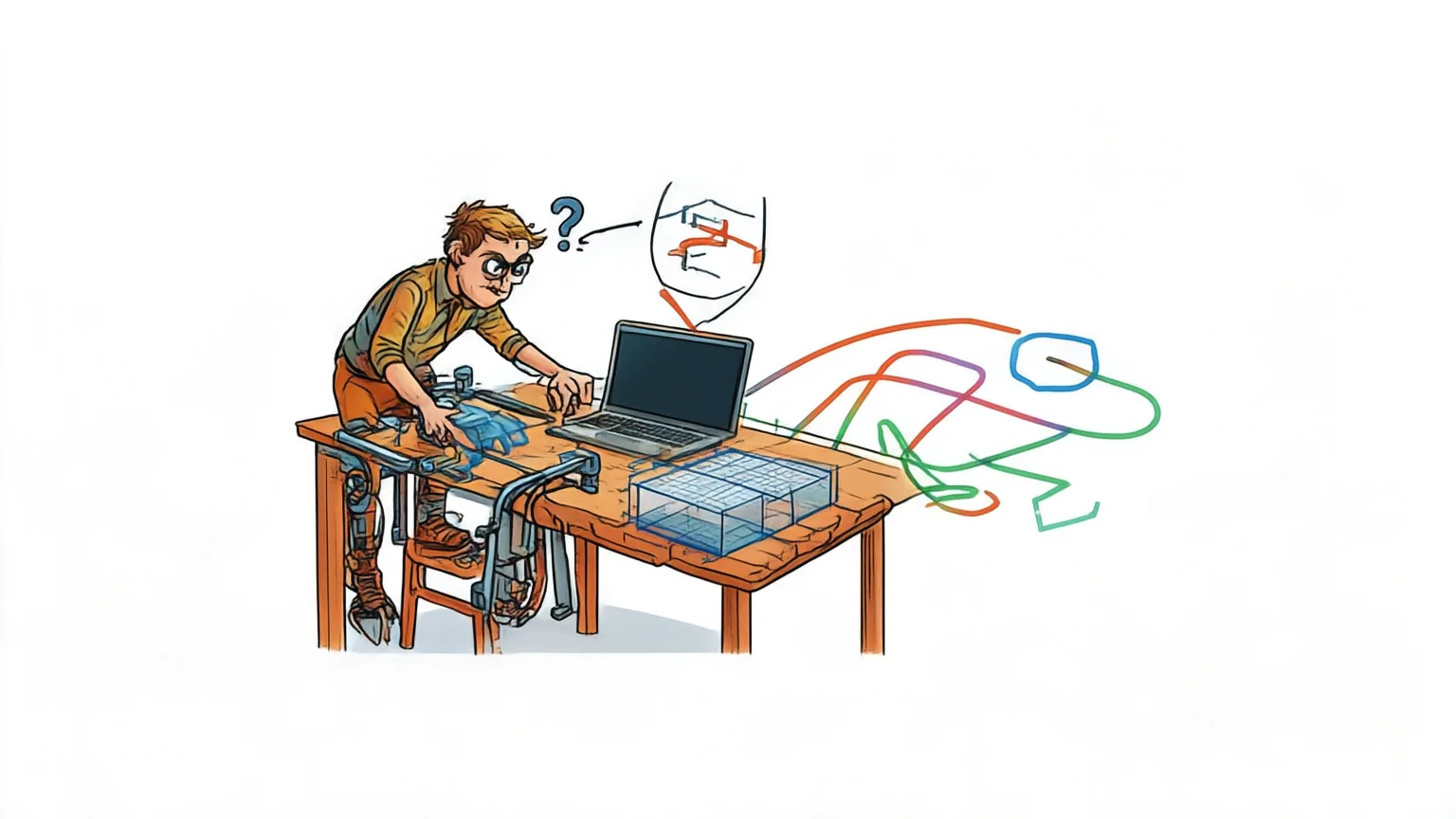
A machine can describe a planned movement as a path instead of a sentence. VFlash aims to make those visual plans quicker to produce and more accurate. It predicts the coordinates of a shape or path together. This avoids the delay of building the plan one small piece at a time.
- Problem: Existing models often produce a visual plan as a sequence of coordinate tokens, the small units used to encode positions. Each unit waits for earlier ones, so detailed plans take increasingly more work to generate.
- New idea: VFlash works with visual primitives, simple spatial descriptions such as points, boxes and paths. A small prediction model produces a whole primitive in a single pass, adjusting its output layout to the kind and length of the description. It learns from annotated examples of these shapes and paths. A prediction can be accepted when it has the required structure, without matching the exact token sequence another model would generate.
- Simple example: Imagine sketching a route across a room. The usual approach is like entering each coordinate in turn; VFlash is like laying down the whole route together.
- Evidence: VFlash reduced prediction errors across the evaluated 2D and 3D robot trajectory tasks. Preliminary measurements from a single rollout showed approximately 25x faster generation for 3D point motion forecasting. An action model using its plans achieved 70.2% average success across four MolmoSpaces task suites, compared with 62.6% for the baseline.
- Limitation: The approximately 25x speed result comes from preliminary measurements of a single rollout, so the abstract does not establish that speedup across broader testing.
- Why it matters: Faster, more accurate spatial plans could help machines plan physical movements with less delay.
- Paper: VFlash: Fast, Accurate Visual Planning via Flash Primitive
Harness-S: Learning from Sibling Harnesses for Generalizable Agent Training
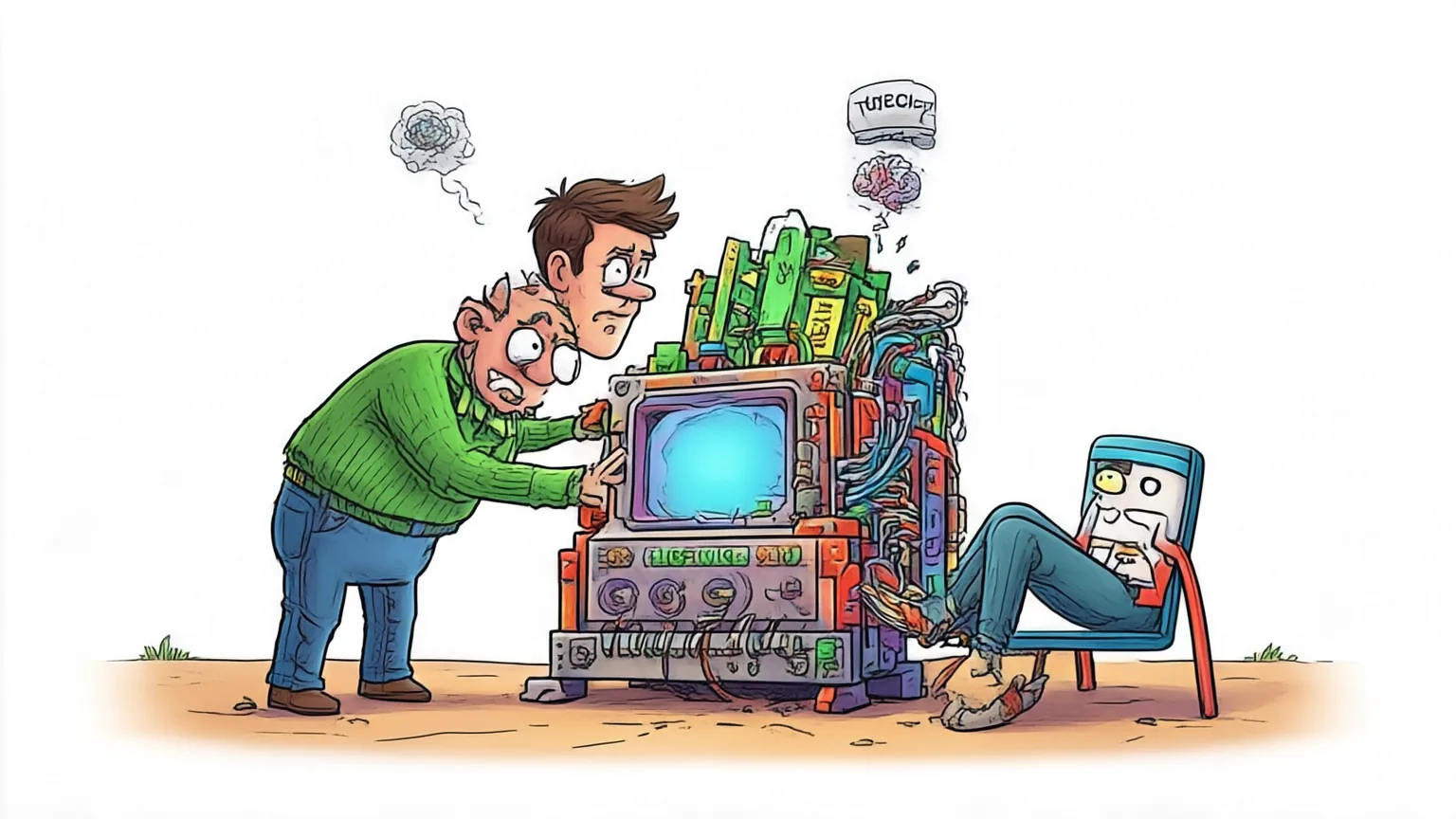
An AI agent's success depends partly on the software setup it works through. Harness-S trains an agent by giving it alternative setups when its usual one leaves it stuck. The agent learns from those new attempts, then returns to its original setup. The aim is to make the lessons persist without requiring the alternative setups for every task.
- Problem: Changes to an agent's execution setup can fix different failures, and their usefulness shifts as the agent learns. Searching for one setup that always wins misses those differences and changes over time.
- New idea: Harness-S builds a fixed collection of sibling harnesses, alternative versions of the software setup that runs an agent, each aimed at different failures. When every initial attempt in the base setup fails, the same agent makes fresh attempts in selected alternatives, and those attempts replace the failures in training that learns from outcomes. A router, a selection mechanism, chooses alternatives using records of their behavior and votes from multiple language models. Those behavior records are refreshed as the agent learns, even though the collection of setups stays fixed.
- Simple example: Imagine a learner who gets stuck with the usual worksheet. A teacher offers a different worksheet aimed at that difficulty, then asks the learner to return to the original format. The goal is for the lesson to stay with the learner after the extra support is removed.
- Evidence: Across AppWorld, SWE-Gym and DBBench, the trained agent substantially outperformed training the agent alone when both used the original setup. Behavior analyses and held-out cases supported the claim that the agent retained behaviors learned through alternative setups. Selecting one setup with the router during use brought further gains with the same number of execution attempts. The abstract gives no numerical performance scores.
- Limitation: The abstract does not quantify the performance gains or the added cost of generating rescue attempts and using multiple language models to select setups.
- Why it matters: Agents could learn from temporary changes to their working setup and keep those lessons when the extra support is removed.
- Paper: Harness-S: Learning from Sibling Harnesses for
Trending AI Repositories
Ranking source: GitHub Trending.
Sources
- 01Hugging Face Papers · Hugging Face Papers
- 02GitHub Trending · GitHub Trending
- 03SageMaker Inference now supports Multi-Instance GPU to maximize GPU utilization for model endpoints · AWS Machine Learning
- 04Crusoe sells troubled Wyoming data center project to Google · TechCrunch
- 05OpenAI valued at $1.25 trillion, as rival Anthropic nears its IPO · The Verge
- 06China reportedly recruited AI exec to spy on Jensen Huang · The Verge
- 07Ripple-65B Preview delivers strong agentic coding results as a fully Apache 2.0 open US model · The Decoder
- 08SLA: Scaling Spatial-Language-Action Model via Continual Pre-training · arXiv
- 09VFlash: Fast, Accurate Visual Planning via Flash Primitive Decoding · arXiv
- 10Harness-S: Learning from Sibling Harnesses for Generalizable Agent Training · arXiv