Apple questions AI for its own sake as xAI faces suit and Claude watermarks leave gaps
Get this by email →
Apple’s CEO rejects shipping AI for its own sake. A judge lets the NAACP’s pollution lawsuit against xAI proceed. Anthropic expands text watermarking but leaves a bypass on two older Claude models.
News
Apple CEO says the company doesn’t ‘want to ship AI for AI’s sake’
Apple CEO John Ternus defended the company’s position in AI. He officially took the job at the beginning of September 2026. Apple’s delayed, more powerful Siri had launched that summer, bringing the upgraded assistant to users.
An answer about agents turns to the people making products
Ternus said Apple will use AI in new products but does not want to ship AI for its own sake. Asked whether agents would make apps unnecessary, he described product creation as deeply human and personal. (TechCrunch)
thinkidiot take: Apple’s delayed, more powerful Siri launched in summer 2026. I would use that assistant as the test of Ternus’s position on useful AI. His comments about human product creation do not settle the question about agents replacing apps. I put more weight on the shipped assistant than on that answer.
Judge allows NAACP lawsuit over xAI data center pollution to move forward
Judge Debra M. Brown denied xAI’s motion to dismiss the NAACP lawsuit over turbines powering its Colossus data center outside Memphis. The case can now move forward. The Southern Environmental Law Center alleges that xAI installed and operated at least 35 combustion turbines without necessary air permits.
The mobile-source argument fails
The lawsuit accuses the SpaceX-owned AI company of violating the Clean Air Act. xAI argued that its turbines were exempt from permitting because they were mobile. It also argued that the plaintiffs lacked standing. Brown found that the plaintiffs had standing under the Clean Air Act. She also found that the turbines were not mobile sources under Mississippi’s State Implementation Plan. A similar dismissal motion from the Department of Justice was denied earlier in October 2026. TechCrunch also reports that New York recently passed a moratorium on new data centers. (TechCrunch)
thinkidiot take: The allegation involving at least 35 turbines will stay in court after xAI’s dismissal bid failed. When assessing this AI operation, I would put its permitting record alongside what its models do. Brown rejected both the standing challenge and the mobile-source argument. Letting the lawsuit proceed is the right result: those defenses should not end scrutiny of the alleged permit violations.
Anthropic's watermark rollout leaves a loophole on two older Claude models
Anthropic is extending text watermarking to Claude Mythos 5, Claude Opus 4.7, Claude Opus 4.6 and Claude Sonnet 4.6. The rollout brings watermarking to four more models as Anthropic cites the EU AI Act’s December deadline for retrofitting older models. On Opus 4.6 and Sonnet 4.6, it applies only when temperature, top_p and top_k all stay at their defaults. Changing just one of those settings bypasses the watermark.
Detection is available only in private preview
Anthropic offers a watermark detection API in private preview. Its watermark uses a variant of Google DeepMind’s SynthID text method and is embedded at model level across hosting platforms. Anthropic says it adds no characters or tokens and contains no user or conversation information. Pricing and request and response formats stay unchanged. Every model released after August 2, 2026, shipped with the watermark. Amazon Bedrock’s rollout may take extra days. Anthropic addresses the older models’ bypass with a compliance warning. (The Decoder)
thinkidiot take: One sampling change bypasses watermarking on Opus 4.6 and Sonnet 4.6. I would check all three sampling settings before relying on either model to produce watermarked text. The compliance warning leaves that dependence on defaults intact. I would not treat this rollout as dependable watermark coverage for those two models.
I built an AI Tamagotchi before Meta could
Sean Hollister built an AI pendant using a $50 Waveshare ESP32-S3 1.75C devkit. It has a 1.75-inch touchscreen, talks to Muse and displays avatars. His build puts a working Muse companion in his hands ahead of the holiday season, when Meta wants to sell its Muse Charm.
A phone supplies the camera the pendant lacks
Meta recommends the devkit for building Muse Gadgets that connect to its Muse AI cloud using open-source code and tokens. Hollister’s device lacks cameras and a 5G cellular radio. Claude Code added a conversation history page accessible with a swipe. Hollister also integrated an ElevenLabs voice to speak Muse’s answers. Claude added a remote phone-camera shutter button and fixed an upside-down front-camera preview. It also added a low-quality camera preview over Bluetooth, allowing use away from home Wi-Fi. (The Verge)
thinkidiot take: A $50 devkit gave Hollister a pendant that talks to Muse and displays avatars. I would start with his swipe-accessible conversation history and remote shutter button because those give me specific functions to try. The camera work still depends on a phone, and the Bluetooth preview is low quality. I judge this build by those usable additions, and they make it a more interesting project than the talking face alone.
Trending AI Papers
Ranking source: Hugging Face Papers for 2026-11-01.
Look Only When Needed: Certificate-Guided Visual Routing for Efficient Diffusion VLMs
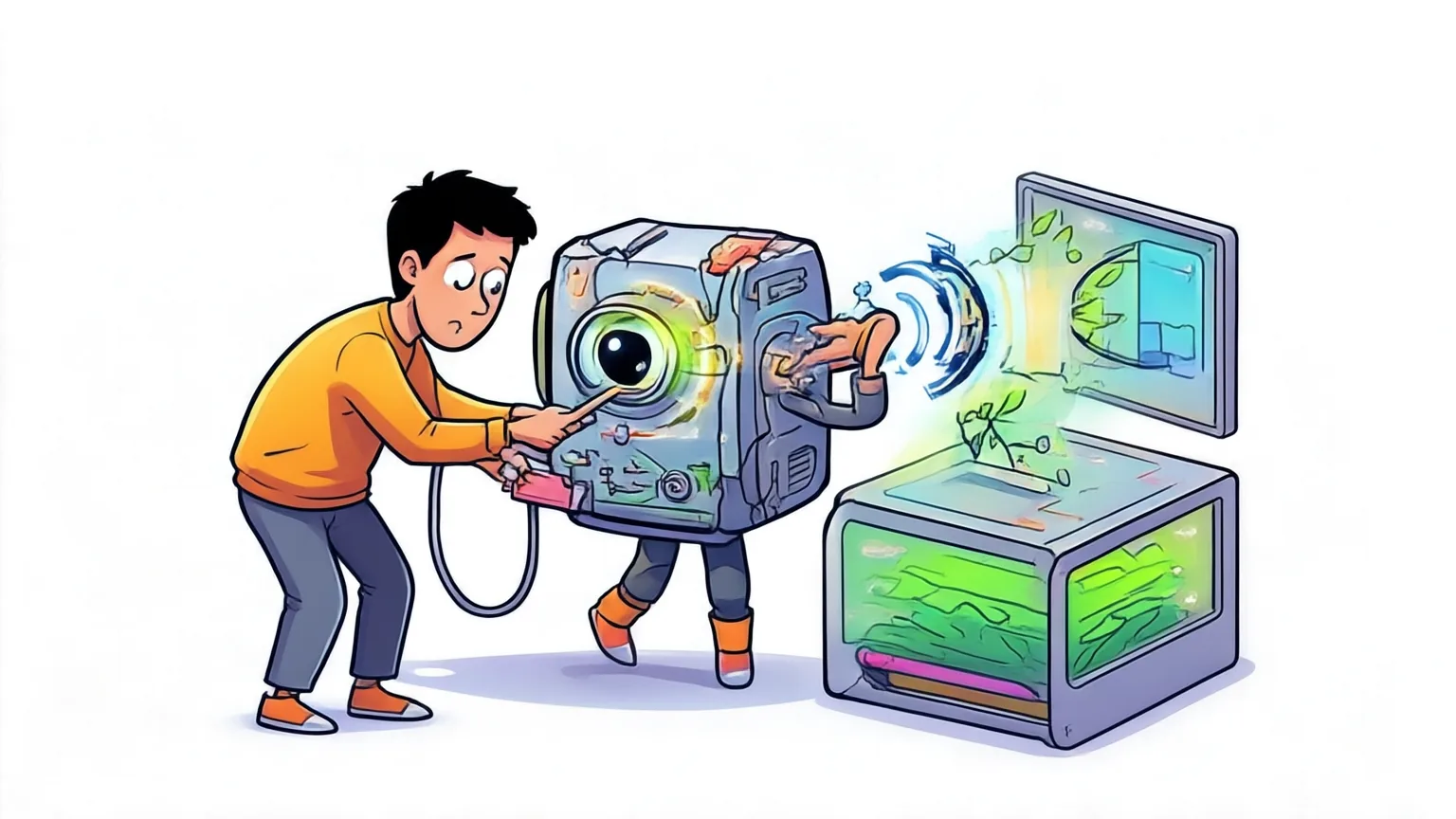
An AI model answering questions about a picture can spend much of its effort looking at the same picture again. This paper introduces LOWN, a method that lets the model skip some of those repeat checks. It uses agreement between answers to decide when another look is needed. The aim is to reduce computation while preserving answer quality.
- Problem: Diffusion vision-language models build answers by filling in hidden words over repeated steps, processing the image each time. Visual tokens, the pieces used to represent an image, account for 89-97% of the input on the studied benchmarks. Removing some image pieces saves work but discards information and leaves the repeated processing of the remaining pieces.
- New idea: LOWN first predicts hidden answer tokens, the units of text the model produces, without consulting the image. It compares these predictions with the latest predictions made using the image. Matching predictions count as certified tokens, meaning the earlier image-based predictions can be reused; disagreement triggers another image check. The number of certified tokens determines how much of the answer is revealed at that step.
- Simple example: Think of answering questions about a photo you have already studied. If your answer from memory matches what you concluded while looking, you keep going. If the answers differ, you look at the photo again.
- Evidence: Across ten benchmarks, LOWN preserves 99.6% of LLaDA-V's score while using 35.3% of its decoding computation on average, measured in FLOPs. It requires neither additional training nor a tuned threshold. In the authors' step-by-step comparison, removing the image changes a token being revealed at 22.8% of steps on average, falling to 7.9% in one reported case.
- Limitation: The reported generalization covers LLaDA-based models. The abstract does not establish whether the same method works as well for other model families, and its computation savings do not establish an equivalent reduction in elapsed time.
- Why it matters: Skipping unnecessary image checks can reduce the computation needed to answer visual questions.
- Paper: Look Only When Needed: Certificate-Guided Visual Routing
Youtu-Parsing-Omni: One Encoder, One Schema, All Modalities
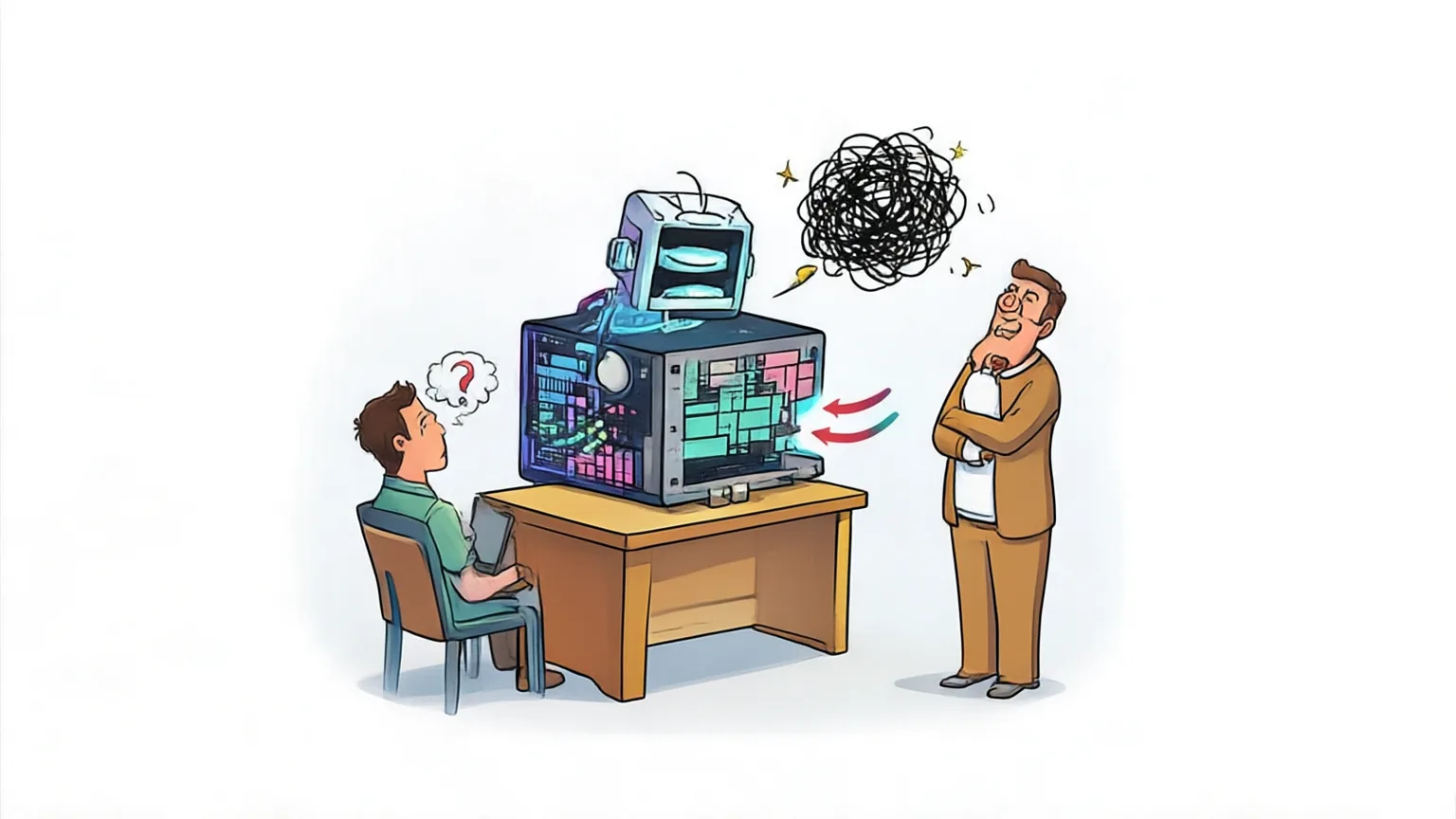
Youtu-Parsing-Omni turns material such as pages, pictures and recordings into organized information that software can use. It keeps track of where or when that information appears. The aim is to help AI agents find evidence and point back to it across different kinds of media. One model handles the work.
- Problem: An agent working across documents, images, audio and video needs both the content and its location in space or time. This paper addresses how to give those tasks a common processing system and output format. Its sheet-music comparison also identifies a gap in general-purpose systems, which trail the proposed model in character-level transcription.
- New idea: A shared encoder, the component that turns input into internal representations, processes every media type with the same learned settings. It starts from a pretrained language model to support text reading and connects video frames with audio occurring at the same time. OmniSchema, a common format for the resulting records, covers all ten parsing tasks, where parsing means extracting organized information from an input. During further training, the model learns from its own generated outputs using guidance from a copy that also receives reference information; that copy is updated after each round.
- Simple example: Think of a clerk organizing pages, pictures and recordings into one filing system. Each entry records what was found and where on a page or when in a recording it appeared, so someone else can return to the evidence.
- Evidence: The single 5 B-parameter model scores 96.96 Overall on OmniDocBench v1.6, reported as state of the art, and 75.08 Avg. on OmniParsingBench, leading open-weight models. Its OmniParsingBench advantage is concentrated on audio and video. It also reports the best overall chart-parsing score of 95.02, the highest exact chemical-fingerprint agreement among compared systems, and character-level transcription of typeset sheet music matching a dedicated optical-music model.
- Limitation: The abstract reports extraction benchmark results but does not test whether agents using these records locate and cite evidence more reliably in complete tasks.
- Why it matters: A common record format with source locations can help agents find and cite evidence across different media.
- Paper: Youtu-Parsing-Omni: One Encoder, One Schema, All Modalities
Proving and Improving the Platonic Representation Hypothesis with JEPAs
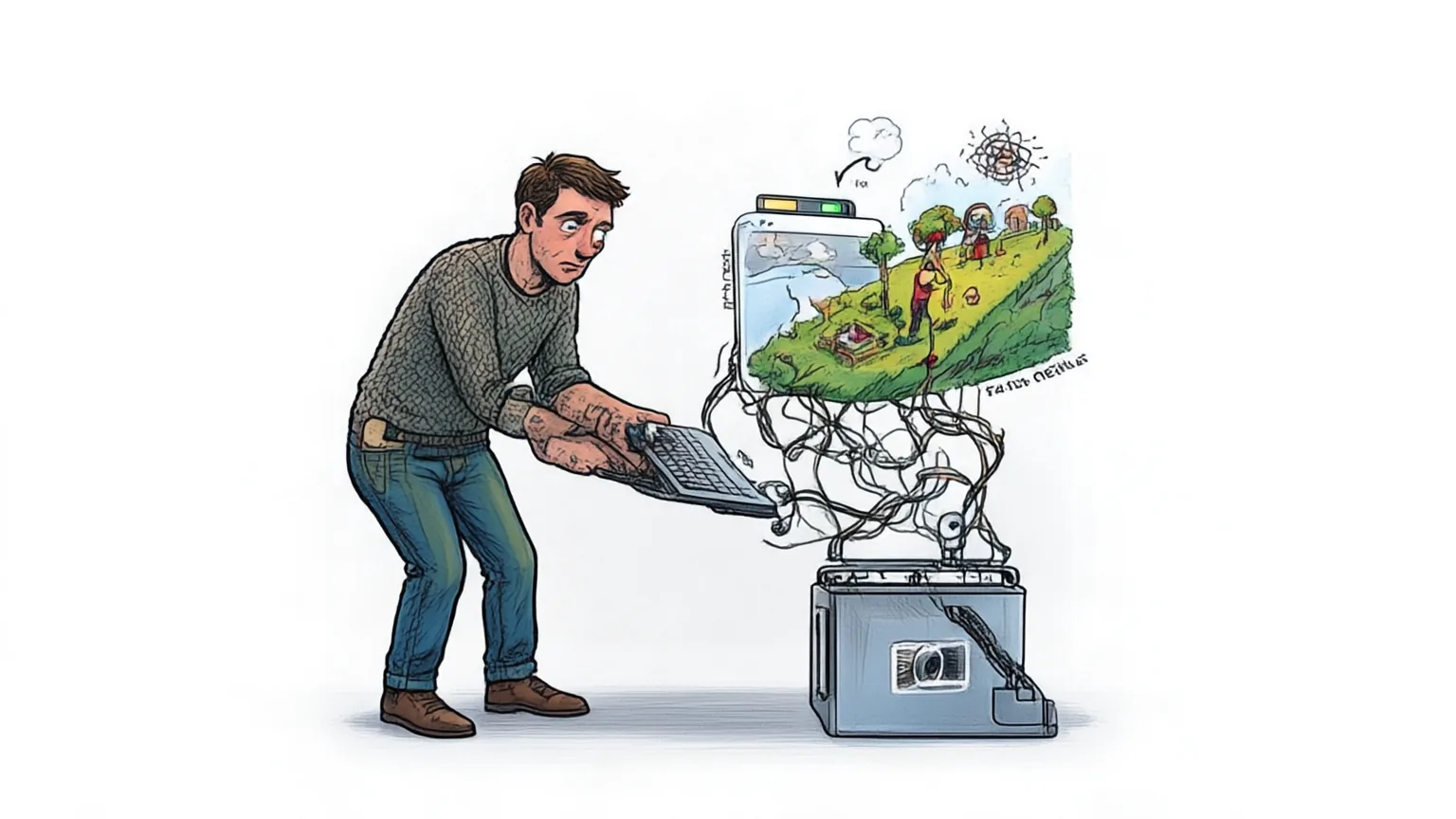
Can models that learn from different kinds of data develop matching internal descriptions of the world? This paper gives a mathematical result showing when that can happen. It also tests a way to train text models so their internal descriptions line up with those of image models. The central finding is that the choice of training pairs matters, alongside model size.
- Problem: The Platonic Representation Hypothesis proposes that models learning from different media develop matching internal representations as they grow. The hypothesis alone supplies neither a proof nor a training method. The paper also finds that predicting the next text token, a unit of text, is an inefficient way to achieve agreement with image representations.
- New idea: A Joint-Embedding Predictive Architecture, or JEPA, learns to predict one input's internal representation from another's. The theorem says separately trained JEPAs learn matching representations up to a rotation, a common geometric reorientation, when their training pairs are observations of the same scene. The authors call these pairs good views and give a bound on disagreement for other pairs. They also describe next-token prediction as a JEPA using bad views, meaning parts of one document rather than observations of one scene.
- Simple example: Imagine two people drawing maps of the same place with their paper facing different directions. Rotating one map could make the layouts match. The paper's result concerns a similar relationship between learned representations when training uses observations of the same scene.
- Evidence: The experiments span 145k captions through the texts of 940M web images. Good views reach the same alignment with 42 times fewer training samples than next-token prediction on the same corpus. A 109M-parameter text JEPA aligns with DINOv2 and CLIP image encoders better than every evaluated language model, including models up to 72B parameters, and better than CLIP's text encoder. The paper also reports CIDEr .838 on COCO for image captioning and 64% top-5 accuracy on ImageNet-100 in the pair-free setting, versus at most 56% among reported language-model results up to 8B parameters.
- Limitation: The exact matching result depends on training pairs being observations of the same scene; other pairs receive a bound on disagreement instead. The experiments establish representation alignment and selected task results, not a general advantage across language-model tasks.
- Why it matters: Choosing better training pairs can make text and image representations agree with far less training data.
- Paper: Proving and Improving the Platonic Representation
Trending AI Repositories
Ranking source: GitHub Trending.
Donchitos/Claude-Code-Game-Studios
Claude Code Game Studios is a Shell project for coordinating game development work within a Claude Code session. Its focus is on organizing agents as a team, with roles and workflows modeled on a studio.
- What it is: It is an MIT-licensed collection of agent definitions and skills that organizes Claude Code agents and workflows for game development, using what the project describes as a studio model.
- What it does: Turn Claude Code into a full game dev studio , 49 AI agents, 72 workflow skills, and a complete coordination system mirroring real studio hierarchy.
- Who it helps: It helps game developers who use Claude Code. They can organize work across specialist agents within a single session.
- Limitation: The supplied description lists 72 skills, while the README lists 74.
- Repository: Donchitos/Claude-Code-Game-Studios
lightpanda-io/browser
Lightpanda is a browser written from scratch in Zig. Its README claims it is 16 times lighter and nine times faster than Chromium, making performance its main point of comparison.
- What it is: Lightpanda is a headless browser built for AI agents and browser automation.
- What it does: Lightpanda: the headless browser designed for AI and automation
- Who it helps: It serves developers building AI agents and automated browser tasks. They can use a browser built specifically for that work.
- Limitation: The supplied excerpt gives no benchmark conditions for its performance claims.
- Repository: lightpanda-io/browser
Orkas-AI/Orkas
Orkas is a desktop assistant that handles work through a team of agents. Its README describes a split between tasks the Commander finishes itself and larger jobs it plans and assigns to specialists.
- What it is: It is a desktop application for macOS and Windows whose Commander handles smaller tasks itself and plans and assigns larger jobs to specialist agents. It supports coding and personal agents, with built-in models or users’ own keys.
- What it does: Orkas is an open-source (MIT), local-first AI team for your desktop: a Commander turns your goal into to-dos and coordinates 16 built-in specialist agents plus Claude Code, Codex, OpenCode, OpenClaw and Hermes, with projects, scheduled automations and connectors. Free app for macOS & Windows; built-in models or your own keys.
- Who it helps: It helps people who want to give an assistant a goal and have it organize the work. People already using the supported coding and personal agents can bring them into that process.
- Limitation: The supplied excerpt does not show completed tasks or evidence of how reliably the agents finish them.
- Repository: Orkas-AI/Orkas
Sources
- 01Hugging Face Papers · Hugging Face Papers
- 02GitHub Trending · GitHub Trending
- 03Apple CEO says the company doesn’t ‘want to ship AI for AI’s sake’ · TechCrunch
- 04Judge allows NAACP lawsuit over xAI data center pollution to move forward · TechCrunch
- 05Anthropic's watermark rollout leaves a loophole on two older Claude models · The Decoder
- 06I built an AI Tamagotchi before Meta could · The Verge
- 07Look Only When Needed: Certificate-Guided Visual Routing for Efficient Diffusion VLMs · arXiv
- 08Youtu-Parsing-Omni: One Encoder, One Schema, All Modalities · arXiv
- 09Proving and Improving the Platonic Representation Hypothesis with JEPAs · arXiv