AI's running costs, a talking pirate ship and OpenAI's funding shortfall
Get this by email →
AWS lays out a playbook for managing Bedrock costs. Nemotron gets a Halloween outing. OpenAI raises about $11 billion against a $30 billion target as big investors pull back.
News
Managing Amazon Bedrock costs end to end: A playbook for FinOps and platform teams
AWS has published a five-stage operating model for managing Amazon Bedrock costs. It gives FinOps and platform engineering teams a sequence to follow: attribute, observe, enforce, optimize, and operate. The playbook connects ownership of spending with request visibility, budget enforcement and regular review.
The caller's identity follows the inference bill
Amazon Bedrock automatically attributes inference costs across all models to the IAM principal making the call. This attribution requires no resources to manage. The caller's ARN appears in the billing pipeline's line_item_iam_principal column. Agentic workflows make many model invocations per task, and token consumption scales with autonomy and context size. The playbook identifies model routing, caching and token limits as platform defaults for reducing avoidable spending. FinOps leads the first and fifth stages, while platform engineering leads the second through fourth. (AWS Machine Learning)
thinkidiot take: Attributing inference costs to the calling IAM principal gives teams an owner to turn to when spending rises. That makes cost ownership a useful starting point before changing model defaults. Token limits and caching come next on my list, because autonomy and larger contexts increase consumption. Choosing a model deserves no more attention than deciding who owns its bill.
nemotron-halloween
MonsterHouse is an interactive Halloween projection that listens to visitors and answers as a grumpy pirate ship. The project presented on Hugging Face uses NVIDIA Nemotron Voice Agent to coordinate the system. It runs on one workstation with an RTX PRO 6000 Blackwell Max-Q and an RTX PRO 4000 Blackwell.
The character spans speech, sight and animation
NVIDIA Nemotron 3 ASR transcribes visitor speech. Nemotron 3.5 Bolt E4B 4GB generates replies, with a LoRA adapter supplying the personality. NVIDIA Magpie TTS Zeroshot voices those replies using a short reference sample of the character. NVIDIA Audio2Face-3D turns speech into mouth animation in Unreal Engine 5. NVIDIA Nemotron 3 Nano Omni describes costumes. YOLO and ByteTrack count and track visitors. (Hugging Face)
thinkidiot take: Putting the whole character on one workstation makes coordination central to MonsterHouse's performance. The LoRA adapter and voice reference sample shape the personality visitors encounter, while Audio2Face-3D connects speech to mouth animation. The reply generator supplies only one part of that encounter. For this kind of character, getting voice and animation to work together matters as much as generating the words.
OpenAI raises just $11 billion of its $30 billion target as big investors lose their AI appetite
OpenAI secured about $11 billion against a $30 billion fundraising target, according to a Wall Street Journal report cited by The Decoder. Its valuation reached $1.25 trillion, below its $1.4 trillion target. The October 31, 2026 story reports the shortfall as major investors pull back amid a tech sell-off.
Family offices and public markets enter the funding picture
OpenAI plans to raise up to $20 billion from family offices and high-net-worth individuals. It is also reportedly planning an IPO early the following year. Anthropic is pursuing a public listing as early as November. The story says a strong IPO could leave Anthropic with well over $100 billion in capital. OpenAI has been using price cuts and more efficient models to defend its market position. (The Decoder)
thinkidiot take: The gap between OpenAI's $11 billion raise and its $30 billion target makes me wary of treating planned fundraising as money already available. The family-office raise and reported IPO remain plans. When choosing models to run, though, the price cuts and efficiency changes matter more to me than the valuation. Those changes deserve evaluation on their own merits; the funding shortfall alone does not settle which model to choose.
Nvidia weighs playing the cosigner for Nscale’s AI data center in West Virginia
Nvidia is reportedly in talks to guarantee billions in debt financing for Nscale's planned Anthropic data center in West Virginia. The proposed residual value guarantee would have Nvidia temporarily take over the facility if Nscale defaulted on construction payments. Nvidia would then help find a buyer and a new tenant.
Power availability sits alongside the financing question
Anthropic's $44.6 billion contract covers the first 460-megawatt building. That building is expected to use Nvidia Vera Rubin chips. Anthropic and Nscale are discussing another building under a second deal worth roughly $45 billion. Nscale had about 25,000 advanced AI chips running in August, compared with nearly 500,000 it plans to deploy. Microsoft withdrew from a planned Nscale site in England after grid power availability slipped into the 2030s. (TechCrunch)
thinkidiot take: Microsoft's withdrawal from the planned England site shows what delayed power can cost a deployment: the site lost its customer when grid availability slipped into the 2030s. Nvidia's proposed guarantee addresses a different problem, setting out what would happen after a construction-payment default. It does not answer the power question. A credible electricity schedule deserves more weight in a deployment decision than either the guarantee or the size of the contracts.
Ollie, a privacy-focused AI assistant, is shutting down
Ollie CEO Bill Lennon announced that the privacy-focused AI assistant will shut down on November 6, 2026. Customers will receive instructions for exporting data and obtaining refunds in the coming days. The announcement follows Ollie's discussion with TechCrunch in September of a $7.5 million seed round led by Khosla Ventures.
Privacy credentials did not settle the competition problem
Ollie was a subscription assistant that connected to email and calendars. It supported appointment bookings and meal planning. Users also had support for bill payments. The story reports that Ollie achieved SOC 2 through an independent audit. Lennon said competition from Muse, Instinct and others made it harder to stand out, grow and raise capital. (TechCrunch)
thinkidiot take: Ollie's shutdown leaves users needing to move their data out of an assistant connected to recurring tasks. Exporting that data and following the refund instructions should take priority as soon as those instructions arrive. Its reported SOC 2 achievement did not resolve the competition and fundraising difficulties Lennon described. For an assistant handling email, calendars and bill payments, privacy credentials alone are too narrow a basis for choosing it.
Trending AI Papers
Ranking source: Hugging Face Papers for 2026-10-31.
Intrinsic Distribution Matching
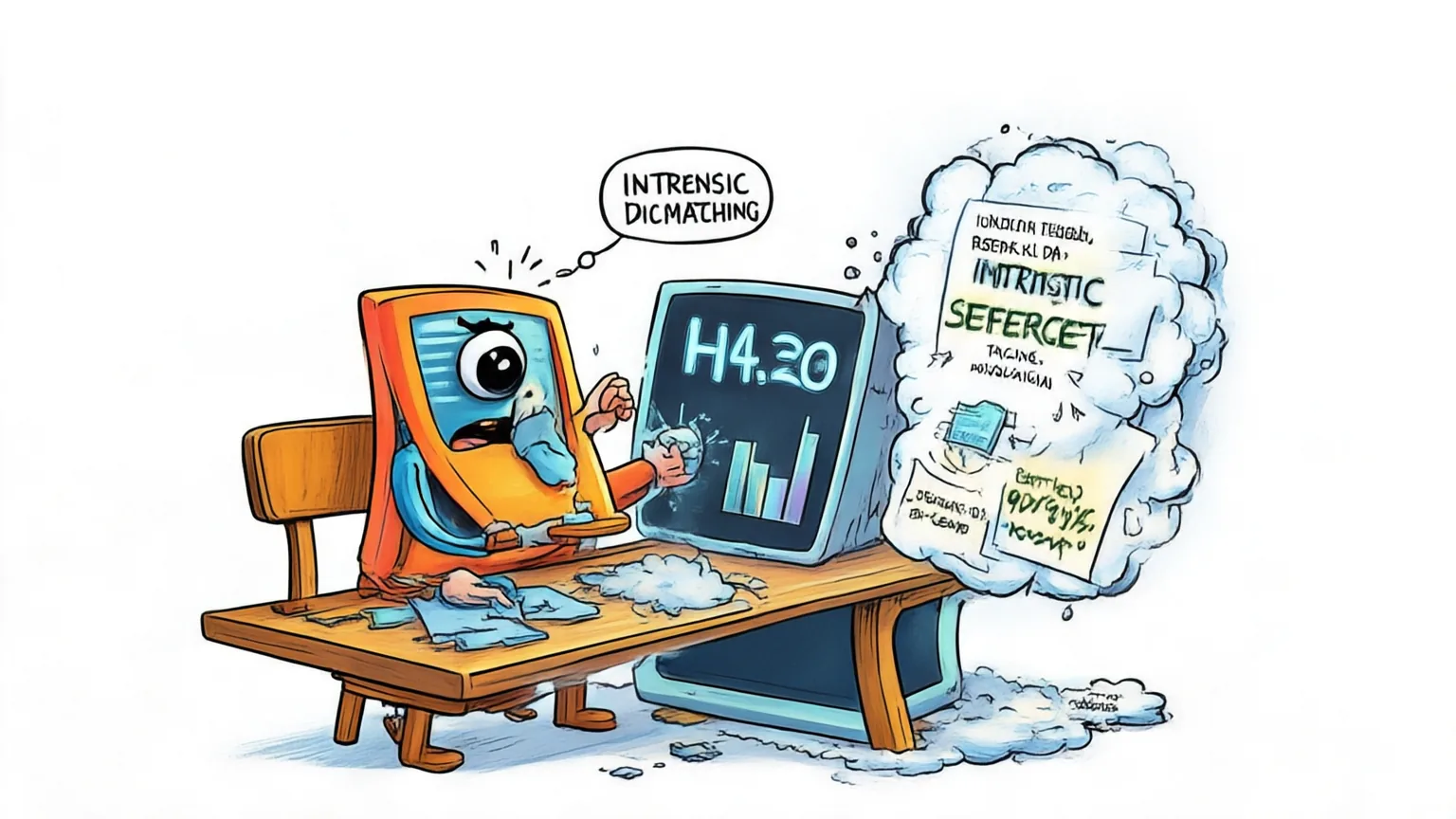
Fast image generators have little time to get the details of a written request right. Intrinsic Distribution Matching adds a training rule to help them do so. It uses information from a running average of the generator itself to guide learning. The aim is better prompt detail without adding a separate system to extract image features.
- Problem: Generating an image in one or a few steps leaves little room to fix missed details. Distribution matching distillation trains a generator to produce images more like those from a reference distribution, but its learned guidance can benefit from explicit checks on feature statistics.
- New idea: Intrinsic Distribution Matching keeps distribution matching distillation, a training method that steers generated images toward a reference distribution. It adds a rule that aligns feature means, or average values, and standard deviations, which describe how widely values vary. Features are internal representations used to describe images. The method gets them from an exponential moving average copy of the generator, whose parameters track recent versions with more weight on newer ones.
- Simple example: Imagine teaching someone to sketch quickly by comparing their drawings with reference pictures. Alongside feedback on each drawing, you check whether measurements across their sketches have similar averages and spread to those across the references. The added checks supplement the original feedback.
- Evidence: At two network evaluations, IDM scores 94.25% on Chinese LongText-Bench and 90.20% on English LongText-Bench, the highest results among the methods compared at that budget. Experiments use Z-Image-Turbo 6B and Qwen-Image 20B. Controlled comparisons show gains from the added statistical constraint, and features from the averaged generator compete with an external DINOv2 encoder across five reported metrics.
- Limitation: The reported experiments cover two image generators. The abstract does not establish whether the gains extend to other generators or evaluation settings.
- Why it matters: This offers a way to improve prompt detail in fast image generation without relying on an external feature encoder.
- Paper: Intrinsic Distribution Matching
A-RSI: Adaptive Task Refresh for Zero-Data Multimodal Self-Improvement
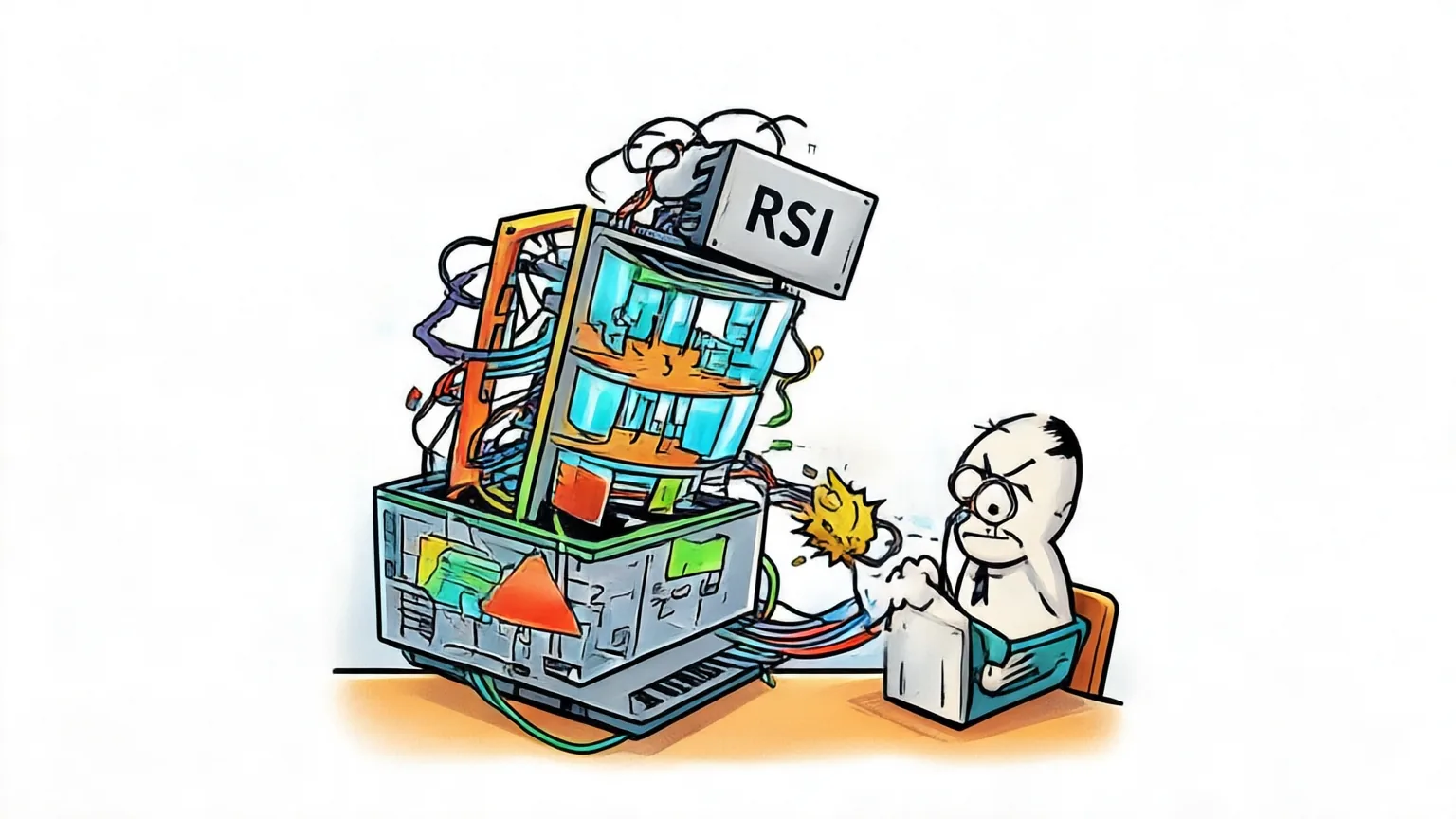
A model learning from its own practice needs to know when to change the exercises. A-RSI uses training records to decide when the current questions have stopped providing enough useful feedback. Programs create replacement questions and calculate answers that can be checked separately from the model's guesses. The training loop needs no outside examples or human-written answer labels.
- Problem: Self-improvement methods often concentrate on creating the next exercises without deciding when the current ones need replacing. Many also treat agreement among the model's own guesses as evidence of a correct answer, leaving training dependent on uncertain predictions.
- New idea: A-RSI maintains a task pool, the collection of questions used for practice. It tracks accuracy and reward variation, meaning changes in the feedback scores assigned during training, to decide when to refresh that collection. A fixed library of programs written by the model generates questions involving multiple forms of information and computes their reference answers. The refresh decision uses training records rather than scores from separate validation or test evaluations.
- Simple example: Think of a tutor watching a student's practice results to decide when a worksheet needs replacing. The next worksheet comes with answers calculated by a program, so grading does not depend on which answer the student repeats most often.
- Evidence: Across the primary eleven-benchmark suite, A-RSI raises average performance from 57.77 to 61.05 with 800 fresh tasks. The training loop uses no external training examples or human-written answer labels. The work also automatically verifies selected properties of its reward and refresh rules and separately audits generated answers.
- Limitation: The abstract reports the gain for the complete method but does not isolate how much comes from the refresh timing versus the generated tasks and their answers.
- Why it matters: It gives models a way to renew their practice while keeping answer checks separate from their own guesses.
- Paper: A-RSI: Adaptive Task Refresh for Zero-Data Multimodal
Your Benchmark Is an Empirical Measure Over Difficulty
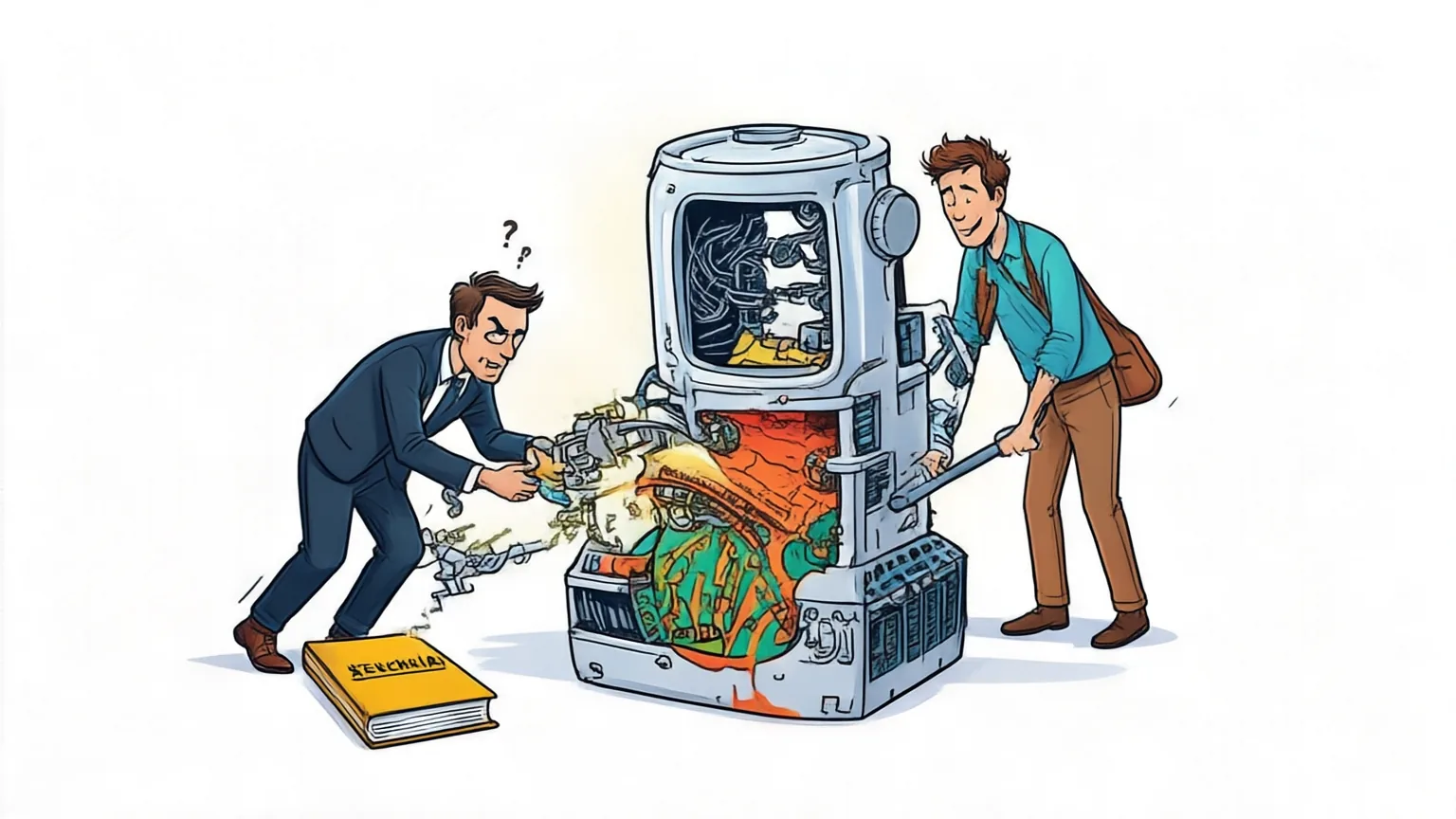
An AI test score depends on how hard its questions are. This paper examines how the mix of question difficulty shapes what a test can reveal. Too much weight at some difficulty levels can distort comparisons, while missing levels can hide progress. The authors also introduce a way to rewrite questions to fill those gaps.
- Problem: A benchmark, or collection of evaluation questions, can emphasize different difficulty levels from those its users intend to measure. It can also omit difficulty levels where a model is improving, so its scores fail to reveal that progress.
- New idea: The paper treats a benchmark as a distribution over difficulty, meaning how its questions are spread across difficulty levels. It introduces a diagnostic for measure mismatch, where that spread differs from the intended one. Another diagnostic detects coverage gaps, or difficulty ranges without questions, and the paper provides theoretical guarantees for the diagnostics. BenchFill is an algorithm that rewrites questions to target difficulty levels where coverage is missing.
- Simple example: Imagine judging a student's maths progress with a test full of easy exercises and very hard problems. If the student improves on problems between those levels, the test has no questions that can show it. Adding questions at the missing difficulty levels makes that progress visible.
- Evidence: The study analyzes 25 popular benchmarks across 7 domains using estimated question difficulties. It finds that many place too much weight on particular difficulty ranges, while others leave substantial ranges uncovered. The abstract reports that BenchFill reduces local coverage gaps but gives no numerical size for that reduction.
- Limitation: The abstract does not quantify BenchFill's gains or report whether filling gaps changes model rankings or improves the measurement of training progress.
- Why it matters: Checking the difficulty mix helps explain what an AI test score captures and what it misses.
- Paper: Your Benchmark Is an Empirical Measure Over Difficulty
Trending AI Repositories
Ranking source: GitHub Trending.
milind-soni/OpenMausBot
OpenMausBot puts a team of AI bots in a chat app. It is an independent project for readers interested in that shared chat format.
- What it is: This TypeScript project provides a chat app built around a team of AI bots.
- What it does: Open-source Grok Bot alternative with a virtual machine that bots can use
- Who it helps: It is for people who want their own team of AI bots. They can interact with that team in a chat app.
- Limitation: The supplied README excerpt does not explain setup requirements.
- Repository: milind-soni/OpenMausBot
CopilotKit/OpenBot
OpenBot is an AI assistant that runs on your company's infrastructure. Its appeal is control: the README says you can change anything about it.
- What it is: This TypeScript project offers a company assistant in the same general format as ChatGPT, Claude or Grok.
- What it does: Open-source AI coworkers that each get a computer of their own: a browser, files and tools, with every action decided before it happens and recorded after. Bring any AG-UI agent.
- Who it helps: It helps companies that want to run and modify their own assistant. They can give each coworker separate logins and choose which tools it can use.
- Limitation: Running it requires your own infrastructure.
- Repository: CopilotKit/OpenBot
expo/skills
Expo Skills is an official Expo resource for AI agents. Its MIT license gives readers a clear starting point for checking reuse terms.
- What it is: The repository is listed as Shell and links to Expo's skills documentation and a skills.sh listing.
- What it does: A collection of AI agent skills for working with Expo projects and Expo Application Services
- Who it helps: It serves developers using AI agents with Expo. They can find official skills through the linked documentation and skills.sh listing.
- Limitation: The supplied README excerpt does not describe individual skills.
- Repository: expo/skills
Sources
- 01Hugging Face Papers · Hugging Face Papers
- 02GitHub Trending · GitHub Trending
- 03Managing Amazon Bedrock costs end to end: A playbook for FinOps and platform teams · AWS Machine Learning
- 04nemotron-halloween · Hugging Face
- 05OpenAI raises just $11 billion of its $30 billion target as big investors lose their AI appetite · The Decoder
- 06Nvidia weighs playing the cosigner for Nscale’s AI data center in West Virginia · TechCrunch
- 07Ollie, a privacy-focused AI assistant, is shutting down · TechCrunch
- 08Intrinsic Distribution Matching · arXiv
- 09A-RSI: Adaptive Task Refresh for Zero-Data Multimodal Self-Improvement · arXiv
- 10Your Benchmark Is an Empirical Measure Over Difficulty · arXiv