Gemini gets a live avatar, WhisperX labels speakers, and DSpark speeds decoding

Gemini 3.8 Live introduces Live Avatar. WhisperX brings speaker-labeled transcription to SageMaker AI. LFM2.5-VL-DSpark targets faster vision-language model decoding.
News
Introducing Gemini 3.8 Live with Live Avatar
Google DeepMind announced Gemini 3.8 Live with Live Avatar, available in Gemini Enterprise from September 24, 2026. Live Avatar processes visual and audio inputs simultaneously. It responds with near-real-time generated video and speech. It supports transitions across 97 languages with synchronized lip movements and expressions.
Background tools keep the dialogue going
Live Avatar supports asynchronous tool calling. This lets it fetch data in the background while continuing the dialogue. Developers can also generate custom animated avatars. Creation uses reference images and currently requires enterprise allowlisting. SynthID watermarks are embedded in both the audio and video output. (Google DeepMind)
thinkidiot take: Live Avatar can fetch data without stopping the conversation. I would test that behavior first, using a dialogue that requires a background lookup. Custom avatar creation requires enterprise allowlisting, so access also determines what I can build. For me, continuing a useful conversation during a lookup matters more than customizing the face.
Speaker-labeled transcription with WhisperX on SageMaker AI
AWS has packaged WhisperX into a GPU-ready Deep Learning Container for Amazon SageMaker AI. It deploys to real-time or asynchronous endpoints without a custom image. The package supports word-level, speaker-labeled transcription. Its bundled models and diarization weights require no Hugging Face token.
Long recordings get an asynchronous path
WhisperX extends OpenAI Whisper with batched inference. It uses wav2vec2 forced alignment for per-word timestamps and speaker diarization to distinguish speakers. The container serves on port 8080, with POST /invocations for inference and GET /ping for health checks. Requests use multipart/form-data with an audio file and optional language, diarize, and response_format fields. Output formats include json, verbose_json, srt, and vtt. The article recommends asynchronous endpoints for long audio that needs more time for transcription, alignment, and diarization. It also covers the GPU AMI pin, scaling, and cost controls. (AWS Machine Learning)
thinkidiot take: The container removes the need for a custom image or a Hugging Face token. I would start with a long recording on an asynchronous endpoint and request speaker labels and word timestamps. That puts transcription, alignment, and diarization through the deployment path AWS recommends for longer audio. I value this packaging more than another transcription demo because it includes the pieces I would deploy together.
Accelerating vision-language models with LFM2.5-VL-DSpark
Hugging Face describes the September 24, 2026 release of an experimental DSpark draft model for LFM2.5-VL-3B. It uses speculative decoding to accelerate decoding without changing output quality. With MLX on an M5 Max, reported decoding speedups range from 2.30x to 3.13x. Reported end-to-end improvements range from 1.56x to 2.62x.
The extra parameters only accelerate decoding
The drafter adds approximately 280M parameters, increasing the deployed parameter count by 8.9%. Its architecture uses 4 attention-only layers. Training uses a block size of 9, while inference recommendations are 8 or 9 depending on hardware. Day-one integrations support llama.cpp, MLX-VLM, and SGLang. SGLang requires a build with DSpark support for LFM2 targets. Speculative decoding does not accelerate vision encoding or prefill. (Hugging Face)
thinkidiot take: The reported end-to-end improvement tops out at 2.62x, while decoding reaches 3.13x. I would measure the full request on my hardware before choosing an inference block size. Vision encoding and prefill receive no acceleration, and the drafter adds 8.9% to the deployed parameter count. I would judge this trade by total request time, even when the decoding figure looks better.
Top AI experts badly underestimated how fast the field is moving, study finds
The Forecasting Research Institute found that AI reached International Mathematical Olympiad gold-medal level in July 2025, ahead of both expert and superforecaster expectations. That was five years before the median expert forecast and ten years before the median superforecaster forecast. FRI's first LEAP panel included 339 experts. They comprised 76 computer scientists, 76 industry experts, 68 economists, and 119 AI policy specialists.
Benchmark surprises meet a different lab result
Experts assigned an average probability of 24.6% to the benchmark outcomes that occurred, compared with 9.7% for superforecasters. FRI says AI likely matched a top virology team on a troubleshooting benchmark in April 2025. Median forecasts placed that result in 2030 for experts and 2034 for superforecasters. Experts forecast $20 billion as the highest AI-company annual recurring revenue at the end of 2026. FRI cites roughly $100 billion for Anthropic as likely reached in September 2026. In a small controlled biological lab trial, 5.2% succeeded with a language model and internet access, versus 6.6% with internet alone. No measurable difference was attributed to the model. (The Decoder)
thinkidiot take: AI reached Olympiad gold-medal level five years before the median expert forecast. I would use that miss as a reason to revisit assumptions about benchmark progress. But the small biological lab trial found no measurable benefit from adding a language model to internet access. My judgement is that these results justify faster reassessment of capabilities, not treating a benchmark result as proof of practical benefit.
Bring your co-founder, partner, or colleague and get 50% off a second TechCrunch Disrupt 2026 pass
TechCrunch is offering 50% off a second Disrupt 2026 pass when buyers purchase two passes of the same ticket type. The offer applies across all ticket types. The event runs October 13,15 at Moscone West in San Francisco. Advertised second-pass savings are up to $450 for Investor passes, $425 for Founder passes, and up to $412 for Attendee passes.
The page gives two deadlines
The article body gives an offer deadline of October 13 at 8 a.m. PT. The page banner instead lists September 25 at 11:59 p.m. PT for ticket savings plus the second-pass discount. The event advertises 300+ showcasing startups and 10,000+ founders, investors, and tech leaders. It also advertises 200+ sessions led by 250+ tech leaders. Programming spans six industry stages, roundtables, and breakouts. The Attendee pass provides access to stages, breakouts, and networking for product, engineering, growth, and go-to-market teams. (TechCrunch)
thinkidiot take: The 50% discount applies to the second pass and requires matching ticket types. I would choose the access my colleague and I need before comparing the advertised savings. The conflicting deadlines also make the purchase window unclear. My judgement is that a second-pass discount is useful only after both people have a reason to attend.
Trending AI Papers
Ranking source: Hugging Face Papers for 2026-09-25.
Training Object Permanence in World Models

A video model can make a scene move, but does it understand that something still exists when it disappears from view? This work builds training material and tests around that question. The researchers use carefully designed animated tasks to teach and assess that understanding. Their aim is to make video models better at handling basic physical rules.
- Problem: Generating video and understanding physical rules are different abilities. Reports of reasoning in video models do not establish whether they track objects that are hidden from view, so that ability needs a direct test.
- New idea: The researchers introduce WROP, a collection of tasks about object permanence, meaning that objects continue to exist when unseen. Its 150 task designs cover six categories of cognitive ability. Scene generators vary details such as lighting, speed, and camera position while keeping the underlying test the same. The work provides training examples and a separate exam to assess models.
- Simple example: Imagine a ball rolling behind a box. The test is whether a model treats the ball as still being there while the box hides it.
- Evidence: The researchers release 1.5 million training samples and a 300-question exam used to evaluate 14 video models. In blind comparisons between pairs of outputs, their 16-billion-parameter model, PWM-WROP, ranks first among continuation models and third overall. Only two reference-to-video models rank above it, and those two are statistically tied.
- Limitation: The abstract gives no before-and-after comparison showing how much the WROP training improves the same model.
- Why it matters: Tracking objects through periods when they are hidden is a basic part of understanding how the physical world works.
- Paper: Training Object Permanence in World Models
OmniEcho: Spatial Audio Understanding for Embodied Agents

Sound can help an agent work out where to go, but using it alongside sight remains difficult. OmniEcho studies how to give agents that ability as they act in an environment. The work brings together recorded scenes, navigation tests, and a model that processes sound with other information. It aims to help agents understand their surroundings and move using what they hear.
- Problem: Agents struggle to connect the direction of a sound with what they see. The field also lacks a clear way to test and build this ability for agents moving through environments.
- New idea: The researchers introduce OmniEchoBench, a shared set of tests for interpreting sound with images and navigating with sound, images, and language. It uses first-order ambisonics, or FOA, an audio format that captures directional information. A system for generating training audio keeps sounds consistent with the scene geometry and the agent's movement. The OmniEcho model combines a component that processes this directional information with an already trained component that interprets audio content.
- Simple example: Imagine trying to find a ringing phone. An agent would need to connect the direction of the ringing with the room it sees, then use both to choose where to move.
- Evidence: The test set contains six tasks, 197 real-world scenes, 2,972 question-answer pairs, and 900 navigation samples, with audio collected from 30 real-world environments. The authors report leading performance on interpreting spatial sound with images. They also report sound-guided navigation close to traditional navigation based on images and language, but give no numerical performance scores in the abstract.
- Limitation: Pinpointing a sound's location and estimating its distance remain unresolved challenges.
- Why it matters: Using sound alongside sight gives agents another source of information for understanding places and choosing where to move.
- Paper: OmniEcho: Spatial Audio Understanding for Embodied Agents
Agent-Editing World Model: Rethinking World Modeling for LLM Agents
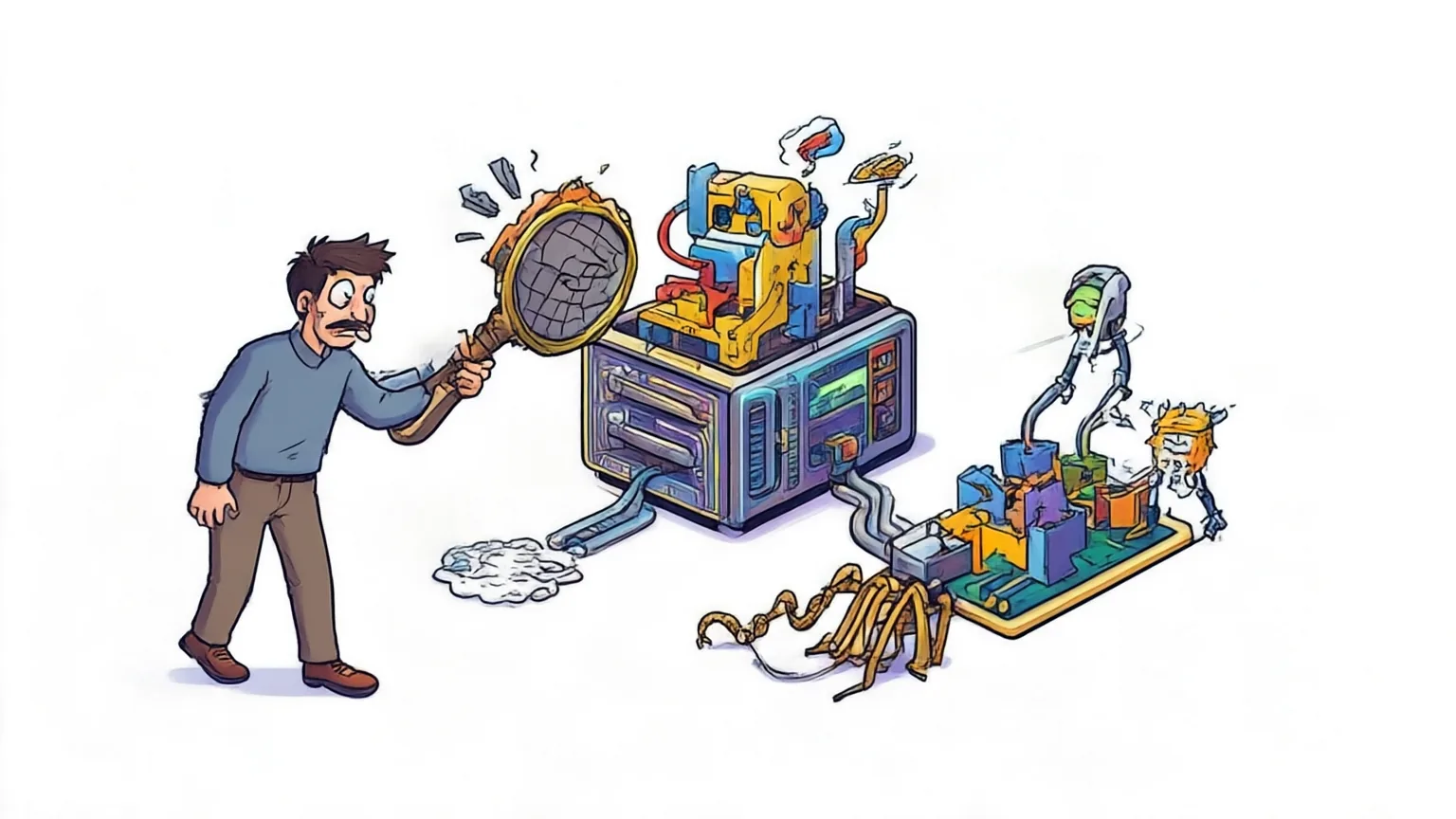
An agent can carry a mistaken assumption through a long task and let it shape later choices. This paper tackles that problem by changing the information the agent uses to decide what comes next. Its model judges decisions and revises the reasoning and actions that follow. The aim is to improve progress while using feedback from actual tool execution.
- Problem: Existing language-based world models often try to predict what tools will return, even when the agent can obtain the real response. Meanwhile, unsupported assumptions and old plans can remain in the agent's history and distort later decisions.
- New idea: The Agent-Editing World Model, or AEWM, models how an agent's reasoning and actions affect later progress. Its Action Judge component sorts decisions into critical, exploratory, or noisy categories, distinguishing their roles in the task. Its State Revision component edits flawed sequences of reasoning and actions that follow an observed history. EditAct is the method that combines these components with actual tool execution and changes the information used for later decisions.
- Simple example: Imagine an agent continuing to plan around an assumption that tool feedback no longer supports. The proposed approach edits the reasoning and planned actions that follow that history, so the next decision uses revised information.
- Evidence: AEWM scores 70.5% macro-F1, a classification measure averaged across categories, on the Action Judge benchmark, beating the strongest frontier baseline by 10.6 points. Across six benchmarks and three underlying agent models, EditAct raises average scores by 3.2 to 6.7 points over the strongest baseline. Further training on verified EditAct runs improves scores over Self-RFT by 2.2 to 2.6 points across three domains, without AEWM guidance during execution.
- Limitation: The abstract reports training and evaluation in search, terminal use, and software engineering. It does not establish whether the gains extend to other kinds of tasks.
- Why it matters: Revising the information behind an agent's decisions can help keep earlier mistakes from steering the rest of a task.
- Paper: Agent-Editing World Model: Rethinking World Modeling for
Trending AI Repositories
Ranking source: GitHub Trending.
strands-agents/harness-sdk
Strands Agents takes a model-driven approach to building AI agents. Its README presents a starting point that needs just a few lines of code.
- What it is: Strands is an open-source Python and TypeScript SDK for building and controlling agent harnesses across models and clouds.
- What it does: Build an agent harness and control it end-to-end. Open-source SDK for production AI agents in Python & TypeScript - any model, any cloud.
- Who it helps: It helps developers building AI agents in Python or TypeScript. They can choose their model and cloud.
- Limitation: The supplied README excerpt does not show setup steps or a working example.
- Repository: strands-agents/harness-sdk
superdesigndev/treg
Treg gives agents a tool catalog through one base URL and one token. It lists 3,000+ endpoints across 60+ providers, without requiring separate provider signups.
- What it is: Treg lets agents access tools from multiple providers through one base URL and token. These tools cover scraping, search engine optimization, enrichment, and image or video generation.
- What it does: OpenRouter for agent tools. Join community here: https://discord.gg/6mQYYfFMAn
- Who it helps: It helps developers whose agents need tools from multiple providers. They can access the catalog through a shared URL and token.
- Limitation: Calls are priced individually, starting at a cent.
- Repository: superdesigndev/treg
leejet/stable-diffusion.cpp
stable-diffusion.cpp is a developer project for working with diffusion models. Its scope includes SD, Flux, Wan, Qwen Image and Z-Image.
- What it is: stable-diffusion.cpp runs diffusion models in pure C/C++, including SD, Flux, Wan, Qwen Image, and Z-Image.
- What it does: Diffusion model(SD,Flux,Wan,Qwen Image,Z-Image,...) inference in pure C/C++
- Who it helps: It helps C and C++ developers working with diffusion models. They can use it to run models from the listed families.
- Limitation: The README explicitly says the project is under active development.
- Repository: leejet/stable-diffusion.cpp
Sources
- 01Hugging Face Papers · Hugging Face Papers
- 02GitHub Trending · GitHub Trending
- 03Introducing Gemini 3.8 Live with Live Avatar · Google DeepMind
- 04Speaker-labeled transcription with WhisperX on SageMaker AI · AWS Machine Learning
- 05Accelerating vision-language models with LFM2.5-VL-DSpark · Hugging Face
- 06Top AI experts badly underestimated how fast the field is moving, study finds · The Decoder
- 07Bring your co-founder, partner, or colleague and get 50% off a second TechCrunch Disrupt 2026 pass · TechCrunch
- 08Training Object Permanence in World Models · arXiv
- 09OmniEcho: Spatial Audio Understanding for Embodied Agents · arXiv
- 10Agent-Editing World Model: Rethinking World Modeling for LLM Agents · arXiv
Join the Idiots
New lab every Sunday. No spam, unsubscribe anytime.