Faster AI training, Meta's glasses and Crusoe's canceled turbine deal
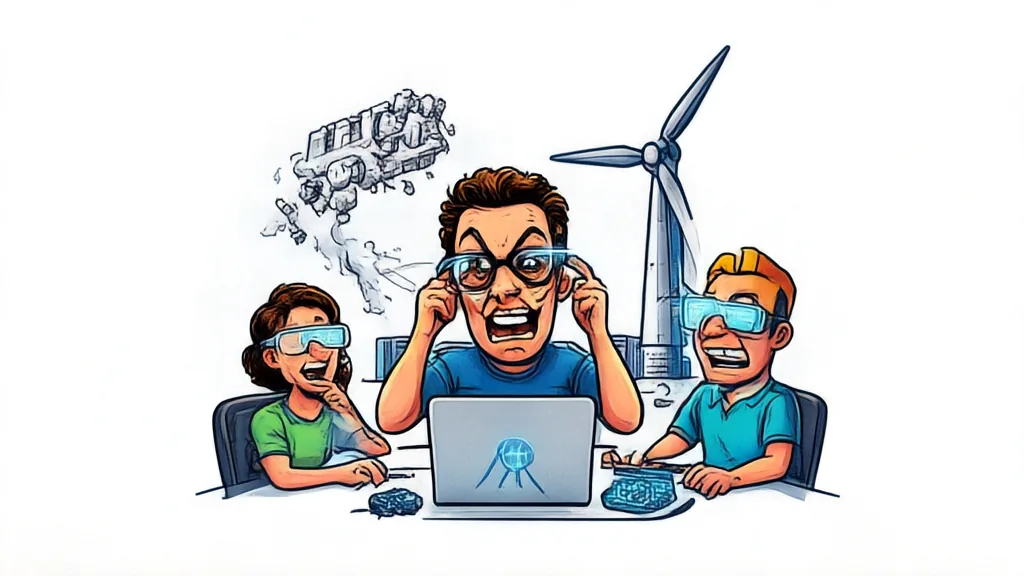
AWS reports 40% more throughput for MoE reinforcement learning. Meta fills Connect with smart glasses. Crusoe abandons a $1.25 billion plan to use Boom turbines at AI data centers.
News
Scaling MoE reinforcement learning on Amazon EKS with EFA and DeepEP with 40% more throughput
AWS Machine Learning presented an architecture that increased aggregate reinforcement learning rollout throughput by 40%. It combines Amazon EKS, Elastic Fabric Adapter and Amazon S3, with DeepEP optimizing communication between experts. The gain applies to large-scale RLHF and GRPO training using Mixture-of-Experts models.
Keeping rollout workers and training accelerators in step
Expert Parallelism routes tokens dynamically between devices. This introduces all-to-all communication across those devices. In asynchronous reinforcement learning, slow training steps stall inference workers. Insufficient rollout throughput leaves training accelerators idle. The training methods also differ in how they assess rewards. PPO typically uses a critic model to estimate value, while GRPO uses relative rewards within a group without a separate critic. (AWS Machine Learning)
thinkidiot take: The reported 40% increase is in rollout throughput, which addresses a stated cause of idle training accelerators. I would first check whether my training run is waiting for rollouts or leaving inference workers stalled. Those are different bottlenecks, and faster rollouts address only one side of that balance. My judgement is that this architecture deserves a trial where rollout supply is the constraint.
At Meta Connect, the company’s smart glasses were everywhere
Meta showed its expanding range of smart glasses at Connect, including an unreleased audio-only pair. Those glasses have six microphones and support music and phone calls without reaching for a phone. They have no camera and no native way to record their surroundings.
Spoken commands collide with ordinary conversation
A Muse integration lets wearers give spoken commands for digital tasks. These include sending emails and reciting to-do lists. The integration is not yet publicly available. During the TechCrunch reporter's demo, Muse mistook conversation with a Meta staffer for commands and talked over her. Meta also has a separate pair of glasses for people with hearing loss. That pair had been in development for about five years and will sell for $150. (TechCrunch)
thinkidiot take: Muse mistook an ordinary conversation for commands and interrupted the reporter during the demo. I would make that distinction the first test before using spoken email commands. Music and phone calls already give the audio-only glasses a concrete purpose. An assistant that talks over its wearer is a poor addition until it can distinguish conversation from instructions.
Crusoe abandons $1.25B plan to use Boom turbines at AI data centers
Crusoe canceled a $1.25 billion agreement to buy 29 Boom Superpower turbines for AI data centers. Each turbine was rated at 42 megawatts, with deliveries originally scheduled to start in 2027. Boom CEO Blake Scholl said the stationary power plants were no longer in Crusoe's near-term plans.
The power business was also meant to fund a passenger jet
Boom's natural gas-fired Superpower turbine shares about 80% of its parts with Symphony, the engine being developed for its Overture passenger jet. Boom raised $300 million last year, largely to commercialize stationary power, with profits intended to fund Overture development. Scholl said Boom would deliver about 250 megawatts of turbines to other sites in 2027. The company is targeting 1 gigawatt in 2028. Crusoe's initial 1.2-gigawatt Abilene data center for Oracle and OpenAI uses grid power, with a gas-turbine plant providing backup only. A separate 900-megawatt Abilene data center that Crusoe is building for Microsoft will use on-site gas turbines. (TechCrunch)
thinkidiot take: The cancellation removes a $1.25 billion purchase agreement from Boom's stationary power plans. I would assess its other delivery plans separately from its ambition to fund Overture with power-business profits. Crusoe's separate Microsoft project still calls for on-site gas turbines, so this cancellation does not establish a rejection of that power source. My judgement is that the funding link to Overture matters more here than any broad verdict on gas-powered computing.
Your uncle’s frozen Mac says it’s infected after viewing a Google ad. Now what?
Malicious Google ads sent Windows and Mac users to fake security warnings directing them to a bogus call center. From August 31 to September 14, Netskope observed malicious-ad clicks from users at 619 customer organizations. It blocked the content and prevented those users from being scammed.
A browser trick makes the whole computer look trapped
Netskope tracked more than 250 Google Ads campaign IDs across at least 284 legitimate publisher sites. The browser locker fills the screen and hides the cursor. It disables common exit keys and degrades browser performance without actually locking the computer. The warnings activate after mouse movement and decrypt in browser memory. They vary depending on whether the device runs Windows or macOS. Google said it was investigating the campaigns but did not indicate that the ads had been fully removed. (Ars Technica)
thinkidiot take: These warnings appeared through ads on at least 284 legitimate publisher sites. I would treat a warning's demand to call for help as part of the suspected scam, even on a familiar site. The hidden cursor and disabled exit keys create the appearance of a locked computer without actually locking it. My judgement is that Google's investigation is an inadequate endpoint without confirmation that the malicious ads are gone.
Pentagon was right to slap Anthropic with a security supply chain risk label, federal court says
A federal appeals court in Washington ruled 2-1 to uphold the Pentagon's classification of Anthropic as a national security supply chain risk. The ruling upholds its exclusion from military contracts. The dispute stems from Anthropic's refusal to permit its technology to be used for autonomous weapons and mass surveillance.
A separate court blocked a parallel designation
Defense Secretary Pete Hegseth argued that Anthropic's safety restrictions posed a risk to military operations. In late August, a federal judge in San Francisco blocked a parallel classification under a different law. That judge called it unlawful retaliation against Anthropic's AI safety stance. Anthropic says the designation has cost it billions and is hurting its planned IPO. The company rejects the appeals ruling and is weighing next steps. The Decoder reports that US intelligence agencies are heavy users of Anthropic's AI models. (The Decoder)
thinkidiot take: The 2-1 ruling upholds Anthropic's exclusion from military contracts over a dispute about permitted uses. I would put those use restrictions at the center of any decision to build with its models for military work. The reported heavy use by US intelligence agencies makes the disagreement over acceptable uses especially consequential. My judgement is that refusing autonomous weapons and mass surveillance is a defensible boundary, even at the financial cost Anthropic reports.
Trending AI Papers
Ranking source: Hugging Face Papers for 2026-09-26.
Your Transformer Can Hold Two Thoughts at Once: Evidence of Linear Superposition in LLMs
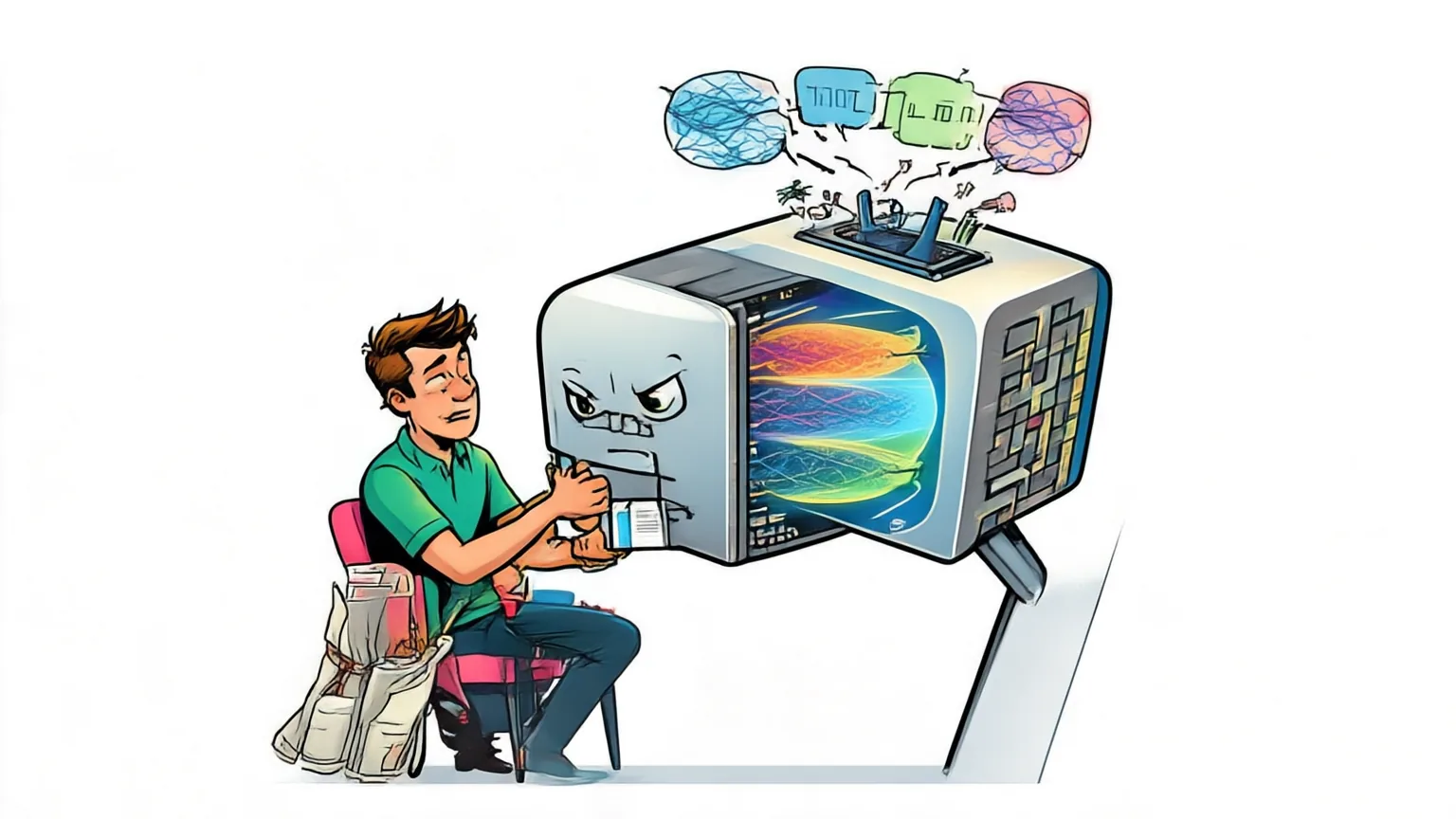
This paper asks whether a language model can handle two text streams together in one calculation. The researchers mix the inputs and examine how the model predicts what comes next. They find that the predictions retain information from both streams. They also present a way to separate that information into two readable continuations.
- Problem: Mixing two text inputs does not automatically produce two separately readable answers. The paper studies whether the combined prediction preserves each stream's contribution and how to turn those contributions into separate continuations.
- New idea: The researchers propose that blending text inputs produces a corresponding blend of predictions for the next token, a piece of text the model can generate. They call this the Superposition Linearity Hypothesis. This superposition tends to diminish as pretraining progresses. Lightweight fine-tuning, an additional round of training, makes the blended prediction closer to the average of the separate predictions. Guided decoding, a procedure for choosing the next text pieces, then separates the mixture into two continuations.
- Simple example: Think of two voices mixed into one recording. The paper's approach is like keeping enough of each voice in the mixture to follow both conversations separately.
- Evidence: The researchers observe the blending behavior before pretraining and find that it tends to weaken as pretraining proceeds. Lightweight fine-tuning substantially reduces the gap between the mixed prediction and the average of the separate predictions. Their decoding procedure produces two coherent continuations from a single forward pass, one run through the model.
- Limitation: The abstract gives no numerical measure of the remaining prediction error or any measured speed gain from producing two continuations together.
- Why it matters: This work shows a way to use one model calculation to advance two separate text continuations.
- Paper: Your Transformer Can Hold Two Thoughts at Once: Evidence of
WanPE: Towards Cinematic Prompt Enhancement for Modern Text-to-Video Generation
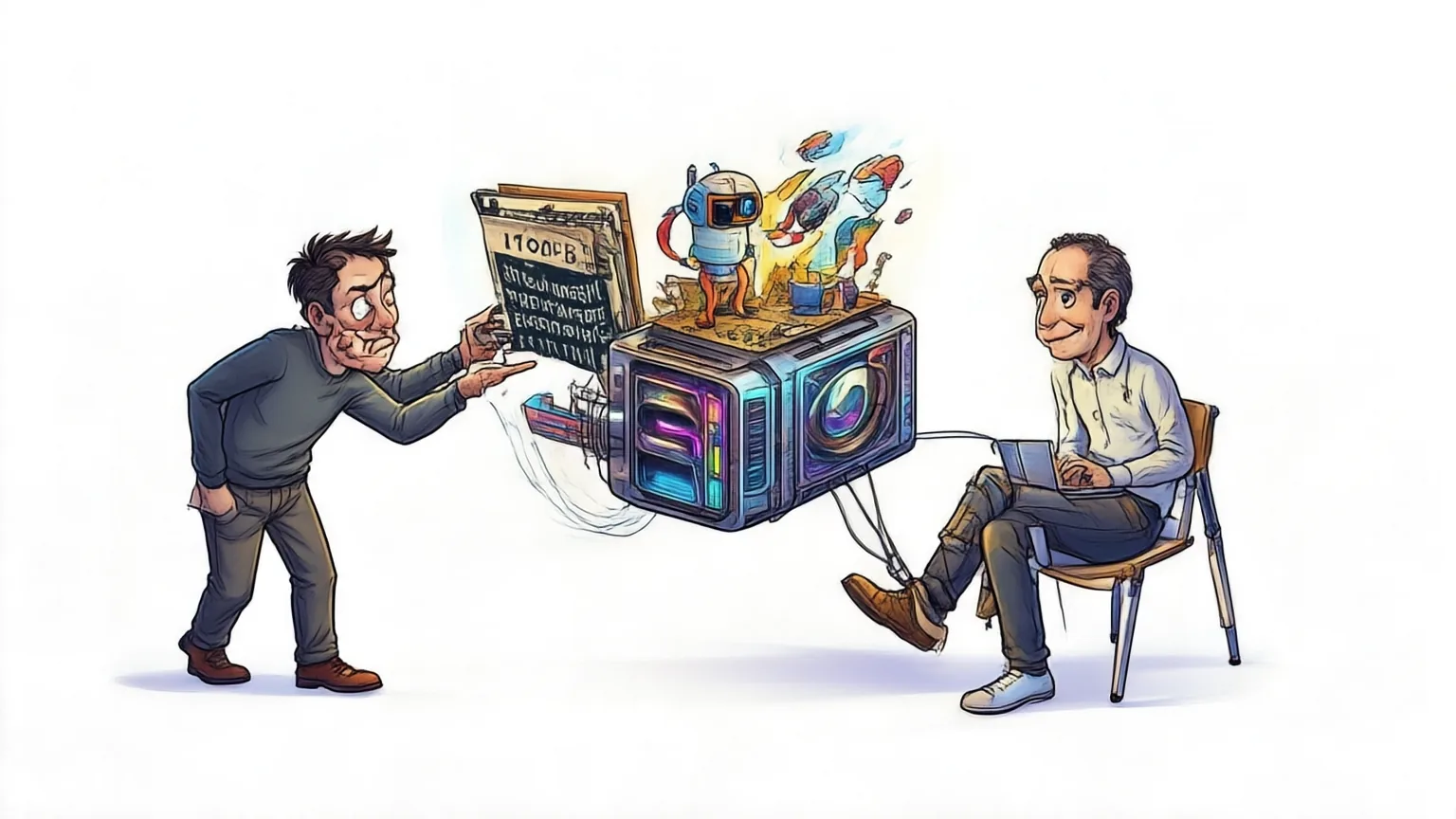
WanPE turns a user's video request into a more detailed filming plan. It works out how shots should unfold before a video generator makes the result. The aim is to coordinate action, camera movement, lighting and sound while keeping the user's requirements intact. The paper tests whether people prefer videos made with these expanded instructions.
- Problem: Longer videos need instructions that coordinate several shots and keep the user's requirements consistent throughout. In the reported tests, giving the generator the user's original prompt produced less preferred results than using WanPE's expanded plan.
- New idea: WanPE is a prompt enhancement model, a system that expands a user's request into detailed instructions for a video generator. It has 397B parameters, the adjustable values learned during training, and was trained on 1.05M real-world videos. It uses reverse construction, deriving plans from videos, to learn how to organize individual shots. It also uses a training method called Semantic-Consistency GRPO to keep those plans faithful to the user's requirements across shots and over time.
- Simple example: It is like handing a director a brief description and receiving a shot-by-shot plan that specifies the action, camera movement, lighting and sound while preserving the original request.
- Evidence: With Wan3.0, WanPE-397B improved human preference over raw prompts by 10.66-18.84 points for videos lasting 5-15 seconds and by 50.86 points at 30 seconds. The evaluation included approximately 11K blind pairwise assessments. WanPE led all evaluated commercial offerings at 5-15 seconds and remained competitive with Seedance 2.5 at 30 seconds. Tests comparing components also favored reverse construction over forward rewriting.
- Limitation: The reported gains over raw prompts come from use with Wan3.0, so the abstract does not establish the same gains with other video generators. It also gives no processing-time or cost results for the 397B-parameter model.
- Why it matters: Better planning of the text instructions can improve how people judge generated videos, especially longer ones.
- Paper: WanPE: Towards Cinematic Prompt Enhancement for Modern
Parts-of-Speech as Emergent Categories in SAE Latent Space
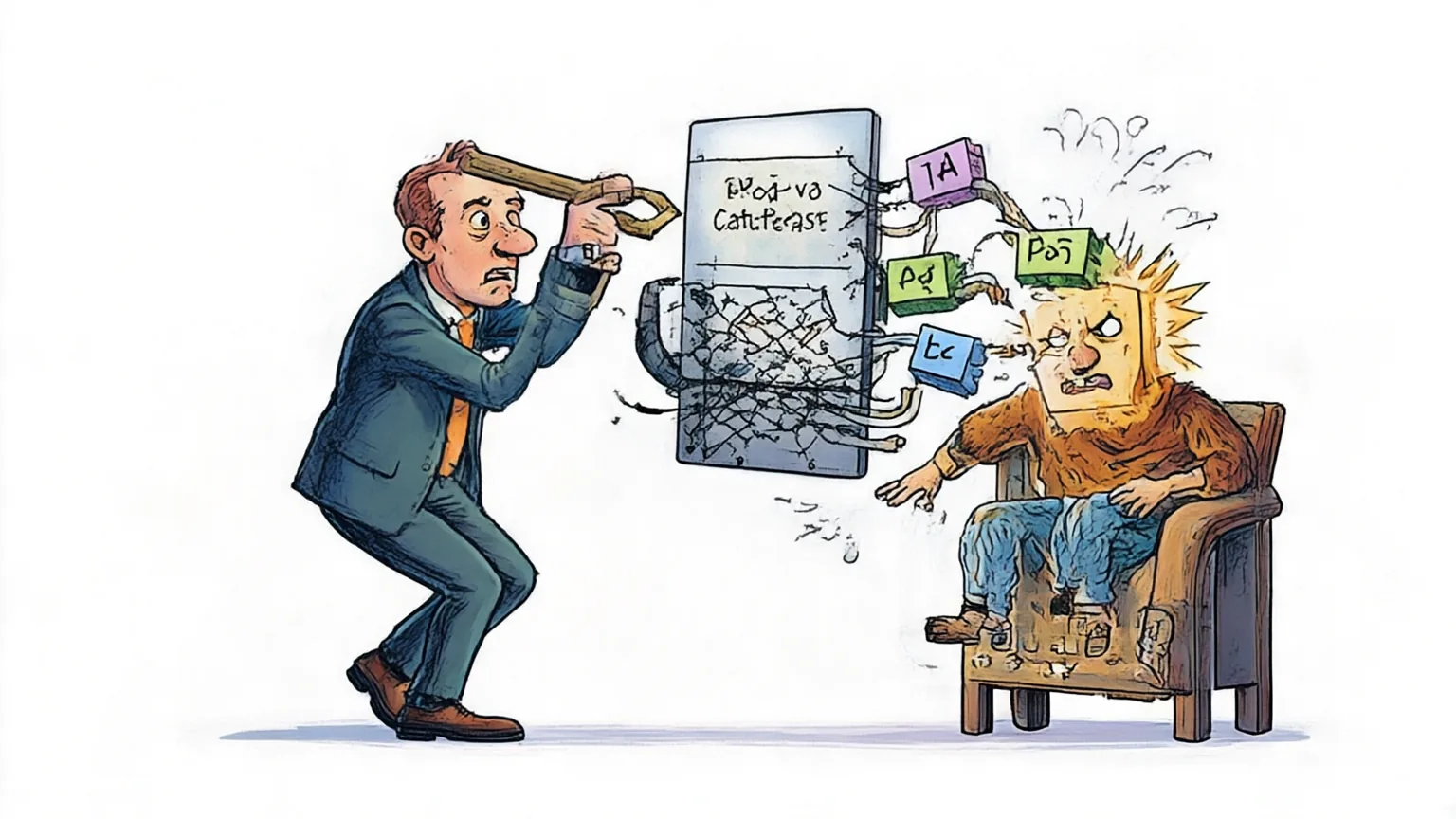
This paper examines how grammar appears inside tools used to inspect language models. It asks whether each grammatical category has its own internal signal or depends on several signals together. The researchers find that grammatical categories are readable from these signals, but rarely fit a simple one-signal-per-category picture.
- Problem: Sparse autoencoders expose internal language-model signals, but what those signals represent linguistically remains unclear. Reading each signal as a separate grammatical label misses the possibility that several signals jointly support a category.
- New idea: A sparse autoencoder is a tool that represents language-model activity using a limited set of active features, also called latents. The researchers study parts of speech, categories that describe words' grammatical roles. They test whether those categories can be identified from individual features or require groups of features. Their findings support small groups whose membership differs by category and can overlap with groups for related categories.
- Simple example: Think of recognizing a tune from several notes together. No single note needs to identify the tune, and different tunes can share some notes. The paper finds a similar pattern in the signals associated with grammatical categories.
- Evidence: Parts of speech were highly recoverable from the feature activity, and this result could not be explained solely by memorizing words. Small feature groups supported the categories and remained stable on data kept out of the analysis used to identify them. Related categories shared some features, and the groups varied substantially across grammatical labels. The abstract reports no numerical scores.
- Limitation: The study uses parts of speech as its test case, so the abstract does not establish whether other kinds of linguistic structure follow the same pattern.
- Why it matters: The findings suggest that understanding a model's grammar requires examining groups of internal signals together.
- Paper: Parts-of-Speech as Emergent Categories in SAE Latent Space
Trending AI Repositories
Ranking source: GitHub Trending.
paperclipai/paperclip
Paperclip is a TypeScript project for people working with AI agents. Its README points readers to a quickstart and dedicated documentation, giving them a place to begin.
- What it is: Paperclip is an open-source application for managing AI agents at work.
- What it does: The open-source app everyone uses to manage agents at work
- Who it helps: It is aimed at people who use AI agents at work. They can follow the quickstart or consult the docs to get started.
- Limitation: The supplied README excerpt does not explain setup requirements or which agents it supports.
- Repository: paperclipai/paperclip
androoAGI/starnet
StarNet is a JavaScript application that presents agent activity through a pixel-art interface. The README links to a downloadable release and lists Windows and macOS support.
- What it is: StarNet is a local-first desktop application where users supply their own key, organize AI agents in a pixel-art space station and watch their activity.
- What it does: A living pixel-art station where real AI agents do real work. Local-first desktop agent harness - bring your own key, watch your crew actually run.
- Who it helps: It is for people who want to watch their AI agents work. Windows and macOS users can find a release download and installation instructions in the README.
- Limitation: You need to supply your own key.
- Repository: androoAGI/starnet
shy3130/tick-stock-panel
TSP is a Python project for quantitative work on A-share stocks. Its README names Polars as the engine and identifies the project as MIT-licensed.
- What it is: TSP is a self-hosted tool for screening, monitoring and backtesting A-share stocks, with LLM-assisted strategy customization, stock analysis and support for third-party data sources.
- What it does: TSP自托管、零运维的 A 股「选股 + 监控 + 回测」量化工作台 | LLM能力驱使策略定制+个股分析+复盘 | 自由接入第三方数据源与个性化扩展数据 | 个人开源
- Who it helps: It is aimed at people developing and reviewing A-share trading strategies. They can use LLM capabilities to customize strategies and analyze individual stocks.
- Limitation: The supplied excerpt gives no evidence about data quality or backtest accuracy.
- Repository: shy3130/tick-stock-panel
Sources
- 01Hugging Face Papers · Hugging Face Papers
- 02GitHub Trending · GitHub Trending
- 03Scaling MoE reinforcement learning on Amazon EKS with EFA and DeepEP with 40% more throughput · AWS Machine Learning
- 04At Meta Connect, the company’s smart glasses were everywhere · TechCrunch
- 05Crusoe abandons $1.25B plan to use Boom turbines at AI data centers · TechCrunch
- 06Your uncle’s frozen Mac says it’s infected after viewing a Google ad. Now what? · Ars Technica
- 07Pentagon was right to slap Anthropic with a security supply chain risk label, federal court says · The Decoder
- 08Your Transformer Can Hold Two Thoughts at Once: Evidence of Linear Superposition in LLMs · arXiv
- 09WanPE: Towards Cinematic Prompt Enhancement for Modern Text-to-Video Generation · arXiv
- 10Parts-of-Speech as Emergent Categories in SAE Latent Space · arXiv
Join the Idiots
New lab every Sunday. No spam, unsubscribe anytime.