Robot simulations scale up, HEMA connects its knowledge, and Google Beam expands
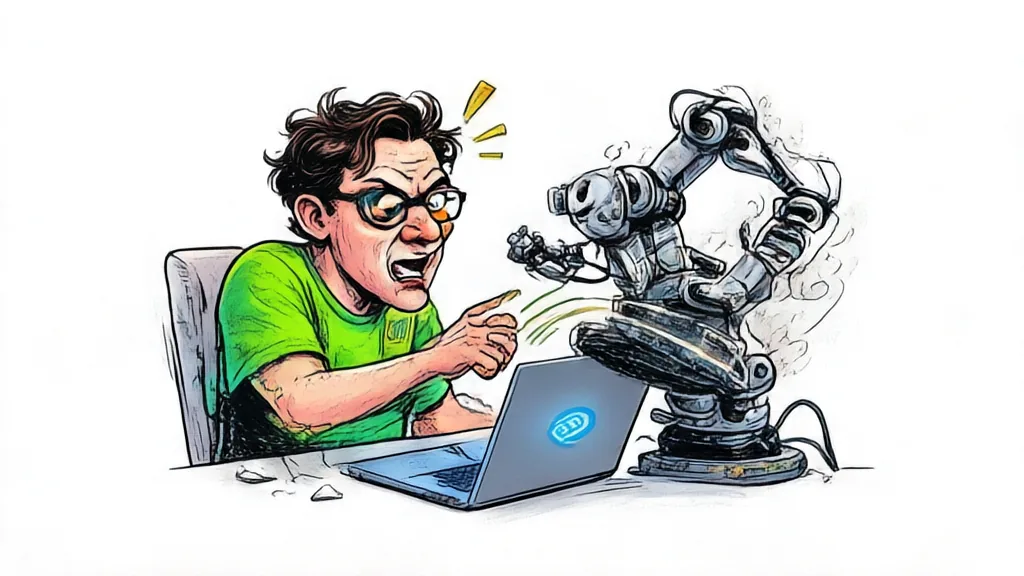
NVIDIA Warp and MjWarp underpin a robotics simulation tutorial. HEMA uses MCP and Amazon Bedrock to bring internal answers into everyday tools. Google Beam expands its regions, partners, and customers.
News
How to Use NVIDIA Warp and MjWarp to Accelerate Robotics Simulation and Learning Workflows
A Hugging Face tutorial shows how to scale an SO-101 follower arm simulation to as many as 2,048 parallel MJWarp environments. MJWarp implements MuJoCo physics in NVIDIA Warp. The walkthrough covers preparing and scaling the simulation environment, without training a policy.
Python kernels with a path into existing learning tools
NVIDIA Warp compiles statically typed Python kernels. Those kernels can run on a CPU or through CUDA on NVIDIA GPUs. After the first launch, Warp caches the native module. Warp also supports differentiable kernels. It interoperates with PyTorch and JAX. (Hugging Face)
thinkidiot take: The tutorial reaches 2,048 parallel environments without training a policy. I would use it to work through simulation setup before starting the learning stage. That separation makes the walkthrough useful as an infrastructure exercise. I value a clear simulation boundary more than a learning demonstration that leaves the setup unexplained.
From portal-hopping to instant answers: HEMA’s journey with MCP and Amazon Bedrock
HEMA, a 100-year-old Dutch retailer with over 750 stores, built an internal AI assistant called HAL using MCP and Amazon Bedrock AgentCore. Its developers can now get answers inside an IDE or chat window. According to the article, questions that previously required visits to three or four portals now take seconds to answer.
A service catalog supplies the connections behind the answers
HEMA’s service catalog maps people to teams and teams to services. It also connects services to APIs and business capabilities. Model Context Protocol makes that knowledge accessible through HAL chat, Kiro, Claude, and other agents. HAL uses Microsoft Entra ID for security. No AWS credentials sit on the client. HAL currently provides a read-only knowledge layer, with an action layer planned next. (AWS Machine Learning)
thinkidiot take: HEMA reports replacing visits to three or four portals with answers delivered in seconds. I would start by asking which team owns a service and which APIs belong to it, using the relationships already in the catalog. HAL’s read-only scope puts knowledge retrieval ahead of taking actions. That is a sensible order for an internal assistant.
Google Beam expands with new regions, partners, and customers
Google is expanding Beam to five new countries. Units are shipping to customers in the U.S., Canada, U.K., France, Germany, and Japan. Google says 18 channel partners support deployment and support, and it is partnering with Industrious to extend the network.
An internal study puts follow-up meetings in focus
HP Dimension with Google Beam integrates with Google Meet and Zoom. Google reports results from an eight-week internal study. Teams felt 50% more connected. They also found it 33% easier to make feedback understood. The study reported that teams needed 21% fewer follow-up meetings. Bain and Company tested HP Dimension with Google Beam for campus recruiting and candidate interviews. (Google)
thinkidiot take: Google’s internal study reported 21% fewer follow-up meetings over eight weeks. I would make that the first result to test in a deployment, alongside whether feedback was understood. Fewer follow-ups would matter more to my evaluation than the reported feeling of connection. The internal study gives me a concrete test target, but I would base a rollout decision on results from the team using it.
Everything new coming to Meta’s AI agent Muse
Meta CEO Mark Zuckerberg announced additions to Muse at the company’s Connect event in Menlo Park on Wednesday. Meta introduced Muse Realtime Avatar, which lets users video chat with a personalized digital avatar and give it tasks. The company also announced that it is bringing Muse computer work to Mac.
Glasses bring task requests into what users see
Muse launched in early September and runs on Muse Spark, Meta’s multimodal model built for agentic work. It connects to apps and services, including email and calendars, to handle everyday tasks. Meta says its planned smart glasses integration will use a wake word. The announced uses include workouts and meal logging. They also include appointment booking and purchases of products users see. Meta says Muse on smart glasses should arrive in the coming months, without an exact launch date. (TechCrunch)
thinkidiot take: Meta’s planned glasses integration includes booking appointments and buying products users see. I would test appointment booking first because it is a concrete task tied to Muse’s calendar connections. I would judge the integration by task completion before giving weight to the personalized avatar. For my use, getting an appointment booked is the stronger reason to use an assistant.
Two years of OpenAI Academy
OpenAI is marking two years of OpenAI Academy. The company says it is bringing AI skills to more communities. The supplied announcement gives no figures for that expansion.
The communities and access details are unspecified
The supplied material establishes only the anniversary and planned wider community reach, without specifying communities, locations, participation details, skills, teaching format, or a timetable. (OpenAI)
thinkidiot take: OpenAI is marking two years of Academy while announcing a wider community reach. I would want the participation details before deciding how to use it for learning. The supplied announcement offers no concrete next step for a learner. I give more weight to an accessible learning opportunity than an anniversary, so this announcement falls short of what I need to act.
Trending AI Papers
Ranking source: Hugging Face Papers for 2026-09-24.
HappyWorld-Bench
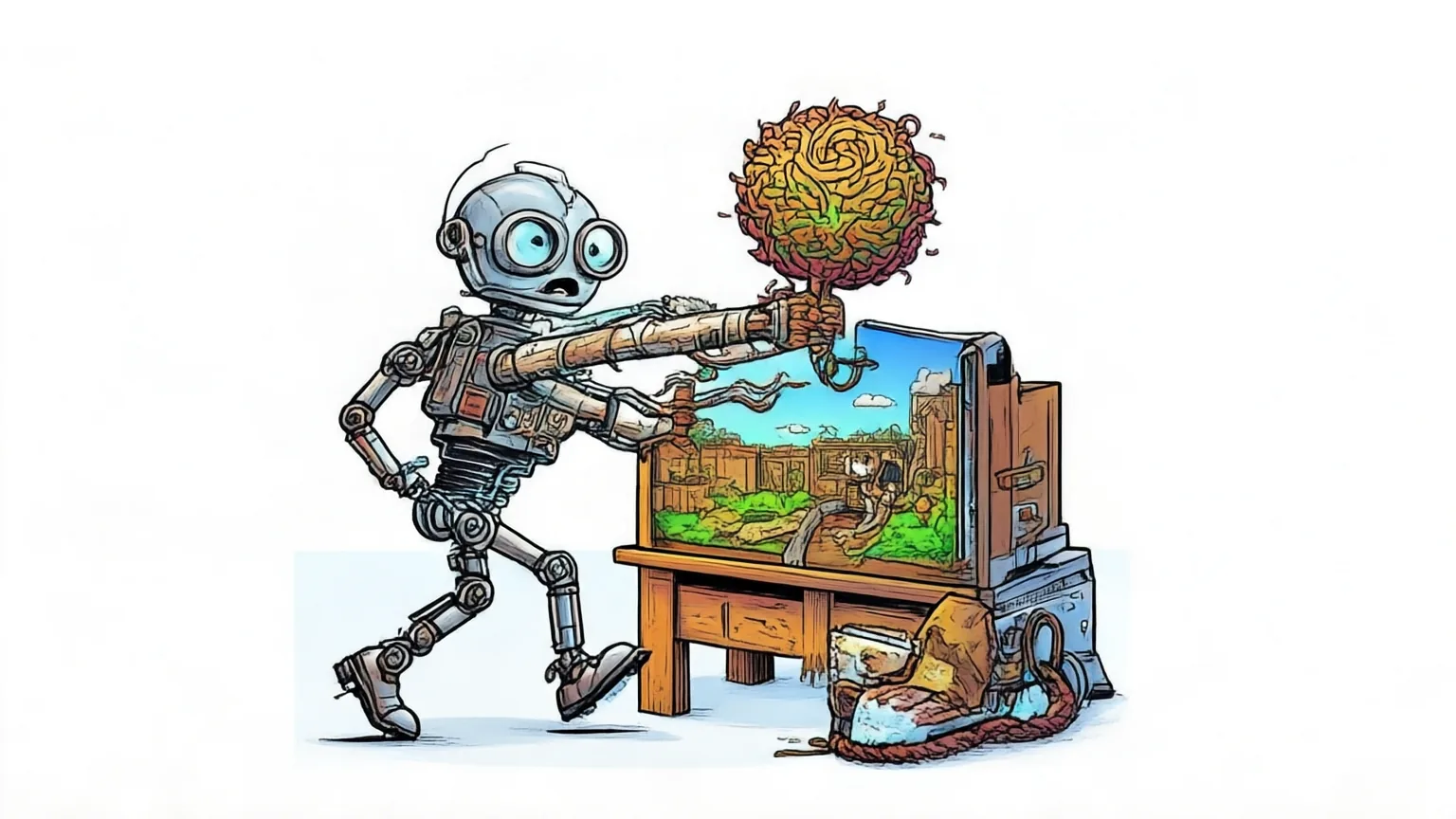
A convincing picture does not show whether a generated world will behave sensibly when someone uses it. HappyWorld-Bench puts these worlds through tests that involve exploring them, making changes, and taking actions. It checks whether they remember what happened and respond correctly. The aim is to judge how well a world works as well as how it looks.
- Problem: Generated worlds can look good while losing track of earlier events or handling changes incorrectly. Judging appearance alone misses failures that emerge when someone returns to a place or carries out a sequence of actions.
- New idea: The benchmark organizes its tests around six abilities, ranging from creating a world to keeping its different parts working together. It tests video generation, spatial systems that arrange and edit scenes, and embodied systems in which agents act within an environment. People compare pairs of outputs, and those choices produce relative model rankings called Elo ratings. Automated checks also measure whether actions produce the expected behavior.
- Simple example: Imagine moving a chair in a virtual room, leaving, and coming back. A useful test asks whether the chair stayed where you put it, not just whether the room still looks convincing.
- Evidence: The evaluation covers 14 video models, 9 spatial systems, and 8 embodied candidates. Spatial systems reach at best 70.14% placement accuracy and 73.33% edit execution. Video models lose consistency over longer sequences and return visits, while embodied models struggle to retain state through multiple actions and follow changed conditions or physical rules.
- Limitation: The abstract gives numerical performance results for spatial systems but only qualitative findings for video and embodied systems, leaving the size of those reliability gaps unclear.
- Why it matters: A generated world needs to remember changes and respond correctly if people are going to interact with it.
- Paper: HappyWorld-Bench
The Past Frames the Future: Memory for Autoregressive Video Generation

A video generator can lose details from earlier scenes while continuing the same story. This paper reviews ways to keep those details available as a video grows. It brings existing memory research into a shared structure so researchers can compare what each method preserves and how it works. The goal is to help future video systems carry the past forward more reliably.
- Problem: Systems that generate video a piece at a time cannot keep all earlier footage immediately available because storage and computing resources are limited. Details about identities, changing conditions, and the effects of earlier actions can disappear from view while they still matter for later scenes.
- New idea: The review defines memory as information from earlier video that can still affect later generation after its original source is no longer directly available. It organizes existing work around what holds that information, what needs remembering, and how memories are stored, retrieved, and revised. It also examines how systems learn to use memory while continuing their own generated sequences. A final perspective covers tests that distinguish actual use of history from merely plausible output.
- Simple example: Imagine making a film with only the latest footage on hand. A continuity notebook could remind you that a character moved an object earlier, even when the scene showing the move is no longer available.
- Evidence: The reported contribution is a review organized around five perspectives: memory forms, functions, operations, learning, and evaluation. The abstract reports no experimental scores or measured gains from a new video generator.
- Limitation: The review leaves reliable memory updates, designs that work within resource limits, learning from a system's own generated sequences, and shared evaluation methods as open problems.
- Why it matters: Remembering earlier events helps a generated video preserve identities and consequences as it continues.
- Paper: The Past Frames the Future: Memory for Autoregressive Video
SpeakerMem-R1: Speaker-Centered Dual-Track Memory for Multi-Party Dialogue
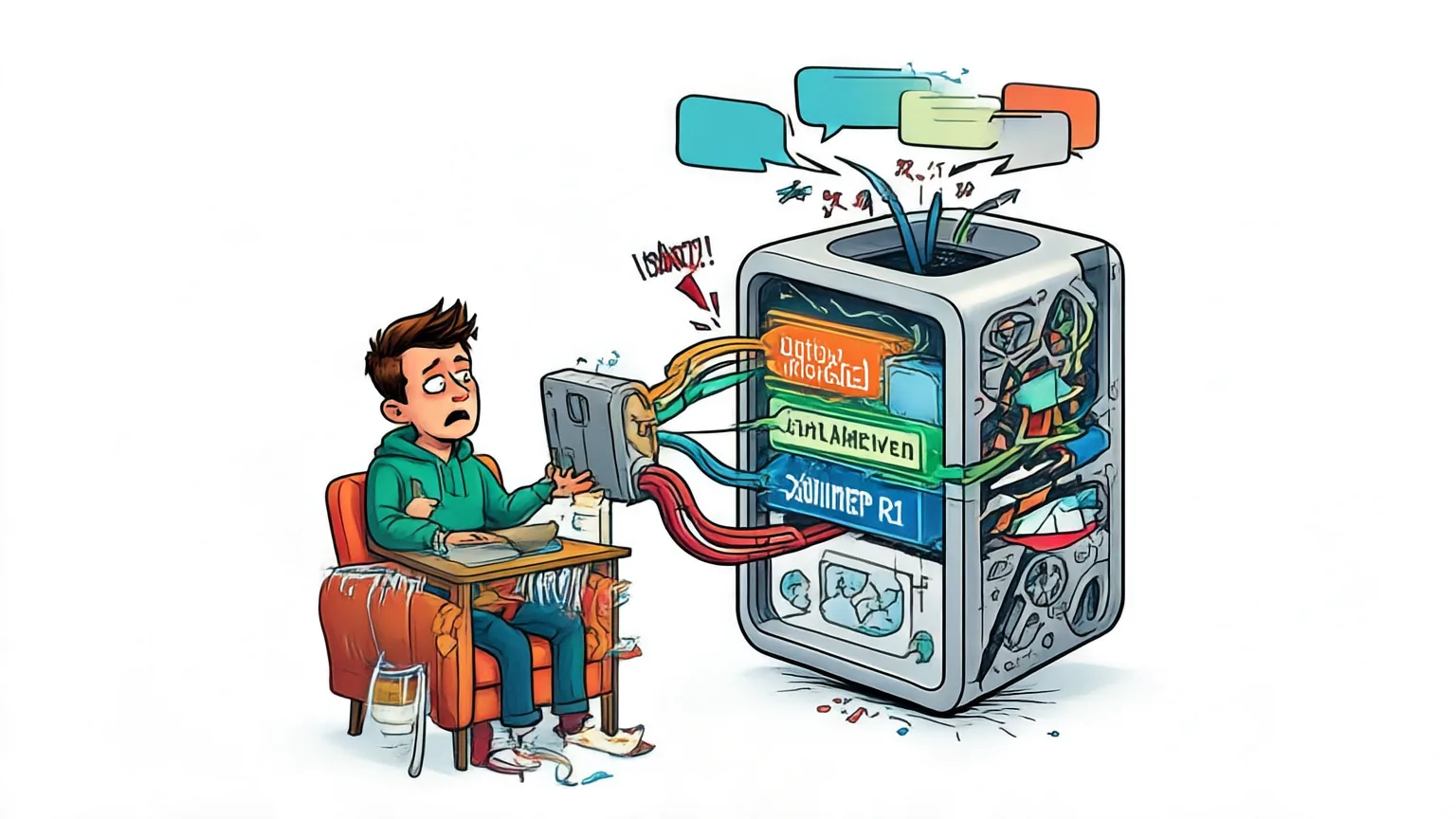
Remembering a group conversation takes more than finding a relevant old message. An assistant also needs to keep track of the speaker, the people being discussed, and what has changed since then. SpeakerMem-R1 keeps both the original messages and organized records of what they establish. It uses them together to answer questions about past conversations.
- Problem: Existing conversation memory systems can lose the links between people and groups or fail to combine clues scattered across different exchanges. Retrieving relevant text alone does not establish who said something, whom it concerns, or which information is still current.
- New idea: SpeakerMem-R1 keeps two kinds of memory: exact messages labeled by speaker and derived states, meaning organized records of what those messages establish. These records provide separate views of individuals and groups. When answering a question, the system connects evidence from both kinds of memory by who or what it concerns, the event, and the time. A trained component called Writer-R1 builds the organized records, with training aimed at reducing mistakes about speakers and later changes.
- Simple example: Think of keeping both a group chat transcript and notes about each person's situation and the group's shared plans. When a plan changes, the notes help identify the current arrangement, while the transcript lets you check who actually proposed it.
- Evidence: SpeakerMem-R1 reports binary accuracies of 47.9% on GroupMemBench, 69.2% on SocialMemBench, and 61.9% on EverMemBench. A separate public EverMemBench leaderboard result is 62.33%, which the abstract identifies as the best reported result among the latest frameworks. It scores 70.85% across all 1,986 LoCoMo questions. In a controlled evaluation of 305 questions, reinforcement learning raises the Writer's mean accuracy from 57.38% to 68.20%.
- Limitation: The LoCoMo result tests two-person conversations, so it does not directly establish performance in larger groups. Although local deployment is a training goal, the abstract gives no measurements of its computing requirements.
- Why it matters: Conversation memory is more useful when an assistant can tell whose information it remembers and whether it has changed.
- Paper: SpeakerMem-R1: Speaker-Centered Dual-Track Memory for
Trending AI Repositories
Ranking source: GitHub Trending.
vectorize-io/hindsight
Hindsight is a Python project focused on memory for agents. Its README links to a paper, benchmarks and a cookbook, giving readers several ways to examine the work.
- What it is: Hindsight focuses on memory for agents, with documentation, integrations and a hosted offering called Hindsight Cloud.
- What it does: Hindsight: Agent Memory That Learns
- Who it helps: Developers working on agent memory can use the linked documentation and cookbook to explore the project. Readers evaluating it can follow the paper and benchmark links.
- Limitation: The supplied excerpt links to benchmarks but includes no results.
- Repository: vectorize-io/hindsight
NVIDIA/Model-Optimizer
NVIDIA Model Optimizer is a Python library for preparing deep learning models for deployment. Its support for several downstream frameworks makes it relevant to readers working across deployment tools.
- What it is: The library offers model optimization techniques to prepare models for downstream deployment frameworks, including TensorRT-LLM, TensorRT and vLLM. The README links to documentation and the nvidia-modelopt package on PyPI.
- What it does: A unified library of SOTA model optimization techniques like quantization, distillation, pruning, neural architecture search, speculative decoding, etc. It compresses deep learning models for downstream deployment frameworks like TensorRT-LLM, TensorRT, vLLM, etc. to optimize inference speed.
- Who it helps: Developers deploying deep learning models can use it to prepare models for their downstream framework. Those targeting TensorRT-LLM, TensorRT or vLLM can consult the linked documentation.
- Limitation: The supplied excerpt gives no measured speed gains or compatibility requirements.
- Repository: NVIDIA/Model-Optimizer
HKUDS/CLI-Anything
CLI-Anything is a Python project focused on software use by agents. It points readers to CLI-Hub as a place to explore alongside the repository.
- What it is: The HKUDS project aims to make software accessible to agents and links to CLI-Hub at clianything.cc.
- What it does: "CLI-Anything: Making ALL Software Agent-Native", CLI-Hub: https://clianything.cc/
- Who it helps: Developers exploring software access for agents are the audience for its stated aim. They can follow the CLI-Hub link, though the excerpt gives no usage examples.
- Limitation: The supplied excerpt does not establish which applications are supported or how the project works.
- Repository: HKUDS/CLI-Anything
Sources
- 01Hugging Face Papers · Hugging Face Papers
- 02GitHub Trending · GitHub Trending
- 03How to Use NVIDIA Warp and MjWarp to Accelerate Robotics Simulation and Learning Workflows · Hugging Face
- 04From portal-hopping to instant answers: HEMA’s journey with MCP and Amazon Bedrock · AWS Machine Learning
- 05Google Beam expands with new regions, partners, and customers · Google
- 06Everything new coming to Meta’s AI agent Muse · TechCrunch
- 07Two years of OpenAI Academy · OpenAI
- 08HappyWorld-Bench · arXiv
- 09The Past Frames the Future: Memory for Autoregressive Video Generation · arXiv
- 10SpeakerMem-R1: Speaker-Centered Dual-Track Memory for Multi-Party Dialogue · arXiv
Join the Idiots
New lab every Sunday. No spam, unsubscribe anytime.