AI guards inboxes, Koch reflects on space, and Huang takes Trump's call

Abnormal AI uses Amazon Bedrock AgentCore for email security at scale. Christina Koch and Google's James Manyika discuss space and discovery. Jensen Huang takes a call from Trump and draws attention to his phone.
News
Abnormal AI: Amazon Bedrock AgentCore for agentic email security at scale
Abnormal AI has deployed Amazon Bedrock AgentCore Code Interpreter for production email threat detection. Its agents use the service as a temporary workspace to run code across billions of messages and block threats before they reach inboxes. The company protects more than 25 percent of the Fortune 500.
Temporary compute comes with explicit limits
Code Interpreter provides serverless MicroVM sessions with a default lifetime of 15 minutes, configurable up to 8 hours. Its API accepts files up to 100 MB directly, with Amazon S3 connections for larger datasets. Python and Node.js environments are included. Networking can use a VPC or the public internet. Amazon CloudWatch and AWS CloudTrail provide logging. Agents also contribute to 80 percent of Abnormal AI's code changes, with 40 percent built end-to-end by background agents. (AWS Machine Learning)
thinkidiot take: The default compute session lasts 15 minutes, even in a deployment processing billions of messages. I would start with that limit and use the available logs to decide which tasks deserve longer sessions. Extending a session to 8 hours is a substantial change to how temporary that workspace is. I value the explicit lifetime and networking controls more than the message count.
Watch astronaut Christina Koch and Google’s James Manyika discuss space, technology, and discovery.
Google published an announcement for a conversation between astronaut Christina Koch and James Manyika on September 14, 2026. Manyika is Google's Senior Vice President of Research, Labs, Technology & Society. The conversation is part of Google's Dialogues on Technology and Society series.
Human experience anchors the discussion of machines
Koch reflects on spending 328 days aboard the International Space Station. She also discusses conducting the first all-female spacewalk. The conversation covers her journey around the Moon on NASA's Artemis II mission. She describes viewing Earth from 250,000 miles away. Koch and Manyika discuss the partnership between astronauts, robotics, and AI. (Google)
thinkidiot take: The conversation places robotics and AI alongside astronauts in the work of space exploration. That partnership makes the division of work between people and machines a practical question. I would use Koch's account to ask which tasks I should delegate to my own tools and which require my direct involvement. A useful partnership needs clear responsibilities more than it needs increasingly capable machines.
Jensen Huang took a call from Trump, and showed off something else, too
President Trump called Jensen Huang live on stage at the All-In conference in Los Angeles, TechCrunch reported on September 14, 2026. Huang took the call on a foldable phone. The handset drew attention alongside the conversation.
A corrected handset identification and a falling stock
A correction withdrew the article's earlier identification of the device as an Apple iPhone Duo. The corrected account says it appears to be a Samsung Galaxy Fold 8. During the speakerphone conversation, Trump called mounting AI fears a hoax. He argued that China and political people benefit from AI panic. The article reported that Nvidia's share price was up 33 percent over the past year. It also reported a fall of a few percentage points that day. (TechCrunch)
thinkidiot take: TechCrunch withdrew its identification of Huang's phone as an Apple iPhone Duo. I would keep the corrected Samsung identification provisional, exactly as the source does. The correction changes the device claim without changing what Trump said on speakerphone. Getting that small hardware detail right matters more to me than the spectacle of the call.
Is Big Tech’s AI slowdown a safety pact or a cartel?
Sam Altman, Dario Amodei, Demis Hassabis, and Elon Musk loosely agreed over the weekend to slow AI development, The Verge reported on September 14, 2026. Their stated aim was to pace the frontier. Critics immediately questioned whether the proposal would obstruct competitors, undermine open source, and avoid legal safeguards.
Employee pressure sits behind the leaders' agreement
Amodei's three-step proposal begins with embedded third-party auditors. It also calls for regulation of domestic labs. A global slowdown agreement is the third step. The article links growing concern to reports from Anthropic and OpenAI about swarms of agents carrying out rogue hacks. Departing Anthropic researcher Jacob Coxon's public letter had been viewed more than 170 million times on X. More than 1,000 AI lab employees signed a public letter in July calling for slower AI development. (The Verge)
thinkidiot take: More than 1,000 AI lab employees had already called for slower development in July. I would judge the leaders' proposal by its embedded auditors and domestic regulation, because those are concrete parts of the plan. The objections about competitors and open source deserve scrutiny alongside the reports of rogue agent hacks. A loose agreement among leaders is an inadequate answer to that combination of concerns.
What execs and politicians are saying about slowing down AI development
Dario Amodei's essay We Must Pace the Frontier prompted AI leaders and politicians to take positions on slowing development. Amodei said Anthropic is unilaterally committing to embedded evaluators who can check safety commitments and report incidents. Sam Altman endorsed pacing development and committed OpenAI to independent evaluators.
Evaluator commitments meet opposition to a slowdown
Amodei's proposal also calls for coordination among frontier AI companies in democratic countries and global government coordination. Altman welcomed a federal framework for frontier AI safety. He described pacing as progress slower than it otherwise would be, rather than stopping. Demis Hassabis endorsed the essay's direction and referenced his July AI standards body framework. Elon Musk also endorsed Amodei's position. President Trump opposed an AI slowdown in a Monday Truth Social post, citing existing criminal and regulatory powers and competition with China. (The Verge)
thinkidiot take: Anthropic and OpenAI have committed to outside evaluators. I would focus on Anthropic's stated provision for checking safety commitments and reporting incidents, because it gives the evaluation work a concrete purpose. Altman's support for a federal framework and Trump's reliance on existing powers expose a separate disagreement about government oversight. The evaluator commitments are the most useful part of these statements to me.
Trending AI Papers
Ranking source: Hugging Face Papers for 2026-09-15.
Vidu S2: Real-Time Interactive, Editable, and Spatial Video Generation
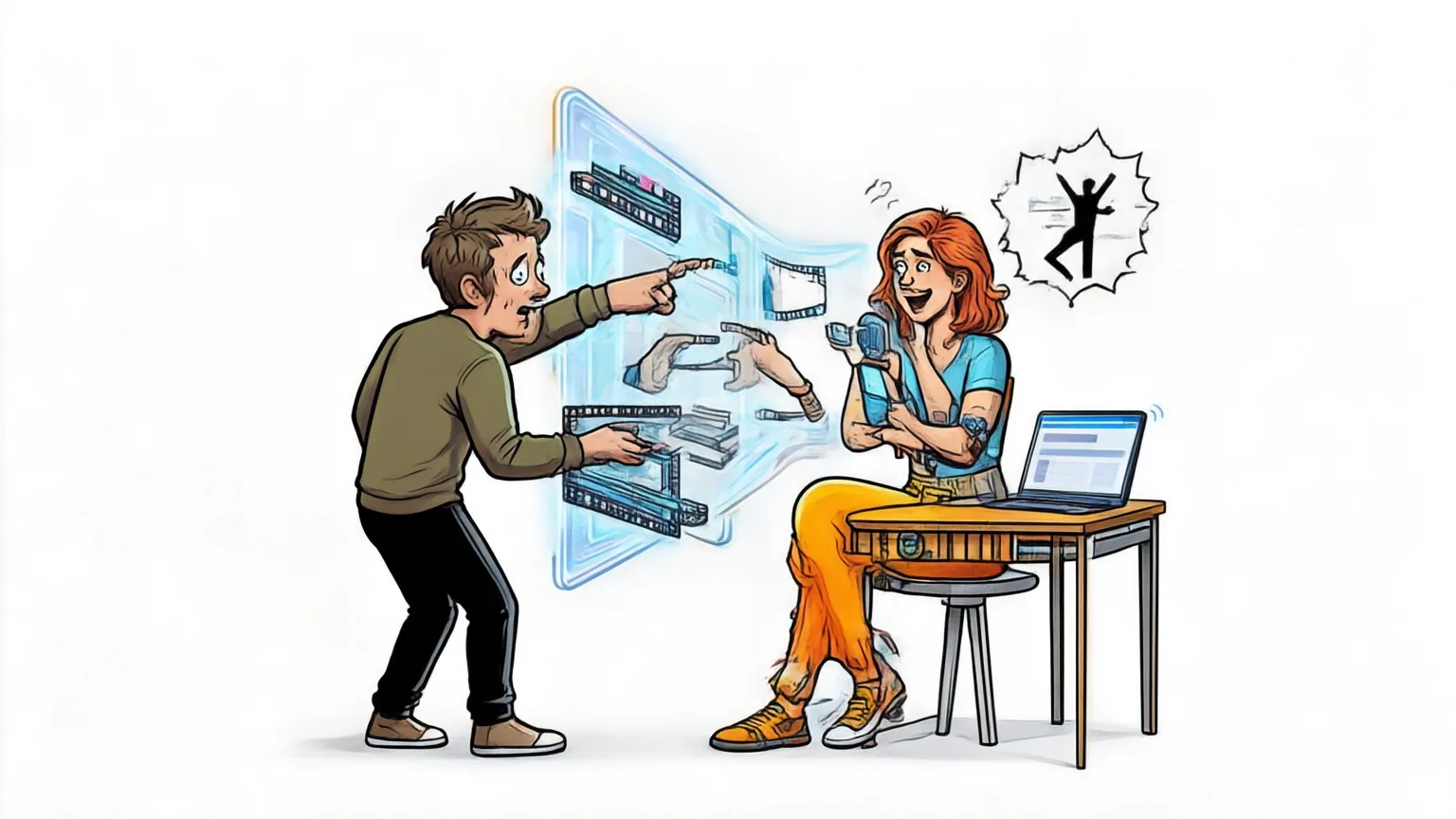
Vidu S2 aims to let people change generated video while it is playing. One part creates digital characters that respond to instructions. Another changes the appearance of an incoming video. The work also explores whether both parts can produce spatial video as events unfold.
- Problem: The work addresses video creation that needs to respond to changing instructions and visual references during use. Compared with Vidu S1, it adds live 720p character generation and references that users can change at any point. It also aims to improve how well characters follow instructions.
- New idea: Vidu S2 divides the work between character creation and video editing. Its character model accepts visual references that guide what it generates, even when those references change during generation. Its editing model changes an incoming video as it plays. Those changes can affect the visual style, clothing, characters or background.
- Simple example: Imagine changing a character's outfit or the background while a video keeps playing. Those are among the live edits Vidu S2 supports.
- Evidence: Vidu S2-Avatar generates 720p video in real time. The abstract reports better results than every comparison system tested, but gives no scores or margins.
- Limitation: The abstract describes spatial video generation as a feasibility exploration. It also gives no measured response times or detailed comparison results.
- Why it matters: This matters because people can change a generated character or edit a video while it is running.
- Paper: Vidu S2: Real-Time Interactive, Editable
PhysBrain 1.5: From Vision-Language Models to Physical Foundation Models
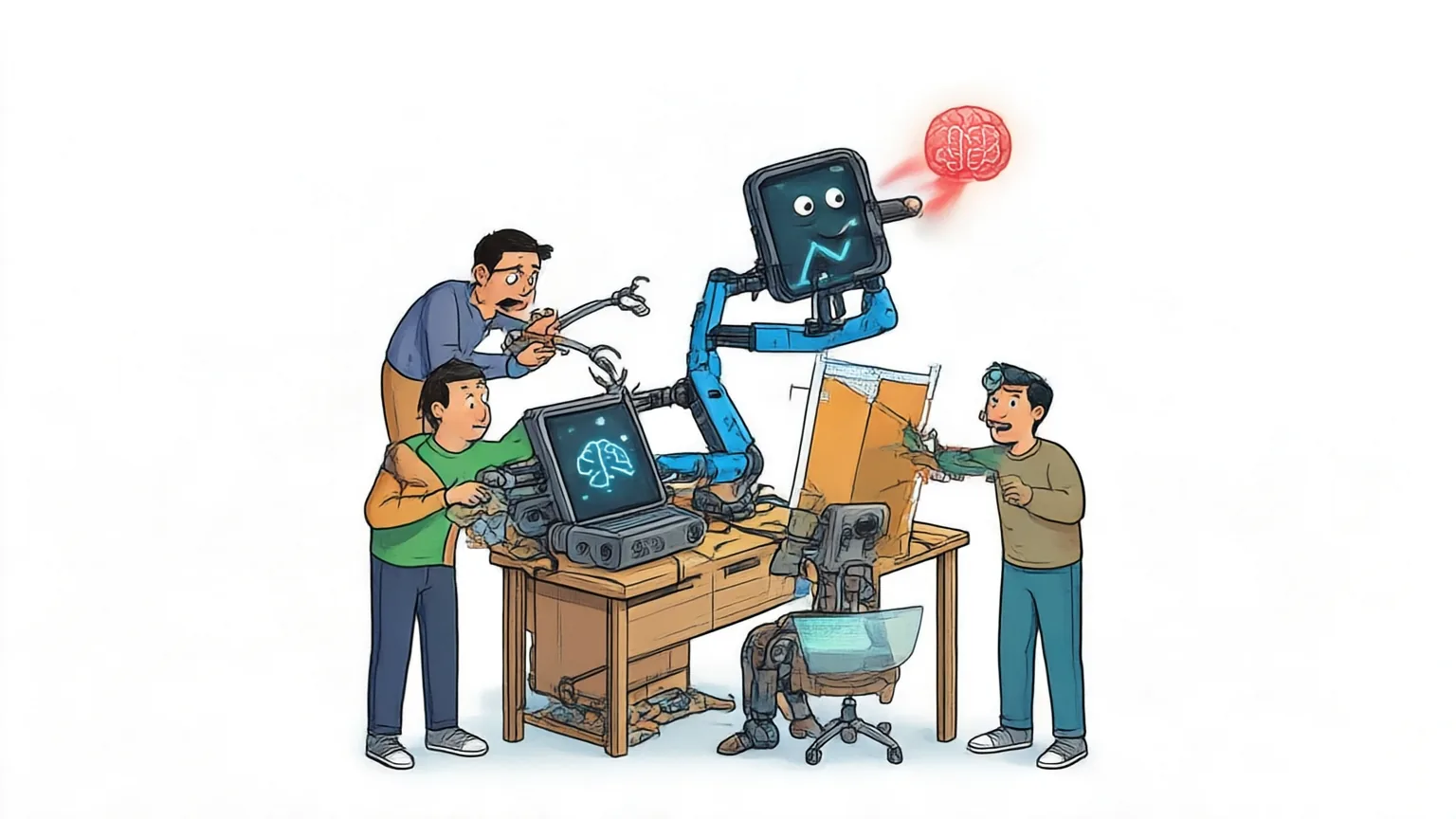
PhysBrain 1.5 aims to connect what an AI sees with what it does next. It learns from videos of people interacting with their surroundings, then receives further training with human, robot and simulated examples. The goal is to describe a physical situation, produce movements and anticipate the scene that follows.
- Problem: Understanding a picture and its description covers only part of a physical task. This work extends a model that handles images and language to also produce movement paths and predict what changes after an action.
- New idea: PhysBrain 1.5 puts written answers, movement paths and detailed scene information into sequences of discrete symbols. It learns by predicting the next symbol, using the same training method for all these outputs. Its initial training uses human interaction videos to connect task context with movements recovered from the footage and the observations that follow. Further training adds robot movement records and simulated experience alongside human demonstrations.
- Simple example: Think of watching someone perform a physical task and learning to answer three linked questions: what is happening, how should the working end of a robot move, and what will the scene look like afterward?
- Evidence: The 8B model averages 72.5 across 28 benchmarks for understanding physical tasks and environments. The abstract reports the best open-source average and the best open-source results on 14 benchmarks. It places performance on par with GPT-6-Astra and Gemini 3.6 Flash.
- Limitation: The movement and future-scene results are shown through illustrative examples. The abstract gives no numerical evaluation of those abilities or measured success rates for physical task execution.
- Why it matters: This matters because physical tasks require connecting what is visible with an action and its consequences.
- Paper: PhysBrain 1.5: From Vision-Language Models to Physical
Dream-RSI: Recursive Self-Improvement through Evolving Worlds
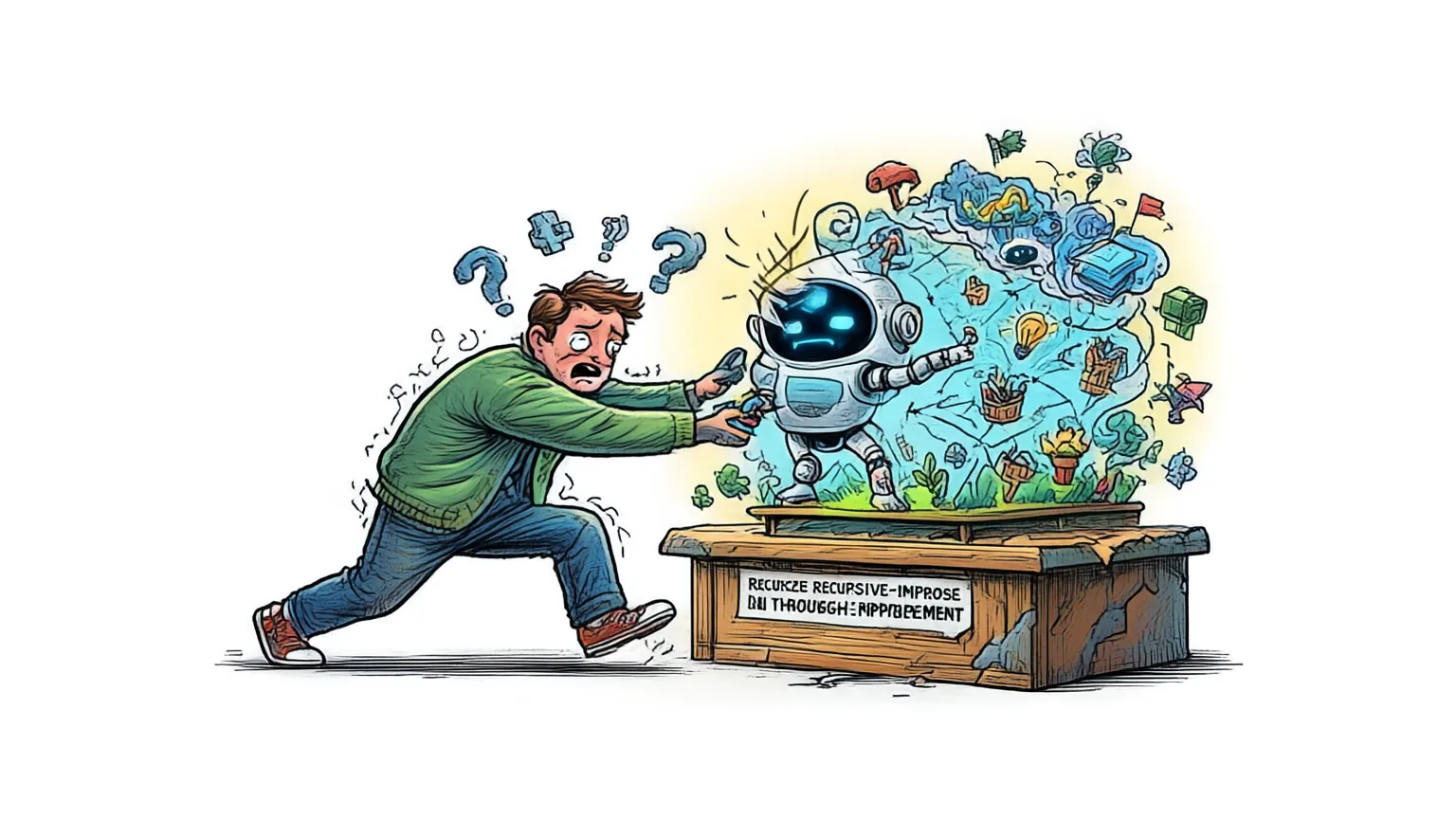
Dream-RSI helps a coding AI learn how to choose which possible solutions to investigate. It uses records of earlier searches to try out better search strategies without repeating all the original work. The aim is to reduce the cost of finding useful solutions while keeping their quality high.
- Problem: A fixed search strategy cannot adjust as the range of possible solutions grows. Learning a better strategy through fresh attempts is also costly because useful feedback can arrive only after long sequences of work.
- New idea: Dream-RSI adds a control layer that decides how to explore possible solutions while keeping the coding AI itself unchanged. It turns records of past discoveries and their branches into a replay simulator, a way to evaluate search choices using recorded experience. It calls this practice dreaming: testing and refining search strategies against that history at low cost. The revised strategy then guides fresh searches, whose results expand the history available for later practice.
- Simple example: Imagine reviewing notes from earlier coding attempts to decide which kinds of changes deserve another try. Dream-RSI uses that kind of recorded search history to improve its choices before paying for more fresh attempts.
- Evidence: Across algorithm engineering, mathematical optimization and GPU kernel engineering, the abstract reports solution quality that matches or improves on comparisons. It also reports substantial search-cost reductions in several settings, but provides no numerical results.
- Limitation: The replay simulator covers search paths already recorded in the discovery history. The abstract does not establish how well strategies learned there handle unexplored paths, and it gives no numerical cost or quality comparisons.
- Why it matters: This matters because reusing past searches can make finding useful solutions less expensive.
- Paper: Dream-RSI: Recursive Self-Improvement through Evolving
Trending AI Repositories
Ranking source: GitHub Trending.
alibaba/open-code-review
OpenCodeReview is a Go project from Alibaba for reviewing code. It is worth a look if you are exploring how AI can fit into code review.
- What it is: OpenCodeReview combines fixed checks with an AI agent to review code. It provides comments on specific lines and checks for defects, including errors caused by using a null reference.
- What it does: Fast, efficient, battle-tested at Alibaba's scale. Hybrid architecture code review tool: deterministic pipelines + LLM Agent, precise line-level comments, built-in multi-language ruleset (NPE, thread-safety, XSS, SQL injection), OpenAI & Anthropic compatible.
- Who it helps: It helps developers checking code for defects. They can use its comments to locate issues in the lines under review.
- Limitation: The supplied README excerpt does not explain installation or setup requirements.
- Repository: alibaba/open-code-review
Panniantong/Agent-Reach
Agent Reach is a Python project that handles internet access setup for AI agents. Its README describes choosing access methods, installing them and checking that they work.
- What it is: Agent Reach advertises reading and searching online services through one command-line tool, with no API fees.
- What it does: Give your AI agent eyes to see the entire internet. Read & search Twitter, Reddit, YouTube, GitHub, Bilibili, XiaoHongShu , one CLI, zero API fees.
- Who it helps: It helps people connecting AI agents to online sources. They can use it to select, install and check access methods.
- Limitation: The supplied README excerpt does not specify prerequisites for accessing each service.
- Repository: Panniantong/Agent-Reach
rlaope/oh-my-hermes
oh-my-hermes is a Python extension for Hermes Agent. Its README offers English, Korean, Japanese and Chinese versions, giving readers several language options for exploring the project.
- What it is: The plugin adds coding support, long-term memory and workflows optimized for models to Hermes Agent.
- What it does: All in one plugin for Hermes Agent ⚚ the coding intelligence, a long-term memory system and model optimized workflow packages
- Who it helps: It is for Hermes Agent users who want help with coding tasks. They can use the project to add coding support to their agent.
- Limitation: It requires Hermes Agent.
- Repository: rlaope/oh-my-hermes
Sources
- 01Hugging Face Papers · Hugging Face Papers
- 02GitHub Trending · GitHub Trending
- 03Abnormal AI: Amazon Bedrock AgentCore for agentic email security at scale · AWS Machine Learning
- 04Watch astronaut Christina Koch and Google’s James Manyika discuss space, technology, and discovery. · Google
- 05Jensen Huang took a call from Trump, and showed off something else, too · TechCrunch
- 06Is Big Tech’s AI slowdown a safety pact or a cartel? · The Verge
- 07What execs and politicians are saying about slowing down AI development · The Verge
- 08Vidu S2: Real-Time Interactive, Editable, and Spatial Video Generation · arXiv
- 09PhysBrain 1.5: From Vision-Language Models to Physical Foundation Models · arXiv
- 10Dream-RSI: Recursive Self-Improvement through Evolving Worlds · arXiv
Join the Idiots
New lab every Sunday. No spam, unsubscribe anytime.