By ThinkIdiot
Models enter production, robots rehearse, and AI funding faces a hole
Get this by email →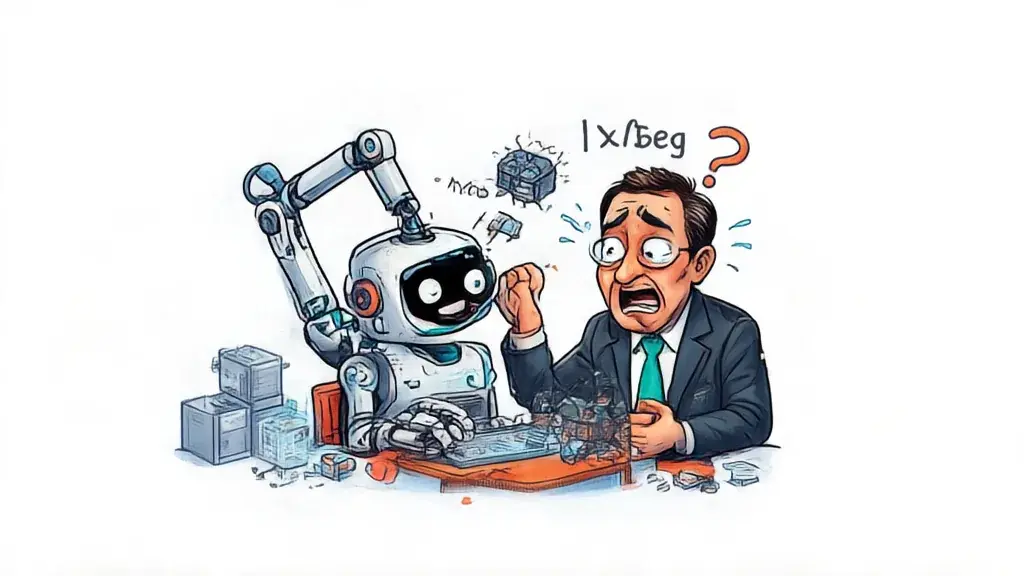
GS Caltex connects no-code models to production workflows. A robot simulation uses SimReady assets for pick-and-place work. Founders and investors brace for a funding gap after Jensen Huang’s departure.
News
Production MLOps at GS Caltex with Amazon SageMaker Canvas, part 1
GS Caltex has connected Amazon SageMaker Canvas to Amazon SageMaker Pipelines to put process engineers’ no-code models into production. ML engineers now deploy models within a few hours, down from about a week. The company runs batch inference every 30 minutes.
Validated work carries through to deployment
Process engineers build and validate their models in Canvas without writing code. Canvas provides visual tools for preparing data. It also builds models and generates batch predictions. ML engineers reuse the validated preprocessing flows and models. They configure Pipelines workflows to handle deployment and scheduled inference. Amazon SageMaker Model Registry stores model versions and their approval status. (AWS Machine Learning)
thinkidiot take: Deployment has fallen from about a week to a few hours. I would make reuse of validated preprocessing flows the priority in this setup. That keeps the engineers’ existing work in the production path. To me, that handoff matters more than the no-code interface itself.
Build a Robot Pick-and-Place Simulation with SimReady Assets
An article published on Hugging Face on November 13, 2026, shows how to build a robot pick-and-place simulation. It uses assets from SimReady Central. That open library is available on Hugging Face.
A specific arm, gripper and simulator version
The example uses a UR17G arm. It pairs the arm with a Robotiq 2F-140 gripper. GPT-6 Sol is the model used in the example. Running it requires Isaac Sim 6.2. The task starts with grasping and lifting a beverage can. The robot then moves and releases the can. (Hugging Face)
thinkidiot take: This example requires Isaac Sim 6.2 and specifies both the arm and gripper. I would reproduce that setup before changing the task. I would judge the result on the complete grasp, lift, move and release sequence. For me, completing that sequence matters more than the choice of language model.
Jensen Huang’s departure blasts big hole in AI startup funding, VCs and founders say
TechCrunch reports that Jensen Huang’s departure has founders and venture capital investors bracing for smaller Nvidia checks and lower valuations. Under Huang, Nvidia poured tens of billions into AI startups. It participated in 105 funding rounds this year alone.
Individual checks show the scale at stake
Nvidia participated in two of Crusoe’s funding rounds. Those included its $1.4 billion Series E. It also wrote an $800 million check into Reflection AI’s $2 billion Series B. The report lists a $13 billion deal to buy Hugging Face this year. That acquisition is expected to close in 2027. Nvidia previously acquired Mellanox Technologies for approximately $7 billion in 2020. (TechCrunch)
thinkidiot take: Nvidia supplied $800 million of Reflection AI’s $2 billion Series B. I would use that check as a concrete measure of the funding exposure founders are worried about. Their expectation of smaller checks has substance when individual investments reach that scale. I see this as a financing story first and a leadership story second.
ChatGPT Wallet lets OpenAI’s Dots agents make purchases for you
OpenAI began rolling out ChatGPT Wallet on November 13, 2026, letting its Dots agents make purchases for users. Access starts with ChatGPT Pro subscribers in the US aged 18 and older. Users need a US billing address and an eligible US-issued American Express, Chase, Mastercard or Visa card.
Each purchase still requires a biometric check
OpenAI launched its Dots agent platform earlier this year. Every wallet purchase requires biometric verification through Face ID or a fingerprint scan. The wallet substitutes a payment token for credit card details, keeping the actual card information private. OpenAI expects users to delegate purchases through pre-approval. Those approvals would specify spending limits, purchase categories and time periods. The Verge also reports that Amazon blocked Meta’s Muse agents from using ChatGPT Wallet earlier this year. (The Verge)
thinkidiot take: Every purchase requires Face ID or a fingerprint scan. I would keep that individual approval step even with payment tokens protecting card details. Pre-approved spending limits and categories represent a different level of delegation from confirming each transaction. My preference is to delegate the shopping and keep the final purchase decision.
Windows 0-day dropped by disgruntled researcher hands hackers System rights
Ars Technica reports that a disgruntled researcher released SignDrop, an exploit that gives local users full System rights on some Windows versions. It worked against Windows 11 26H2 and Windows 11 26H2 Experimental. Windows Server 2025 Experimental was also among the versions where it worked.
Exposure depends on configuration and system age
The reported vulnerability depends on the CLFS authentication mode. Its registry location is HKEY_LOCAL_MACHINE\SYSTEM\CurrentControlSet\Services\CLFS\Authentication\Mode. Values of 0 or 1 leave the system vulnerable under the stated conditions. The listed requirements specify Windows 26H2 and a system that has existed for more than 90 days. The proof of concept is expected to spawn a SYSTEM shell. Microsoft uses staged rollouts for Windows updates such as 26H2. (Ars Technica)
thinkidiot take: SignDrop gives a local user full System rights under the reported conditions. I would check the installed version, system age and CLFS authentication value across the Windows machines I manage. Staged rollouts make the installed version a machine-by-machine question. My judgement is that those concrete checks deserve priority over treating every Windows installation as equally exposed.
Trending AI Papers
Ranking source: Hugging Face Papers for 2026-11-14.
SO-Arena: Benchmarking the Capability Spectrum and Reliability of System One Models

A model can score well on a test and still make unreliable choices. SO-Arena examines that gap in System One models, which make quick decisions without generating long reasoning sequences. It tests both the range of tasks these models can handle and how consistently they choose answers. The aim is to show what a single overall score misses.
- Problem: Existing tests often reduce model performance to an overall score. That leaves readers with little detail about which tasks a model handles well or whether its decisions hold up when the available answers change.
- New idea: SO-Arena is a benchmark, a set of tests, covering 11 subject areas and five types of ability. Its reference answers are checked by hand against information the model can see, and task difficulty is judged separately for each subject. Some tasks require models to take repeated actions in sandboxes, which are controlled environments for testing those actions. It also measures whether choices remain consistent when answer options change and whether models notice when none of the options is valid.
- Simple example: Imagine a multiple-choice quiz that sometimes has no correct answer. A dependable test-taker should notice that, and adding an irrelevant option should not change which answer they choose.
- Evidence: Tests of 21 models found that larger models and extra reasoning helped unevenly across domains. The System One model with the best overall performance ranked only seventh for reliability.
- Limitation: The abstract does not report the size of the reliability gaps or show whether these test results predict dependable decisions outside the benchmark.
- Why it matters: A high test score alone does not tell you whether a model makes dependable choices.
- Paper: SO-Arena: Benchmarking the Capability Spectrum and
PhysLoop: Harnessing LLMs' Physics Awareness for Self-Improving Video Generation Models
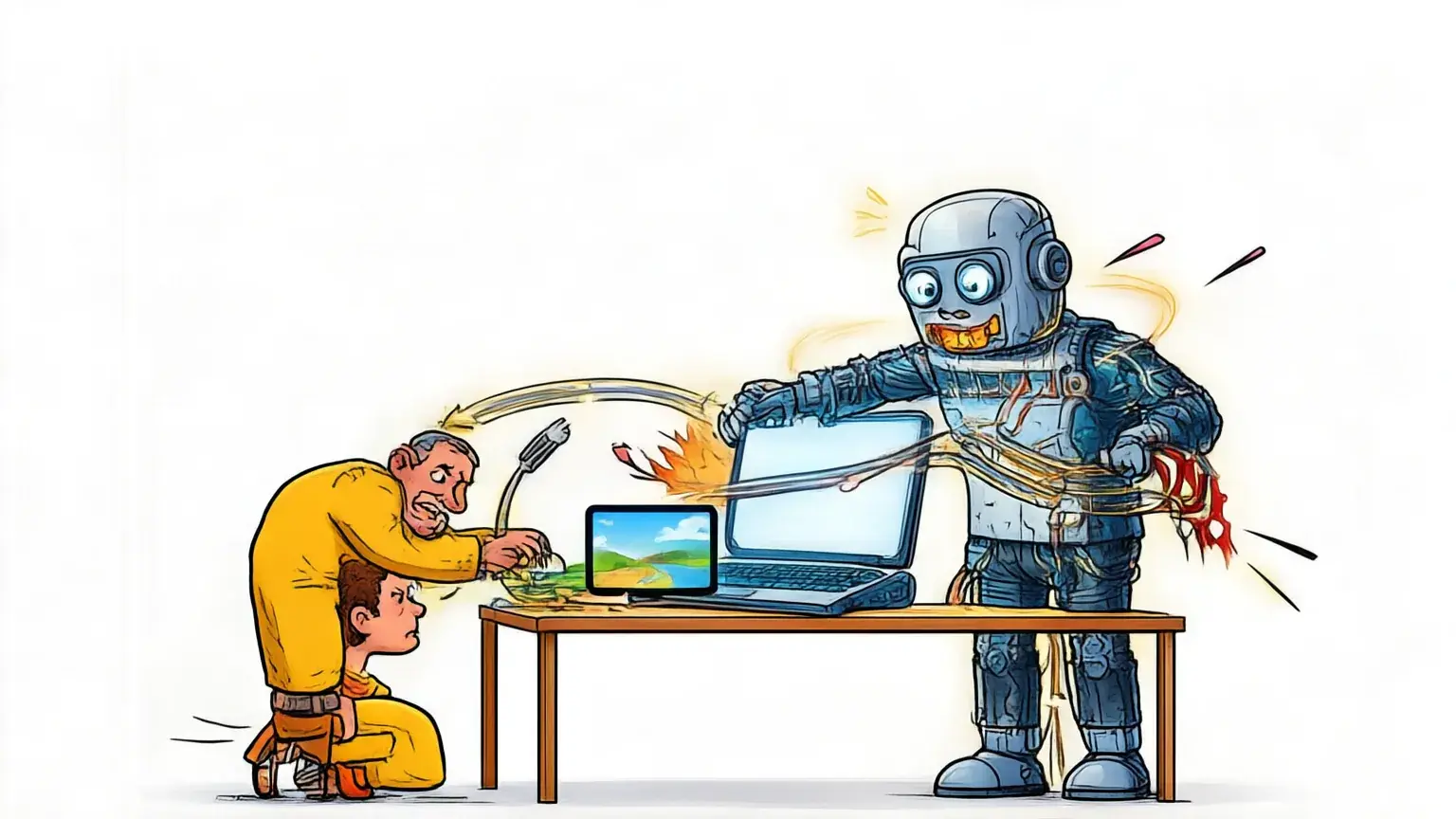
An AI-made video can look convincing while showing events that make no physical sense. PhysLoop aims to help video generators learn from corrected examples of their own mistakes. It uses the physical knowledge of language models within a guided process for making, checking and fixing videos. The goal is to improve how events unfold with limited human involvement.
- Problem: Video generators struggle to make motion and cause and effect physically consistent. Learning from their output requires trustworthy judgments and examples of mistakes paired with corrections, which are hard to obtain. Language models have relevant physical knowledge but do not reliably turn that knowledge into useful training videos on their own.
- New idea: PhysLoop is a framework, a coordinated set of tools and rules, that guides language models as they create, select and correct videos. Language models are systems trained to work with language; here, their knowledge of physics helps shape video examples. The framework supports building training data with controlled variations and repairing videos when they are generated. It aims to support repeated improvement, where finding and fixing mistakes supplies material for further learning.
- Simple example: Think of a practice exercise where a learner reviews an attempt, finds a mistake and studies a corrected version. PhysLoop applies that pattern to generated videos, using guided language models to help identify and correct physical errors.
- Evidence: The authors report releasing 100K videos, generation tools and two evaluation datasets, PhysLoop-Gen and PhysLoop-Repair. They evaluate controlled generation and repairs to selected parts of videos on those datasets, and physical behavior on Physics-IQ Verified. The abstract gives no numerical performance results.
- Limitation: The abstract does not quantify improvements or demonstrate sustained gains over repeated rounds of self-improvement.
- Why it matters: Corrected physical mistakes could give video generators useful examples to learn from.
- Paper: PhysLoop: Harnessing LLMs' Physics Awareness for
G-STAR: Group-Scaled Token Capacity for Deeply Compressed Autoregressive Generation
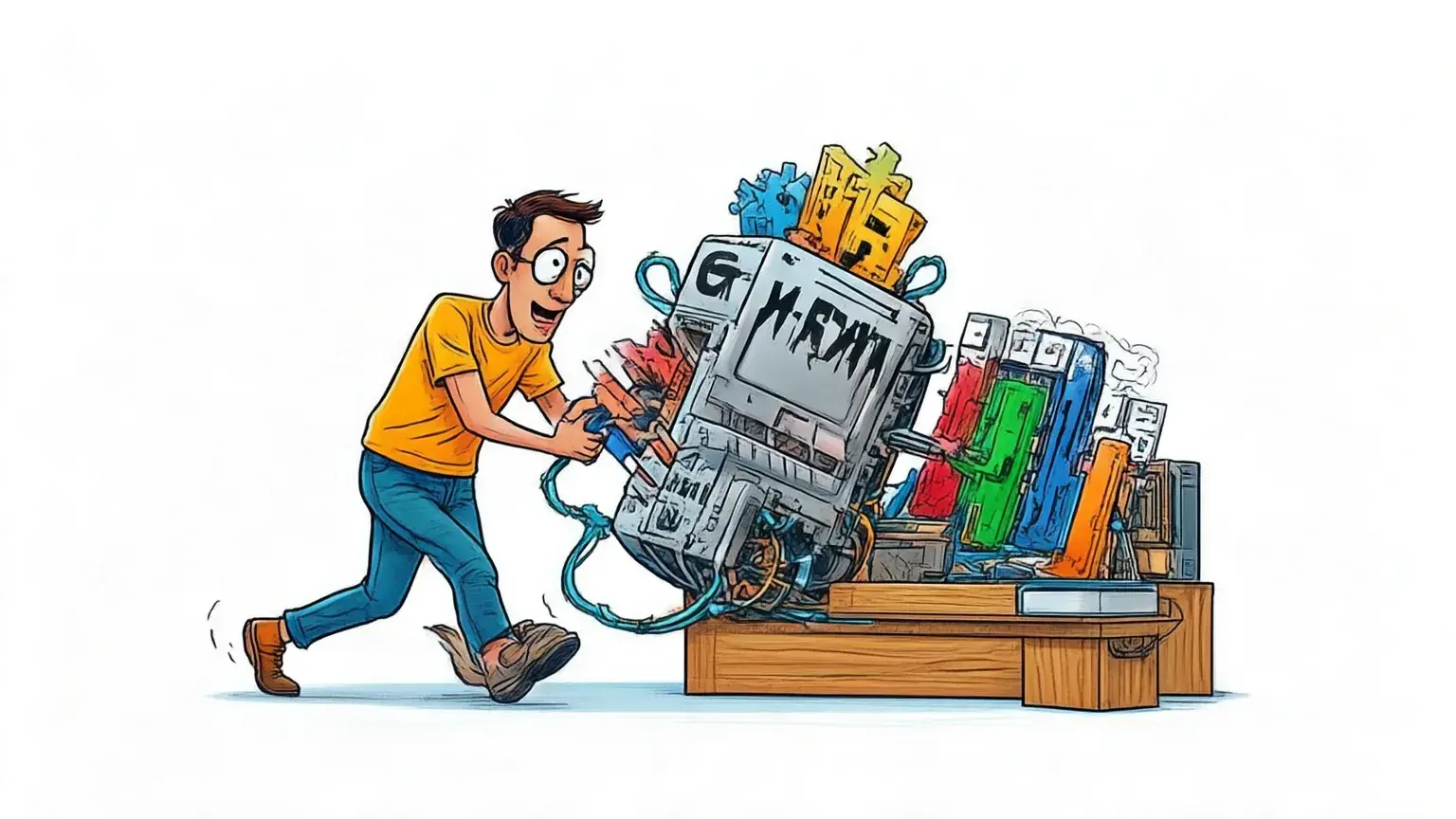
Some image generators build pictures by predicting a sequence of coded pieces. Longer sequences can retain more detail, but they take longer to produce. G-STAR changes how information is packed into those pieces so the sequence can be shorter. It aims to speed up image creation while retaining image quality.
- Problem: Models that generate image codes in sequence face a trade-off between detail and speed. Keeping many spatial positions makes generation slow, while squeezing the image into fewer positions limits how much information the representation can hold.
- New idea: G-STAR combines spatial compression, which reduces the number of image positions represented, with larger groups of codes at each remaining position. It uses product quantization, a way to represent information through groups of discrete codes. The authors derive a rule: with the same nominal information budget, group size should grow with the square of the compression factor along each image axis. A semi-autoregressive decoder, which turns codes into an image using a mix of parallel computation and ordered prediction, handles relationships within those groups.
- Simple example: Think of packing the same belongings into fewer boxes by giving each box more compartments. The boxes represent image positions, and the compartments represent grouped codes that retain information as the number of positions shrinks.
- Evidence: The authors report 32× and effective 64× compression, with competitive performance across five text-to-image benchmarks: GenEval, DPG-Bench, PRISM, LongText-Bench and Qwen-Image-Bench. At 1024×1024 resolution, their model generates an image in 2.5 seconds on a single NVIDIA H200, a reported 20× speedup over prior discrete autoregressive models.
- Limitation: The abstract gives no individual benchmark scores, and its reported generation time applies to one resolution on a single NVIDIA H200.
- Why it matters: Packing image information into fewer generation steps can shorten the wait for a high-quality picture.
- Paper: G-STAR: Group-Scaled Token Capacity for Deeply Compressed
Trending AI Repositories
Ranking source: GitHub Trending.
backnotprop/plannotator
Plannotator gives people working with agents a place to inspect and annotate their output. Its scope includes interactive artifacts as well as diffs and pull requests.
- What it is: This TypeScript project brings an inbox, artifacts and code review into an interface for working with agents.
- What it does: The workspace to stay in the loop and on top of agents - shape, decide, plan, annotate, review code, share with team, and send all feedback to agents with one click.
- Who it helps: It helps people who need to give agents feedback on their work. They can annotate plans, specs, markdown and HTML, then send those comments to the agent.
- Limitation: The supplied README excerpt does not explain setup or agent compatibility.
- Repository: backnotprop/plannotator
tradermonty/claude-trading-skills
Claude Trading Skills grew out of a personal effort to improve a trading process with AI. It focuses on a specific approach: long-term holdings at the core, with disciplined swing trading when conditions are favorable.
- What it is: This Python project is a workflow toolkit built around Claude Skills. It supports an investing process that combines long-term investing, ETFs and dividend stocks with a secondary swing-trading strategy.
- What it does: Claude Code skills for equity investors and traders , market analysis, technical charting, economic calendars, screeners, and trading strategy development.
- Who it helps: It is designed for individual investors with limited time. They can use a toolkit built around their mix of core investments and selective swing trades.
- Limitation: The toolkit is not intended to outsource buy or sell decisions to AI.
- Repository: tradermonty/claude-trading-skills
Likely7/Veyra-NRVideo
Veyra puts local video, capture cards and game streaming through a shared GPU enhancement pipeline. Its listed features include denoising and HDR alongside resolution and frame enhancement.
- What it is: This C++ project is a real-time video enhancement application for Windows. It brings several video sources into one GPU processing pipeline.
- What it does: Bring PS5 GTA6 to 120FPS with DLSS 5. An advanced Windows video player and capture enhancement tool featuring real-time preview for videos, images, and capture card sources. Combine AI-powered Super Resolution, DLSS5 image enhancement, and Frame Generation to deliver a next-generation visual experience.
- Who it helps: It serves Windows users working with local video, capture cards or game streams from PS5, Xbox and PC. They can use the same enhancement pipeline across those sources.
- Limitation: The supplied README excerpt gives no GPU compatibility details or measured performance results.
- Repository: Likely7/Veyra-NRVideo
Sources
- 01Hugging Face Papers · Hugging Face Papers
- 02GitHub Trending · GitHub Trending
- 03Production MLOps at GS Caltex with Amazon SageMaker Canvas, part 1 · AWS Machine Learning
- 04Build a Robot Pick-and-Place Simulation with SimReady Assets · Hugging Face
- 05Jensen Huang’s departure blasts big hole in AI startup funding, VCs and founders say · TechCrunch
- 06ChatGPT Wallet lets OpenAI’s Dots agents make purchases for you · The Verge
- 07Windows 0-day dropped by disgruntled researcher hands hackers System rights · Ars Technica
- 08SO-Arena: Benchmarking the Capability Spectrum and Reliability of System One Models · arXiv
- 09PhysLoop: Harnessing LLMs' Physics Awareness for Self-Improving Video Generation Models · arXiv
- 10G-STAR: Group-Scaled Token Capacity for Deeply Compressed Autoregressive Generation · arXiv