By ThinkIdiot
SGLang reaches Trainium, Granite gets LLMON, and Google introduces Gemini 4 Hydrogen
Get this by email →
SGLang-Neuron brings frontier model deployment to AWS Trainium. LLMON arrives in Granite 4.1 3B and 8B. Google introduces Gemini 4 Hydrogen.
News
Deploy frontier AI models on AWS Trainium with SGLang-Neuron
RadixArk, in collaboration with Annapurna Labs, has released SGLang-Neuron through a publicly available AWS Deep Learning Container. It lets developers serve models and generate reinforcement learning rollouts on AWS Trainium. Both tasks use the existing SGLang server and generation APIs.
The familiar interface gets a different execution path
The integration uses an out-of-tree plugin selected at server startup by setting SGLANG_PLATFORM=neuron. It runs native PyTorch operations alongside Neuron Kernel Interface kernels compiled with torch.compile. Prefill/decode disaggregation transfers prompt KV caches between servers. Those transfers use NIXL over Elastic Fabric Adapter. The walkthrough serves openai/gpt-oss-120b on a Trainium3 instance. Its configuration uses a 10,240-token context length and allows up to 64 running requests. (AWS Machine Learning)
thinkidiot take: Existing SGLang server and generation APIs now work on AWS Trainium. I would start with the published gpt-oss-120b walkthrough and its 64-request configuration. That gives me a concrete setup to assess alongside the plugin's native PyTorch execution. Keeping the interface familiar is the most useful part of this release.
LLMON: An LLM-Native Markup Language, now in Granite 4.1 3B and 8B
The LLMON authors released granite-4.1-3b-LLMON-preview and granite-4.1-8b-LLMON-preview in a November 12, 2026 article on Hugging Face. These experimental models are trained to consume and generate LLMON-marked text. The authors report indirect prompt-injection attack success rates near zero on some benchmarks while maintaining general capability relative to Granite 4.1 Instruct models.
Instructions get explicit links to their intended data
LLMON uses meaningful tags wrapped in reserved special-token delimiters. Those delimiters distinguish structure from content. Unique IDs bind instructions anywhere in the context to the specific data payloads they should act on. The release includes a GitHub toolkit with workflows and templates. Its converters transform JSON into LLMON without loss. Mellea also has native support that automatically converts its LLM calls to LLMON. (Hugging Face)
thinkidiot take: The authors report near-zero indirect prompt-injection success rates on some benchmarks. I would use the lossless JSON converters to test the preview models with instruction and payload pairs from my own workflows. The unique IDs make that relationship explicit in the input format. For me, that mechanism justifies testing the previews; the benchmark result alone does not justify adopting them.
Introducing Gemini 4 Hydrogen
Google introduced Gemini 4 Hydrogen on November 12, 2026 for everyday coding and agentic workflows. It costs $1.50 per million input tokens and $7.50 per million output tokens. Those rates apply across its entire 1 million-token context window.
Model switching puts quota and completion time in focus
Hydrogen scores 51 at high thinking and 54 at xhigh on the Artificial Analysis Intelligence Index, compared with Argon's 50. Google Antigravity's Orchestrator dynamically switches models within a session. It achieved near-Carbon success rates on Terminal-Bench 4.0 while consuming 24% less quota and finishing 19% faster on average. Compared with Gemini 3.8 Flash, Google reports that Hydrogen finishes tasks 2.5 times faster at its default high setting. Google also reports Terminal-Bench 4.1 scores of 57% for Hydrogen versus 18.2% for Gemini 3.8 Flash. In early partner testing of complex graphs, SQL, and data-heavy enterprise workflows, Hydrogen ran 2x to 2.8x faster and used 12% to 23% fewer tokens than Gemini 3.8 Flash. (Google DeepMind)
thinkidiot take: Google reports that Antigravity's Orchestrator reached near-Carbon success rates while using 24% less quota and finishing 19% faster on average. I would test that model-switching workflow before choosing a fixed model for every task. The reported result puts completion time and quota consumption beside success rate in the same comparison. That is a more useful basis for my choice than Hydrogen's intelligence score alone.
Democrats launch Nvidia investigation, write scathing letter on Huang’s ‘scheme’ with Trump
Democrats Richard Neal and Ron Wyden opened an inquiry into the Trump administration's handling of Nvidia chip sales to China, TechCrunch reported on November 12, 2026. They asked Commerce Secretary Howard Lutnick to preserve records. As minority-party lawmakers, they cannot compel answers. This is the second congressional investigation since news of the alleged spy affair broke.
The dispute turns on how export payments were collected
The lawmakers' letter alleges that Nvidia H200 chips manufactured in Taiwan were routed through the United States and tariffed before receiving export licenses. They describe that arrangement as an unconstitutional export tax. The article cites an August 2025 agreement under which Nvidia and AMD would share 15% of revenue from chip sales to China with the U.S. government to secure export licenses. The letter also questions continued chip purchases by Megaspeed. It asks how Nvidia's $26 million in donations to Trump's projects factored into the export deal. Separately, the article reports that Jensen Huang agreed on November 12 to testify in a closed-door session before a Republican-led congressional inquiry. (TechCrunch)
thinkidiot take: The cited export agreement tied licenses to a 15% share of Nvidia and AMD's China chip revenue. I would put the records behind that arrangement at the center of this inquiry. Neal and Wyden have requested preservation, but they cannot compel answers. A concrete payment arrangement deserves scrutiny grounded in records, and I find that more consequential than the letter's rhetoric.
Muse can now place calls to US businesses , if you pay
Meta's Muse can now place calls to U.S. businesses on behalf of paid subscribers. The feature follows initial testing in September. Subscriptions start at $20 per month for 500 million tokens per week. A $100 monthly plan offers 3 billion tokens.
Getting someone to stay on the line is another problem
Meta said the previous month that Muse had more than 10 million users. Alexandr Wang cited calls to cable companies and the DMV as uses for the calling feature. He also named restaurants without online reservations. The article reports that many businesses and receptionists hang up when they identify calls as coming from AI agents. Wang also said the recently added ability to create a Muse email address would soon reach free users. (TechCrunch)
thinkidiot take: Many businesses and receptionists hang up when they identify an AI caller, according to the article. I would test Muse on a restaurant reservation before relying on it for a cable-company call. The subscription's token allowance does not answer whether the recipient will stay on the line. Completed calls would decide whether I pay for this feature.
Trending AI Papers
Ranking source: Hugging Face Papers for 2026-11-13.
BirdDreams: Joint Perspective and BEV Video Generation for a Plausible, Reactive Driving World Model
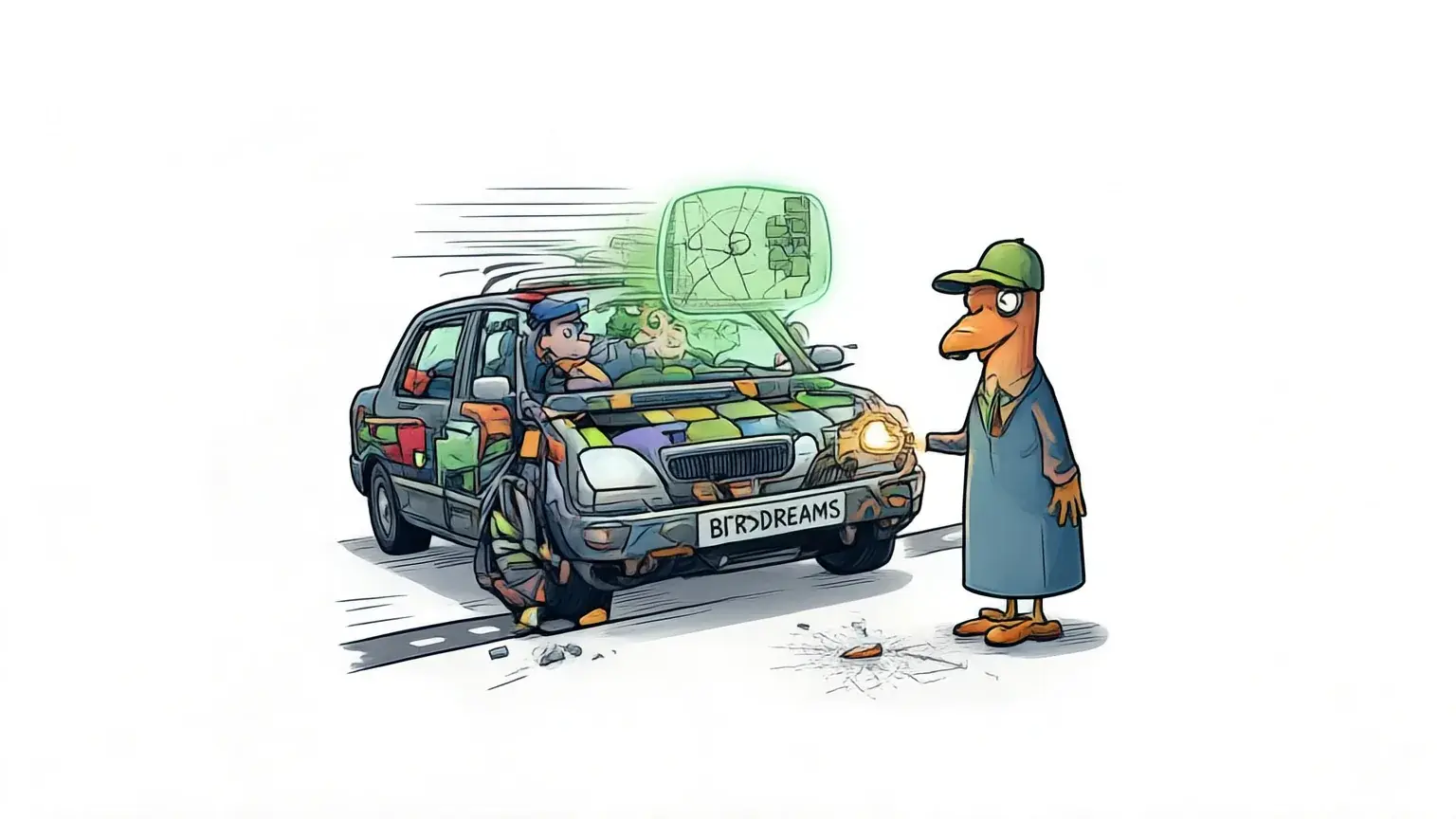
BirdDreams builds imagined driving footage from a camera image. Alongside the street view, it creates a simple overhead view of the road and vehicles. The aim is to follow a chosen route while making nearby traffic move believably.
- Problem: In street-level footage, a vehicle's movement can be hard to separate from its appearance, and other vehicles can block the view. Earlier methods guide video generation with layouts that already contain the future paths of nearby vehicles. That gives control over traffic but requires those paths to be supplied in advance.
- New idea: BirdDreams generates street-level footage together with a bird's-eye view, an overhead diagram showing roads and vehicles as simple shapes at a consistent scale. Separate video generators exchange information so that road geometry and visible details can inform each other. To guide the simulated car, the system shifts and turns its latest overhead frame along a supplied path. Those altered frames guide generation without fixing every vehicle's future movement.
- Simple example: Think of watching through a windscreen while also looking at a moving road diagram. The diagram makes vehicle positions easier to follow, while the windscreen view shows details such as traffic lights. BirdDreams creates both views together.
- Evidence: On PhysicalAI-AV and nuScenes, BirdDreams followed supplied driving paths more closely than earlier driving world models. Without a supplied driving action, it also produced more plausible movement of the simulated car. Human evaluators judged nearby vehicles' behavior more realistic than in a model that generated only the street view.
- Limitation: The abstract reports results on generated scenes, but does not establish that the model's predictions are reliable enough for real driving decisions.
- Why it matters: Predicting nearby traffic as well as the simulated car's movement makes driving simulations more useful for exploring possible actions.
- Paper: BirdDreams: Joint Perspective and BEV Video Generation for
On the Design of Hyper-Connections: Simplification, Stability, and Scalability
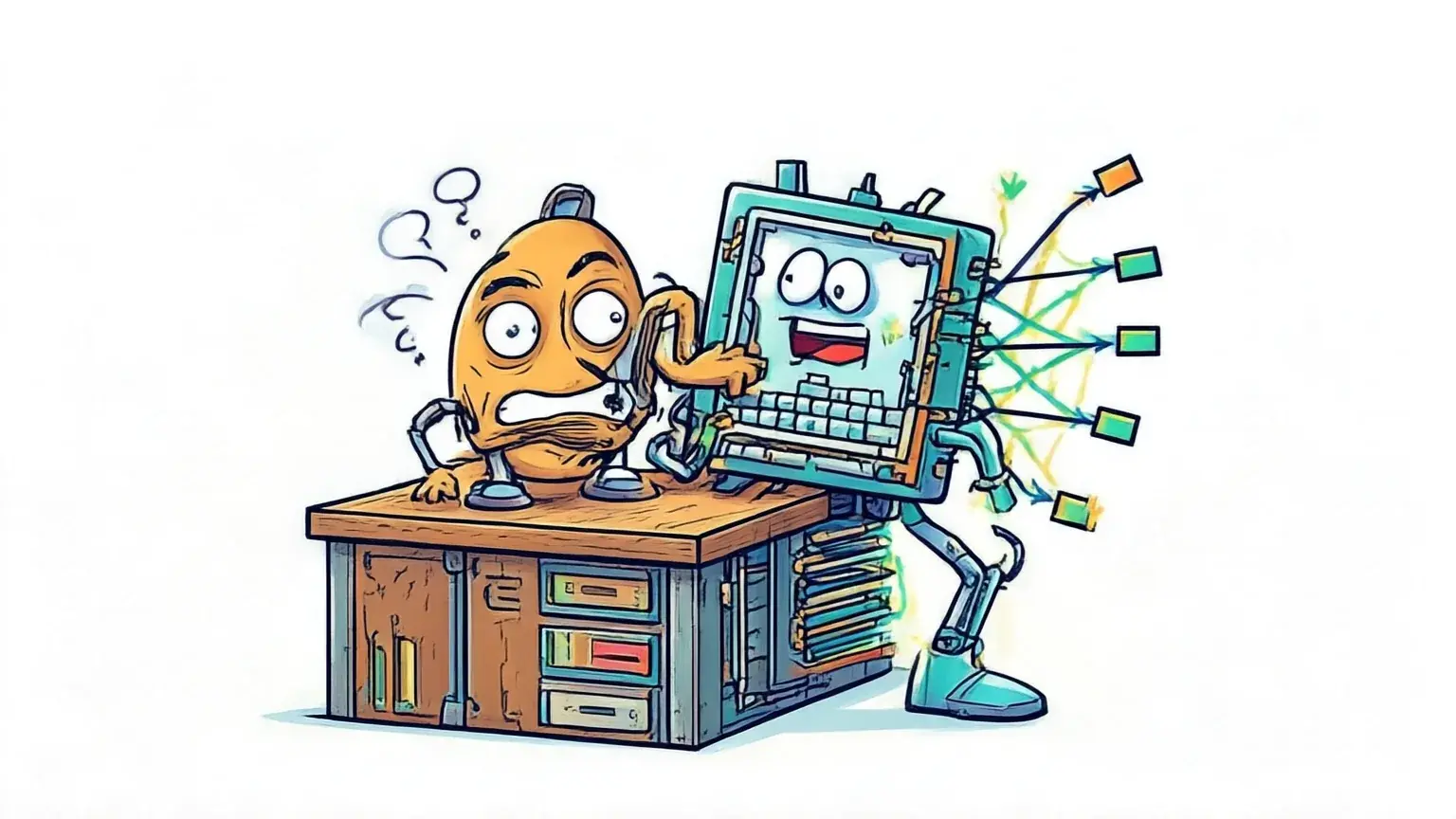
This paper asks whether the connections inside a language model need to be so complicated. These connections carry information between stages of computation, but richer designs add training cost. The authors introduce SimpleHC to keep the benefits of a more elaborate design while cutting that extra work.
- Problem: Hyper-Connections are a design for passing information through a language model, but the value of their individual parts is not well understood. They also add training overhead. The study finds that repeatedly accessing the enlarged stored state is a major cost, even when the model does not mix its contents.
- New idea: SimpleHC removes residual mixing, the operation that blends information within the state carried between computation stages. It retains learned gates, controls that determine how information is read and written. Gates for different layers, or computation stages, use a shared starting state so reads can be grouped and writes delayed. Numerical corrections preserve the contributions from earlier stages exactly.
- Simple example: Imagine several people updating a shared worksheet. Reopening and saving it after every small change takes extra work. SimpleHC groups reads and delays writes, while keeping track of each contribution so it is preserved.
- Evidence: At the largest tested scale, SimpleHC added only 2.4% to total training time compared with a conventional residual baseline. Across 15B to 30B mixture-of-experts models, its performance was comparable to mHC, the comparison architecture. It also showed smoother changes in training gradients and remained stable in stress tests.
- Limitation: The abstract reports scaling results from 15B to 30B models, but does not establish whether the same cost and performance benefits hold beyond that range.
- Why it matters: Simpler connections can make the benefits of richer model architectures less costly to train.
- Paper: On the Design of Hyper-Connections: Simplification
Duo: A Reciprocal World Model for Full-Duplex Interaction
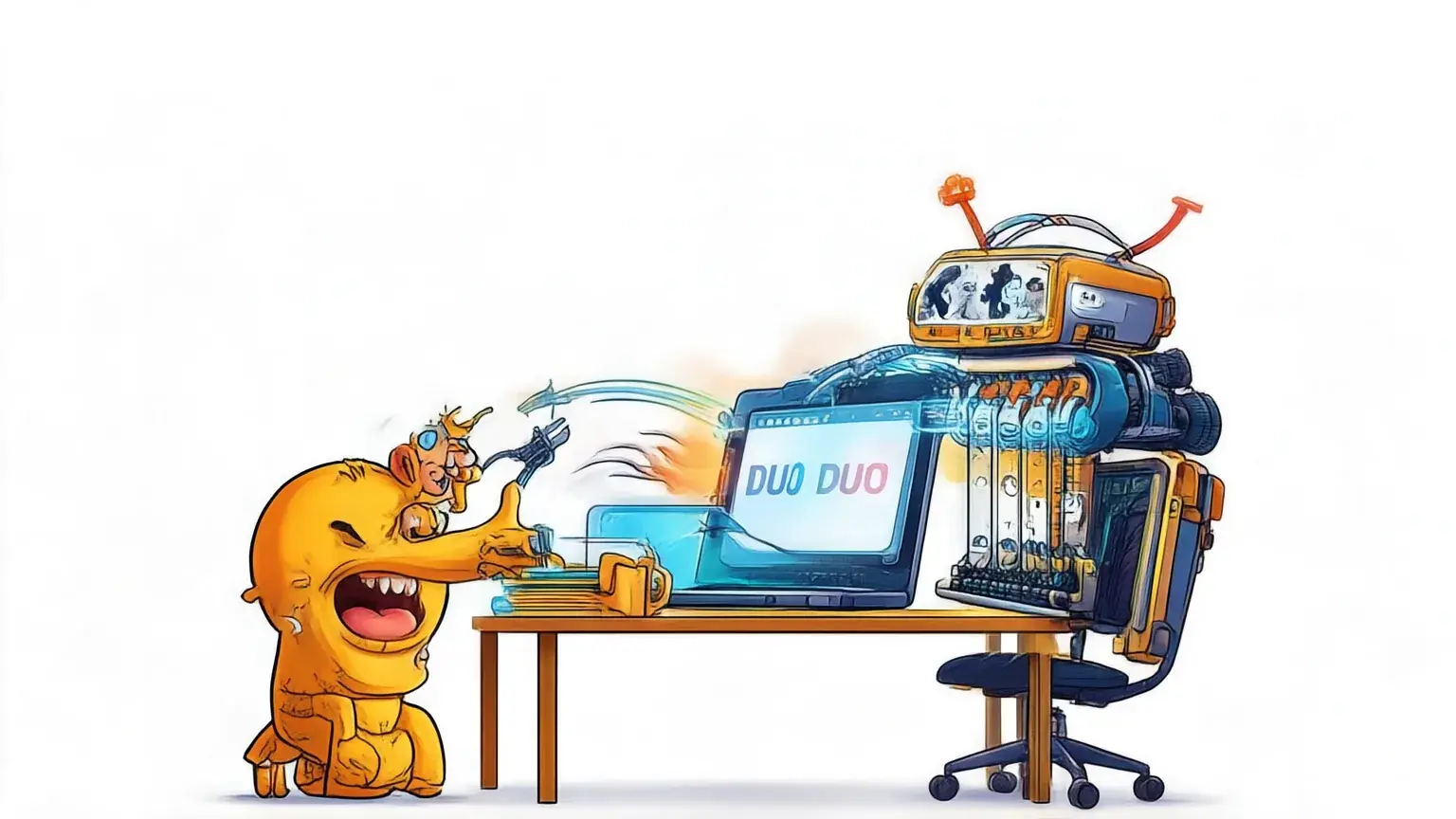
Duo v1 is built to keep taking in sound and video while it responds. The aim is an interaction where people can interrupt or show something without waiting for a turn to end. Its design brings decisions about how to respond into the same system that produces the sounds and images.
- Problem: Existing world models mostly simulate physical scenes while leaving reasoning and decisions to outside controls. That separates what happens in the scene from the process of deciding how to participate. Duo aims to bring those abilities together for continuous interaction.
- New idea: Duo separates its work into Intent, which reasons about the interaction and decides when to participate, and Realization, which produces audio and video. Both parts follow a shared timeline, with rules that prevent them from using inputs that have not yet arrived. Training exposes both parts to the system's own generated reasoning and audiovisual history, helping prepare them for the inputs they encounter during use.
- Simple example: Imagine showing an object to an assistant, then interrupting its reply to redirect its attention. Duo is designed to keep receiving your voice and video during its response, so the exchange can continue without a strict handover.
- Evidence: The abstract reports support for ongoing audiovisual conversation and interruptions. It also describes showing real objects, changing virtual scenes, guiding assistants, and playing audiovisual games without a mouse or keyboard. It provides no measured results or comparisons with other systems.
- Limitation: The abstract gives no measurements of response delay, reliability, or interaction quality, so it does not establish how consistently Duo handles these activities.
- Why it matters: An assistant that keeps listening and watching while responding can let people redirect an interaction as it unfolds.
- Paper: Duo: A Reciprocal World Model for Full-Duplex Interaction
Trending AI Repositories
Ranking source: GitHub Trending.
QwenLM/qwen-code
Qwen Code is a TypeScript project with a package published on npm. Its README links to the package and states a minimum Node.js version, giving readers a starting point for checking installation requirements.
- What it is: The project is distributed on npm as @qwen-code/qwen-code. Its README includes package version, license and download badges.
- What it does: An open-source AI coding agent that lives in your terminal.
- Who it helps: It is for developers using AI assistance for coding. They can find the npm package and check the stated Node.js requirement before installing.
- Limitation: It requires Node.js 22.0.0 or newer.
- Repository: QwenLM/qwen-code
ashhart/TensorFold
TensorFold serves language models from a Zig binary on Apple Silicon and NVIDIA GPUs. Serving needs no Python or MLX installation, which makes it worth a look for readers seeking a setup without those dependencies.
- What it is: The binary handles checkpoint loading, request tokenization and direct execution of Metal or CUDA kernels. It sits between incoming requests and GPU execution.
- What it does: LLM Inference Engine for Metal, CUDA and Vulkan.
- Who it helps: It helps developers serving language models on Apple Silicon or NVIDIA GPUs. They can run serving without installing Python or MLX.
- Limitation: Contributors using a coding agent must have it load the contributor skill before writing code.
- Repository: ashhart/TensorFold
ggml-org/llama.cpp
llama.cpp is a project for running language models. The supplied README shows an MIT license and a link to releases, giving readers concrete places to check its terms and available versions.
- What it is: The repository sits in the language-model execution layer. Its listed implementation language is C++.
- What it does: LLM inference in C/C++
- Who it helps: It is relevant to developers looking to run language models. They can follow the README's release link to inspect published versions.
- Limitation: The supplied excerpt gives no hardware requirements or setup instructions.
- Repository: ggml-org/llama.cpp
Sources
- 01Hugging Face Papers · Hugging Face Papers
- 02GitHub Trending · GitHub Trending
- 03Deploy frontier AI models on AWS Trainium with SGLang-Neuron · AWS Machine Learning
- 04LLMON: An LLM-Native Markup Language, now in Granite 4.1 3B and 8B · Hugging Face
- 05Introducing Gemini 4 Hydrogen · Google DeepMind
- 06Democrats launch Nvidia investigation, write scathing letter on Huang’s ‘scheme’ with Trump · TechCrunch
- 07Muse can now place calls to US businesses , if you pay · TechCrunch
- 08BirdDreams: Joint Perspective and BEV Video Generation for a Plausible, Reactive Driving World Model · arXiv
- 09On the Design of Hyper-Connections: Simplification, Stability, and Scalability · arXiv
- 10Duo: A Reciprocal World Model for Full-Duplex Interaction · arXiv