By ThinkIdiot
BotPsy goes on-device, Kimi joins Bedrock, Gemini reaches more devices
Get this by email →
BotPsy brings a sub-billion-parameter model to on-device assistant tasks. Kimi K3.1 Pro arrives on Amazon Bedrock. Google expands Gemini Intelligence features across more devices.
News
BotPsy: On-Device Personal Assistant with a Sub-Billion-Parameter Agentic Language Model
Tether AI Research introduced BotPsy, a 0.8B-parameter model for function calling and agentic workflows on-device. It is built on Qwen3.5-0.8B. Developers can now download it as safetensors and GGUF files in bf16, Q8 and Q4 formats.
The benchmark gains have a task ceiling
Reported BFCL v4 scores rise from 23.4 for Qwen3.5-0.8B-Think to 44.0 for BotPsy. On ACEBench, the score increases from 30.1 to 58.7. On τ-bench, it moves from 23.2 to 51.5. BotPsy beats every tested model with up to 1.2B parameters across six tool-use and agentic benchmarks. It also beats Qwen3.5-2B-Think on five of those six benchmarks, with the larger model leading on Claw-Eval. BotPsy is best suited to low- to medium-difficulty tasks and is not intended for high-stakes use. (Hugging Face)
thinkidiot take: A 0.8B model beating Qwen3.5-2B-Think on five of six benchmarks gives me a concrete reason to test the smaller option first. I would start with low-difficulty function calls and compare its results with the larger model on the same tasks. The Claw-Eval result stops me from treating parameter count as settled evidence in either direction. For this scope, BotPsy earns a trial before the larger model gets the job.
Introducing Kimi K3.1 Pro on Amazon Bedrock
Moonshot AI’s Kimi K3.1 Pro Highspeed is now available on Amazon Bedrock. It has a 3T-class open-weight architecture and a 1-million-token context window. Moonshot AI reports speeds of 2,3 times those of Kimi K3.1 Pro. Existing Kimi K3 applications on Bedrock can try Highspeed by changing the model ID while keeping the same endpoint, APIs and features.
Reasoning is always on and defaults to max
Access includes OpenAI-compatible Chat Completions and Responses APIs, along with the Converse API. Supported capabilities include tool calling, structured output, configurable reasoning, image input and streaming. The model always reasons before answering and accepts low, high or max reasoning_effort, with max as the default. Explicit prompt caching is available to optimize inference. AWS also describes using the model as a coding assistant in OpenCode. Inference data stays within the AWS data boundary, is not shared with Moonshot AI or used for training, and has zero data retention and zero operator access. (AWS Machine Learning)
thinkidiot take: Existing Bedrock applications can try Highspeed with a model ID change, which makes the reported 2,3 times speed increase straightforward to put to a test. I would compare it on the same coding tasks with reasoning_effort set explicitly. Since reasoning defaults to max, I would treat that setting as part of the comparison. The easy switch is the strongest reason to try it; the speed claim still has to earn its place in my workflow.
Gemini Intelligence: New features, on more devices
Google is expanding Gemini Intelligence to more devices through its latest Pixel Drop and Motorola’s first Gemini Intelligence device. The Pixel update brings the latest features to Pixel 10, Pixel 10 Pro XL and Pixel 10 Pro Fold. U.S. pre-orders for Motorola signature 27 open November 19. Gemini task automation for ordering food, hailing rides and booking reservations is also expanding to the UK, India and Japan.
Widgets draw on your information, while assistance handles device settings
Create My Widget is rolling out over the next few weeks. It builds widgets from natural-language descriptions and can use information from Gmail, Calendar and Search. Device Assistance can help free storage and check which apps have location access. It can also mute distractions while allowing important calls. Proactive suggestions are coming to Android Auto for Pixel phones with Gemini Intelligence. Create My Widget is also coming to Pixel Watch in the next few weeks. (Google)
thinkidiot take: Device Assistance can check location access and mute distractions while allowing important calls. Those are the functions I would try first, because they address specific settings I want control over. I would put them ahead of building a widget from Gmail, Calendar and Search information. For me, useful device assistance starts with making those ordinary controls easier to use.
Your Algorithm: Giving People More Ways to Personalize Facebook Recommendations
Meta has detailed Your algorithm, Facebook’s suite of AI-powered recommendation controls. People can express preferences in natural language to shape both Feed and Reels. The interface brings those interests into an editable view with a one-sentence Lately Summary and Interested In and Not Interested In lists.
Preference edits must reach recommendations already queued
A collection of LLMs understands, stores and tracks stated preferences alongside user behavior. Preference management validates changes and adds ranking signals. It saves preferences to a single store read by both Feed and Reels. Each Interested In interest drives four retrieval sources. These are search, related-topic clusters, the content graph and item-to-item similarity. Delivery optimization is designed to make edits take effect responsively even when upcoming recommendations were cached before the change. (Meta Engineering)
thinkidiot take: A single preference store feeds both Feed and Reels, giving an edit a defined route into both recommendation systems. I would change one interest and inspect both surfaces, including the recommendations served immediately afterward. That would test the stated purpose of the delivery optimization, where cached recommendations meet a new instruction. I judge this control by how clearly an edit changes what arrives, rather than by how neatly the interface describes my interests.
OpenAI acquires Odessia, travel startup created by Sonder founder
Odessia founder Francis Davidson says OpenAI acquired his AI travel agent. OpenAI confirmed that Davidson joined the company. The Odessia tool has already shut down.
The travel product is gone; the next one is unannounced
Davidson also founded Sonder. Odessia raised a $6 million pre-seed round led by Sequoia. Its travel agent launched around five months before the report. Davidson says it helped early adopters plan millions of dollars’ worth of travel. The deal’s terms were not disclosed, and OpenAI has not announced new travel-specific products or plans. OpenAI previously cited travel as a potential use when it launched ChatGPT agent in July 2025. (TechCrunch)
thinkidiot take: Odessia’s tool has shut down, so the immediate result for users is the loss of a travel agent. I would judge any successor by what I can actually use to plan a trip. Davidson’s reported travel volume describes activity before the shutdown, not a product available afterward. With no new travel-specific product announced, I see this as a company move rather than progress users can put to work.
Trending AI Papers
Ranking source: Hugging Face Papers for 2026-11-11.
dNaViT: Discrete Codes are General-Purpose Visual Representations
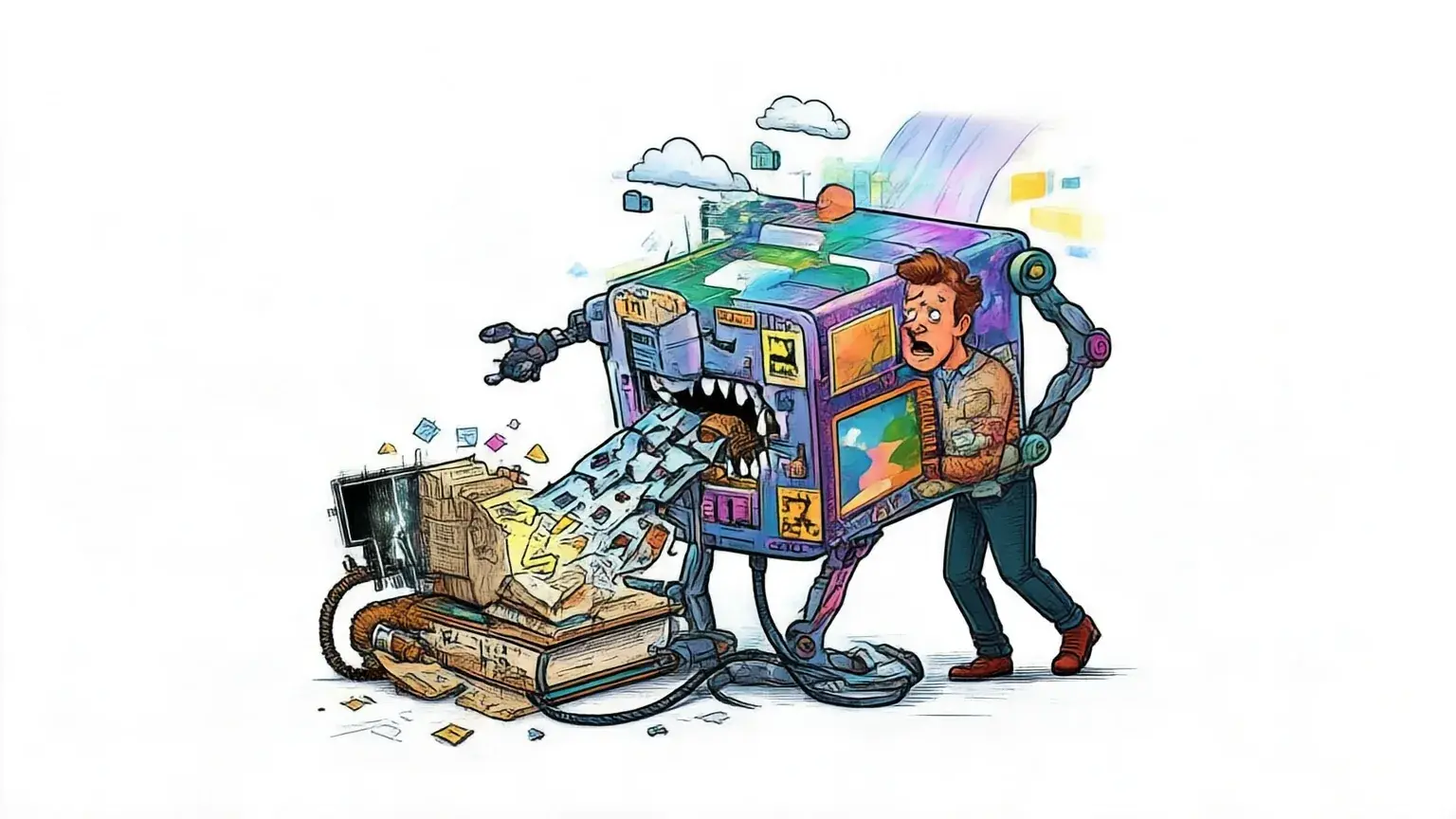
dNaViT turns pictures into codes drawn from a fixed set. The aim is to make those codes useful both for understanding a picture and for rebuilding it. This would let different image tasks share the same way of storing visual information.
- Problem: A fixed set of image codes must preserve both what a picture means and how it looks. The paper asks whether one representation can serve tasks that otherwise use their own specialized methods.
- New idea: dNaViT starts with a pretrained encoder, a model that extracts information from images, and keeps it unchanged. It adds a small adjustment mechanism that helps preserve details needed to rebuild the picture. Grouped product quantization, a method that assigns separate codes to groups of features, increases the possible code combinations without making the sequence of image positions longer. Training balances recognition of image content with preservation of individual pixel details.
- Simple example: Think of a shared box of picture tiles: the same pieces must let someone recognize what a scene contains and assemble a detailed version of it. This is an analogy for the two jobs the image codes must support.
- Evidence: The abstract reports that dNaViT matches or beats task-specific baselines across 12 visual understanding benchmarks, 4 generation benchmarks, and an image editing benchmark. It gives no individual scores or margins.
- Limitation: The abstract does not report the memory use or processing cost of its codes, so it does not establish whether sharing this representation makes systems cheaper to run.
- Why it matters: Shared image codes could let systems understand, create, and edit pictures using the same representation.
- Paper: dNaViT: Discrete Codes are General-Purpose Visual
World In-Context Learning for Agentic Robot Manipulation
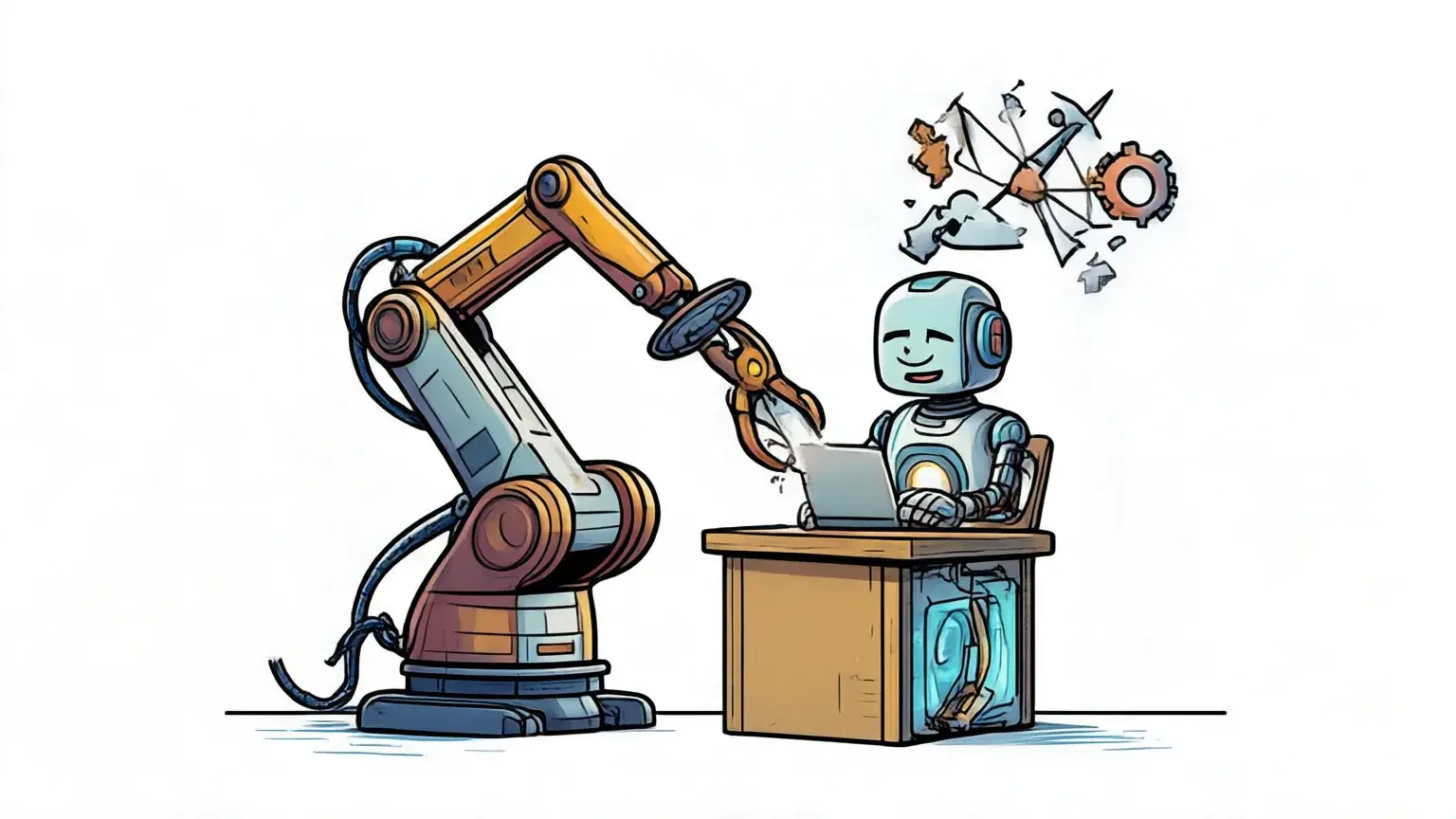
RoboScript lets a robot prepare for a task by practicing in simulation and keeping notes on what it learns. It begins with a demonstration and uses the practice results to guide later actions. The aim is to carry useful lessons into unfamiliar scenes without retraining the underlying model.
- Problem: Training stores a robot's skills inside its model, tying those skills to the conditions used during training. Learning from a demonstration supplied as input avoids changing the model, but that demonstration alone gives no feedback about the robot's current surroundings.
- New idea: World In-Context Learning means learning through information supplied to a model rather than changing its internal settings. RoboScript implements this by having an unchanged model rehearse a demonstrated task in simulation and record the feedback. It saves the resulting lessons as Task Memory, a fixed record used when attempting the task in new scenes. Those lessons describe task steps and object roles, which helps them transfer when appearances change.
- Simple example: Imagine watching someone arrange objects on a table, practicing the sequence, and writing down which object to move at each step. The notes describe the objects' roles rather than their exact appearance, so they remain useful at a different table.
- Evidence: Across all 50 tasks in RoboTwin 2.0, RoboScript achieves 83.4% mean success across clean and randomized settings. It uses one demonstration per task and no gradient updates, beating the strongest trained action policy by over 20 percentage points. The abstract also reports transfer to a physical dual-arm robot.
- Limitation: The abstract reports transfer to a physical robot but gives no physical-robot success rate. The 83.4% result therefore does not establish the same level of performance outside the benchmark.
- Why it matters: Robots could reuse lessons from practice in new scenes without retraining their underlying models.
- Paper: World In-Context Learning for Agentic Robot Manipulation
Few-Step Streaming Video Generation via Condition Shifting

This work changes how a model learns to generate streaming video. It gives the video generator an extra training role that otherwise requires a separate model. The aim is to reduce training costs while keeping the resulting videos responsive to instructions and visually consistent.
- Problem: Generating video in fewer steps reduces generation costs, but training can still require an additional model. In Distribution Matching Distillation, that extra model estimates properties of generated outputs and must keep adapting as the generator changes, adding memory use and computation.
- New idea: The authors adapt APEX, their generation method, to streaming video using condition shifting, which changes the input that tells the model what job to perform. The original text input asks it to generate video, while a modified input asks it to estimate how its generated outputs change. Both jobs use the same internal model settings, removing the need for a separate estimation network. Training still uses a frozen reference teacher, an unchanged model that provides guidance.
- Simple example: Think of asking the same person to draft a scene description and then review it under a different set of instructions. Switching the instructions gives one worker two roles, much as this method gives one model both generation and estimation work.
- Evidence: Evaluation uses 180-second videos, a 70-case human study, and a 320-case StreamAV-Bench comparison. Against S2-Avatar, APEX scores 3.856 versus 3.831 for video instruction fulfillment on the Progressive track and 0.641898 versus 0.632606 for visual aesthetics across both tracks. Human ratings give APEX +30.0% net preference for instruction following and +4.3% each for consistency and video quality. Under matched training settings, peak allocated GPU memory per GPU is 4.4% lower and mean iteration time is 9.2% shorter than DMD.
- Limitation: Motion quality favors S2-Avatar. Audiovisual synchronization is mostly tied, and usability is unchanged, so the gains do not extend to every aspect of the video.
- Why it matters: Reusing the generator for an extra training role reduces measured training costs while improving some aspects of video quality and instruction following.
- Paper: Few-Step Streaming Video Generation via Condition Shifting
Trending AI Repositories
Ranking source: GitHub Trending.
we-promise/sure
Sure is a personal finance project written in Ruby. Its README links to public performance data and a security scan workflow, giving readers more to inspect than a project description.
- What it is: This Ruby app sits in personal finance. The README includes links to DeepWiki and Dosu for questions about the project.
- What it does: The personal finance app for everyone (by everyone)
- Who it helps: Readers assessing the project can follow the Skylight link to inspect performance data. Developers with questions can follow the linked DeepWiki and Dosu resources.
- Limitation: The supplied README excerpt does not describe setup requirements.
- Repository: we-promise/sure
tokio-rs/topcoat
Topcoat is a Rust project for building web apps. Its README points coding agents to a dedicated file covering APIs and application conventions.
- What it is: Topcoat sits in the Rust web development stack. The README directs agents to llms.txt for guidance on using it.
- What it does: A batteries-included framework for building web apps
- Who it helps: Rust developers building web apps are its intended users. Coding agents working with the project can consult llms.txt for its APIs and application conventions.
- Limitation: The supplied excerpt points to API guidance but does not include it, so it provides no basis for describing specific capabilities.
- Repository: tokio-rs/topcoat
Sources
- 01Hugging Face Papers · Hugging Face Papers
- 02GitHub Trending · GitHub Trending
- 03BotPsy: On-Device Personal Assistant with a Sub-Billion-Parameter Agentic Language Model · Hugging Face
- 04Introducing Kimi K3.1 Pro on Amazon Bedrock · AWS Machine Learning
- 05Gemini Intelligence: New features, on more devices · Google
- 06Your Algorithm: Giving People More Ways to Personalize Facebook Recommendations · Meta Engineering
- 07OpenAI acquires Odessia, travel startup created by Sonder founder · TechCrunch
- 08dNaViT: Discrete Codes are General-Purpose Visual Representations · arXiv
- 09World In-Context Learning for Agentic Robot Manipulation · arXiv
- 10Few-Step Streaming Video Generation via Condition Shifting · arXiv