AWS Quick workflows, Japan's synthetic finance data and Anthropic's IPO plans
Get this by email →
AWS explains how agents and skills work in Quick. Elith and NVIDIA release synthetic personas for Japan's financial sector. Anthropic reportedly advances its IPO plans.
News
How skills and agents work in AWS Quick
AWS has explained how agents and skills fit together in AWS Quick. Teams can encode repeatable work such as status updates, release notes and ticket creation as skills. Agents bring configurable instructions, knowledge sources and connectors to those tasks. They can run in chat or through a routine.
Shared agents keep the user's access limits
Agents can access only resources and services available to their user. That user controls each agent's permissions. Custom agents can be tested, published and shared with users and groups within an AWS Quick account. Quick synchronizes knowledge bases on a schedule from Google Drive, Microsoft OneDrive, Confluence, SharePoint, Amazon S3 and Amazon Bedrock Managed Knowledge Bases. Natural-language requests also support data analysis, web application building and research. AWS Quick Sight supplies datasets and dashboards in accounts provisioned through the AWS Management Console. The post also covers building and sharing skills and using the official catalog. (AWS Machine Learning)
thinkidiot take: A shared Quick agent still operates within its user's access limits. I would start with a release-notes skill, test a custom agent that uses it and then share that agent with the team. That puts repeatable instructions and user-controlled permissions in the same workflow. For me, that is the strongest reason to use this setup for routine work.
Nemotron-Personas-Finance-Japan: A Synthetic Dataset Capturing Japan's Demographics and Financial Context
Elith and NVIDIA have released Nemotron-Personas-Finance-Japan, a financial-domain extension of Nemotron-Personas-Japan. The synthetic dataset operates at million-record scale. It supports conversational agents, customer simulation and model evaluation without using real customer data.
Official statistics meet household financial context
The dataset pairs Japan's official statistics with household finance and financial literacy data. It was developed using NeMo SDG-PGMs and NeMo Data Designer. Its design incorporates feedback from Sompo Japan and Tokio Marine Holdings. Bank of Fukuoka and Mizuho Financial Group also contributed feedback. Other contributors include Meiji Yasuda Life Insurance and FDUA. The dataset is available for commercial use under CC BY 4.0. (Hugging Face)
thinkidiot take: This dataset supports financial model evaluation without real customer data. I would use its household finance and financial literacy context to build customer simulations before choosing conversational agent behavior. Commercial use under CC BY 4.0 makes that a practical option for product work. I value that specific evaluation use more than the million-record scale.
Anthropic reportedly plans to move forward with IPO plans
Anthropic is proceeding with plans to list, according to TechCrunch's November 9, 2026 report citing The Wall Street Journal. The Journal reportedly said the company planned to set a valuation range that week. Trading was planned to begin on Thursday or Friday of the following week.
Investors push back on the valuation target
Some institutional investors reportedly want a valuation below $1.5 trillion. That target was discussed the previous week. A $2 trillion valuation had been floated a few months earlier. OpenAI was reportedly valued at $1.25 trillion the previous week after raising $11 billion. It had initially sought $20 billion. (TechCrunch)
thinkidiot take: Some institutional investors reportedly want Anthropic priced below the $1.5 trillion target. I would give that demand more weight than the $2 trillion figure floated earlier. OpenAI's reported $11 billion raise also fell short of the $20 billion it initially sought. My judgement is that the money investors actually commit deserves more attention than the valuation targets.
David Ellison says AI could be the ‘biggest creative unlock in modern history’
Paramount Skydance CEO David Ellison used the company's latest earnings call to argue that AI has the potential to reshape film production more than CGI. He said the company has been developing its own AI tools. He claimed those tools would make content easier to produce and accelerate projects.
A Terminator budget comparison frames the argument
Ellison said Terminator cost $4 million to make. He estimated that recreating it shot for shot today would cost $60 million to $70 million. He suggested AI tools would help make production budgets more manageable. He also linked their use to more original storytelling. Ellison described AI as a tool for artists. He said it would never replace them. (The Verge)
thinkidiot take: Ellison's budget comparison puts Terminator at $4 million originally and an estimated $60 million to $70 million for a recreation today. I would judge Paramount Skydance's tools by his stated goals of manageable budgets and faster production. Those are more concrete targets than a comparison with CGI's historical impact. My judgement is that the production argument deserves attention, while the creative claim asks for too much credit upfront.
Here’s what Trump said he knew about Jensen Huang
President Trump faced questions at a White House briefing about Nvidia CEO Jensen Huang's relationship with an alleged Chinese spy, according to The Verge's November 9, 2026 article. The article says Nvidia opened an investigation after Huang acknowledged being unfaithful to his wife. Trump did not specify when he first learned of the affair.
Reported briefings leave the timeline unresolved
The Verge cites an October New York Times report about an earlier briefing for Trump. That report said he had been briefed roughly a year earlier about Huang's close relationship with an alleged Chinese spy. A subsequent New York Times report said Marco Rubio helped draft a memo about the relationship before Trump's May visit to China. At the White House briefing, Trump denied hearing about the alleged spy ties during that trip. Trump said he spoke with Huang that day. According to Trump, Huang told him he had no idea the person was a spy. (The Verge)
thinkidiot take: Nvidia has opened an investigation, according to The Verge's report. I would keep Huang's acknowledged infidelity separate from the allegation about espionage when assessing this story. Trump's account of their conversation does not establish the person's alleged spy ties or settle the reported briefing timeline. My judgement is that the investigation deserves more weight than Trump's retelling of Huang's explanation.
Trending AI Papers
Ranking source: Hugging Face Papers for 2026-11-10.
WorldFoundry: Towards Unified Infrastructure for World Intelligence

A convincing generated video does not show whether a model can remember a scene or respond consistently when something changes. WorldFoundry is an open-source toolkit for examining those abilities across different kinds of models. It brings the steps for running and assessing them into a shared system. The aim is to make comparisons repeatable and connect reported findings to inspectable outputs.
- Problem: Models can produce believable images while failing to keep track of an environment or follow physical cause and effect. Judging appearance alone misses these failures. Comparing systems is also difficult when they need different inputs, software and evaluation methods.
- New idea: The paper defines a world model as a system that remembers an environment, changes that memory when actions occur, and predicts what follows. WorldFoundry provides shared tools to prepare, run and inspect such systems. Adapters, which connect each model to the shared tools, retain its particular input and evaluation requirements. Evidence records link assessment claims to saved outputs and distinguish a model being ready to run from it having supporting evaluation results.
- Simple example: Think of a simulated room where you move a chair and then look away. A convincing picture is only part of the task: when you look back, the chair should still be where you put it. This illustrates the difference between drawing a scene and tracking a changing environment.
- Evidence: The catalog contains 270 model entries, 74 benchmarks and 62 registered metric entries. It records readiness separately from evidence of execution. These figures describe the infrastructure's coverage, not demonstrated gains in model ability.
- Limitation: The abstract reports catalog coverage but gives no comparative results showing how well the listed models preserve state, follow physical dynamics or respond consistently to actions.
- Why it matters: WorldFoundry gives researchers a shared way to check whether models track changing worlds beyond producing convincing images.
- Paper: WorldFoundry: Towards Unified Infrastructure for World
ReproBridge: Building Reproducibility into ML Research Artifacts
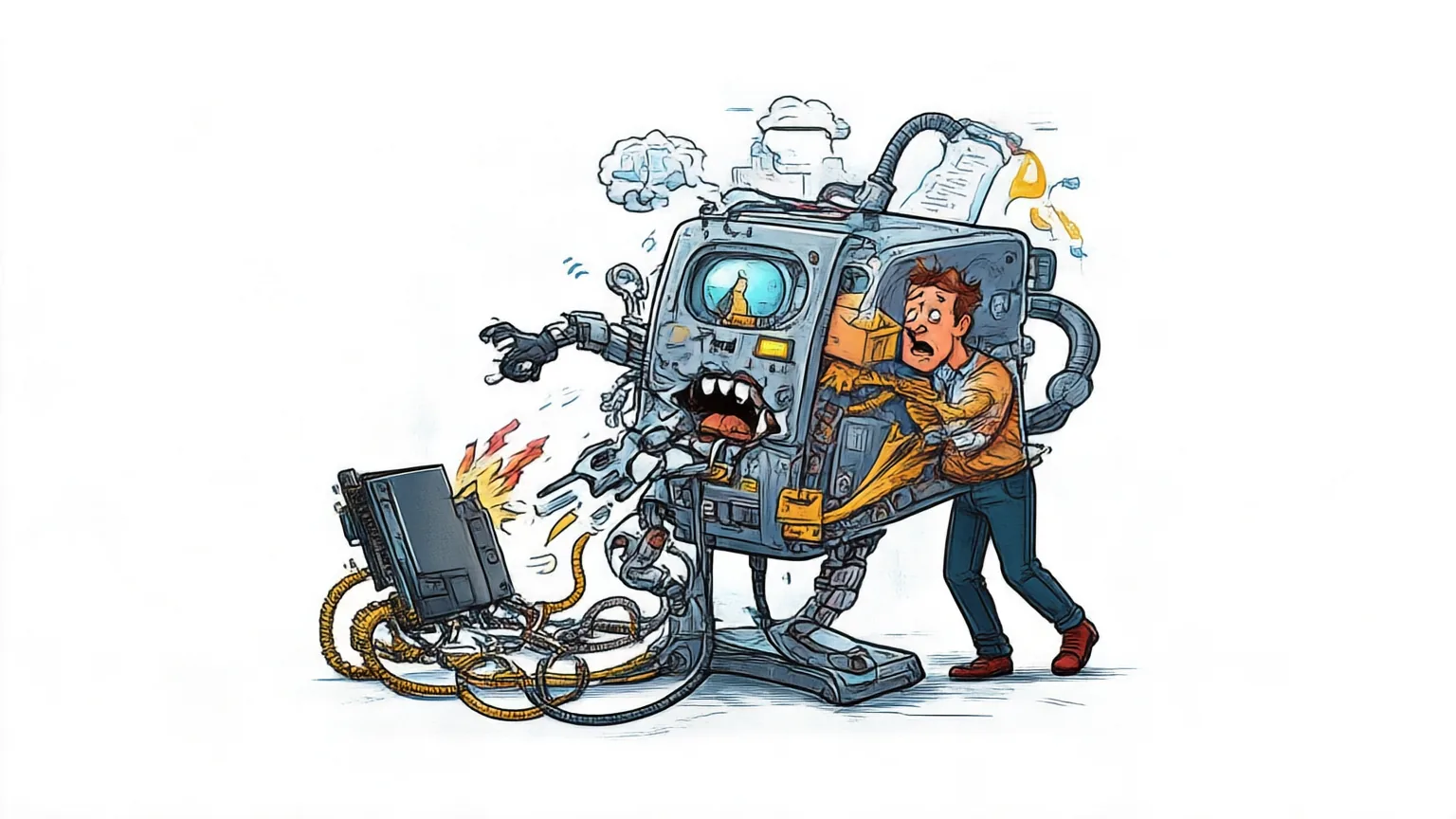
Running a published machine learning experiment again often means piecing together instructions that were never collected in one place. ReproBridge uses coding agents to turn those recovered details into a reusable package. The work tests whether another agent can then repeat the experiment more reliably. Its reported results show higher success and lower API spending with these prepared packages.
- Problem: The information needed to repeat an experiment is scattered across papers, code and supporting files. Released code alone can leave important steps unclear. An agent's success can therefore reflect its ability to guess or recover missing instructions rather than the completeness of what researchers shared.
- New idea: ReproBridge uses an agent workflow, a sequence of tasks carried out by coding agents, to preserve the steps and decisions needed to repeat an experiment. It produces a package containing revised code, software setup instructions, scripts that start experiments and a guide. Later agents test these packages in fresh sessions, without carrying over the earlier agent's session context. A separate auditor checks the evidence that the experiments actually ran.
- Simple example: It is like turning a recipe with missing steps into a complete set of instructions after cooking it successfully. The next cook gets the recovered details instead of having to work them out again.
- Evidence: The benchmark contains 1,029 tasks from 387 experiments across 36 papers, with five human-verified reference scores per task. Across four models, the prepared packages raised mean reproduction success from 76.4% to 92.6% and reduced downstream API spending by 19.7% on average. The success-rate spread between models fell from 21.6 to 3.9 percentage points, and every model exceeded 90% mean success. Removing any package component reduced success, with the largest losses from removing code or environment setup.
- Limitation: The reported cost reduction covers downstream API spending. The abstract does not report whether those savings outweigh the cost of creating the prepared packages.
- Why it matters: Saving the instructions recovered during one attempt makes later attempts more reliable and reduces repeated detective work.
- Paper: ReproBridge: Building Reproducibility into ML Research
Flide: Accelerating Decision Inference with Exact State Forking
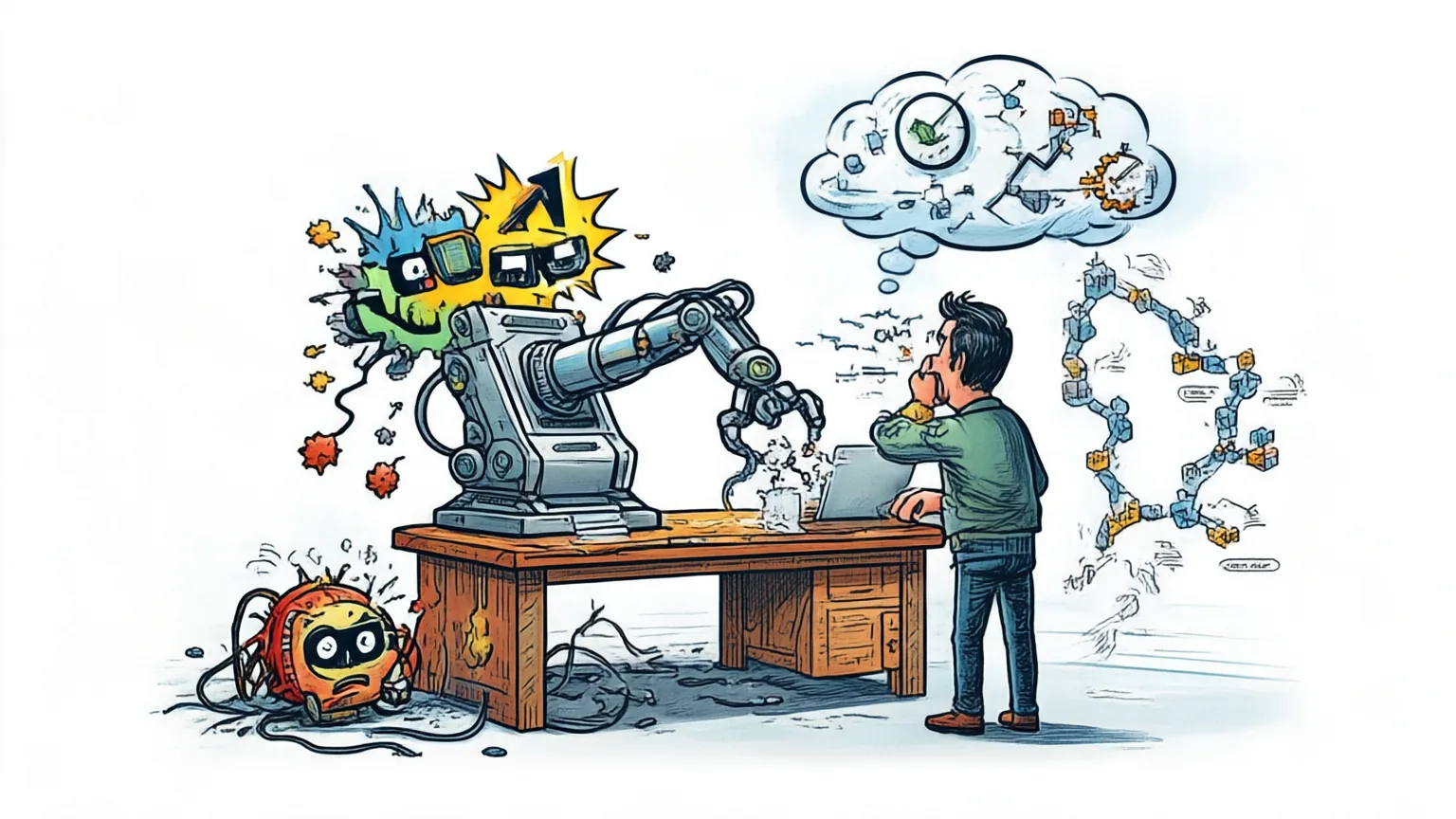
Some AI models choose among possible answers instead of writing long responses. Flide is software designed to run these decisions faster when several questions share earlier context. It reuses shared work while keeping each question's calculation separate where needed. The aim is to reduce waiting without changing the probabilities assigned to the answers.
- Problem: Existing software for running models is built around generating text and handles these decision requests poorly. It can repeatedly process the same shared context or distort the probabilities of possible answers. That creates a tradeoff between speed and faithful results.
- New idea: Flide separates a request's branches, meaning questions that share some context but then diverge, from the order in which the hardware processes them. It places their tokens, the units of text a model processes, into one sequence. ForkAttention, its mechanism for controlling which information each branch uses, keeps dependency records on the graphics processor that performs the calculations. It also saves checkpoints, stored calculation states that later requests can resume as the interaction history grows.
- Simple example: Imagine answering several questions about the same conversation. You would read the conversation once, then consider each question separately without letting one question's extra details affect another. Flide aims to reuse the shared reading while preserving those boundaries.
- Evidence: Tests on public hybrid and decision models report query speeds up to 9.5 times faster than vLLM and SGLang. Flide also stayed closest to a float32 reference, a calculation using 32-bit floating-point numbers, under total variation distance, a measure of differences between probability distributions. The method guarantees that each branch matches a separate model calculation when arithmetic is exact.
- Limitation: The mathematical guarantee assumes exact arithmetic, while the reported numerical tests measure closeness to a reference. The abstract gives a peak speedup but no average speedup or breakdown of the conditions that produced it.
- Why it matters: Flide offers a way for AI agents to make decisions faster while preserving the calculations behind their answer probabilities.
- Paper: Flide: Accelerating Decision Inference with Exact State
Trending AI Repositories
Ranking source: GitHub Trending.
garrytan/gbrain
GBrain gives existing agents a shared memory that users control. It keeps sources alongside explicit facts and lets users correct or withdraw those facts.
- What it is: GBrain shares sourced facts across agents and lets users correct or withdraw those facts.
- What it does: Garry's Opinionated OpenClaw/Hermes Agent Brain
- Who it helps: It helps people who want their agents to draw on the same remembered facts. They can update that memory when information changes or withdraw facts they no longer want retained.
- Limitation: Semantic search is an addition to the starting setup, which uses keyword retrieval.
- Repository: garrytan/gbrain
ZhuLinsen/daily_stock_analysis
This Python project brings stock analysis into a scheduled workflow. Its support for cost-free scheduled runs makes it relevant to readers who want recurring analysis without a running cost for scheduling.
- What it is: This LLM-based stock analysis application combines multiple market-data sources with real-time news, presents results in a decision dashboard, sends automated notifications and supports cost-free scheduled runs.
- What it does: LLM 驱动的多市场股票智能分析系统:多源行情、实时新闻、决策看板与自动推送,支持零成本定时运行。 LLM-powered multi-market stock analysis system with multi-source market data, real-time news, decision dashboard, automated notifications, and cost-free scheduled runs.
- Who it helps: It helps people who follow stocks across multiple markets. They can receive automated notifications rather than rely only on checking the dashboard.
- Limitation: The supplied README excerpt does not explain how to set up the cost-free scheduled runs.
- Repository: ZhuLinsen/daily_stock_analysis
homeassistant-ai/ha-mcp
HA-MCP is a Python MCP server for Home Assistant. Its README flags a breaking change in v7.3.0: ha_config_set_yaml has moved to beta.
- What it is: The server sits between AI assistants and Home Assistant. Its README advertises 87 tools.
- What it does: Configure and automate Home Assistant with Claude, ChatGPT, and other AI assistants.
- Who it helps: It helps Home Assistant users who want to manage their setup through an AI assistant. They can use the server's tools to work with that setup.
- Limitation: Users of ha_config_set_yaml need to account for its move to beta in v7.3.0.
- Repository: homeassistant-ai/ha-mcp
Sources
- 01Hugging Face Papers · Hugging Face Papers
- 02GitHub Trending · GitHub Trending
- 03How skills and agents work in AWS Quick · AWS Machine Learning
- 04Nemotron-Personas-Finance-Japan: A Synthetic Dataset Capturing Japan's Demographics and Financial Context · Hugging Face
- 05Anthropic reportedly plans to move forward with IPO plans · TechCrunch
- 06David Ellison says AI could be the ‘biggest creative unlock in modern history’ · The Verge
- 07Here’s what Trump said he knew about Jensen Huang · The Verge
- 08WorldFoundry: Towards Unified Infrastructure for World Intelligence · arXiv
- 09ReproBridge: Building Reproducibility into ML Research Artifacts · arXiv
- 10Flide: Accelerating Decision Inference with Exact State Forking · arXiv