Google's October AI updates, AWS web preparation and Apple's revenue hints
Get this by email →
Google rounds up its October 2026 AI announcements. AWS explains how to prepare web content for Amazon Bedrock Knowledge Bases with Crawl4AI. Apple hints at revenue opportunities involving third-party AI apps.
News
The latest AI news we announced in October 2026
Google's October 2026 AI updates include the global rollout of Gemini 4 Argon for complex coding, financial analysis and legal workflows. It is available across Google AI Studio, the Gemini API, Google Cloud, Search and the Gemini app. Google announced Gemini 4 Carbon two weeks later. Carbon is in pre-release testing with the U.S. government and selected cyber defenders through the Fairwind Program.
Content detection expands alongside models and simulation
Google describes Carbon as its strongest model yet for long-horizon engineering and cybersecurity defense. Genie 4 supports real-time interactive simulation. It includes native audio and natural-language control of unfolding scenes. Google is also expanding SynthID Detector globally in English. SynthID has watermarked more than 180 billion images and videos and 240,000 years of audio. The detector also identifies AI content from partners including OpenAI, NVIDIA, Kakao and Apple. (Google)
thinkidiot take: SynthID Detector identifies AI content from OpenAI, NVIDIA, Kakao and Apple as well as Google. I would put that partner coverage ahead of Google's strongest-model claim when choosing what to try first. It gives me a concrete detection function to test across those providers. For my workflow, that is the most useful part of this roundup.
Prepare web content for Amazon Bedrock Knowledge Bases with Crawl4AI
AWS has published a workflow that uses Crawl4AI to prepare web content for Amazon Bedrock Knowledge Bases. The open source crawler handles JavaScript rendering, selective extraction and custom metadata enrichment before content reaches Amazon S3. The workflow writes Markdown and a metadata sidecar for each page. It supports both managed and customer-managed knowledge bases.
Batch preparation sets a clear boundary on freshness
Amazon Bedrock Managed Knowledge Base handles ingestion, storage, indexing and retrieval, with service-managed embedding and reranking models by default. The Amazon Bedrock Web Crawler accepts seed URLs or sitemaps and supports scheduled syncs. It can wait for JavaScript-loaded content and respects robots.txt. After its first full crawl, it captures added, updated and deleted content. The Crawl4AI preparation path supports boilerplate pruning, optional CSS-selector extraction and bounded traversal. It uses batch ingestion rather than real-time web access at inference. (AWS Machine Learning)
thinkidiot take: The Crawl4AI path ingests content in batches, so it does not provide live web access when answering a query. I would use its CSS selectors and boilerplate pruning to control what enters the knowledge base. That puts the work of selecting content before ingestion. I value that explicit preparation step more than treating every crawled page as ready to retrieve.
Apple may try to increase revenue by doing…something with third-party AI apps
Apple CFO Kevan Parekh outlined potential AI revenue opportunities during the company's Monday night earnings call. He named third-party apps, partnerships and first-party offerings without specifying a third-party plan. Reuters reported that investors were considering the prospect of Apple distributing third-party AI agents through the App Store and taking a share of their revenue. No new third-party capability was announced.
Commission estimates and subscription records tell different stories
Third-party estimates in August suggested an 18% decline in Apple's U.S. App Store commission revenue. The Epic Games lawsuit forced Apple to allow apps to redirect users to outside payment systems. Parekh said September-quarter App Store performance was similar to the prior year. He reported record paid subscriptions. He also reported double-digit growth for third-party apps. Apple forecast services growth of 8% to 9% for the December quarter. (TechCrunch)
thinkidiot take: Apple named AI revenue opportunities without specifying a third-party plan. I would keep an app's distribution decisions tied to that distinction: investor interest in an agent store is not an announced offering. The 8% to 9% services growth forecast gives a concrete business target, but no agent distribution terms to evaluate. This is a revenue discussion, and I would give it little weight in a build plan.
Y Combinator’s Garry Tan uses AI agents so much, he spends up to $200K a year on tokens
Y Combinator's Garry Tan said he spends approximately $100,000 to $200,000 a year on AI tokens. He discussed that spending on Walter Isaacson's podcast, The Builders. Tan has also shared gstack, a collection of 23 Claude Code skills, on GitHub.
Personal archives and founder records supply the context
Tan said his personal agent had read his email, Dropbox and Apple Notes. It had also read therapy notes going back 20 years. He described Y Combinator's internal agent, Stray Light, as having context covering every founder it has backed. That context also covers everyone who has emailed Y Combinator and all applications. Tan said personal AI agents need lower costs to become mainstream. He described his own spending as a privilege. (TechCrunch)
thinkidiot take: Tan's annual token spending reaches approximately $200,000. I would start by inspecting the 23 skills he shared on GitHub rather than treating that budget as a model for my own setup. His account ties agent use to extensive personal and organizational context, while he explicitly calls for lower costs. I find the shared skills a more useful starting point than the spending figure.
Goldman Sachs pulls AI coding tools from traders and bankers
Goldman Sachs has restricted advanced AI coding tools to engineers, according to Bloomberg's reporting on October internal guidelines. The restrictions cover tools such as Claude Code and GitHub Copilot. Traders and bankers are losing access after months of using them to monitor trading flows and create content.
The reversal follows public support for staff prototypes
In July, Goldman CIO Marco Argenti praised AI prototyping by non-technical staff. He described those staff members developing ideas before handing them to engineers for production. Goldman spokesperson Nick Carcaterra cited productivity among the factors behind the restrictions. He also cited risk management. Carcaterra said the experimentation phase was over. (The Decoder)
thinkidiot take: Goldman's October guidelines restrict coding tools to engineers after its CIO praised non-technical prototyping in July. I would want to preserve the prototype-to-engineer handoff Argenti described. It gave non-technical staff a role in developing ideas while leaving production work with engineers. For me, ending that access is a less convincing choice than the workflow Goldman had already endorsed.
Trending AI Papers
Ranking source: Hugging Face Papers for 2026-11-03.
Video Generation Meets Agent Harness: Agentic Video Generation, Agentic World Modeling and Recursive Self-Improvement
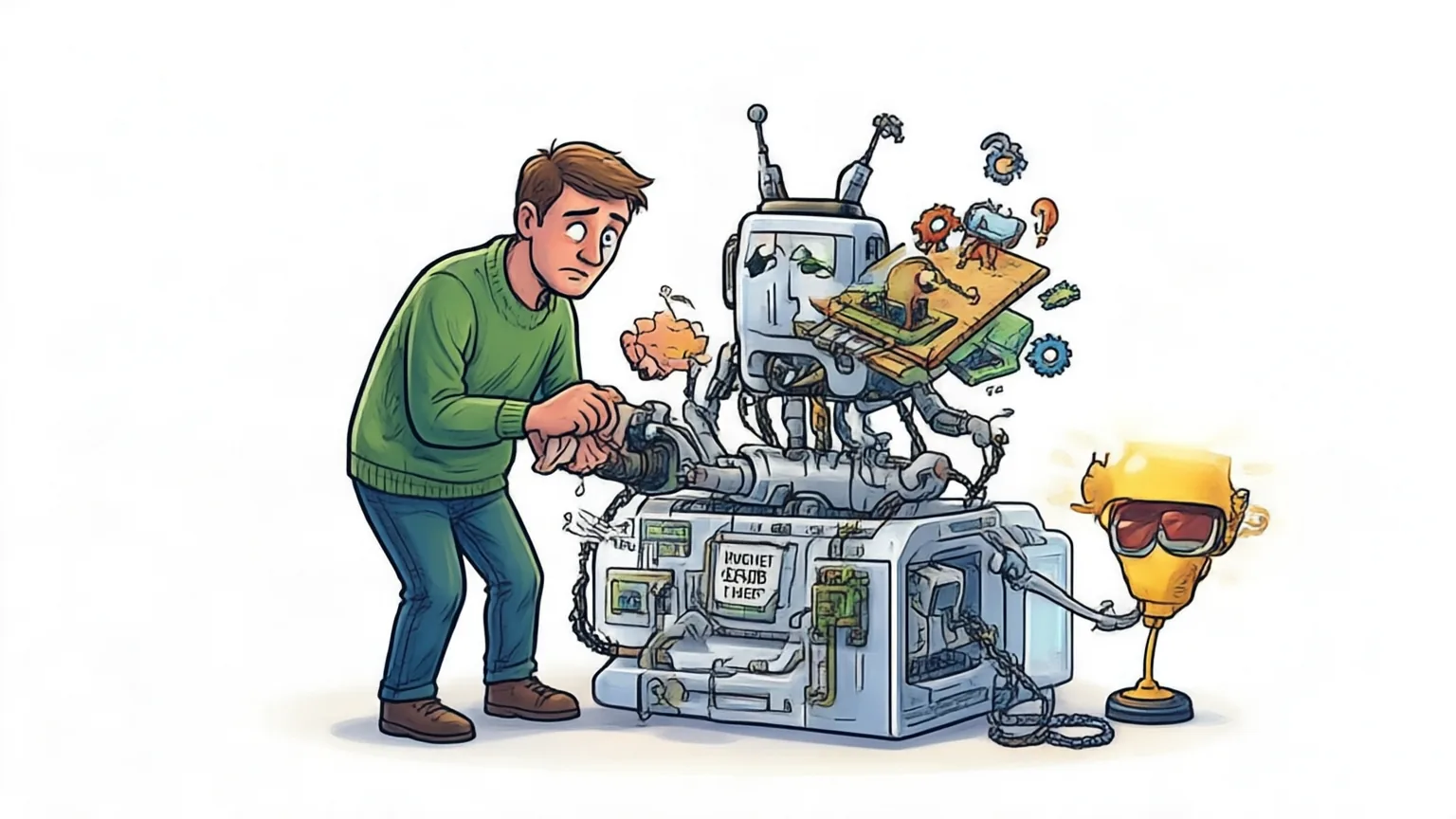
Making a video with AI can involve much more than asking a model for a clip. This report examines how software can organize the planning, tools and revisions needed to make connected scenes. It also explores using generated video as an environment where AI agents can act and see what happens. The aim is to explain how these systems could improve both their videos and the processes used to make them.
- Problem: Generating a video in one pass does not provide all the planning, memory and control needed for a production with several shots. Systems that revise their work also need ways to distinguish a better clip from a lasting improvement in the model or its supporting software.
- New idea: The report centers on an agent harness, the software that gives an AI agent tools, keeps track of its work and manages feedback and spending limits. For video production, this software coordinates scripts, shots, assets and editing. For simulated environments, a game engine or program can track what exists and what changes while a video model creates the visible scene. The report also separates revisions to individual outputs from changes to models, evaluation systems and the improvement process itself.
- Simple example: Think of a film crew's production coordinator: someone keeps the script, props, shot order and requested edits organized. The harness fills a similar role around the video model.
- Evidence: The abstract reports a conceptual analysis of video production, simulated environments and systems that improve their own development process. It provides no measured performance results.
- Limitation: The abstract does not demonstrate that repeated revisions produce lasting improvements in models or their supporting software. Measuring that progress remains an open challenge.
- Why it matters: This matters because useful video systems need to keep track of a task and respond to feedback as well as generate pictures.
- Paper: Video Generation Meets Agent Harness: Agentic Video
From Fragmentation to Fusion: A Survey and Roadmap for Omnimodal Embeddings
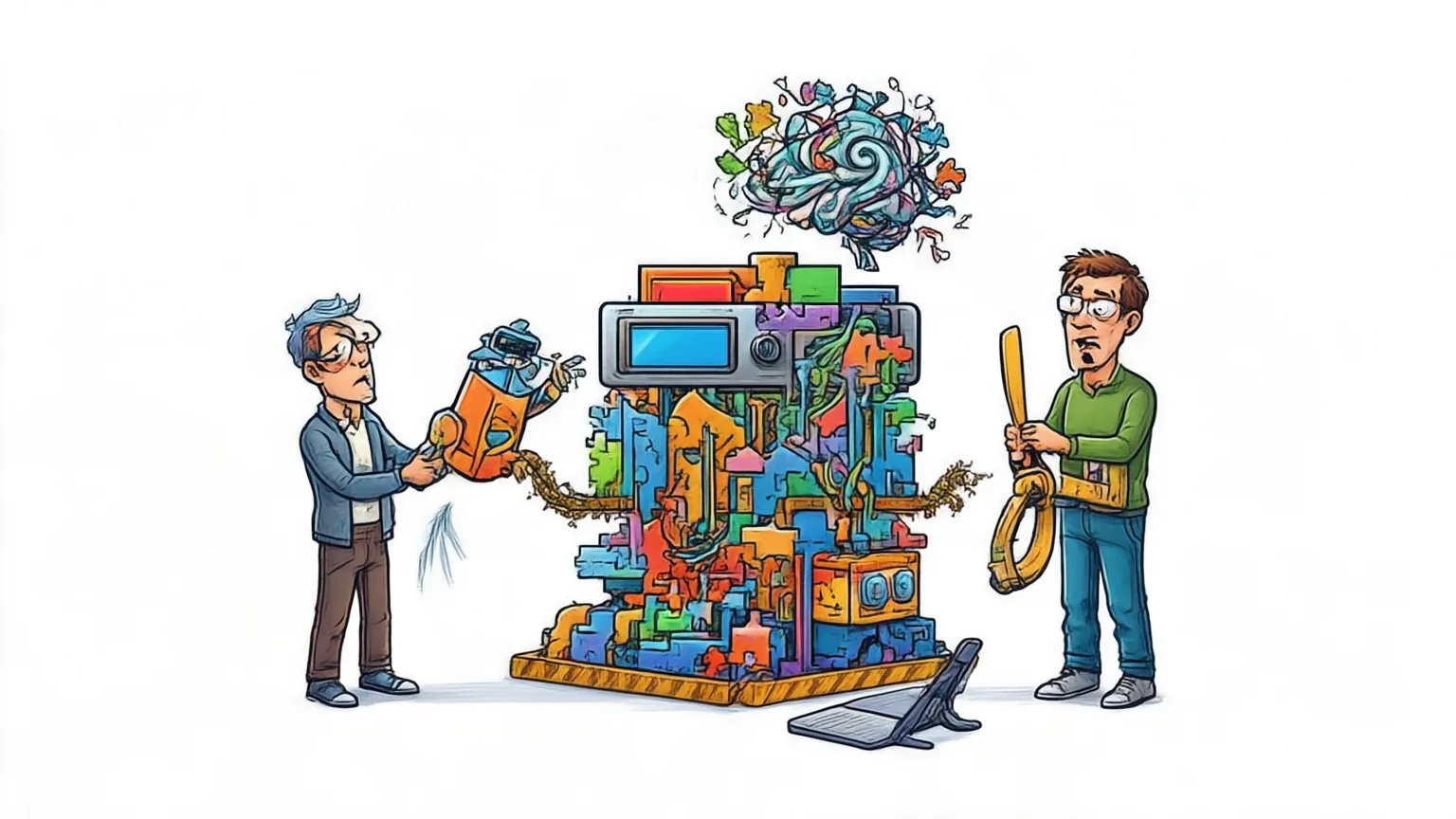
AI systems use numerical representations to organize information for tasks such as search and recommendations. This paper examines research on these representations across different kinds of input. It argues that separate research communities are moving toward shared methods without exchanging enough ideas. The authors propose a way to distinguish handling more kinds of information from understanding them together.
- Problem: Researchers often study representations for each kind of input separately, despite sharing mathematical foundations. That separation hides common ideas and leaves challenges specific to each kind of input insufficiently explored.
- New idea: An embedding is a numerical representation of information that an AI system can work with. The paper distinguishes coverage, meaning support for different kinds of input; comparability, meaning the ability to compare their representations; and compositionality, meaning the ability to represent combinations of information. It connects these abilities to converting inputs into supported forms, aligning their representations so they can be compared, and building representations jointly. The authors favor the joint approach as the destination for combining information across input types.
- Simple example: Think of a library: accepting different kinds of material is one achievement, making them searchable together is another, and connecting their contents into a shared account is harder still. These illustrate the paper's distinctions between coverage, comparability and compositionality.
- Evidence: The abstract presents a framework linking three capabilities to three routes toward unified representations. It reports a synthesis of research, with no experimental scores or measured gains.
- Limitation: The abstract does not show that the favored joint approach achieves compositionality. It also acknowledges that challenges specific to different kinds of input remain underexplored.
- Why it matters: This matters because accepting several kinds of information does not by itself mean an AI system can understand how they fit together.
- Paper: From Fragmentation to Fusion: A Survey and Roadmap for
Wave Forcing: Towards Speed-of-Light Streaming Video Generation
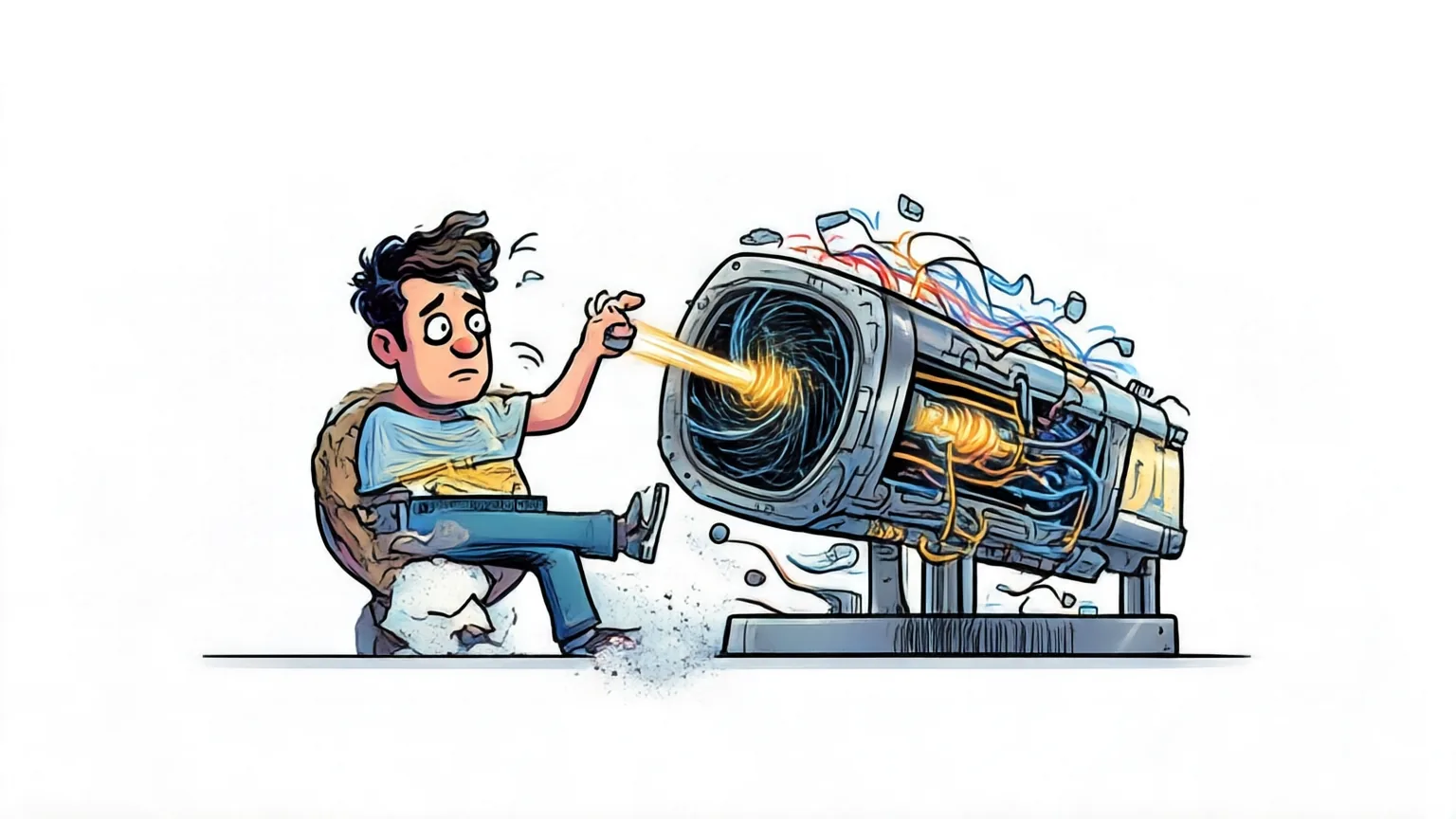
An AI video stream needs to keep producing frames while preserving the scene and its movement. Wave Forcing tackles the delays and visual deterioration that can build up during long generation runs. It overlaps work on successive pieces of video across copies of a model. The paper tests both the resulting video quality and the speed of the system.
- Problem: Existing methods generate video in chunks, or short sections, but separate steps for cleaning up each section and refreshing stored history slow the process. Even with one cleanup step, they require two model passes. Longer runs can also lose quality and develop unintended camera movement.
- New idea: Wave Forcing overlaps denoising, the repeated removal of noise to form a video, across successive chunks. A chunk can use information from earlier, cleaner chunks before those chunks are finished, while copies of the full model share the staggered work. Once this production line is full, each round of simultaneous model passes produces one output chunk. Training prepares the model for partially cleaned video, motion and its own generated history, while supporting software overlaps data transfers with computation.
- Simple example: Think of a production line where several items are being worked on at once. An item still needs several stages, but after the line fills, a finished item can emerge every round.
- Evidence: On Wan2.1-T2V-1.3B, 5-step Wave Forcing reports overall quality comparable to Rolling Forcing and higher Dynamic Degree, a motion measure, on short and long videos. With 4 steps on eight H200 GPUs, it reaches 147.6 frames per second in the video-generating model and 134.8 frames per second for the complete process, or 7.07 times the single-GPU throughput. In tests of the generating model alone, with matched software backends, denoising steps and GPU counts, Wave Parallelism reaches up to 2.53 times the throughput of the faster Ulysses or Ring baseline across six model scales from 1.3B to 14B.
- Limitation: The headline speed result uses eight H200 GPUs. The quality comparison uses 5-step generation, while the headline speed measurement uses 4 steps, so they do not establish the same quality at that reported speed.
- Why it matters: This matters because overlapping the work can make continuous AI video faster while retaining several steps of visual refinement.
- Paper: Wave Forcing: Towards Speed-of-Light Streaming Video
Trending AI Repositories
Ranking source: GitHub Trending.
vercel-labs/agent-desktop
agent-desktop gives AI agents a way to read and operate desktop apps through the OS accessibility tree. That access method is the detail to notice when considering how an agent will interact with an app.
- What it is: This Rust project sits between an AI agent and desktop apps, using the operating system's accessibility tree.
- What it does: Computer use CLI for AI agents
- Who it helps: It helps people building agents that need to interact with desktop apps. Their agents can read and operate those apps through the accessibility tree.
- Limitation: The project supports macOS, Windows and Linux, but the supplied excerpt does not identify supported apps.
- Repository: vercel-labs/agent-desktop
D4Vinci/Scrapling
Scrapling is a Python project for extracting information from the web. It is relevant to readers working on web scraping, though the supplied README excerpt offers little technical detail.
- What it is: Scrapling is a Python web scraping framework whose description covers single requests through full crawls.
- What it does: 🕷️ The BEST Web Scraping framework that handles everything from a single request to a full-scale crawl! Don't be shy, join here: https://discord.gg/EMgGbDceNQ and follow here for daily tips and tricks: https://x.com/Scrapling_dev
- Who it helps: It serves Python users who need to collect information from websites. They can follow the README's documentation link to learn how to use it.
- Limitation: The supplied excerpt does not describe setup requirements or scraping constraints.
- Repository: D4Vinci/Scrapling
FlashML-org/FreeToken
FreeToken is a Python project focused on local model serving. It is relevant to readers exploring desktop use of models, but the supplied excerpt gives no technical evidence for its performance claims.
- What it is: It sits in the tooling for serving models on a local computer. The repository lists Python as its language.
- What it does: FreeToken brings datacenter-scale model serving to your desktop. Run massive models locally, fast and efficiently.
- Who it helps: It targets people who want to use models on their own computers. They can consider it for local serving, though the supplied material does not establish which models it supports.
- Limitation: The supplied excerpt gives no hardware requirements or performance measurements.
- Repository: FlashML-org/FreeToken
Sources
- 01Hugging Face Papers · Hugging Face Papers
- 02GitHub Trending · GitHub Trending
- 03The latest AI news we announced in October 2026 · Google
- 04Prepare web content for Amazon Bedrock Knowledge Bases with Crawl4AI · AWS Machine Learning
- 05Apple may try to increase revenue by doing…something with third-party AI apps · TechCrunch
- 06Y Combinator’s Garry Tan uses AI agents so much, he spends up to $200K a year on tokens · TechCrunch
- 07Goldman Sachs pulls AI coding tools from traders and bankers · The Decoder
- 08Video Generation Meets Agent Harness: Agentic Video Generation, Agentic World Modeling and Recursive Self-Improvement · arXiv
- 09From Fragmentation to Fusion: A Survey and Roadmap for Omnimodal Embeddings · arXiv
- 10Wave Forcing: Towards Speed-of-Light Streaming Video Generation · arXiv