Grok’s Odyssey arrives, AI’s payoff stalls, and r/opensource shuts the door
Get this by email →
Grok releases seven minutes of its AI-generated Odyssey. An Apollo economist reports no financial payoff from AI outside tech. New r/opensource rules exclude AI projects and tell non-English speakers to go elsewhere.
News
Grok releases the first seven minutes of its AI-generated ‘Odyssey’
Grok has released seven minutes of its AI-generated Odyssey. Grok Imagine shared the footage in a post dated October 23, 2026. The release is labeled Episode 1 of a series. Viewers can now watch an opening installment.
A full-length promise becomes a series opener
The release came three months after Elon Musk promised a full-length Odyssey movie with historical accuracy. The episode was made with Grok Imagine in collaboration with Wonder Studios and director Dev Walker. (TechCrunch)
thinkidiot take: Seven minutes have arrived three months after a promise of a full-length movie. I would judge the released installment on whether it earns my attention as a story. The change to an episodic release makes the original promise a poor description of what viewers have in hand. A finished opening deserves a viewing, but it does not earn credit for a finished movie.
AI delivers ‘zero financial payoff’ to most companies, Apollo economist says
Apollo Global Management chief economist Torsten Slok reported no financial payoff from AI for corporate America outside tech. He examined the S&P 493, excluding seven companies from the S&P 500.
Cheaper intelligence meets flat business measures
The excluded companies were Alphabet, Amazon, Apple, Meta, Microsoft, Nvidia and Tesla. Slok found that profit margins and revenue per worker both appeared flat, with no evidence of AI improving productivity in those measures. Slok argued that increasingly cheap intelligence would be difficult to turn into higher revenue growth and profit margins. (TechCrunch)
thinkidiot take: Slok found no evidence of a productivity improvement in the S&P 493 measures he examined. I would use revenue per worker and profit margins to assess an AI deployment before calling it a business success. Cheaper intelligence alone does not satisfy that test. The financial case deserves more weight than the enthusiasm surrounding the technology.
r/opensource just banned AI, non-English speakers, and more
Moderators at r/opensource announced submission rules banning projects that use AI, are made by AI, or are intended for AI. The announcement was posted Saturday evening. The changes prompted the creation of r/trueopensource. That rival subreddit now gives people another community to turn to.
Established projects only, with no contributor requests
Submitted projects must be at least one year old, actively maintained and have multiple contributors. Moderators said they would no longer accept requests for maintainers or contributors. The rules tell non-English speakers to find another community. Moderators say they cannot distinguish AI-written text from AI-translated text. Moderator Wolvereness said selective enforcement could allow room for incidental AI accessibility features such as automatic captioning. (The Verge)
thinkidiot take: Projects must now have multiple contributors, while requests for contributors are no longer accepted. I would have no use for this submission channel when seeking collaborators for a new project. The language rule also makes the moderators’ difficulty identifying AI text a reason to exclude people. These rules put too much weight on keeping projects out of an open-source community.
Google’s AI search changes upended online publishing
Google launched AI Overviews in 2024, placing generated summaries above links to selected sources in Search. It followed with AI Mode in May 2025. That chatbot-like interface gives users detailed summaries of web results. Search users can now read those summaries within Google’s interfaces.
Publisher traffic figures show the scale of the shift
A Press Gazette investigation found AI Overviews in almost a quarter of news-related searches in May 2024. Similarweb data tracked a decline in the New York Times’s search traffic share over three years. That share fell from 44 percent to 35.5 percent. The Wall Street Journal cited those figures. Digital Content Next separately reported Google traffic losses among 19 members between May and June 2025. Those losses ranged from 1 to 25 percent. (The Verge)
thinkidiot take: Nineteen Digital Content Next members reported Google traffic losses of 1 to 25 percent between May and June 2025. I would include publisher referrals in any assessment of Google’s summary interfaces. Placing generated answers above source links gives the summary priority over the underlying reporting. That is a design choice I would reject for news search.
Nvidia open-sources Flora to make robot video labeling 125x cheaper than GPT-6 Astra
Nvidia has open-sourced Flora, a system for labeling robot video, with models available on Hugging Face. In Nvidia’s 50-video test, Flora scored 57.1 percent on annotation quality against GPT-6 Astra’s 53.7 percent. Estimated costs were $0.72 per video hour for Flora and $88.49 for GPT-6 Astra. Flora’s cost is a projection assuming $10 per GPU-hour.
Action detection leads, but descriptions lag
Flora uses three fine-tuned Qwen3.5 models: a 9B action segmentation model, a 27B captioning model, and the 27B Flora-Rewarder. Flora-Rewarder scores episode success from 1 to 5 and evaluates performance against self-defined rubrics. It also classifies half-second steps as normal, suboptimal, or failure. Nvidia says Flora annotates up to 200,000 video hours daily across 512 GB300 GPUs during GR00T training. On WGO-Bench, Flora led action-boundary detection but trailed GPT-6 Astra overall and Gemini 3.8 Flash in description accuracy. On RoboRewardBench, Flora’s error rate was 27.8 percent lower than GPT-6 Astra’s, and Flora-Rewarder detected 53.3 percent of failed steps. (The Decoder)
thinkidiot take: Flora’s projected labeling cost is $0.72 per video hour, against $88.49 for GPT-6 Astra in Nvidia’s comparison. I would test the available models on action boundaries first, where Flora led WGO-Bench. Its weaker description accuracy makes that distinction matter when choosing a labeling system. Flora earns a trial for robot action labeling, but the results do not justify treating it as suited to every annotation task.
Trending AI Papers
Ranking source: Hugging Face Papers for 2026-10-26.
UserArena: Benchmarking Interactive User Simulation for Long-Horizon Shopping Agents

Shopping assistants need to respond as a shopper's choices unfold. UserArena gives researchers recorded shopping sessions and an environment for testing how well simulated shoppers behave. It also lets them check simulated results against a controlled experiment on a live shopping service. The work aims to make these simulations more faithful over extended exchanges.
- Problem: Testing a shopping assistant requires a simulation that captures both the shopping environment and how people respond over time. Existing resources rarely offer detailed records of long shopping sessions or ways to check simulated outcomes against live experiments.
- New idea: UserArena combines recorded shopping sessions with an environment where an assistant can act and receive responses. Its checks cover valid outputs, individual choices, behavior across a session, responses tailored to each user, and final outcomes. The authors also introduce On-Policy Trajectory Distillation, a way to train a shopper simulator using guidance from a teacher model. The teacher uses intent across a whole session to guide the simulator along sequences the simulator itself produces.
- Simple example: Think of rehearsing a conversation with a shopper: each response needs to make sense in light of the whole exchange. UserArena lets researchers check that continuity and compare simulated outcomes with those from a live experiment.
- Evidence: UserArena contains 64,729 session trajectories from 11,010 users, spanning 566,102 items and 13 action types. Under its evaluation protocol, OPTD had the strongest overall fidelity among the simulators tested and came closest to reproducing the production policy's effect. The abstract gives no numerical size for those improvements.
- Limitation: The abstract reports validation against a controlled production A/B test but does not establish whether the results hold across other shopping services or production experiments.
- Why it matters: More faithful shopper simulations could help researchers judge changes to shopping assistants before testing them with real users.
- Paper: UserArena: Benchmarking Interactive User Simulation for
RSIHub: A Composable Framework for Agent-Evolution Methods
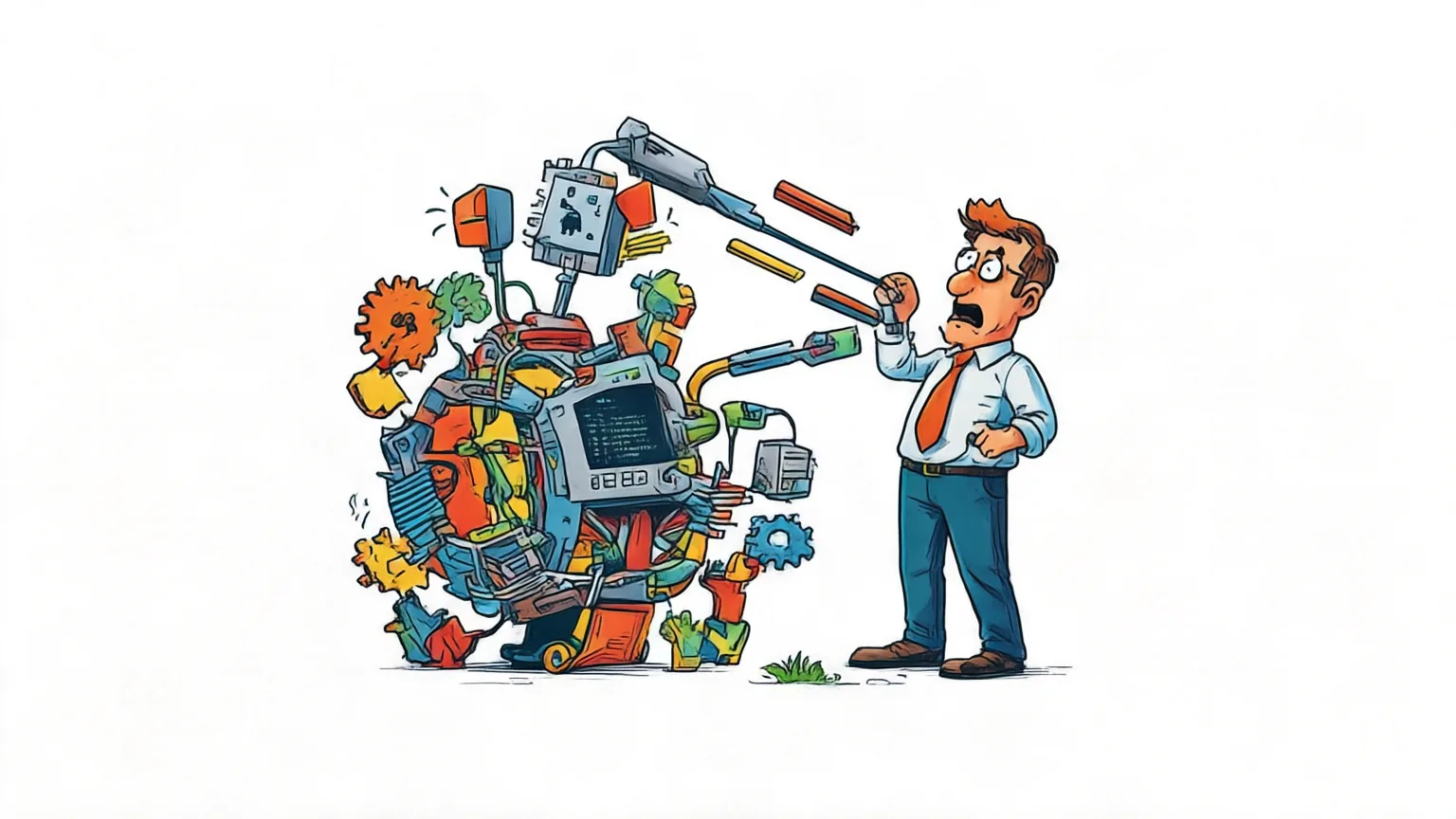
Researchers are testing ways for AI agents to improve using feedback from their own work. Comparing these approaches is harder when each comes with its own experimental setup. RSIHub provides shared software for running and checking them. It aims to let researchers spend more effort on how agents improve while keeping their experiments traceable.
- Problem: Methods for improving agents often rebuild the same software for running experiments and checking results. Separate implementations make it harder to reuse components and compare methods under common conditions.
- New idea: RSIHub is an open-source framework, a shared software base for building methods that improve agents from execution feedback. Each method uses a recipe, a specification that combines reusable operations and declares which resources it may change. The framework runs experiments, evaluates results, handles recovery, and records the history of each candidate version. Evaluation stays outside the resources the method can alter, and each result remains linked to the version tested and its test conditions.
- Simple example: Think of a shared workshop where teams can change their designs but use the same testing equipment. RSIHub also keeps a record of each version, so a result can be traced back to what was tested and under which conditions.
- Evidence: The authors implemented AHE, Hyperagents, A-Evolve, and GEPA without changing RSIHub's core. They tested the methods with MiniSWE and Codex on Terminal Bench 2 and τ^3 Banking, keeping model and evaluator configurations fixed. The largest observed overall gain in pass@1, success on a single attempt, was 13.5 percentage points.
- Limitation: Method rankings changed across settings, and improvements during optimization did not always carry over to tasks kept aside for testing.
- Why it matters: A shared experimental setup makes it easier to compare agent improvement methods and trace their results.
- Paper: RSIHub: A Composable Framework for Agent-Evolution Methods
Omni-Woodpecker: Hallucination Correction via Evidence-Prior Rebalancing for Omni LLMs

AI systems that process sound and video together can still describe things the input does not support. Omni-Woodpecker tries to correct these errors before the system writes its answer. It changes how the system weighs incoming evidence against patterns learned earlier. The approach requires no additional training.
- Problem: Systems that combine sound and images can make unsupported claims when they mix the two sources. Existing correction methods mainly adjust the answer, leaving the internal mixture of observed evidence and learned expectations unaddressed.
- New idea: Omni-Woodpecker first examines sound and images separately to find conflicts between them. It then uses orthogonal decomposition, a mathematical separation into perpendicular components, to distinguish input evidence from competing learned expectations inside the model's internal numerical state. When it finds a conflict, it reduces the influence of misleading expectations and strengthens evidence the model overlooked. These adjustments happen before the model turns its internal state into an answer, without additional training.
- Simple example: Think of checking both what you saw and what you heard before describing an event. If they clash, the approach is like separating those observations from what you expected to happen before deciding what to say.
- Evidence: With Qwen2.5-Omni-7B, Omni-Woodpecker improved performance by 12.9 points on CMM and 8.6 points on AVHBench. It also gained 0.67 to 2.25 points across four general audio-visual reasoning benchmarks. With VideoLLaMA2-AV, the gains on CMM and AVHBench were 4.6 and 3.9 points, respectively.
- Limitation: The abstract reports benchmark gains but does not give the remaining rate of unsupported claims or the extra computation needed for correction.
- Why it matters: Checking sound and visual evidence before answering could reduce unsupported claims without retraining the model.
- Paper: Omni-Woodpecker: Hallucination Correction via
Trending AI Repositories
Ranking source: GitHub Trending.
makecindy/cindy
Cindy is a TypeScript project for an AI agent that does work on your own computer. That focus puts the reader's machine at the centre of its pitch.
- What it is: Cindy brings multiple harnesses, models and tools together to work in projects and apps on the user’s computer. It is released under the Apache 2.0 licence, and the README offers English and Simplified Chinese versions.
- What it does: Consider it done. The open-source AI agent that works out of the box · 想到,就能做到。开源、开箱即用的 AI Agent。
- Who it helps: It is aimed at people who want an AI agent to work on their own computer. They can use Cindy for that role, though the supplied excerpt gives no concrete task examples.
- Limitation: The supplied README excerpt does not provide setup instructions or concrete task examples.
- Repository: makecindy/cindy
JetBrains/thinkrail
ThinkRail is an agentic development environment that learns about a project through living specs. Its README separates that present focus from a future ambition to build its own capabilities.
- What it is: ThinkRail is a TypeScript project in the JetBrains incubator. It provides an interface around pi, separate workspaces, and durable project knowledge through living specs and reusable skills.
- What it does: Vibe code with pi in a lightweight, real IDE that customises itself around the way you work , The Vibe You Need
- Who it helps: It is aimed at developers who want their development environment to learn about their project as they work. They can use its living specs approach to support that project understanding.
- Limitation: Building its own capabilities is described as a future ambition, not a current feature.
- Repository: JetBrains/thinkrail
AgriciDaniel/claude-seo
Claude SEO is a free, open-source audit plugin by Agrici Daniel. It brings website audits into Claude Code, with attention to both conventional search and AI search.
- What it is: Claude SEO checks websites for crawl access, speed and structured data, covering conventional search and AI search within Claude Code. It is a Python project released under the MIT licence.
- What it does: Universal SEO skill for Claude Code. 26 sub-skills + 19 sub-agents covering technical SEO, E-E-A-T, schema, GEO/AEO, agent readiness (Lighthouse Agentic Browsing, WebMCP, llms.txt), backlinks, local SEO, e-commerce, international SEO, Google APIs, and PDF/Excel reporting. 9 optional extensions for live SEO data.
- Who it helps: It helps people checking how their websites perform in search. They can audit issues such as crawl access, speed and structured data within Claude Code.
- Limitation: The plugin is designed for use with Claude Code.
- Repository: AgriciDaniel/claude-seo
Sources
- 01Hugging Face Papers · Hugging Face Papers
- 02GitHub Trending · GitHub Trending
- 03Grok releases the first seven minutes of its AI-generated ‘Odyssey’ · TechCrunch
- 04AI delivers ‘zero financial payoff’ to most companies, Apollo economist says · TechCrunch
- 05r/opensource just banned AI, non-English speakers, and more · The Verge
- 06Google’s AI search changes upended online publishing · The Verge
- 07Nvidia open-sources Flora to make robot video labeling 125x cheaper than GPT-6 Astra · The Decoder
- 08UserArena: Benchmarking Interactive User Simulation for Long-Horizon Shopping Agents · arXiv
- 09RSIHub: A Composable Framework for Agent-Evolution Methods · arXiv
- 10Omni-Woodpecker: Hallucination Correction via Evidence-Prior Rebalancing for Omni LLMs · arXiv