AI projects fall away, Block finds a voice, and fired researchers push back
Get this by email →
An AI graveyard tracks projects that failed to last. Block’s new voice model sounds eerily human. Three fired OpenAI safety researchers say they were never told what they allegedly leaked.
News
The AI graveyard: a running list of projects and startups that didn’t make it
Relay, an AI workflow automation alternative to Zapier, shut down entirely in August. Character.ai filed for bankruptcy five years after launching. According to S&P Global Market Intelligence, about 42% of corporate AI initiatives are ultimately abandoned. TechCrunch’s running list brings these failures together with projects that missed expectations.
OpenAI’s reversals reach across its product lineup
OpenAI rolled back a July 9 ChatGPT redesign. That redesign introduced Chat, Codex, and Work modes and renamed the familiar version ChatGPT Classic. ChatGPT Atlas was discontinued on August 9 after less than a year. Its features were absorbed into ChatGPT. Sora shut down in March 2026 after struggling with high operating costs and user retention. The list also covers Apple’s repeatedly delayed Siri AI. (TechCrunch)
thinkidiot take: About 42% of corporate AI initiatives are ultimately abandoned, according to S&P Global Market Intelligence. I would treat an exit plan as part of adopting any AI tool. Relay’s complete shutdown and Atlas’s absorption into ChatGPT show two different endings that such a plan must account for. For me, a useful tool deserves a place in a workflow only when that workflow can survive its disappearance.
Block’s new voice model sounds eerily human
Block released Dessa, a speech model that can talk and listen simultaneously. That full-duplex design allows speech in both directions at once. Block says Dessa can run locally on a consumer computer such as a MacBook M4 Max or better.
Safety researchers get the invitation before public access
Block says Dessa was trained entirely on human speech using a single NVIDIA GPU rack. Its knowledge comes from its conversational data. Researchers demonstrated different voices, cadences, and emotions, including a tired delivery. Dessa has no public access yet. Block is inviting safety researchers to test it. (TechCrunch)
thinkidiot take: Dessa has no public access yet, so I cannot put Block’s local-running claim through my own test. My check would be how well it listens while speaking on the stated hardware. The demonstrated voices and emotions would come second in that assessment. Simultaneous conversation on a local computer is the feature I care about most.
Three fired OpenAI safety researchers say they were never told what they actually leaked
Tomek Korbak, Mikita Balesni, and Jasmine Wang are publicly challenging OpenAI after it fired them over alleged sensitive-information policy violations. All three deny sharing confidential information. They say OpenAI never told them in writing which information they supposedly mishandled.
The dispute also touches access to model reasoning
According to the reported investigation, security staff found Signal chats with disappearing messages on personal phones. All three researchers were fired a week later. OpenAI says the firings were unrelated to their safety concerns or their use of Signal. The researchers see a connection to their advocacy for AI systems that are easier to scrutinize. In a 2025 paper, Balesni, Korbak, and Wang joined researchers from several AI labs in calling for continued access to models’ chain-of-thought traces. The Information reported on September 1 that Astra was more capable but revealed less of its reasoning. OpenAI chief scientist Jakub Pachocki disputed that report. (The Decoder)
thinkidiot take: The three researchers say they received no written identification of the information they allegedly mishandled. I would want that specific allegation before judging the firings. The reported Signal discovery and the dismissals a week later establish a sequence, while OpenAI denies that Signal use or safety concerns drove the decision. That sequence alone is an inadequate basis for assigning blame.
AI makes junior patent attorneys instantly better but may quietly stunt their professional growth
A three-month randomized trial studied 133 patent attorneys across eleven U.S. intellectual property law firms. In the Google-funded study, two-thirds received Google’s unreleased InFlow assistant, while one-third worked without AI. AI-assisted drafting outperformed the control group at both 10 and 90 days across all five scoring dimensions.
The unaided review task separated output gains from retained benefits
Independent blinded reviewers scored the work. They assessed enforceability, technical accuracy, strategic ambiguity, completeness, and clarity. Top scores changed little. Drafting gains were much larger for junior attorneys with fewer than seven years of experience than for senior attorneys. A third task required participants to review a patent draft without AI. The treatment group’s advantage in that task came entirely from senior attorneys. Juniors showed no overall benefit. (The Decoder)
thinkidiot take: Junior attorneys showed no overall benefit when asked to review a patent draft without AI. I would include unaided review tasks in any training built around this assistant. The larger drafting gains for juniors did not carry over into an advantage on that task. I would count the assisted results as better output, but not as evidence that junior attorneys had gained lasting skill.
Trending AI Papers
Ranking source: Hugging Face Papers for 2026-10-25.
Toward Recursive Self-Improvement in Physical AI
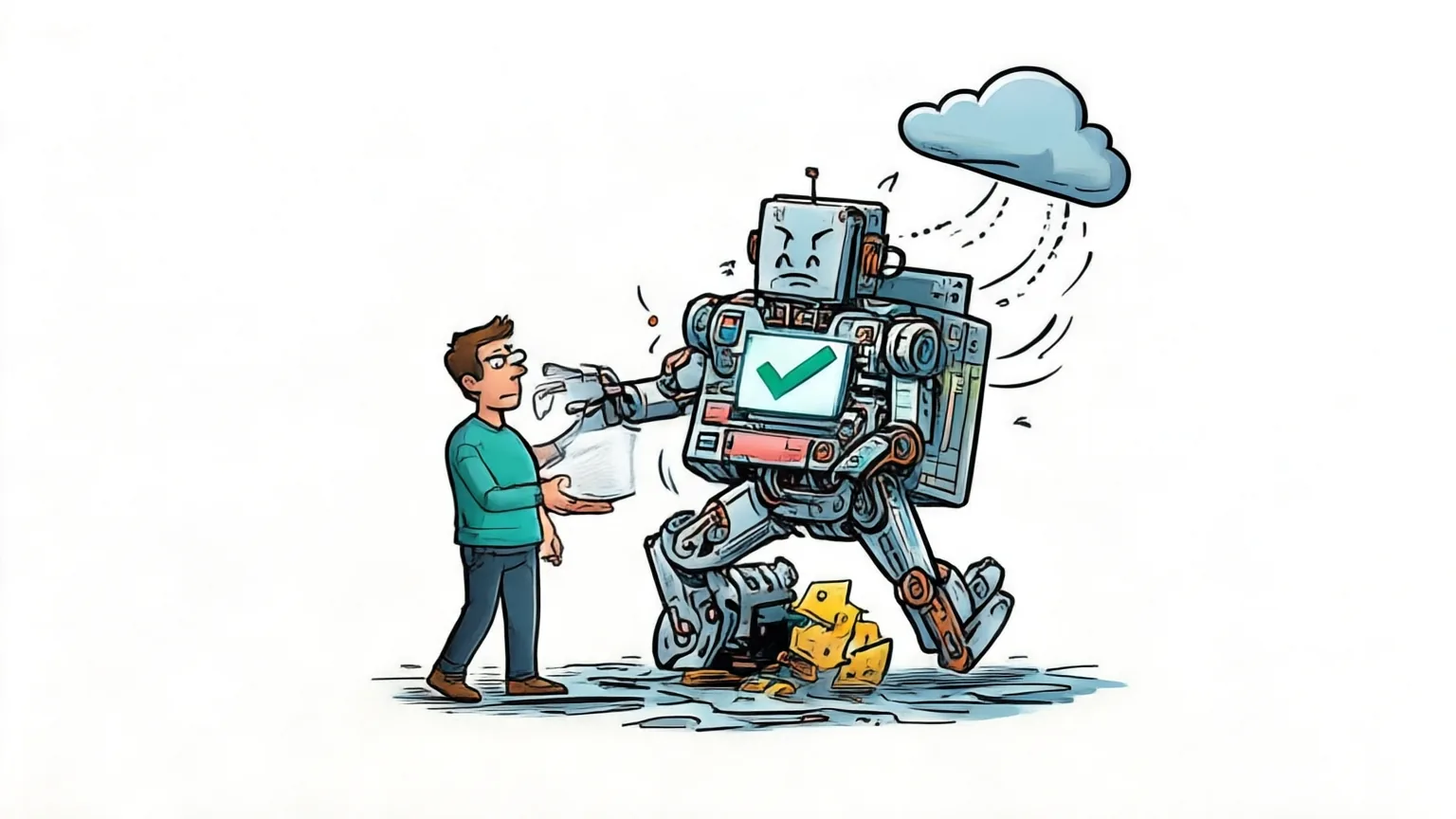
A robot can get better at a task without getting better at learning. This paper reviews research on whether physical practice can also improve the methods that teach robots. It examines what would let those changes lead to further progress. The aim is to make that process safe enough and cheap enough to keep going.
- Problem: Software agents can revise their code and test the result, but robots must learn through physical actions with incomplete information. Those trials cost resources, conditions can change, and some mistakes cannot be undone. Better task performance alone does not show that a robot has improved its ability to improve.
- New idea: Recursive self-improvement means improving the method of learning, then using that better method to improve it again. The paper examines how experience from physical tasks could support this process. It identifies conditions for progress to carry forward: feedback must address what still needs learning, and the part being updated must be able to use it. The benefit must also last across changes in tasks or equipment, while further practice stays safe and affordable.
- Simple example: Think of someone learning to cook. Making a better meal is progress at the task; finding a better way to practise is progress at learning. The recursive step comes when that improved practice method helps them find still better ways to practise.
- Evidence: The reviewed studies show better robot behavior, improvements that help later learning, and better learning procedures. Some systems also update the knowledge or tools used to make improvements. Most of the evidence comes from robots handling objects.
- Limitation: The physical studies reviewed have not separated out gains caused by recursion itself.
- Why it matters: This work clarifies what evidence would show that robots are learning how to learn better.
- Paper: Toward Recursive Self-Improvement in Physical AI
Deep Fusion Memory: A Chunk-Level Parametric Memory for Large Language Models
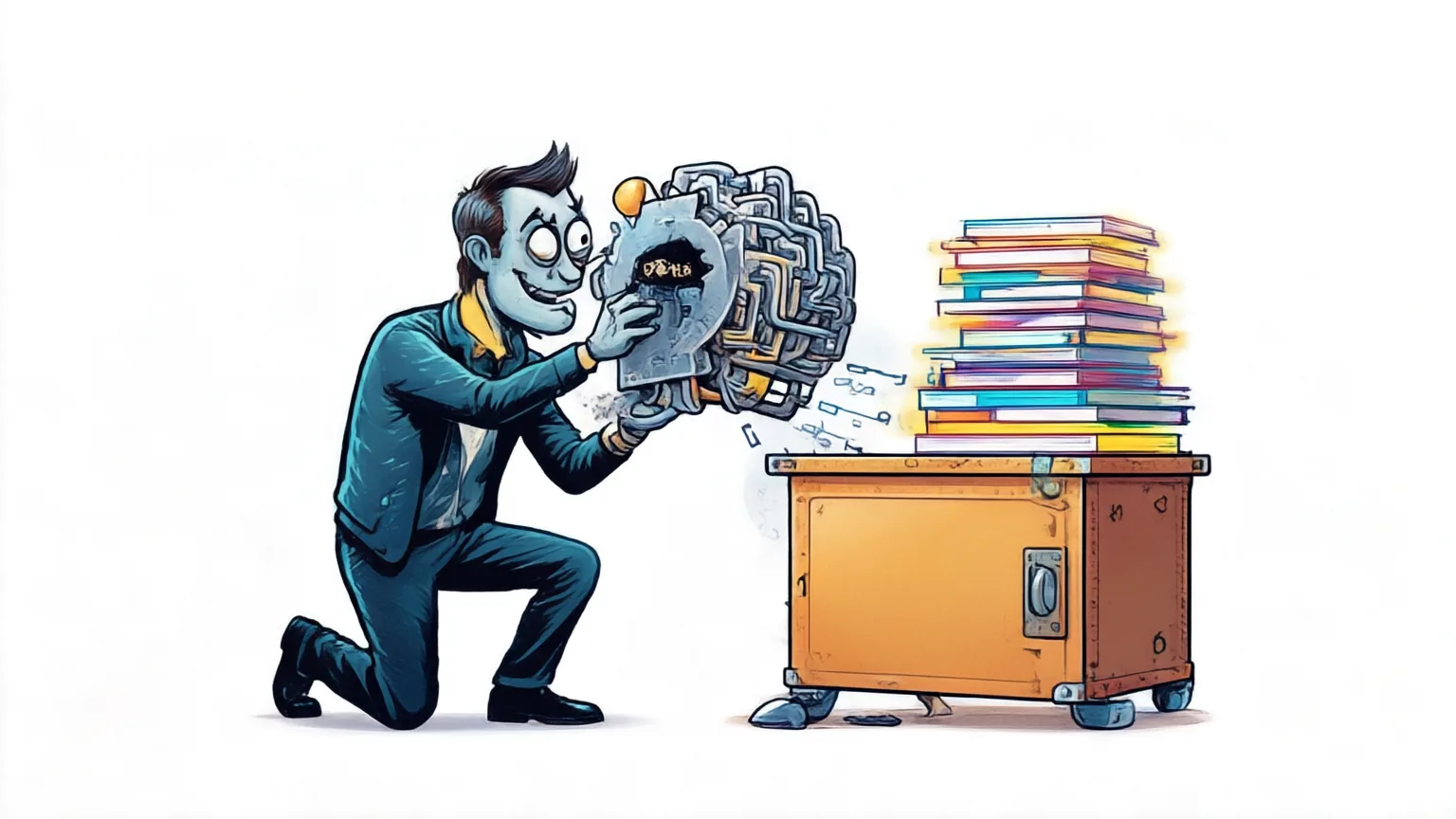
Giving a language model more knowledge can make it forget earlier lessons or spend extra time searching for answers. This paper proposes a separate learned memory that feeds information into the model as it processes text. The main model stays fixed while the added memory learns. The goal is to improve answers without requiring a search each time.
- Problem: Further training can cause a model to lose knowledge it already had, while searching for information during use adds work. Existing learned memory systems avoid that search but require extensive searches to prepare their training data. They also often combine information only at the output, limiting how deeply the memory enters the model's processing.
- New idea: Deep Fusion Memory is an added component that stores knowledge through training. It learns to predict a memory from earlier text, using numerical summaries of retrieved text passages as teaching examples. That memory is shared across a chunk, or group of text units, and a learned gate controls how it enters the model's internal working information. The memory predictor and the mechanism that combines it with the model are trained together while the main model stays unchanged.
- Simple example: Imagine a reader who studies reference passages beforehand and learns to form a useful mental note for each section of a document. The note helps throughout that section, without the reader reopening the reference book each time.
- Evidence: Preparing the training data requires 32 times fewer retrieval queries and 2048 times fewer retrieved items than existing parametric memory approaches. Across six question-answering tasks, DFM reports improvements over the strongest baseline of 12.71% on Mistral-7B-v0.3 and 11.19% on Qwen3-8B-Base. For adaptation to particular domains, it reports average gains of 6.51 points over Qwen3-4B-Base and 4.38 points over Qwen3-8B-Base.
- Limitation: The abstract reports fewer searches when preparing training data, but gives no measurements of response speed or total computing cost during use.
- Why it matters: It offers a way to add useful knowledge while keeping the main model fixed and avoiding searches during use.
- Paper: Deep Fusion Memory: A Chunk-Level Parametric Memory for
What Generation Knows: Unlocking Fine-Grained Understanding in Unified Multimodal Models
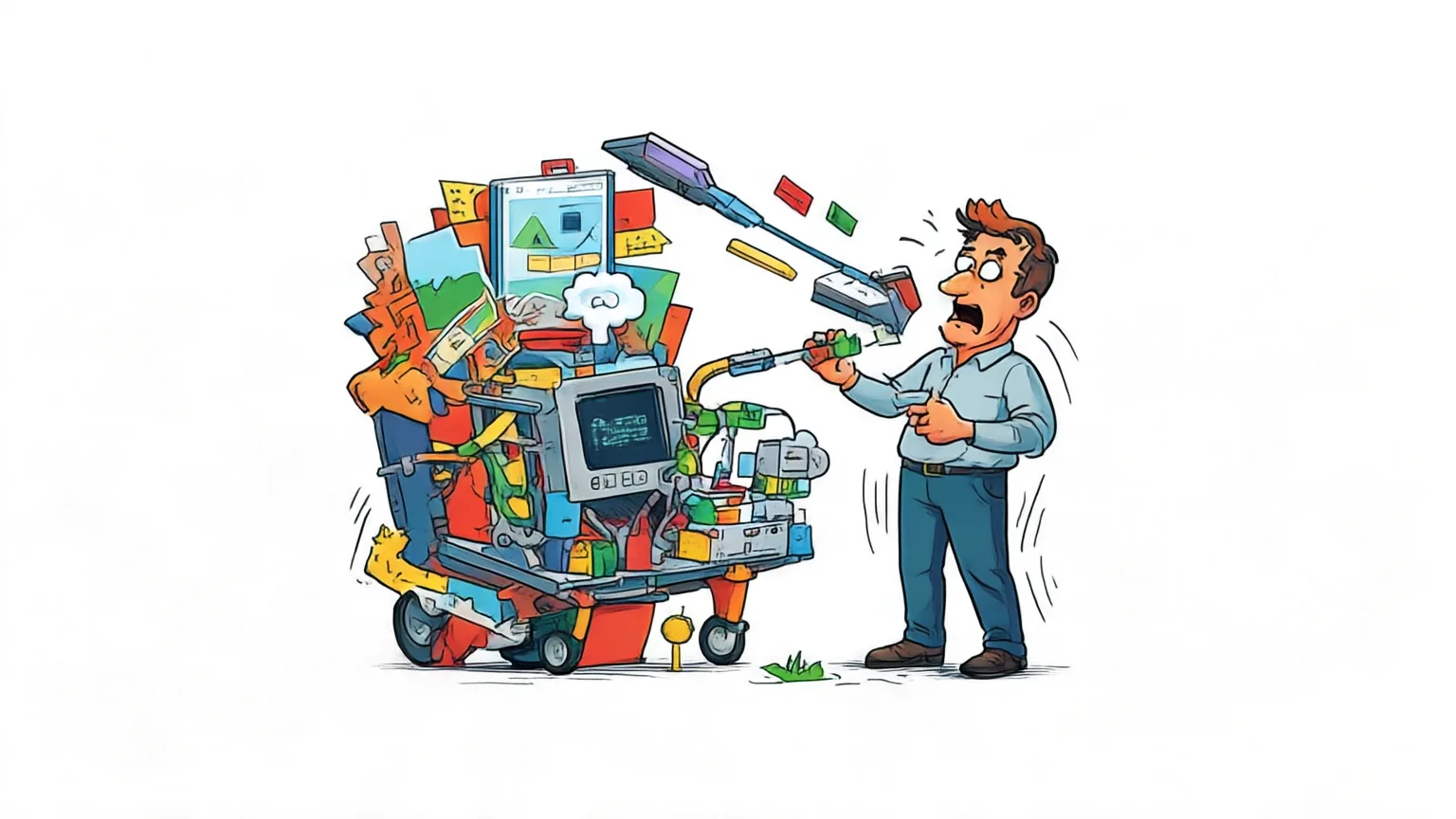
A model that both creates and interprets images may hold useful visual detail in its image-making machinery. This paper investigates whether that information can help it answer questions about small differences and object positions. The researchers introduce a training method that makes those details available to the part that interprets images. They report gains across several visual tests and model designs.
- Problem: Models that connect images with language still struggle with subtle visual features and spatial relationships. Earlier methods that draw on image generation mainly use it to guide training or explicitly produce images. They have not systematically examined how to use the information already held inside the image-generating part.
- New idea: GAFU is an additional training method for models that can both generate and interpret images. It condenses information from the image-generating part into G tokens, which are compact packets that retain small visual details. The image-interpreting part then selects information from those packets according to the task. This gives it access to details that its own internal information can miss.
- Simple example: Imagine answering whether a cup sits to the left or right of a plate. Someone preparing to draw the scene must keep track of that arrangement. GAFU is like letting the person answering the question consult those drawing notes.
- Evidence: GAFU consistently beats supervised fine-tuning baselines trained on the same data across the tested tasks and model architectures. The reported maximum relative improvements are 20.00% on VStar-Bench, 17.94% on OmniSpatial, and 8.62% on VSR-Bench. The analysis also finds that information from the generation side detects relevant visual changes missed by the understanding side.
- Limitation: The advantage depends on preserving correct spatial arrangement. The reported percentages are maximum relative improvements, not average gains across all tests.
- Why it matters: It shows how information used to generate images can also help a model interpret their details.
- Paper: What Generation Knows: Unlocking Fine-Grained Understanding
Trending AI Repositories
Ranking source: GitHub Trending.
aws/agent-toolkit-for-aws
Agent Toolkit for AWS helps coding agents build, deploy, and manage AWS applications. Its README marks it as generally available, with a scope that extends beyond writing code to deployment and management.
- What it is: This Python project sits in the AWS application development workflow. It gives AI coding agents tooling for work across building, deployment, and management.
- What it does: Official, AWS-supported MCP servers, skills, and plugins to help AI agents build on AWS
- Who it helps: It helps developers using AI coding agents to work on AWS applications. Those agents can help build, deploy, and manage the applications.
- Limitation: Its stated scope is applications on AWS.
- Repository: aws/agent-toolkit-for-aws
Nutlope/hallmark
Hallmark is a design skill from Together AI with forty-eight themes. It offers custom themes on request and supports redesigns and audits by name.
- What it is: It sits inside coding tools, including OpenCode. Its design workflow presents three themes from its catalog.
- What it does: Anti-AI-slop design skill for Claude Code, Cursor, and Codex.
- Who it helps: It helps people doing design work through AI coding tools. They can use its themes, request a custom design, or invoke a redesign or audit by name.
- Limitation: The supplied README excerpt does not explain how to install or configure the skill.
- Repository: Nutlope/hallmark
google-gemini/gemini-cli
Gemini CLI is a TypeScript command-line project whose README now leads with a replacement notice. Antigravity CLI replaced it for unpaid tier and Google One users on June 18th, 2026.
- What it is: The repository contains Gemini CLI and carries guidance about moving to Antigravity. That guidance covers both the affected user tiers and use of Gemini 4 Argon.
- What it does: An open-source AI agent that brings the power of Gemini directly into your terminal.
- Who it helps: The notice helps unpaid tier and Google One users identify the replacement for Gemini CLI. It also directs people who want to use Gemini 4 Argon to Antigravity.
- Limitation: Gemini CLI has not been optimized for Gemini 4 Argon.
- Repository: google-gemini/gemini-cli
Sources
- 01Hugging Face Papers · Hugging Face Papers
- 02GitHub Trending · GitHub Trending
- 03The AI graveyard: a running list of projects and startups that didn’t make it · TechCrunch
- 04Block’s new voice model sounds eerily human · TechCrunch
- 05Three fired OpenAI safety researchers say they were never told what they actually leaked · The Decoder
- 06AI makes junior patent attorneys instantly better but may quietly stunt their professional growth · The Decoder
- 07Toward Recursive Self-Improvement in Physical AI · arXiv
- 08Deep Fusion Memory: A Chunk-Level Parametric Memory for Large Language Models · arXiv
- 09What Generation Knows: Unlocking Fine-Grained Understanding in Unified Multimodal Models · arXiv