AI screens for scams, pays for access and runs on-device
Get this by email →
Google DeepMind and Singapore bring scam detection into private chats. Anchor Browser and AWS give agents a way to pay for resources. LFM2.5-24B-A2B puts fast, private agent reasoning on-device.
News
Google DeepMind and Singapore Government announce new AI tool to protect citizens against scams
Google DeepMind and GovTech Singapore announced an AI tool that detects conversational scams inside private chats. It processes conversations on the user's device without sending that data to the cloud. Scams account for over half of Singapore's reported crimes and more than S$4 billion in losses since 2019.
A quick screen before a closer reading
The tool uses a two-stage pipeline to assess incoming messages. A lightweight classifier first screens them for potential threats using minimal power. A fine-tuned Gemma model then examines a larger snapshot of the conversation. That contextual check confirms a threat or discards a false alarm. Training included local scam conversations involving impersonations of public institutions, banks and local figures, alongside trending regional schemes. When the model detects manipulative patterns, it issues a real-time warning to pause before sharing sensitive information or funds. (Google DeepMind)
thinkidiot take: Scam detection now runs on-device without sending private conversations to the cloud. I would put that privacy property ahead of any promise about detection accuracy, which the supplied evidence does not quantify. The lightweight screen also reserves the deeper conversation check for potential threats. My judgement is that a private warning to pause is a sensible role for AI in personal chats.
Building agents that transact with Anchor Browser and AgentCore payments
Anchor Browser and the AWS Generative AI Innovation Center Partner Agent Factory built agents that autonomously pay for x402-protected web resources and APIs. Anchor Browser with Agentic Payments is now available on AWS Marketplace. Amazon Bedrock AgentCore payments checks budgets, signs transactions and retries requests without exposing wallet credentials to the agent runtime. This gives agents a payment path through resources that otherwise stop a task for manual intervention.
The payment stack extends beyond a wallet
The x402 protocol is an open standard for machine-to-machine payments over HTTP. A server returns 402 Payment Required with the amount, accepted payment methods and payment address. Developers currently have to parse that challenge, construct payment headers and support multiple payment schemes. They also have to store private keys, manage wallets, prevent duplicate payments and track spending limits in real time. AgentCore payments manages wallet connectivity and enforces configurable spending limits for APIs, Model Context Protocol servers and web content. Amazon CloudWatch provides observability into that managed payment capability. (AWS Machine Learning)
thinkidiot take: An HTTP 402 response no longer has to stop an agent's task for a manual payment. I would set the spending limit before giving an agent access to paid resources. Budget enforcement and keeping wallet credentials outside the runtime matter more to me than the ability to transact by itself. I judge this as useful infrastructure because it takes on the payment and key-management work developers otherwise have to build.
Run fast, private agents on-device with LFM2.5-24B-A2B
Hugging Face presents LFM2.5-24B-A2B as a reasoning model built for fast, private agents on-device. It has 24 billion total parameters but activates just 2 billion per token. Reported throughput reaches 184 tokens per second on Apple M5 Max and up to 21,000 output tokens per second on a single NVIDIA B300 GPU. Its context window has grown from 32,000 to 131,000 tokens.
Tool use gets its own training work
The model scores 48.09 on LiveClaw against 38.19 for Qwen3.6-35B-A3B, which has roughly 50% more total and active parameters. It leads or matches the competition on five of eight tool-use and agentic benchmarks: AutomationBench, BFCLv4, ToolSandbox, LiveClaw and τ³-Bench Banking. On AutomationBench, its score exceeds three times that of the next-best model. Its vocabulary expands from 65,000 to 128,000 tokens for better non-Latin tokenization, and it produces explicit reasoning before its final answer. Post-training includes supervised fine-tuning, non-agentic and agentic on-policy distillation, and agentic reinforcement learning inside harnesses such as OpenClaw, Hermes Agent, Pi and OpenCode. Pre-training grew from roughly 17 trillion to 33 trillion tokens, followed by 2 trillion mid-training tokens at 32,000-token context and 300 billion at 131,000-token context. (Hugging Face)
thinkidiot take: LFM2.5-24B-A2B scores 48.09 on LiveClaw while activating only 2 billion parameters per token. I would start an evaluation with its tool-use results, then run the agent harness I actually intend to use. The reported 184 tokens per second on Apple M5 Max gives the on-device claim a concrete hardware reference. For my purposes, that combination earns a trial ahead of choosing a model by parameter count alone.
Meta’s Generative Ads Model (GEM): Scaling the Central Model and Compute Engine for Frontier Ads AI
Meta's 2026 generation of GEM moves ads recommendation from separate domain optimizations to a single central foundation model. It learns from signals across Meta's ads platforms. A shared compute engine serves dozens of surfaces and objectives for 3.6 billion daily users. Meta reports that GEM has delivered an 18.9% conversion improvement and a 12% improvement in ad click-through rate across its ad surfaces and objectives.
Larger upstream models without extra downstream latency
Meta co-designed its LLM-style Kunlun architecture with the latest GPU hardware. It observed an LLM-like scaling law as model complexity grew 2.5 times from earlier GEM versions, with greater capacity and longer context improving ranking quality. Post-training uses a larger latency budget without requiring real-time evaluation of every ad candidate. LoopFM transfers internal representations and sequential historical memory to downstream models. Together with knowledge distillation, it doubles intelligence transfer without additional compute cost or latency, while Solaris uses elastic pre-computation to capture upstream gains. Over the past year, GEM also contributed conversion uplifts of 5.8% on Facebook, 4.1% on Instagram and 1.6% for off-site conversion among targeted users. (Meta Engineering)
thinkidiot take: Meta reports doubled intelligence transfer without additional compute cost or latency. That is the part I would examine first when assessing this architecture. It connects a larger central model to downstream systems without making each recommendation carry the extra processing burden. My judgement is that this transfer mechanism is more interesting engineering than the 2.5-fold growth in model complexity itself.
Science Corporation implants its vision-restoring chip in its first Stargardt disease patient
Science Corporation CEO Max Hodak announced the first implantation of its PRIMA vision-restoring chip in a patient with Stargardt disease. The inherited disease gradually destroys central vision and affects approximately 150,000 people worldwide. During the patient's first rehabilitation session, he saw a letter. During the second, he read a word.
Camera glasses feed artificial photoreceptors
PRIMA is a two-millimeter-by-two-millimeter chip placed under the back of the eye. The hour-long surgery positions it where photoreceptors have degenerated. Camera-equipped glasses transmit a view of the world to the implant, which works like artificial photoreceptors. PRIMA is commercially available in Europe for patients with geographic atrophy, an advanced form of age-related macular degeneration. Science Corporation believes the approach also applies to other diseases, including Stargardt disease, which is currently considered incurable. Speaking at TechCrunch Disrupt, Hodak described a path to a next-generation device in humans within the next year and a goal of getting close to native visual acuity over the next five years. (TechCrunch)
thinkidiot take: The first Stargardt patient went from seeing a letter to reading a word across two rehabilitation sessions. I would give that observed result more weight than the five-year goal of approaching native visual acuity. Reading a word is a concrete outcome, while that longer-term goal is still Hodak's stated ambition. My judgement is that this first result deserves attention on its own terms, without borrowing significance from the future device.
Trending AI Papers
Ranking source: Hugging Face Papers for 2026-10-14.
DoSA: Dots Sparse Attention
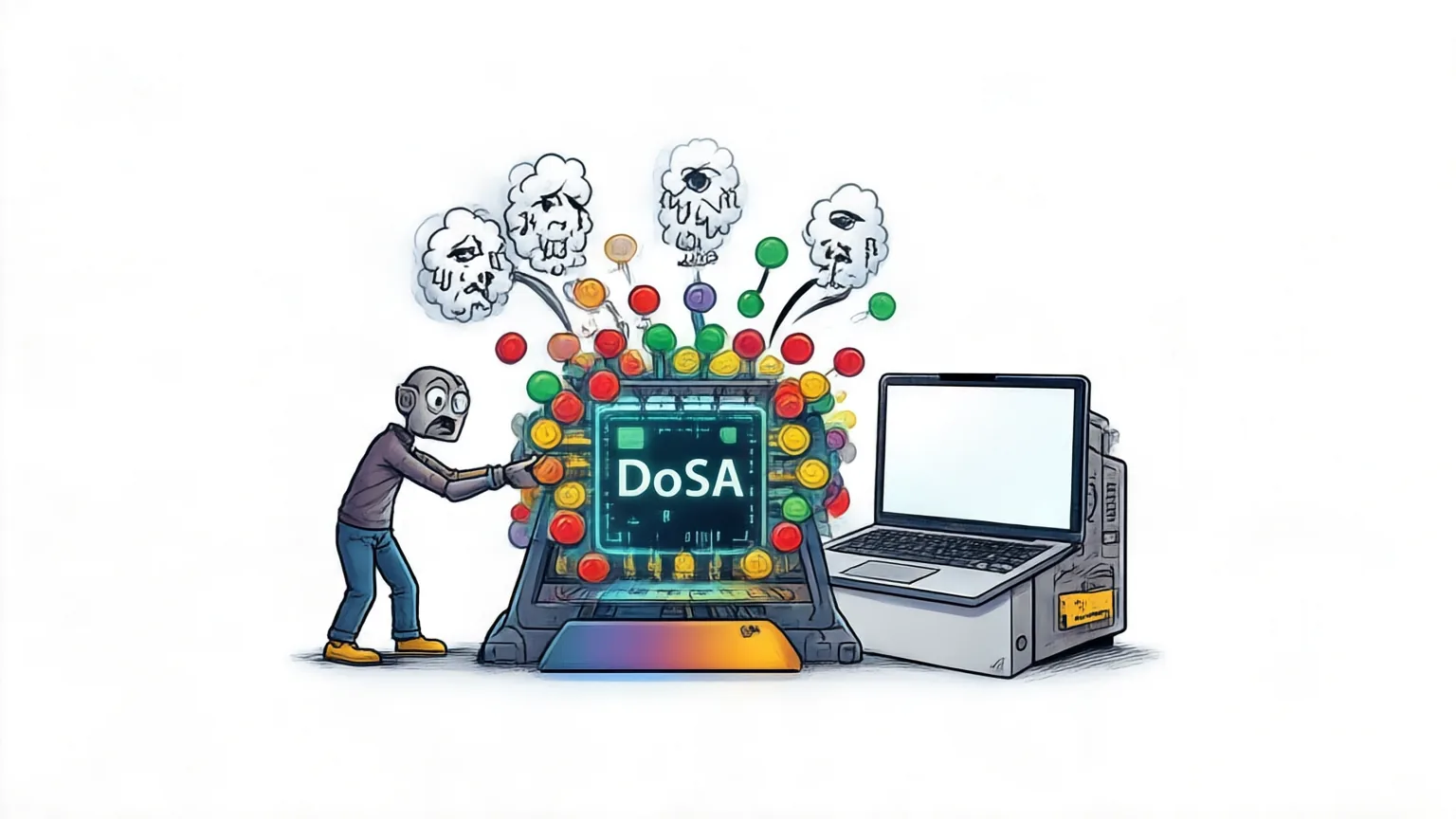
Picking a few useful pieces of text can still make a language model inspect every possible choice. DoSA reduces that search work while keeping exactly the same choices. It checks whether a candidate can still qualify before spending effort calculating its full score.
- Problem: Sparse attention lets a model use only a small selection of the available text. But finding that selection can still require every scoring component to examine every candidate, leaving an expensive search behind.
- New idea: DoSA starts by fully scoring a small starting group to establish a score that candidates must reach to qualify. It then calculates bounds, which are limits on how much the unfinished parts of a candidate's score could change the result. A candidate receives the remaining calculations only if those limits show it could still qualify. Further filtering uses completed scores to reduce the work of recording and selecting results.
- Simple example: Imagine choosing the highest-scoring entries in a contest with several judges. Once some entries have strong totals, you can reject another entry if even its best possible remaining marks would leave it below the cutoff. DoSA applies that reasoning to choosing text.
- Evidence: Across English, Chinese, and code workloads, the complete Indexer runs up to 2.74 times faster than SGLang and 1.69 times faster than LiteTopK. Tests on GLM-5.2 and DeepSeek-V3.2 report time-to-first-token speedups of up to 1.94 times over SGLang and 1.50 times over LiteTopK, respectively.
- Limitation: The savings depend on the structure of the scoring data and the gaps between candidates' scores. The abstract reports maximum speedups but does not give typical gains or the weakest results.
- Why it matters: Reducing the search work can help a language model begin answering sooner without changing which text it selects.
- Paper: DoSA: Dots Sparse Attention
Vela: User Behavior as Supervision Sparks LLM Intelligence
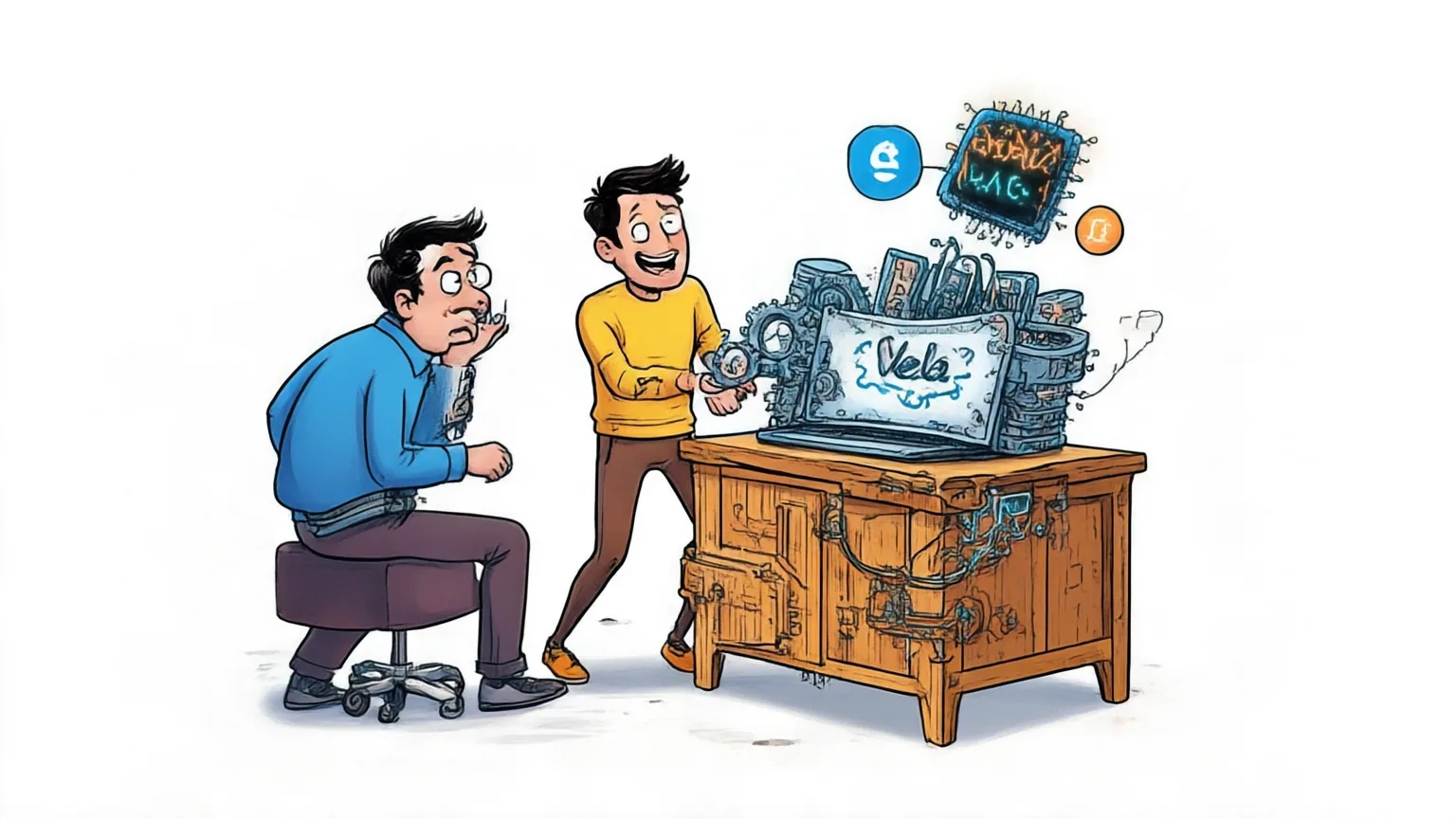
A person's past activity can teach a language model about what they want and how their interests change. Vela turns records of that activity into exercises for training a model. The work tests whether learning from these records improves both understanding of users and performance on broader tasks.
- Problem: Assistants and recommendation systems need to interpret behavior that unfolds over weeks or years. Training on fixed text collections or artificially generated examples does not capture how a person's behavior changes over time.
- New idea: Vela uses real behavior records as supervision, meaning the material that guides a model's learning. It converts those records into tasks and training trajectories, which are sequences of steps used to carry out a task. It filters tasks by difficulty and keeps trajectories that meet its acceptance rules. The selected examples then support fine-tuning, which is additional training of an existing model.
- Simple example: Think of learning someone's tastes from a diary of their choices over time. A single entry gives one clue, while the sequence lets you look for changing interests. Vela builds training exercises from that kind of behavioral history.
- Evidence: Vela uses anonymized records from 100,000 users to create 100,000 tasks across 91 templates, retaining approximately 75,000 tasks with selected training trajectories. Fine-tuning Qwen3.6-35B-A3B improves user-related performance by up to 11.5 points and general benchmark performance by an average of 4 points. Reinforcement learning after fine-tuning beats reinforcement learning from the base model by up to 7.7 points.
- Limitation: The abstract reports training results for Qwen3.6-35B-A3B but does not establish whether the same gains hold for other models. It also does not report how well the trained model handles users whose behavior differs from the training records.
- Why it matters: Behavior records could help models learn how people's needs change while also improving performance beyond user-focused tasks.
- Paper: Vela: User Behavior as Supervision Sparks LLM Intelligence
LeWAM: End-to-End World and Action Modeling with JEPAs
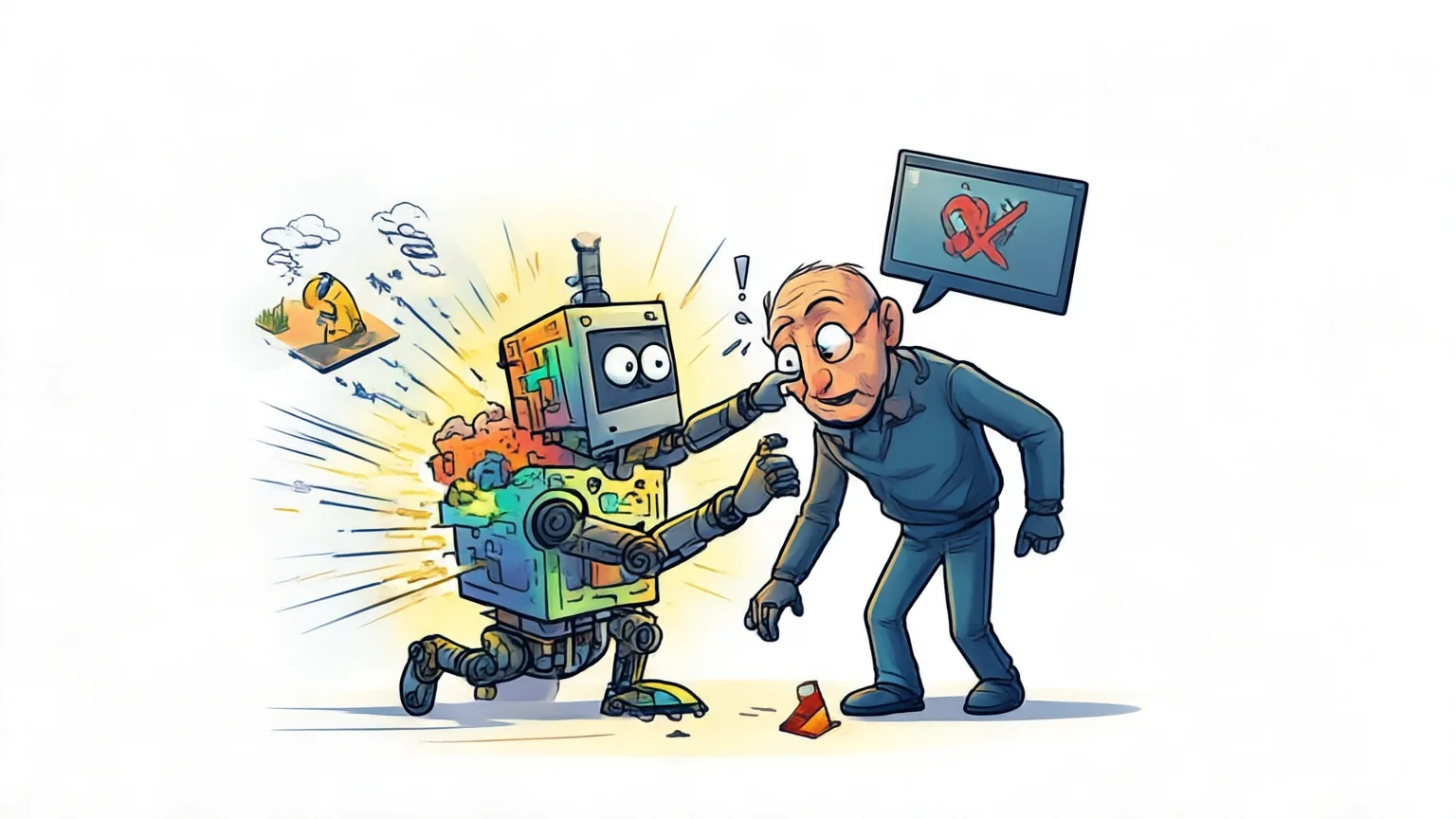
A robot needs to anticipate what will happen and choose what to do next. LeWAM trains those abilities together in one model. It represents a scene in a compact internal form instead of trying to recreate every image detail. The same model can choose an action directly or compare possible actions before acting.
- Problem: Existing systems of this kind usually learn to represent scenes and predict the effects of actions before adding a separate way to choose actions. That staged approach leaves learning about the world and learning how to act as separate steps.
- New idea: LeWAM jointly learns to predict the next latent state, a compact internal description of the situation, and to generate possible actions. Its action training uses flow matching, a method for learning to generate samples from an action distribution, or spread of possible actions. It constrains the internal descriptions to follow an isotropic Gaussian distribution, a bell-shaped pattern with equal spread in every direction. The resulting model can act directly or plan by predicting the consequences of sampled actions.
- Simple example: Imagine moving an object across a table. You could choose a movement immediately or first consider several movements and predict where each would leave the object. LeWAM supports both ways of choosing through the same learned model.
- Evidence: Compared with prior JEPAs in visual planning, LeWAM raises success rates from 28.6% to 89.7% on tasks involving substantial physical contact and from 10.9% to 46.2% on tasks requiring longer action sequences. It plans 32.3 times faster. On tasks that learn actions from demonstrations, it is also competitive with established methods in simulation and on physical robots.
- Limitation: Success on tasks requiring longer action sequences remains at 46.2%. The abstract describes results from learning demonstrations as competitive but gives no numerical comparison for those tests.
- Why it matters: Learning prediction and action together can help robots plan faster and complete more of the tested tasks.
- Paper: LeWAM: End-to-End World and Action Modeling with JEPAs
Trending AI Repositories
Ranking source: GitHub Trending.
vercel-labs/skills
Vercel Labs’ skills is a TypeScript CLI for the open agent skills ecosystem. Its supported agents include OpenCode, Claude Code, Codex and Cursor, plus 75 more.
- What it is: Vercel Labs’ skills is a TypeScript CLI for the open agent skills ecosystem.
- What it does: The open agent skills tool - npx skills
- Who it helps: It helps people using supported coding agents such as OpenCode, Claude Code, Codex and Cursor. They can use this CLI with their supported agent.
- Limitation: The supplied README excerpt lists supported agents but gives no setup or usage instructions.
- Repository: vercel-labs/skills
Sources
- 01Hugging Face Papers · Hugging Face Papers
- 02GitHub Trending · GitHub Trending
- 03Google DeepMind and Singapore Government announce new AI tool to protect citizens against scams · Google DeepMind
- 04Building agents that transact with Anchor Browser and AgentCore payments · AWS Machine Learning
- 05Run fast, private agents on-device with LFM2.5-24B-A2B · Hugging Face
- 06Meta’s Generative Ads Model (GEM): Scaling the Central Model and Compute Engine for Frontier Ads AI · Meta Engineering
- 07Science Corporation implants its vision-restoring chip in its first Stargardt disease patient · TechCrunch
- 08DoSA: Dots Sparse Attention · arXiv
- 09Vela: User Behavior as Supervision Sparks LLM Intelligence · arXiv
- 10LeWAM: End-to-End World and Action Modeling with JEPAs · arXiv