AI moves cloud workloads, scales expert models and enters war planning

AWS describes agents that automate cloud migrations. Olmo-core 3 introduces open training infrastructure for large expert models. A report says Trump consulted Grok before capturing Venezuela's president.
News
Scaling cloud migrations with agentic AI on Amazon Bedrock AgentCore
AWS Professional Services uses a multi-agent framework on Amazon Bedrock AgentCore to automate enterprise cloud migrations from discovery through operations. An enterprise migration program covered more than 300 applications under a fixed fiscal-year deadline. Internal project tracking reported that its four-agent pattern cut infrastructure as code development from 3,4 weeks per application to minutes.
Approved internal modules sit at the center
The agents use the Strands Agents SDK and access organization-maintained MCP tools through AgentCore Gateway. The intake agent handles incoming migration work. Another agent composes approved internal infrastructure as code modules. A migration intelligence and governance agent covers oversight of the portfolio. The SRE agent handles operations after cutover. The pattern supplements AWS Transform for migration and modernization, and AWS DMS for databases. (AWS Machine Learning)
thinkidiot take: Internal tracking puts infrastructure as code development at minutes instead of 3,4 weeks per application. I would start with the approved internal modules, because composing those is the concrete task described here. The pattern also assigns agents to governance and operations after cutover, extending its scope beyond code generation. For my own migration work, that coverage matters more than the speed figure alone.
Introducing Olmo-core 3: Open, scalable training infrastructure for large MoEs
Olmo-core 3 was released on October 1, 2026, with a redesigned open system for training mixture-of-experts models, according to the announcement on Hugging Face. A preliminary test on eight NVIDIA B300 GPUs reached 52,000 tokens per second per GPU for a 47B-parameter model. The earlier implementation delivered 19,400 tokens per second per GPU in that comparison.
Keep experts on GPUs and send data to them
The new system replaces the earlier FSDP-based implementation with a DDP-based design that keeps experts resident on GPUs and routes data to them. One benchmark expanded the expert pool from 8 to 128 while selecting four experts per token. Active parameters stayed near 3.2B as total parameters rose from 4.6B to 47B. Throughput fell by less than 5%. The infrastructure has also been benchmarked at over one trillion total parameters. The training stack combines expert parallelism, pipeline parallelism, and a distributed optimizer to spread experts, layers, and optimizer state across GPUs. (Hugging Face)
thinkidiot take: Growing total parameters from 4.6B to 47B cost less than 5% of throughput in one benchmark. I would use that comparison as the starting point for testing the stack, with active parameters held near 3.2B. It directly measures the throughput cost of expanding the expert pool under that constraint. For choosing training infrastructure, I find that result more useful than the trillion-parameter benchmark alone.
Musk’s AI chatbot Grok reportedly encouraged Trump to capture Venezuela’s president
President Trump reportedly consulted Grok before invading Venezuela and capturing Nicolás Maduro, according to Time reporting covered by TechCrunch. Time reported that Trump met secretly with Elon Musk in December 2025, roughly seven months after Musk left DOGE. A source told Time that Trump spent hours talking to the chatbot, including asking how Venezuelans would respond to their president's capture.
Gov Grok also entered military targeting
Time reported that Grok described Maduro as deeply unpopular. The chatbot predicted that many Venezuelans would celebrate his downfall. The article also cites a June 2026 statement from the Pentagon's head of AI about military use of Gov Grok. That official said the military used it to deploy and strike targets during the Iran War. Earlier in the publication week, the Pentagon announced that Musk and Anduril's Palmer Luckey would co-lead a study of advanced technology use on battlefields. (TechCrunch)
thinkidiot take: The Pentagon's head of AI said Gov Grok was used to deploy and strike targets during the Iran War. I would give that attributed statement more weight than a chatbot's prediction that Venezuelans would celebrate Maduro's capture. The former describes operational use; the latter is a forecast reported by Time. My judgement is that a prediction of public approval is an unacceptable basis for a decision to capture a president.
Google’s new Guided Vision feature can help you read the fine print
Google launched Guided Vision in Gemini Live on compatible Android devices on October 1, 2026. The feature uses a phone's camera to provide real-time audio descriptions. Users can ask it to read small text, describe their surroundings, or find and identify objects.
Follow-up questions extend a camera request
Guided Vision is available through the Gemini app and Google TalkBack. An accessibility shortcut can be configured on devices running Android 9 and above. Users can ask follow-up questions, including requesting the expiration date on an item Gemini helped them find. Google says audio cues help users align the camera when a requested object is outside the shot. Google cautions against using the feature for navigation, safe-travel guidance, or obstacle detection. It also says Guided Vision is not a replacement for a cane or mobility aid. (The Verge)
thinkidiot take: Guided Vision lets a user find an item and then ask for its expiration date. That is the sequence I would test first, because it joins object finding and small-text reading in one interaction. Google's stated limits exclude navigation and obstacle detection from that use. I judge the feature's value by those specific reading tasks, and the follow-up question is its most useful detail.
ChatGPT can now virtually try on clothes for you
OpenAI announced the global launch of virtual try-on and Favorites in ChatGPT on October 1, 2026. Users can supply a selfie or full-body photo to visualize clothing and accessories through a Try On button in shopping results. Favorites saves products to the app's Library alongside try-on images.
An item screenshot can start the process
Users can also upload an image of an item, including a web screenshot, and ask ChatGPT to try it on. OpenAI says ChatGPT can find purchasable pieces from a described style. Photos of celebrity outfits can also serve as a starting point for that search. The company says the features use ChatGPT Images 2.5. It claims improvements in lighting, textures, adherence to editing instructions, and image-generation latency. (TechCrunch)
thinkidiot take: Favorites puts saved products and try-on images together in ChatGPT's Library. I would use that pairing to keep the product next to its visualization while comparing items. The screenshot option also gives me a direct way to start with a specific piece. For my own shopping, those retrieval and input features matter more than the claimed improvements in lighting and textures.
Trending AI Papers
Ranking source: Hugging Face Papers for 2026-10-02.
Hierarchical Continuous Diffusion Language Models
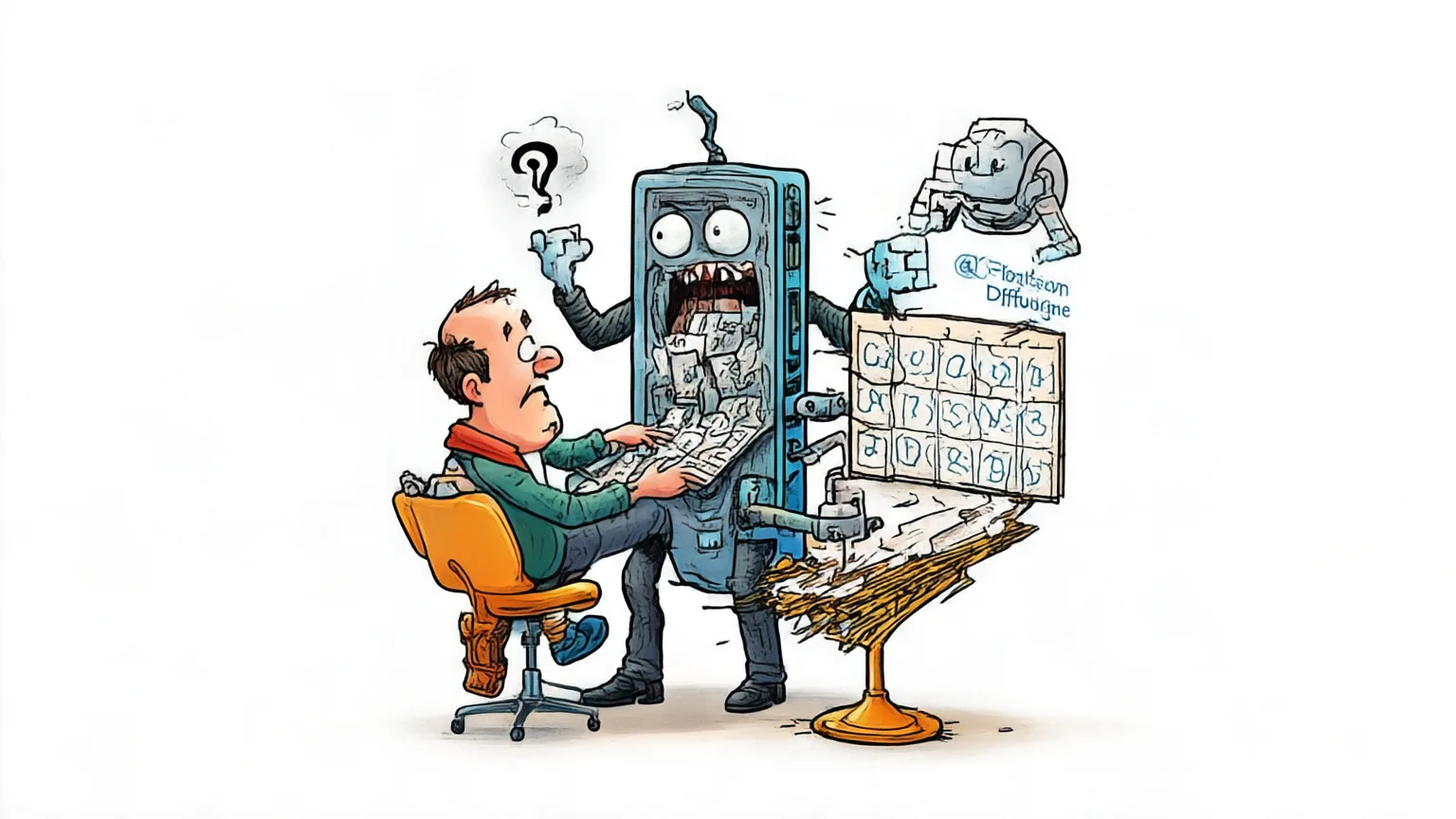
Writing several parts of an answer at once requires keeping them consistent with each other. This paper introduces a text generation method that links tentative word choices through a shared internal representation. It aims to make those choices fit together better, both in language and in puzzles with strict rules.
- Problem: Some diffusion models choose tokens, the pieces that make up text, separately when producing several at once. That loses the connections between those choices. Other models refine a shared numerical representation, but do not connect it to a valid set of tokens until the final conversion.
- New idea: HC-DLM uses a latent state, a shared numerical representation that it gradually refines into an answer. At each step, it reads out tokens, the pieces that make up text, and uses them to guide the next revision of that state. Only the latent state persists through the generation process. Its training rule comes from a mathematical bound on the probability the model assigns to the tokens.
- Simple example: Think of filling in a Sudoku grid with pencil marks. After sketching possible entries, you use them to revise the whole grid, then check the entries again. The method similarly alternates between tentative token choices and revisions to its shared internal representation.
- Evidence: At matched model size, HC-DLM outperforms both discrete and continuous diffusion baselines on Sudoku and Countdown puzzle accuracy. It also improves generative perplexity, a measure used to assess generated text, on LM1B. The abstract gives no numerical scores or improvement sizes.
- Limitation: The abstract reports results on Sudoku, Countdown and LM1B, but gives no generation speed or computing cost comparisons.
- Why it matters: It addresses how to generate several parts of an answer together while keeping their choices consistent.
- Paper: Hierarchical Continuous Diffusion Language Models
Adaptive Reward Routing: Dynamic Multi-Reward Optimization for Joint Audio-Video Diffusion via Forward-Process RL
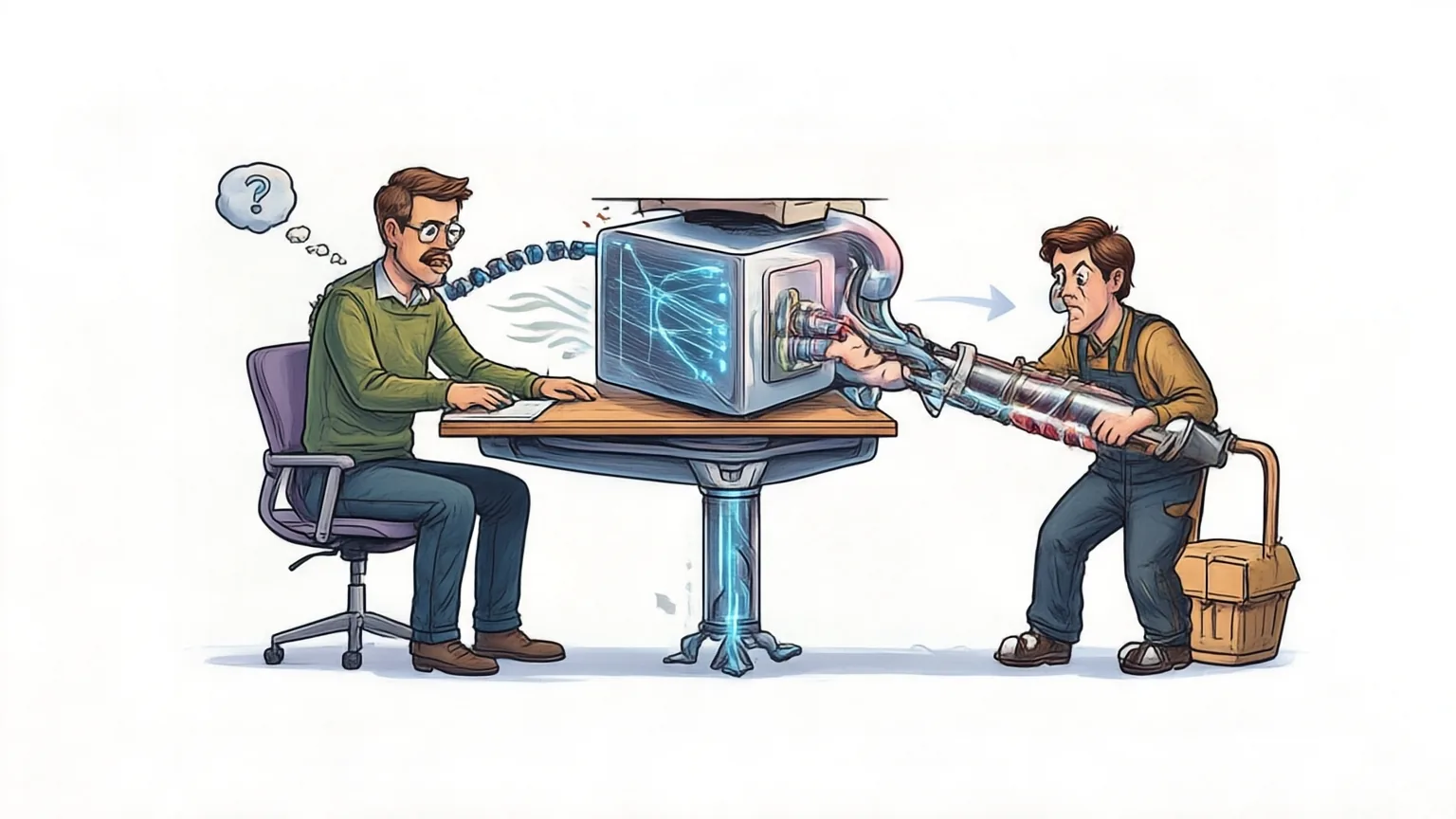
A model making video and sound together has several jobs to get right. The picture and audio must each work well, describe the same event and stay in time. This paper changes how training steers those jobs as the model learns. The aim is to improve them together without letting one take over.
- Problem: Training uses rewards, scores that encourage desirable outputs, but different rewards can push the model in conflicting directions. Existing methods tend to keep both their relative importance and the locations of training updates fixed. Those choices can become less useful as the model changes.
- New idea: Adaptive Reward Routing adjusts both where training changes the model and how it combines reward scores. It uses cross-attention, the mechanism through which sound and video representations consult each other, to estimate where they influence each other and direct updates there. After an initial training period, it adjusts reward weights using how reward-driven changes interact within the sound and video parts of the model. The original weights remain a reference for the intended priorities, helping preserve weaker but necessary objectives.
- Simple example: Think of editing a clip of someone clapping. Clear images and clean sound are not enough if the clap is heard at the wrong moment. Like an editor shifting attention among these issues, the method adjusts which training goals receive attention and where their updates act.
- Evidence: The abstract reports consistent improvements over strong reinforcement learning baselines in sound and video quality, agreement between their content, and timing. Tests that remove individual components support the contribution of both adaptive update placement and reward coordination. No numerical results are given.
- Limitation: The abstract names no evaluation datasets and gives no scores or improvement sizes, leaving the scale and breadth of the gains unclear.
- Why it matters: It helps training account for sound quality, video quality and their agreement as the model changes.
- Paper: Adaptive Reward Routing: Dynamic Multi-Reward Optimization
ActiveSaddler: Automated Curriculum Learning for Agent Harness Optimization
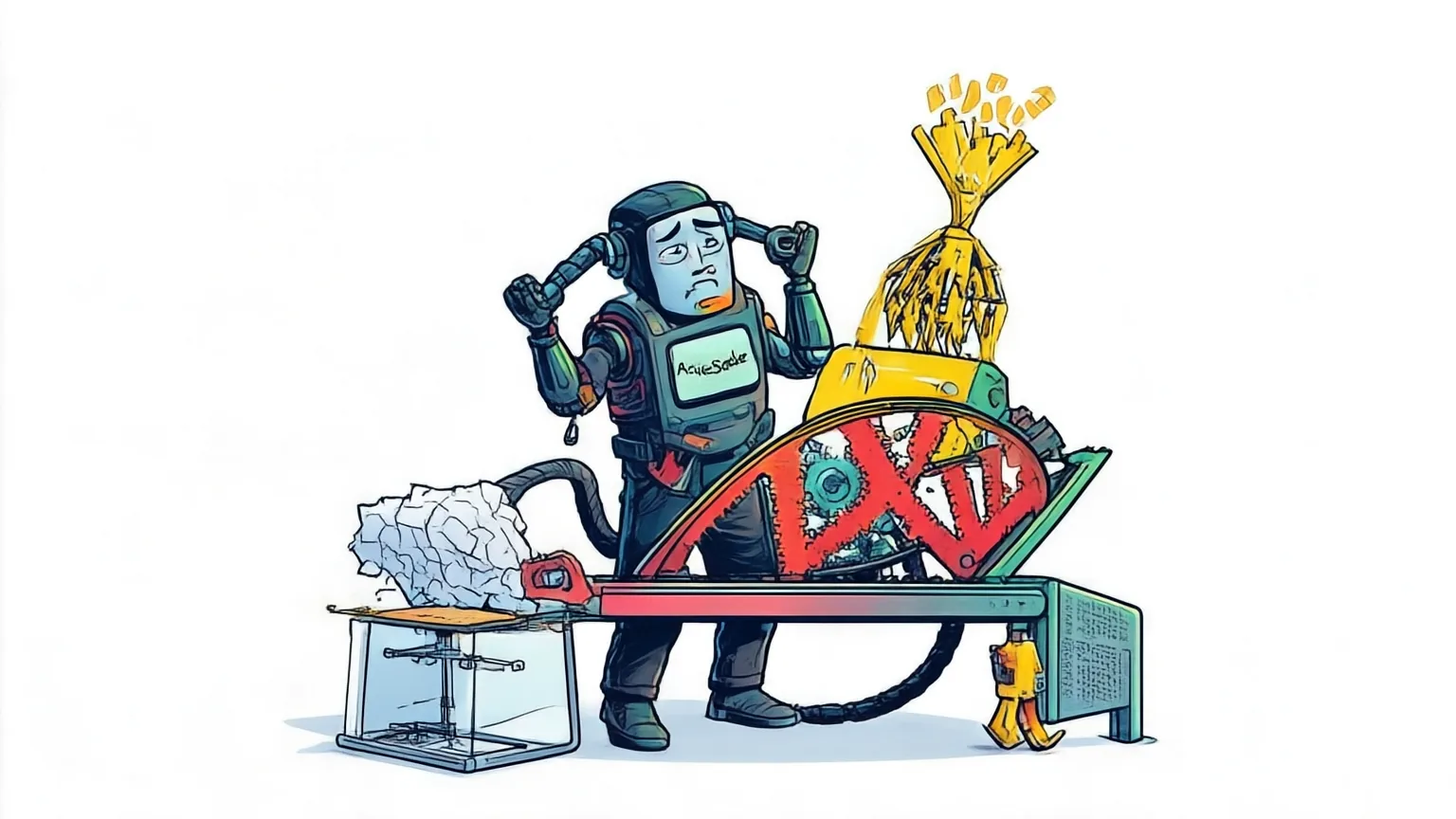
An AI agent depends on the instructions and tools around it to complete tasks. Improving that setup requires useful examples of where it fails. ActiveSaddler changes which practice scenarios are used as the setup improves. It aims to keep that practice focused on failures that still offer room to learn.
- Problem: Existing methods improve an agent's surrounding setup using feedback from task attempts, but largely fix which scenarios supply that feedback. As the setup changes, the most useful scenarios can change too. A fixed selection does not adapt to those shifting needs.
- New idea: ActiveSaddler adapts the curriculum, the selection of practice scenarios used to improve an agent's harness, meaning its prompts, tool interfaces and control logic. It groups recurring mistakes into reusable failure patterns and estimates how much further work on each could help. It balances revisiting known weaknesses with trying unfamiliar scenarios to discover new ones. Each optimization result updates both the patterns it knows about and their priorities.
- Simple example: Think of a tutor choosing practice exercises after each lesson. The tutor revisits mistakes that still need work, but also tries unfamiliar exercises to uncover other gaps. ActiveSaddler uses that approach to choose scenarios for improving an agent's setup.
- Evidence: On GAIA2 and Terminal-Bench 2.0, ActiveSaddler improves test Pass@1, the success rate on a single attempt, by 4.4 and 7.5 percentage points respectively. The comparison uses the same harness optimizer with a scenario order fixed before optimization. Component-removal tests also support the roles of creating targets dynamically, estimating their changing usefulness and seeking new failures.
- Limitation: The abstract reports results on GAIA2 and Terminal-Bench 2.0, but does not establish whether the gains extend to other benchmarks or report the added computing cost.
- Why it matters: Choosing useful practice scenarios can improve an agent's setup beyond what the same optimizer achieves with a fixed scenario order.
- Paper: ActiveSaddler: Automated Curriculum Learning for Agent
Trending AI Repositories
Ranking source: GitHub Trending.
earendil-works/pi
Pi is a TypeScript project for working with AI agents. Its coding agent has an npm package, giving readers a concrete component to explore.
- What it is: Pi includes a unified LLM API, an agent loop, a terminal interface and a coding agent CLI.
- What it does: AI agent toolkit: unified LLM API, agent loop, TUI, coding agent CLI
- Who it helps: It serves developers building or using AI agents. They can work with its coding agent through a command-line interface.
- Limitation: The supplied README excerpt links to npm and Discord but gives no setup instructions or compatibility details.
- Repository: earendil-works/pi
tile-ai/tilelang
TileLang is a kernel programming language in the Python ecosystem. Its README points readers to a PyPI package and learning puzzles.
- What it is: TileLang helps developers write high-performance kernels for GPUs, CPUs and other accelerators.
- What it does: Domain-specific language designed to streamline the development of high-performance GPU/CPU/Accelerators kernels
- Who it helps: It serves developers writing compute kernels. They can explore the linked Learn TileLang puzzles.
- Limitation: The supplied excerpt references Ascend 950 but does not provide a full hardware compatibility list or performance results.
- Repository: tile-ai/tilelang
pbakaus/impeccable
Impeccable provides frontend design guidance for AI coding agents. It combines live browser iteration with 61 deterministic detector rules for AI-generated frontend design.
- What it is: Impeccable provides AI coding agents with frontend design guidance through one skill, 24 commands and 61 deterministic detector rules.
- What it does: The design language that makes your AI harness better at design.
- Who it helps: It helps developers using AI coding tools for frontend work. They can use its commands and iterate on designs in the browser.
- Limitation: Setup requires running
npx impeccable installfrom the project root, then/impeccable initinside the AI coding tool. - Repository: pbakaus/impeccable
Sources
- 01Hugging Face Papers · Hugging Face Papers
- 02GitHub Trending · GitHub Trending
- 03Scaling cloud migrations with agentic AI on Amazon Bedrock AgentCore · AWS Machine Learning
- 04Introducing Olmo-core 3: Open, scalable training infrastructure for large MoEs · Hugging Face
- 05Musk’s AI chatbot Grok reportedly encouraged Trump to capture Venezuela’s president · TechCrunch
- 06Google’s new Guided Vision feature can help you read the fine print · The Verge
- 07ChatGPT can now virtually try on clothes for you · TechCrunch
- 08Hierarchical Continuous Diffusion Language Models · arXiv
- 09Adaptive Reward Routing: Dynamic Multi-Reward Optimization for Joint Audio-Video Diffusion via Forward-Process RL · arXiv
- 10ActiveSaddler: Automated Curriculum Learning for Agent Harness Optimization · arXiv
Join the Idiots
New lab every Sunday. No spam, unsubscribe anytime.