Gemini 4 Argon arrives, AWS connects claims to answers, and Grokipedia gets a redesign
Google DeepMind announces Gemini 4 Argon. AWS shows how to query claims in natural language with Bedrock Knowledge Bases. Grokipedia refreshes its design.
News
Gemini 4 Argon: our next era of frontier intelligence
Google DeepMind has announced Gemini 4 Argon with a 1 million token limit for deep, multi-step problem solving. In one quantum algorithm optimization example, Google says Argon beat the published baseline by 40% in minutes. A team of Argon agents also freed up over 300 TiB of memory after deployment. Estimated total memory savings range from 500 TiB to 1 PiB.
Token pricing and a concrete decoder rewrite
Argon will launch at an introductory price of $2 per million input tokens. Output tokens will cost $10 per million. Cached input tokens will receive a 95% discount on the input price. Google also reports that Argon agents replaced 32K lines of SIMD code in libgav1. The resulting video decoder is memory-safe. It runs 2.7 times faster than the Rust port. (Google DeepMind)
thinkidiot take: Replacing 32K lines of SIMD code with a memory-safe decoder running 2.7 times faster than the Rust port is the result I would investigate. I would start with a decoder workload because that example offers a concrete speed comparison. The token prices give me another number to put beside that work. For me, the decoder result makes a stronger case for trying Argon than the size of its token limit.
Query claims in natural language with Amazon Bedrock Knowledge Bases
AWS has published a technical guide to building a conversational claims assistant with Amazon Bedrock Knowledge Bases. The assistant answers natural-language questions with citations to claim documents. A policyholder can ask whether the estimate for claim CLM-100482 has been approved and when the check will be issued. An adjuster can ask which open auto claims over $10,000 were filed last month and what work remains on each.
Retrieval checks the evidence before writing an answer
The guide starts with claim documents stored in Amazon S3. Bedrock Knowledge Bases provides fully managed retrieval augmented generation, handling parsing, chunking, embeddings, and vector storage. The AgenticRetrieveStream API breaks multi-part questions into sub-queries and performs one or more retrieval passes. It checks whether the evidence is sufficient before generating a response. The API streams trace events and answer text, with each citation linking part of the answer to a source claim document. The guide also covers multi-turn follow-ups, metadata filters, and contextual grounding guardrails. (AWS Machine Learning)
thinkidiot take: Each citation maps part of the assistant's answer to a source claim document. I would use the approval-and-payment question to inspect those mappings for each part of the response. That gives me a specific way to judge the answer against the retrieved material. For a claims assistant, I value that traceability more than conversational fluency.
Elon Musk’s Grokipedia has a ‘newly refreshed’ design
SpaceXAI has released a v0.3 update for Grokipedia, its AI-powered competitor to Wikipedia. The update brings a new logo and changes to the homepage and live edits page. Readers can now see more recent changes at once on the live edits page. The release follows Grokipedia's recent resumption of incorporating edits.
Article discovery takes the shape of a bookshelf
The homepage now includes a featured articles list. Its entries appear as digital books that users can spin around. A most-read section also uses a book metaphor. That section presents book spines on a horizontally scrolling shelf. A latest edits tracker appears on the homepage too. SpaceXAI head of design Benji Taylor describes the result as a newly refreshed Grokipedia. (The Verge)
thinkidiot take: The live edits page now makes more recent changes visible at once. I would go there to inspect what has changed since edits resumed. Spinning book covers has less value to me than that clearer view of revisions. The edits page is the part of this redesign I would keep using.
Valor, Atreides, and Sequoia back AI startup Flow Engineering at $750M valuation
Flow Engineering has raised a $50 million Series B round at a $750 million valuation. The three-year-old startup is based in San Francisco. Its AI agents automatically align CAD drawings with product requirements, simulation results, and other testing. That gives hardware teams an automated way to connect drawings with the requirements and evidence around them.
Hardware customers span vehicles, aviation, and space
Antonio Gracias of Valar Equity Partners and Gavin Baker of Atreides Management co-led the round. Sequoia Capital also participated. It led Flow's Series A round last October. Roelof Botha joined as an angel investor and board member. Flow's customers include Anduril, Rivian, and Joby Aviation. General Motors PPU, RV Tech, and Stoke Space are also customers. (TechCrunch)
thinkidiot take: Flow's agents automatically align CAD drawings with requirements, simulation results, and testing. I would evaluate that alignment on a drawing with requirements and test results already attached. That would put the product's stated job at the center of my assessment. The $750 million valuation is less persuasive to me than how well that specific task works.
Attackers have been exploiting critical Zimbra flaw to steal emails
Attackers have been exploiting CVE-2026-73570 in Zimbra Collaboration Suite to steal emails. A crafted email lets a remote attacker without credentials run operating system commands through the ZCS SNMP notification path. The vulnerability applies when the optional zimbra-snmp package is installed and SNMP notifications are enabled. Shadowserver Foundation reported 274 compromised instances.
Observed intrusions extended to persistent remote access
Microsoft detected two distinct scanning tools probing the Internet for vulnerable endpoints from July 28 to August 7. The reported number of servers running Zimbra was 19,000 in the week following the patch. That count fell to about 12,000 in the following weeks. About 10,000 instances are currently tracked. Observed activity after successful exploitation included JSP web shells and reverse shells. Attackers also escalated privileges and deployed persistent remote-access tooling. (Ars Technica)
thinkidiot take: A crafted email can trigger operating system commands without credentials when the vulnerable SNMP configuration is present. I would check whether my installation has zimbra-snmp and notifications enabled, then look for the reported intrusion activity. The observed persistent remote-access tooling makes the question of prior compromise central to that review. I would treat this as an incident investigation as well as a patching task.
Trending AI Papers
Ranking source: Hugging Face Papers for 2026-10-01.
Learning Meta-Skills for Agent Harness Design in Test-Time AI4AI
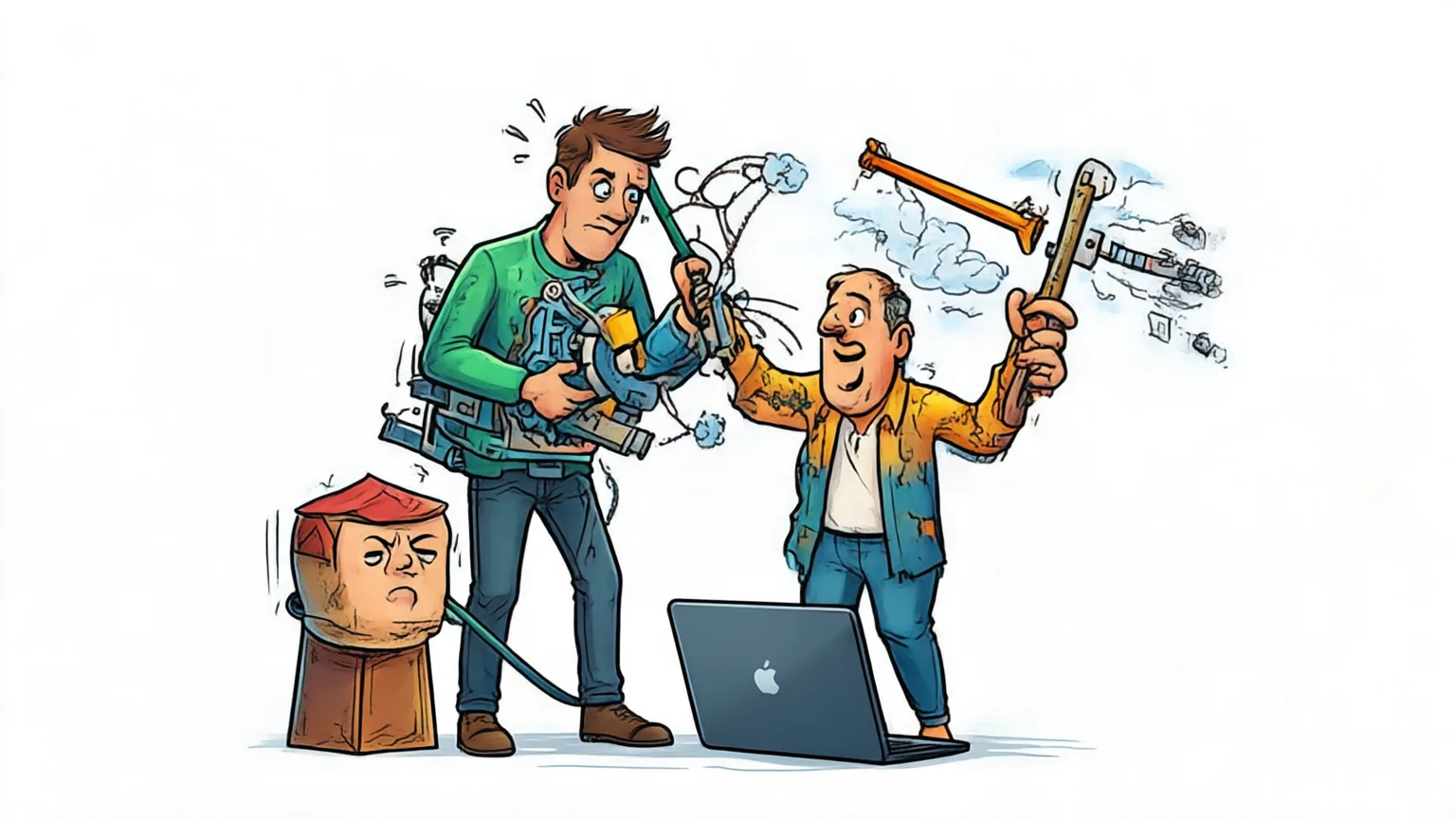
An AI can struggle because of the setup it works in, not just what it knows. This study asks whether another AI can learn to prepare a more useful setup for it. The researchers turn lessons from earlier attempts into rules for choosing support on new tasks. Neither AI needs its underlying model retrained.
- Problem: Improving an AI's reasoning alone does not address the conditions it needs to work well. Simply handing it advice also leaves the job of putting that advice into practice to the AI doing the task.
- New idea: The Builder is an AI that prepares a working setup, called a harness, for another AI called the Target. It watches how the Target performs on development tasks, which are tasks used to refine the approach before testing. From that feedback, it learns meta-skills: rules about when help is needed and which resources to supply. It then holds that rule collection fixed and uses it to prepare setups for unfamiliar tasks.
- Simple example: Think of someone preparing a workspace for a cook. After watching earlier attempts, the helper learns when to lay out particular utensils or instructions. For a new recipe, the helper uses those lessons to arrange the workspace.
- Evidence: Across Harness-Bench and NewtonBench, using the full meta-skill bank improved macro-average performance by 8.95 percentage points over building setups without those skills. It also beat giving the same bank directly to the Target by 12.02 percentage points. Gains appeared even when the same model filled both roles.
- Limitation: The abstract reports results on two benchmarks. It does not establish whether the learned support rules transfer to tasks outside those benchmarks.
- Why it matters: An AI can become more effective when past experience changes the support it receives.
- Paper: Learning Meta-Skills for Agent Harness Design in Test-Time
WorldAuditBench: Interactive 3D World Auditing with Multimodal Agents
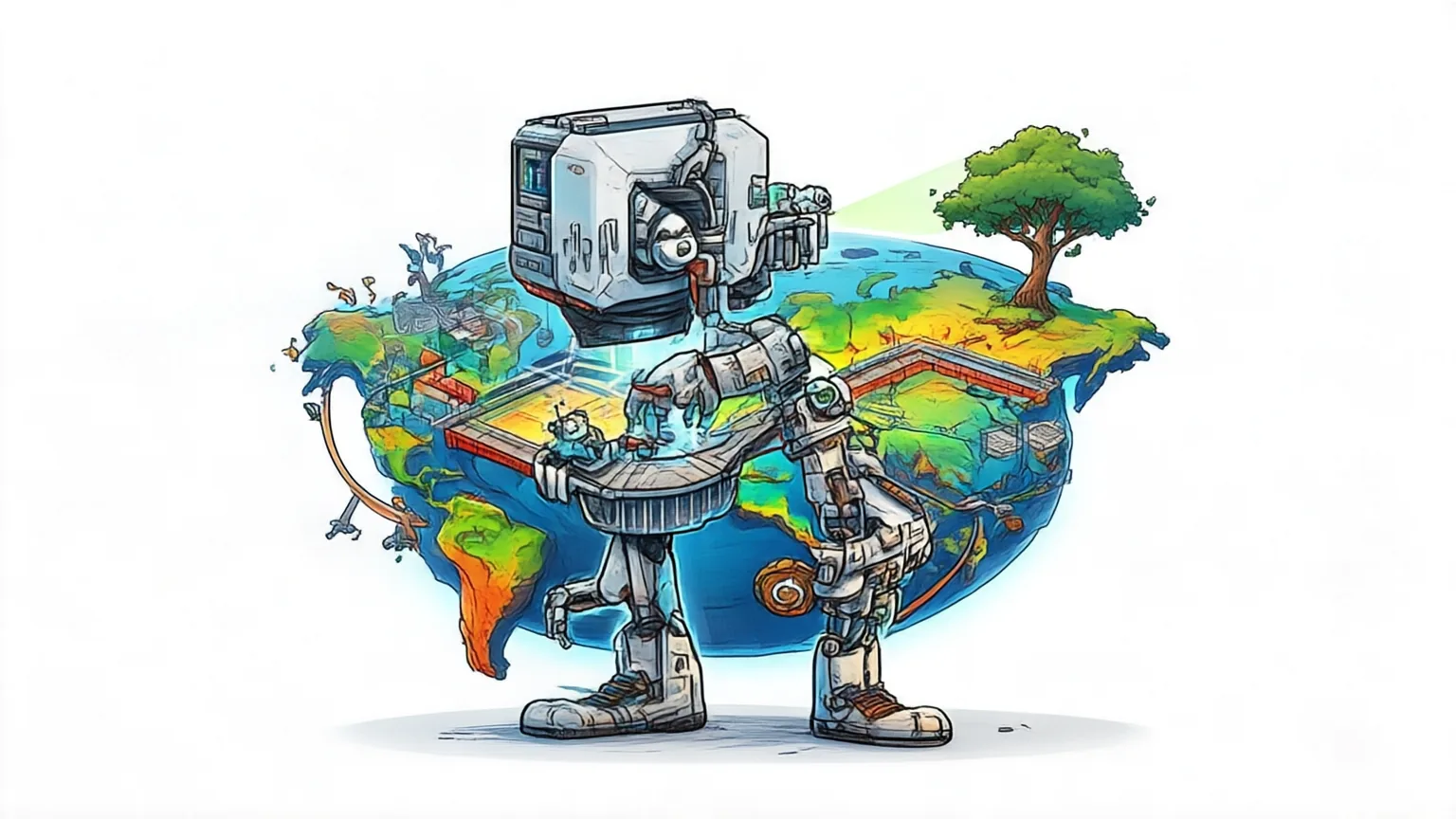
A simulated world can look convincing while hiding broken details. An object might float, or a wall might let someone walk straight through it. This study tests whether AI can move through such worlds and find these faults. It asks how well AI connects what it sees with what it should check next.
- Problem: Finding faults requires both looking in useful places and understanding what is wrong. An AI must also act to check its suspicions, and the ability to connect those steps remains poorly understood.
- New idea: WorldAuditBench is a benchmark, a collection of tasks for comparing AI systems, focused on faults in interactive 3D worlds. It compares two ways to inspect them under the same exploration allowance. One uses a vision-language-action model, which handles images, text and actions, to explore before a vision-language model, which interprets images and text, identifies faults. The other lets a vision-language model choose its next action based on what it sees.
- Simple example: Imagine inspecting a virtual room and suspecting that a wall is faulty. Looking at it may not settle the question. Trying to walk through it checks whether the wall actually blocks movement.
- Evidence: The benchmark contains 213 anomaly tasks across 13 environments, covering five families of faults. Five frontier models were evaluated using two inspection approaches. AI success rates ranged from 6.6% to 42.3%, compared with 83.4% for humans.
- Limitation: The tested AI systems remained far below human performance. They struggled to collect and interpret evidence while exploring.
- Why it matters: The tests reveal how much work remains before AI can reliably inspect simulated worlds for faults.
- Paper: WorldAuditBench: Interactive 3D World Auditing with
The Teacher Is a Direction, Not a Destination: Extrapolating RL-Induced Representation Residuals in On-Policy Distillation

An AI learning from another AI usually learns from the answers that model would give. This paper instead looks inside the teaching model to measure how reward-based training changed it. The researchers use that change to guide a learner beyond the teaching model's internal patterns. The aim is to preserve more of the useful training signal and help the learner perform better.
- Problem: Methods that push a learner beyond its teacher using output predictions face two problems. The step that turns internal model activity into word scores weakens some changes more than others. Estimates based on sampled words also add noise, which gets amplified and can destabilize training.
- New idea: RIDE, short for RL-Induced Direction Extrapolation, measures how reinforcement learning, or training with rewards, changes a teacher model's internal numerical patterns. At each processing layer and each position in a text sequence, it compares those patterns with the teacher's saved version from before reward-based training. It trains a student model toward patterns farther along that same direction than the teacher's. A penalty for moving away from the teacher limits how far the student is pushed.
- Simple example: Think of a coach comparing a learner's movement before and after practice. Instead of copying only the final pose, another learner uses the direction of improvement to guide a further adjustment. A limit on that adjustment keeps it close to the demonstrated movement.
- Evidence: Across four pairs of base models and reward-trained teachers, RIDE approached or exceeded teacher performance in every pair. It was the only method whose mean performance did so. It consistently beat extrapolation based on outputs, which worsened student performance whenever the teacher was close to its base model.
- Limitation: RIDE requires access to internal model states and the teacher's saved version from before reward-based training. The abstract reports no numerical performance scores, so it does not show the size of the gains.
- Why it matters: Changes inside a trained model can guide another model toward performance that matches or exceeds its teacher.
- Paper: The Teacher Is a Direction, Not a Destination:
Trending AI Repositories
Ranking source: GitHub Trending.
openclaw/openclaw
OpenClaw is an AI assistant that runs on your own devices. It puts the assistant in your chats, making that the main reason to take a closer look.
- What it is: This TypeScript project provides an AI assistant that runs on your devices and works in your chats.
- What it does: The AI that really does things. Any OS. Any Platform. The lobster way. 🦞
- Who it helps: It is for people who want an AI assistant on their own devices. They can use it in their chats.
- Limitation: The supplied README excerpt does not explain setup or name supported chat services.
- Repository: openclaw/openclaw
modelcontextprotocol/servers
This repository collects reference implementations for MCP alongside links to community-built servers and other resources. It gives readers examples to study and points them to the MCP Registry for published servers.
- What it is: This TypeScript repository provides reference implementations demonstrating MCP features and SDK usage. It also provides references to community work.
- What it does: Model Context Protocol Servers
- Who it helps: It helps developers looking for MCP implementation examples. They can study the reference implementations and follow links to community-built servers.
- Limitation: The repository houses a small set of reference implementations; the README directs readers to the MCP Registry for a list of published servers.
- Repository: modelcontextprotocol/servers
colbymchenry/codegraph
CodeGraph is a code intelligence tool for coding assistants. Its focus on semantic code context makes it relevant to readers who use agents to work with code.
- What it is: CodeGraph provides coding assistants with a pre-indexed code knowledge graph. It runs locally and automatically syncs the graph when code changes.
- What it does: Pre-indexed code knowledge graph, auto syncs on code changes, for Claude Code, Codex, Gemini, Cursor, OpenCode, AntiGravity, Kiro, CoPilot, and Hermes Agent , fewer tokens, fewer tool calls, 100% local
- Who it helps: It helps developers using coding assistants such as Claude Code, Cursor and Codex. They can use CodeGraph to give those assistants semantic code context.
- Limitation: The supplied README excerpt gives an upgrade command but no initial installation instructions.
- Repository: colbymchenry/codegraph
Sources
- 01Hugging Face Papers · Hugging Face Papers
- 02GitHub Trending · GitHub Trending
- 03Gemini 4 Argon: our next era of frontier intelligence · Google DeepMind
- 04Query claims in natural language with Amazon Bedrock Knowledge Bases · AWS Machine Learning
- 05Elon Musk’s Grokipedia has a ‘newly refreshed’ design · The Verge
- 06Valor, Atreides, and Sequoia back AI startup Flow Engineering at $750M valuation · TechCrunch
- 07Attackers have been exploiting critical Zimbra flaw to steal emails · Ars Technica
- 08Learning Meta-Skills for Agent Harness Design in Test-Time AI4AI · arXiv
- 09WorldAuditBench: Interactive 3D World Auditing with Multimodal Agents · arXiv
- 10The Teacher Is a Direction, Not a Destination: Extrapolating RL-Induced Representation Residuals in On-Policy Distillation · arXiv
Join the Idiots
New lab every Sunday. No spam, unsubscribe anytime.