Grok joins Bedrock, model pruning borrows from physics, and AI shopping meets doubt

Grok 4.6 arrives in Amazon Bedrock. A model pruning method treats block removal as an Ising optimization problem. The man who built Apple's stores questions Silicon Valley's bet on AI shopping.
News
xAI’s Grok 4.6 is now available in Amazon Bedrock
xAI's Grok 4.6 launched on Amazon Bedrock on August 18, 2026. Bedrock users now have access to the model for long-running agents, coding, and knowledge work. It offers a 500K-token context window and four reasoning effort levels.
Two endpoints and a choice of reasoning effort
The reasoning settings are low, medium, high, and xhigh. Grok 4.6 is available through the bedrock-mantle endpoint. It also runs through bedrock-runtime. Supported interfaces include the Converse API, Chat Completions, and Responses. Cross-Region inference is supported too. xAI reports that the model showed more self-testing and verification on longer agent trajectories. (AWS Machine Learning)
thinkidiot take: Grok 4.6 puts four reasoning effort levels within reach of Bedrock users. I would run the same coding task at each setting and inspect the result, including its self-tests. That would put xAI's reported verification behavior at the center of the trial. For my use, that behavior deserves more attention than the size of the context window.
Pruning LLMs Like a Physicist: Block Removal as an Ising Optimization Problem
A September 21, 2026 article on Hugging Face presents a method for choosing which transformer blocks to remove from a language model. The authors frame the choice as a constrained binary optimization problem that maps to an Ising glass. They report almost 23 percentage points higher MMLU performance than the best competing block-removal method at 50% compression of Llama-3.3-70B-Instruct.
The calculation accounts for pairs of removals
The method assigns a binary variable to each transformer block. A value of 0 keeps the block, while 1 removes it. A second-order Taylor expansion produces an approximate Hessian. Its off-diagonal entries capture pairwise interactions between block removals. Block removal provides inference speedups and memory savings. It can also be combined with quantization and low-rank compression. (Hugging Face)
thinkidiot take: The reported advantage is almost 23 percentage points on MMLU at 50% compression. I would use that compression setting as the starting point for a trial on Llama-3.3-70B-Instruct. The pairwise calculation gives me a concrete reason to test how blocks behave when removed together. I would put this method ahead of competing block-removal approaches in my testing queue.
The man who built Apple’s stores doesn’t buy Silicon Valley’s bet on AI shopping
Ron Johnson, who joined Apple in 2000 to build its retail business, questions Silicon Valley's bet on AI shopping. ChatGPT now lets users research, compare, and in some cases buy products without leaving the chatbot. Johnson says Apple's secret sauce has always been its people.
A laptop purchase still invites a hands-on visit
Google's Universal Commerce Protocol is designed to help AI agents take consumers from product discovery to checkout. Johnson argues that buyers would not delegate a $1,000 or $2,000 laptop purchase entirely to an agent. He says they want to experience the product physically. He also points to how Apple Store employees are paid. They do not earn commission, which he says allows them to focus on what customers need. (TechCrunch)
thinkidiot take: ChatGPT already supports product research, comparisons, and some purchases inside the chatbot. I would use those comparisons to prepare for a $1,000 or $2,000 laptop purchase, then experience the machine physically. That puts the chatbot's research tools alongside the store visit Johnson values. His argument is persuasive about handing over the entire purchase, but I would still give AI a place in choosing.
California tightens rules on AI data center energy and water use
California Governor Gavin Newsom has signed seven bills intended to prevent AI data centers from passing utility costs onto residents. The laws require the California Public Utilities Commission to introduce a new rate classification for data centers. The package also requires data centers to pay for upgrades to local power grids and water systems.
Streamlined approval comes with consumption requirements
Proposed data centers must disclose estimated water use to local governments. They must also provide energy efficiency information. Drought planning is another required disclosure. To qualify for a streamlined approval process, data centers must meet energy consumption requirements. Water and fuel consumption requirements also apply to that process. (The Verge)
thinkidiot take: The package requires data centers to pay for local power grid and water system upgrades. I would put those obligations into a project budget before pursuing streamlined approval. The disclosure rules also give local governments water estimates and drought plans to examine. Making those costs and resource demands part of the approval process is a condition I support.
OpenAI forms math advisory group as its AI resolves more than 100 open problems
On September 21, 2026, OpenAI announced the independent Advisory Group on Mathematics and Artificial Intelligence, hosted at the Institute for Advanced Study in Princeton. OpenAI claims its internal model resolved more than 100 additional open mathematics problems after the publication of a solution to the Navier-Stokes Millennium Prize problem. The group will assess the significance of results and coordinate releases.
Members can speak publicly but cannot redirect the research
Earlier that month, 25 Fields Medal-winning mathematicians signed an open letter criticizing AI labs' race to solve famous mathematics problems. The advisory group has nine initial members. Only Camillo De Lellis also signed the Fields Medalists' letter. Members will be unpaid and can offer unsolicited advice. They can publicly express their views and control the group's membership. The group cannot slow or redirect OpenAI's internal mathematics research. (TechCrunch)
thinkidiot take: The advisory group cannot slow or redirect OpenAI's internal mathematics research. I would read its assessments alongside OpenAI's claims, especially given members' freedom to express their views publicly. That gives the group a role in evaluating results without authority over the research's pace or direction. I value that public voice, but I judge its authority too narrow to address the race criticized in the open letter.
Trending AI Papers
Ranking source: Hugging Face Papers for 2026-09-22.
RRSI: Regularized Recursive Self-Improvement of Agent Harnesses
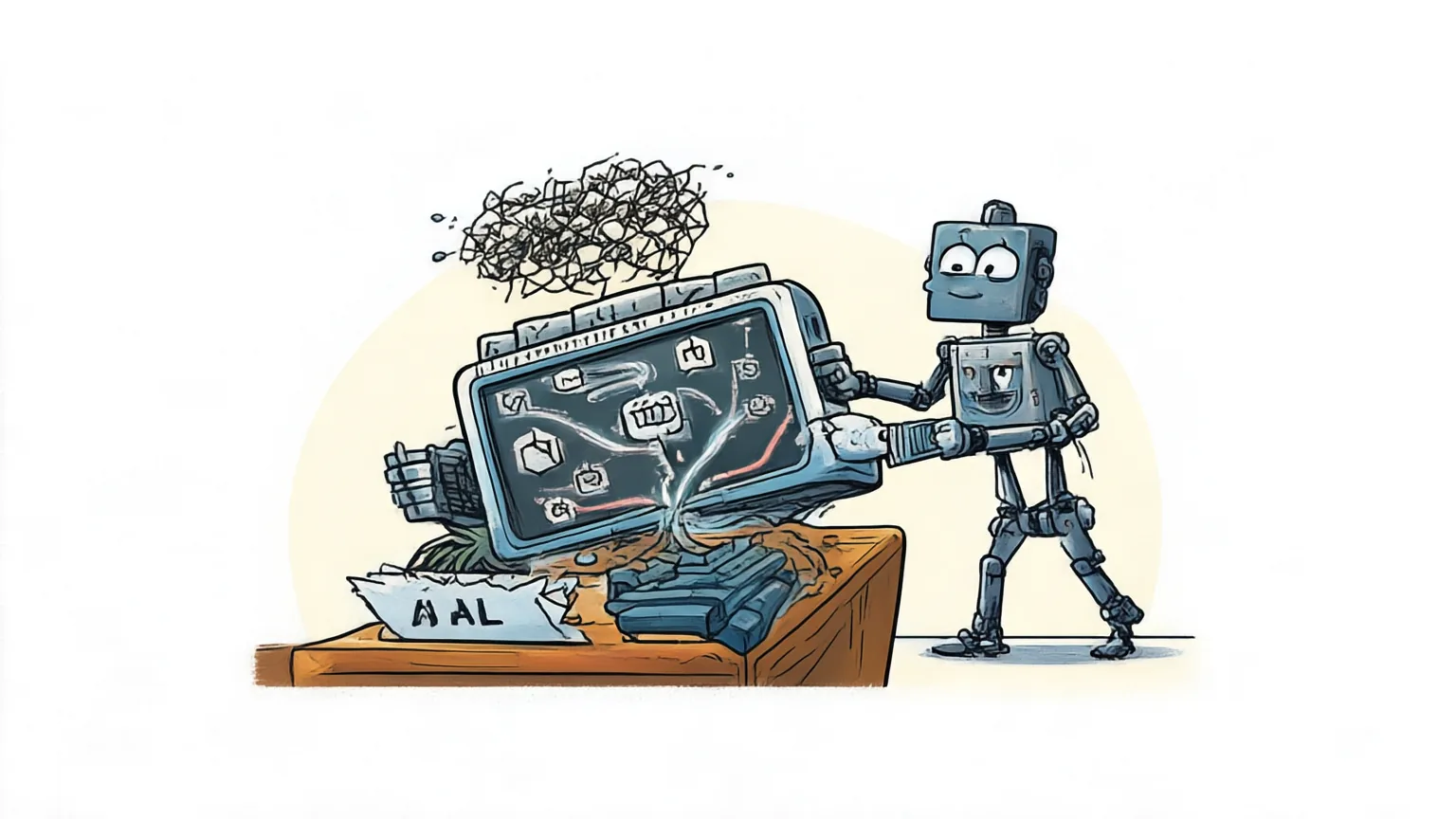
An AI agent depends on more than the model inside it. Its instructions, tools and ways of keeping track of work also shape what it can do. This paper studies how to improve that surrounding setup automatically without merely learning tricks for the tasks used during development. The aim is to make those improvements useful on unfamiliar tasks too.
- Problem: Repeatedly changing an agent's setup can make it better at familiar tests without making it more capable elsewhere. Existing improvement methods can end up memorizing the development tasks, so their apparent gains shrink or disappear on different tests.
- New idea: The method puts rules around proposed changes to the harness, meaning the instructions, tools and workflow around an unchanged model. It limits how many edits each proposal can combine, adjusts that limit over time and encourages directions not yet explored. A critic checks for changes tailored to a particular test. A pruning step removes changes that add too little, cost too much or have stopped helping.
- Simple example: Think of revising a cooking checklist after practicing the same recipes. Adding a reminder for every detail of those recipes could help during practice but fail with a new dish. This method tries to keep the broadly useful reminders and discard the recipe-specific clutter.
- Evidence: Across eight benchmarks covering coding, workspace tasks and engineering design, the method reports gains of up to 14.1 points on the task split used to guide changes. Gains reach up to 4.7 points across five benchmarks outside that development distribution. The resulting harness uses 30% fewer policy tokens than evolution without these constraints.
- Limitation: The reported gains are maximums, so the abstract does not show how consistently the method helps across individual benchmarks. It also does not establish whether those gains extend beyond the tested tasks.
- Why it matters: Improving an agent's setup is more useful when the gains carry over to unfamiliar work and require less model output.
- Paper: RRSI: Regularized Recursive Self-Improvement of Agent
Transferring the Intelligence of VLMs to Robotic Control

Can an AI model that understands pictures and text put that ability to work through a robot? RoboDawn gives such a model a small set of commands for moving and gripping. The model watches what happens after each action and decides what to do next. The work tests how far this approach can go without training the robot specifically for each task.
- Problem: Understanding a scene on a screen does not establish that a model can act successfully in the physical world. The paper tests whether that ability can transfer through a simple control interface, while comparison systems rely on robot training data specific to the benchmarks.
- New idea: RoboDawn connects a vision-language model, which processes images and text, to commands for moving, turning and operating a robot's gripper. The model uses a closed loop, meaning it observes the scene again after acting and adjusts its next move. It also uses in-context learning, meaning demonstrations supplied as input teach the model how to use the commands and approach the task without task-specific robot training.
- Simple example: Picture someone directing a robot to put a block in a basket through simple movement and gripping commands. They check the scene after each move before choosing the next one. Watching a demonstration first gives them an example of both the controls and the task.
- Evidence: On RoboTwin 2.0 C2R, success rises from 53.2% without a demonstration to 73.6% with one, compared with 46.0% for π0.5. On RoboDojo, success rises from 35.67% to 47.17% with one demonstration. The framework also performs block-in-basket and block-stacking tasks on a real Franka robot.
- Limitation: The abstract reports real-world use on block placement and stacking, but gives no real-world success rates. It does not establish how broadly the approach works across other physical tasks.
- Why it matters: A model that can guide a robot through simple commands could reduce the need for task-specific robot training.
- Paper: Transferring the Intelligence of VLMs to Robotic Control
One to More, More to One: Category-Aware Iterative Expert Training for Software Engineering Agents
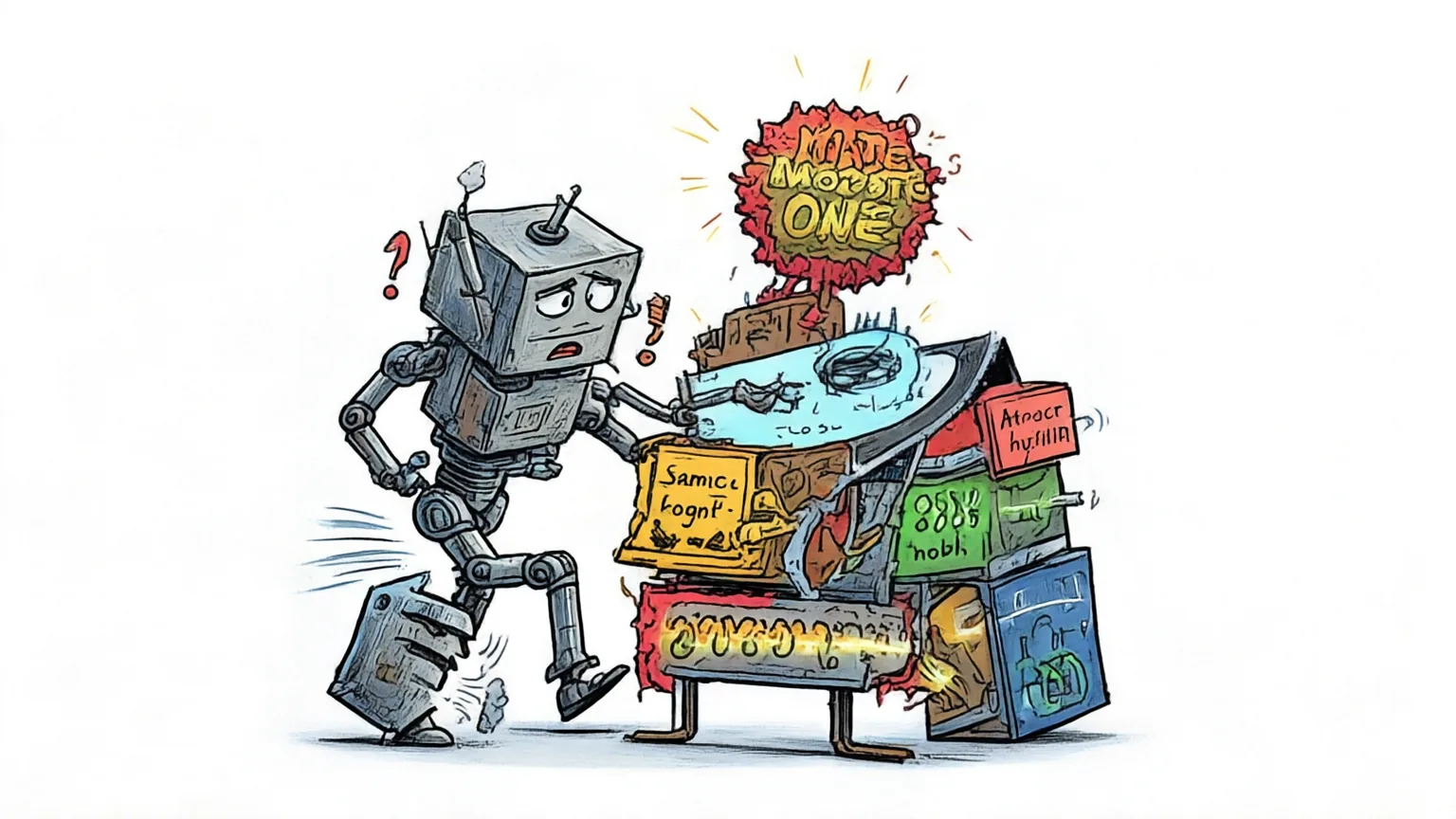
Training a coding agent can improve some kinds of work while making others worse. This paper explores a way to develop separate specialists and combine what they learn into a single agent. Each specialist revisits its own successful solutions and changes which tasks it practices. The aim is to preserve useful gains across different kinds of software work.
- Problem: Training on a combined pool of software tasks can produce uneven progress across task categories. An overall success score can hide the fact that better results in some categories come with worse results in others. Even training separate specialists leaves uneven progress on individual tasks.
- New idea: The method labels software tasks by category and trains specialist agents from the same starting model using reinforcement learning, which rewards successful behavior. Each specialist checks which tasks it can still solve, learns from its own verified successful action sequences and selects tasks for further practice. Distillation, meaning training a single student model from the specialists, then combines their behavior using task labels to select the relevant teachers. A reward rule retains only teacher improvements relative to a reference, and no external model supplies solution sequences or target actions.
- Simple example: Imagine a team practicing different kinds of repair work. Each specialist revisits repairs they have completed successfully and chooses what to practice next based on their current ability. They then use their experience to teach a generalist who must handle the full mix of jobs.
- Evidence: The final combined model reaches mean resolution of 58.04% on Pro-618 and 59.00% on SWE-bench Multilingual. These results improve on the base model by 5.39 and 2.78 percentage points, respectively.
- Limitation: The abstract gives final overall scores but no final scores for individual task categories. Those numbers alone do not show whether the combined model avoids regressions in every category.
- Why it matters: A coding agent needs to retain skills across different kinds of work as its overall performance improves.
- Paper: One to More, More to One: Category-Aware Iterative Expert
Trending AI Repositories
Ranking source: GitHub Trending.
zhouxiaoka/autoclip
AutoClip is a Python project for turning long videos into shareable excerpts. Its focus on reusing existing footage gives readers a concrete reason to look.
- What it is: This is a video editing tool hosted on GitHub. Its README links to documentation in several languages.
- What it does: AutoClip : AI-powered video clipping and highlight generation · 一款智能高光提取与剪辑的二创工具
- Who it helps: It helps people who want to share shorter pieces of a long video. They can use it to turn that footage into clips.
- Limitation: The supplied README excerpt does not explain installation or system requirements.
- Repository: zhouxiaoka/autoclip
ruanyf/weekly
This repository collects technology reading, software and resources. Its September entries cover React Native, a PR-only contribution approach and OpenClaw 2.0.
- What it is: It is a GitHub archive of numbered issues, with links to individual articles. The repository also hosts a free programmer recruitment thread.
- What it does: 科技爱好者周刊,每周五发布
- Who it helps: Technology readers can browse the archive and suggest articles, software or resources through GitHub issues. Programmers can consult the recruitment thread, where employers can post jobs and internships.
- Limitation: Submitting a suggested article, tool or resource requires opening a GitHub issue.
- Repository: ruanyf/weekly
Crosstalk-Solutions/project-nomad
Project NOMAD brings learning materials into a locally run service. Its appeal is continued access to those materials when an internet connection is unavailable.
- What it is: This TypeScript project sits in the self-hosted education space. Its README links to a website, a Discord community and a benchmark leaderboard.
- What it does: Project NOMAD is an offline-first knowledge and education server. Wikipedia, thousands of books, courses, maps, and optional local AI, all running on hardware you own with no internet required.
- Who it helps: It helps people who need reference and study materials without internet access. They can consult those resources on their own hardware and optionally use local AI.
- Limitation: You need hardware of your own to run it.
- Repository: Crosstalk-Solutions/project-nomad
Sources
- 01Hugging Face Papers · Hugging Face Papers
- 02GitHub Trending · GitHub Trending
- 03xAI’s Grok 4.6 is now available in Amazon Bedrock · AWS Machine Learning
- 04Pruning LLMs Like a Physicist: Block Removal as an Ising Optimization Problem · Hugging Face
- 05The man who built Apple’s stores doesn’t buy Silicon Valley’s bet on AI shopping · TechCrunch
- 06California tightens rules on AI data center energy and water use · The Verge
- 07OpenAI forms math advisory group as its AI resolves more than 100 open problems · TechCrunch
- 08RRSI: Regularized Recursive Self-Improvement of Agent Harnesses · arXiv
- 09Transferring the Intelligence of VLMs to Robotic Control · arXiv
- 10One to More, More to One: Category-Aware Iterative Expert Training for Software Engineering Agents · arXiv
Join the Idiots
New lab every Sunday. No spam, unsubscribe anytime.