Disrupt's discount deadline, world-model secrets and Huang's AI certainty

TechCrunch Disrupt ticket savings end September 25 at 11:59 p.m. PT. World-model companies are keeping their plans private. Nvidia's Jensen Huang says fears about AI are overblown.
News
6 days left to save up to $200 to TechCrunch Disrupt 2026
TechCrunch says ticket savings of up to $200 for Disrupt 2026 end September 25 at 11:59 p.m. PT. The announcement gives buyers six days to secure the current pricing. The event takes place October 13,15 in San Francisco.
Group discounts and dedicated spaces for meeting investors
Group passes for four or more people receive an additional 30% discount. The event advertises more than 10,000 founders, investors and tech leaders in attendance. Its program includes more than 250 speakers and 200 sessions. Those sessions span six industry stages, roundtables and breakouts. The Expo Hall will feature more than 300 startups. Networking options include AI-powered matchmaking and the Deal Flow Cafe for investors and founders. (TechCrunch)
thinkidiot take: Groups of four or more receive an additional 30% discount. I would settle the group booking before choosing sessions. That puts a concrete saving ahead of sorting through more than 200 sessions. For a team already attending, the group rate deserves more attention than the speaker count.
World model companies are keeping a lot of secrets
AMI Labs co-founder Michael Rabbat says the company is still researching and building. It is not publicly sharing product plans or timelines. The company is less than a year old.
Data suppliers are working without the full brief
Physicl CEO Alex de Vigan says customers have not explained exactly what they are building. That limits his ability to provide more useful data. World Labs has shown Marble demos for media creation. Other demos include explorable video-game environments and CGI effects. AMI has explored manufacturing, biomedicine and robotics. Its work also includes exploring AI software for doctors through its Nabia partnership. (TechCrunch)
thinkidiot take: Physicl's customers are withholding details that would help it supply more useful data. I would give a data supplier a concrete description of the intended task before asking for better inputs. Here, secrecy reaches into the work of supplying those inputs. Keeping product plans private is defensible, but leaving a supplier without a useful brief is a poor trade.
No one is surprised that Nvidia’s Jensen Huang thinks AI fears are overblown.
Nvidia CEO Jensen Huang told CBS Sunday Morning that there is a 0% chance of AI ending the world. He also argued that AI does not need new rules or laws. His position extends to new guidelines.
A call for unrestricted development from a growing fortune
Huang described calls from other CEOs to slow AI development as not grounded in science. Those CEOs include Anthropic's Dario Amodei and OpenAI's Sam Altman. The Verge places Huang seventh on Forbes' richest-people list. It reports his estimated wealth at $21 billion in 2023. That estimate rose to more than $192 billion in 2026. (The Verge)
thinkidiot take: Huang pairs a 0% claim about AI ending the world with opposition to new rules, laws and guidelines. I would not use that claim as a reason to drop safeguards in systems I run. His position rejects the calls to slow development from Amodei and Altman. That level of certainty is a poor basis for deciding how much oversight AI deserves.
Alibaba's open-weight Qwen-Image-2.1 claims to beat closed models in image generation with just 7 billion parameters
Alibaba has released Qwen-Image-2.1, an open-weight model for generating and editing images. Its visual generation component has 7 billion parameters. It runs on capable consumer GPUs such as a 3090, bringing those functions to local hardware.
Transparent layers are supported, but commercial use needs another license
The model natively generates and edits transparent RGBA images. This includes isolating objects and changing text on transparent layers. It accepts up to ten reference images simultaneously and supports local edits guided by circles, masks or painted marks. Qwen claims it beats most closed models on its own benchmark, while independent benchmarks are still pending. The model is available on Hugging Face, GitHub and Model Scope. Its research license prohibits commercial use without a separate license from Qwen. (The Decoder)
thinkidiot take: Qwen-Image-2.1 supports native transparent-image editing on capable consumer GPUs such as a 3090. I would start a research evaluation with object isolation and text changes on transparent layers. A commercial workflow still requires a separate Qwen license. Those editing controls are a stronger reason to evaluate it than Qwen's own benchmark ranking.
Tencent's Gander aims to keep talking while it works in the background
Tencent's Gander continuously processes video, speech and text while speaking and handling tasks in the background. Users can interrupt it or change the task during a conversation. It also delivers follow-up questions and progress updates without waiting for a prompt.
Better conversational timing comes with weaker task accuracy
Gander separates real-time conversation into a cerebellum and background reasoning into a swappable brain. That brain can use Codex or Claude Code without retraining the conversation model, and tests used an unspecified model from OpenAI's GPT-5.6 family. It makes conversational decisions in one-second segments using roughly two minutes of conversation memory, without a separate speech-start-and-stop detection module. The report says it started speaking at the correct moment in all 100 Full-Duplex-Bench v3 scenarios. It interrupted users in 8% of cases versus GPT-Realtime's 13.5%, but its task accuracy was slightly below the weakest competitor. A GitHub code repository exists, and the team plans to release model weights and training data. (The Decoder)
thinkidiot take: Gander interrupted users in 8% of cases, but its task accuracy fell slightly below the weakest competitor. I would judge it on whether the background work gets done correctly. Its swappable brain gives me a concrete component to compare while keeping the conversation model unchanged. Better timing matters, but I would put task accuracy ahead of conversational polish.
Trending AI Papers
Ranking source: Hugging Face Papers for 2026-09-21.
CodeMidas: Scaling Agentic Coding RL Environments from Code Itself
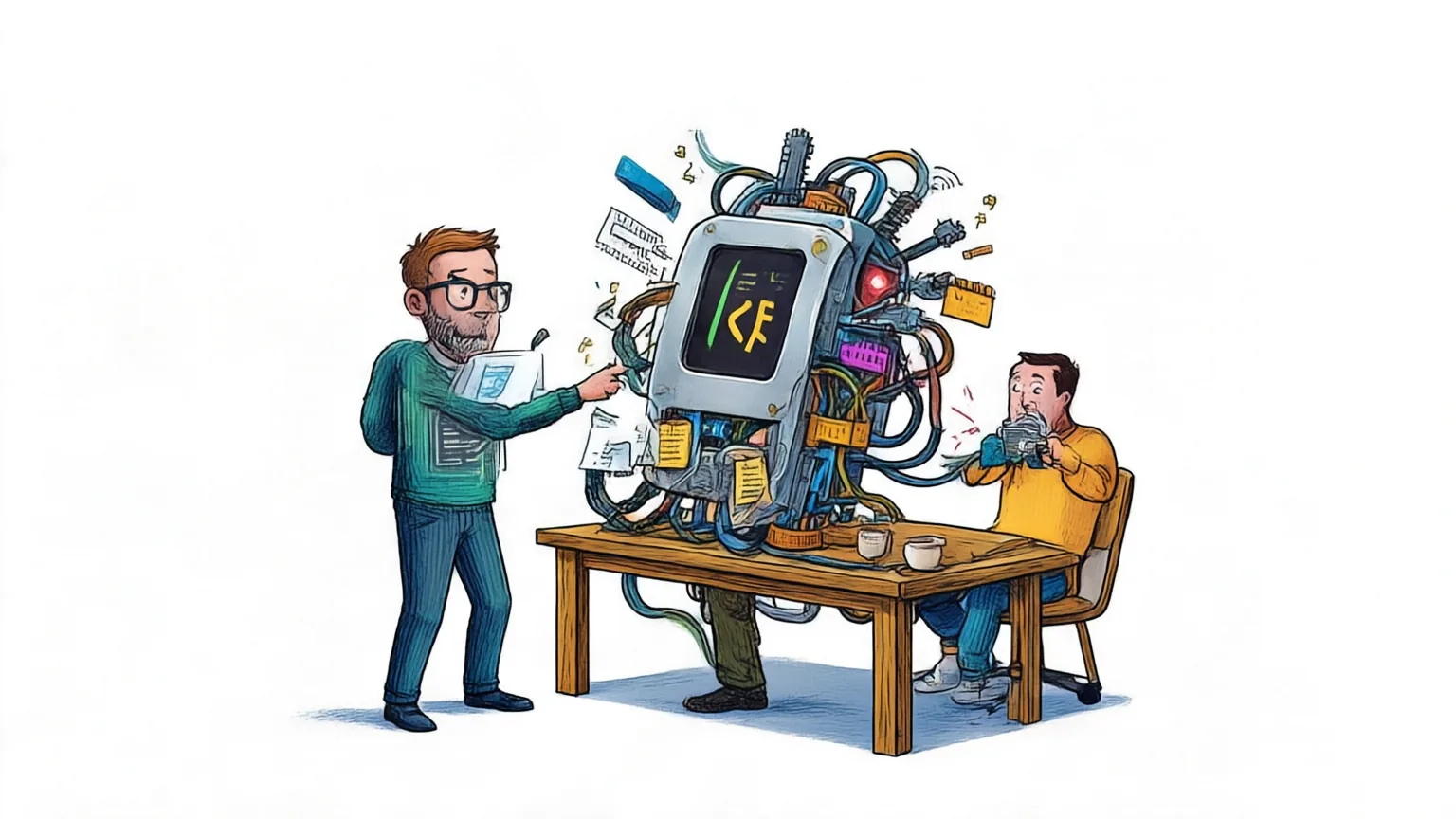
Working software can supply practice problems for AI coding assistants. CodeMidas reads existing programs and turns what they do into tasks with tests to check the answers. The aim is to produce more training material without needing records of bugs or past changes. Training on these tasks improved the tested model across several kinds of software work.
- Problem: Coding assistants need varied practice tasks and dependable ways to judge their solutions. Existing methods often build tasks from issue reports and recorded code changes, which restricts what they can extract from a codebase.
- New idea: CodeMidas starts with source code, the written instructions behind a program, as its only input specific to each task. Automated assistants inspect the program and describe behavior that a solution must reproduce. They run the original program to build tests, then check candidate tasks through execution and repeated attempts to solve them. The accepted tasks support reinforcement learning, a training method that rewards successful solutions.
- Simple example: Think of a teacher making exercises from a working machine rather than its repair log. The teacher watches what the machine does, sets a task to reproduce that behavior, and uses the original machine to check the answer.
- Evidence: The dataset contains 5,545 training tasks from 3,185 open-source codebases, covering 23 programming languages and 15 technical domains. MiMo-V2.5 improved on all five benchmarks after training. Reported gains include 11.7% on DeepSWE, 17% on ProgramBench, and 8.5% on Terminal-Bench v2.1. Experiments also found that adding more high-quality tasks improved performance.
- Limitation: The abstract reports training results for MiMo-V2.5 only, leaving gains for other models untested. It also gives no cost figures for constructing and checking the tasks.
- Why it matters: Existing software could provide a larger supply of checkable practice tasks for training coding assistants.
- Paper: CodeMidas: Scaling Agentic Coding RL Environments from Code
RecreationWorld: Scalable and Verifiable Environments for Hybrid Computer-Use Agents

RecreationWorld asks AI assistants to learn how an application works by using it, then build their own version. The assistants can move between clicking through screens, writing code, and checking the result. This creates practice and evaluation tasks that combine skills often studied separately. The results show that copying an application's appearance is easier than reproducing its behavior.
- Problem: Research on computer assistants often separates operating visual interfaces from writing software. Real work requires switching between these activities, so studying them separately misses an important part of the job.
- New idea: RecreationWorld gives an assistant a working application to inspect and recreate, without specifying the steps to follow. It supplies repeatable workspaces on Ubuntu, macOS, Windows, Android, and Web, with tools for both screen interaction and coding. The original application supplies expected outcomes for hidden checks, which reward matching behavior. RecreationBench, the accompanying evaluation set, checks both visible results and program behavior after user actions.
- Simple example: Think of rebuilding an appliance after trying its controls. Matching the arrangement of its buttons is only part of the job; pressing those buttons must also produce the same results.
- Evidence: Training on recorded task attempts improved models across five coding and computer-use benchmarks outside the training setting. RecreationBench contains 250 tasks. GPT-6 Astra leads with an overall score of 58.1%, yet passes every programmatic test on only 2.8% of tasks.
- Limitation: Assistants reproduce static screen layouts more reliably than interactions and calculated results. Their applications also remain smaller and concentrate more code in a single structure than the originals.
- Why it matters: This work tests whether an assistant can build software that behaves correctly when someone actually uses it.
- Paper: RecreationWorld: Scalable and Verifiable Environments for
EvoOntology: A Self-Evolving Ontology Layer for Data Agents
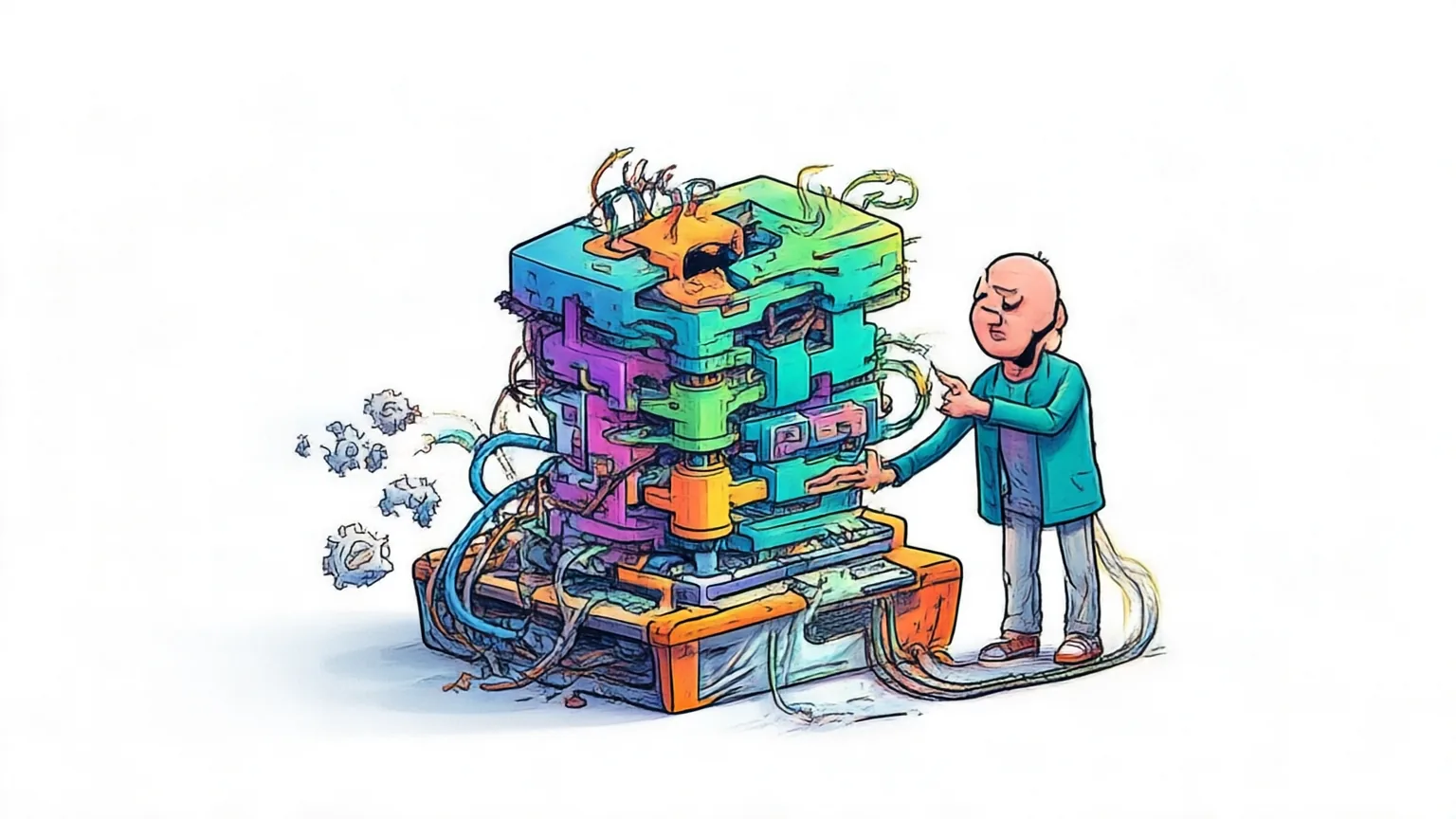
An AI assistant working with data needs to understand where information lives and what it means. EvoOntology builds a guide that the assistant can consult while working across tables, files, and databases. Another assistant creates the guide, and an update process revises it after evaluation. The aim is to reduce the work of finding and interpreting scattered data.
- Problem: Data assistants must reach information through general tools that expose details such as column names and file paths. Exploring raw sources directly or relying on manually written guides scales poorly across large, varied collections and does not adapt well to different assistants.
- New idea: EvoOntology creates an ontology, a structured guide to data that an assistant can consult while carrying out a task. The guide covers data structure, content, and tools, and is served through MCP, a protocol for connecting assistants to external tools and information. A builder assistant constructs the guide automatically. An update process proposes specific kinds of edits based on identified causes of problems, then accepts them only after comparing versions with the particular model being used.
- Simple example: Think of a shared filing room with a directory explaining what each folder contains and how to find it. EvoOntology is like having someone build that directory, revise it when problems appear, and check each revision with the person who uses it.
- Evidence: Across three data-agent benchmarks and four underlying language models, EvoOntology consistently outperformed strong comparison methods and existing approaches that supply data-meaning guides. The abstract gives no numerical scores or sizes of improvement.
- Limitation: The abstract does not quantify the gains or report the cost of building, querying, and repeatedly evaluating the guide.
- Why it matters: A guide that improves through evaluation could help AI assistants find and use information across varied data sources.
- Paper: EvoOntology: A Self-Evolving Ontology Layer for Data Agents
Trending AI Repositories
Ranking source: GitHub Trending.
BuilderIO/agent-native
Agent-Native is a TypeScript project from BuilderIO focused on agentic applications. It pairs autonomous agents with a purpose-built UI.
- What it is: Agent-Native lets developers define capabilities once as actions that agents use as tools and the UI calls from code.
- What it does: A framework for building agentic apps
- Who it helps: It is aimed at developers building agentic apps. They can examine a TypeScript project focused on that work.
- Limitation: The supplied README excerpt includes a quick-start command and an explanation of shared actions.
- Repository: BuilderIO/agent-native
anthropics/financial-services
Claude for Financial Services collects reference agents, skills, and data connectors for financial workflows. One source supports both a Claude Cowork plugin and deployment through the Claude Managed Agents API.
- What it is: This Python repository provides reference material for financial-services workflows. It sits between Claude and work in investment banking, equity research, private equity, and wealth management.
- What it does:
- Who it helps: It serves people working in investment banking, equity research, private equity, and wealth management. They can install the material in Claude Cowork or deploy it through the API behind their own workflow engine.
- Limitation: Agents draft work for qualified human review, and every output is staged for human sign-off.
- Repository: anthropics/financial-services
vercel-labs/json-render
json-render generates dynamic, personalized interfaces from prompts. It uses predefined components and actions to keep the output predictable.
- What it is: This TypeScript project from Vercel Labs provides tooling for prompt-generated interfaces. Its output is built around predefined components and actions.
- What it does: The Generative UI framework
- Who it helps: It helps developers who want to generate interfaces from prompts. They can use predefined components and actions to constrain what those interfaces contain and do.
- Limitation: Components and actions must be defined in advance.
- Repository: vercel-labs/json-render
Sources
- 01Hugging Face Papers · Hugging Face Papers
- 02GitHub Trending · GitHub Trending
- 036 days left to save up to $200 to TechCrunch Disrupt 2026 · TechCrunch
- 04World model companies are keeping a lot of secrets · TechCrunch
- 05No one is surprised that Nvidia’s Jensen Huang thinks AI fears are overblown. · The Verge
- 06Alibaba's open-weight Qwen-Image-2.1 claims to beat closed models in image generation with just 7 billion parameters · The Decoder
- 07Tencent's Gander aims to keep talking while it works in the background · The Decoder
- 08CodeMidas: Scaling Agentic Coding RL Environments from Code Itself · arXiv
- 09RecreationWorld: Scalable and Verifiable Environments for Hybrid Computer-Use Agents · arXiv
- 10EvoOntology: A Self-Evolving Ontology Layer for Data Agents · arXiv
Join the Idiots
New lab every Sunday. No spam, unsubscribe anytime.