AI's new vocabulary, Anthropic's compute bill, and Astra's Portal run
Get this by email →
A glossary explains opaque recurrence and other AI terms. Anthropic reportedly signs up to $517 billion in compute deals after warning about risk. GPT-6 Astra finishes Portal without human help in under 24 hours.
News
Opaque recurrence, and other AI terms that you should probably know
TechCrunch has published a glossary of the terms spreading alongside AI. It identifies opaque recurrence as a reasoning technique in OpenAI's new Astra model. The glossary gives readers definitions for the words used to describe AI systems and their capabilities.
Even AGI has different definitions
OpenAI's charter defines AGI as highly autonomous systems that outperform humans at most economically valuable work. Google DeepMind defines it as AI at least as capable as humans at most cognitive tasks. AI agents can perform multistep tasks such as filing expenses and booking tickets. They can also write and maintain code. API endpoints let developers build integrations and let agents control third-party services directly. Chain-of-thought reasoning breaks problems into intermediate steps to improve the result, usually taking longer to answer. (TechCrunch)
thinkidiot take: OpenAI and Google DeepMind set different bars for AGI: outperforming humans at economically valuable work versus matching them at cognitive tasks. I would keep those definitions beside any AGI claim before deciding what it means for the work I want done. For choosing an agent, filing expenses or maintaining code gives me a more concrete criterion. I care more about those capabilities than agreement on the grand label.
Anthropic reportedly signs $517 billion in compute deals after Dario Amodei warned rivals about reckless risk
Anthropic signed compute contracts worth up to $517 billion in eleven months, according to The Information, as reported by The Decoder. Since October 2025, it has secured at least 14.8 gigawatts of computing power beyond its existing one to two gigawatts. The agreements give Anthropic access to additional computing capacity on a much larger scale.
The spending plans run on different clocks
In early 2026, Dario Amodei warned that competitors did not understand the risks of investing too fast. OpenAI's compute plan totals $750 billion through 2030. It targets 30 gigawatts by that year, while many Anthropic contracts extend beyond it, complicating comparisons. Anthropic's annualized revenue exceeded $65 billion, according to Bloomberg. OpenAI's exceeded $40 billion as of July. Sam Altman warned that technical progress risks turning expensive compute projects into bad investments and criticized "unsustainable silliness" in the buildout, especially among neo-cloud providers. (The Decoder)
thinkidiot take: Anthropic's reported commitments reach up to $517 billion after Amodei warned about the risks of investing too fast. I would put contract timelines beside the dollar totals before treating either company's plan as a measure of its lead. Many Anthropic agreements extend beyond OpenAI's 2030 target, so the headline totals cover different periods. To me, Amodei's warning is a useful standard for judging Anthropic's own spending.
GPT-6 Astra beat Portal start to finish without human help in under 24 hours
Developer cozyblaze reported that GPT-6 Astra finished Portal in about 23 hours and 43 minutes. It completed the game without human help after the initial goal was set. Code and documentation for the run are available on GitHub.
The game stopped while Astra thought
The model controlled Portal through MCP and a modified SourcePauseTool that paused the game while it reasoned. During each pause, the agent received screenshots, player position, and camera angle. It selected inputs and then resumed the game. The demonstration video removes those thinking pauses. Token usage would cost at least $570 at Astra's list price. Cozyblaze used a $200 Codex subscription. (The Decoder)
thinkidiot take: Astra completed Portal without human help, but the run took about 23 hours and 43 minutes with pauses for reasoning. I would read the published code and documentation before using the edited video to judge its pace. The removed pauses and at least $570 in list-price token usage belong alongside the completion result. I count this as a convincing demonstration of autonomous completion, with speed and cost central to judging its practical value.
Trending AI Papers
Ranking source: Hugging Face Papers for 2026-09-08.
Bilevel Coordinated Reflection: A Game-Theoretic Approach to Multi-Agent LLM Systems
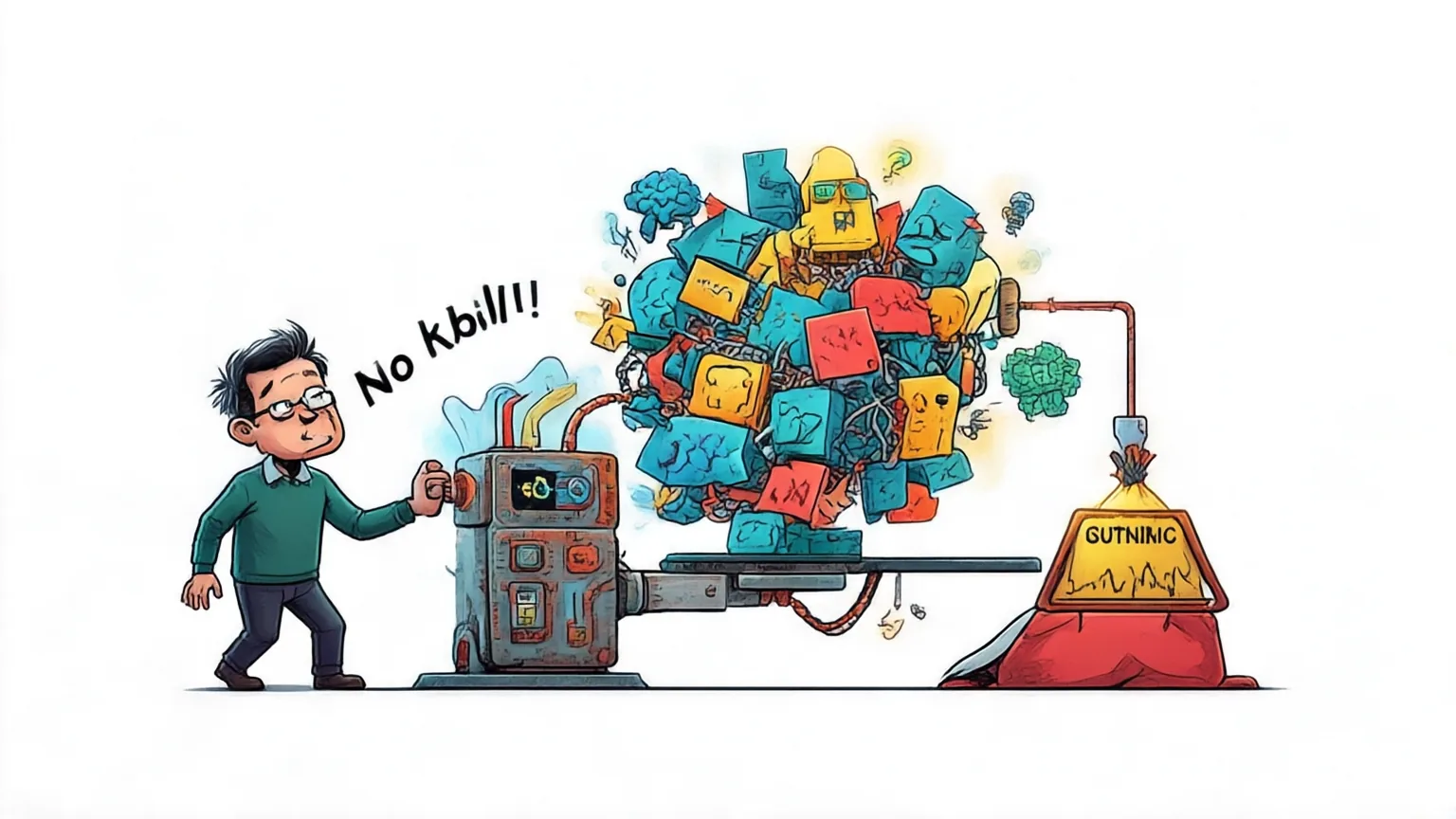
Teams of AI assistants often divide a job and save lessons from their attempts. This paper asks when that teamwork helps and when those saved lessons make things worse. It proposes checking each new lesson against results from the task itself before keeping it.
- Problem: Splitting work among AI assistants and asking them to reflect can produce strong results, but it does not explain when their choices will fit together. Reading what the assistants wrote is also insufficient to reliably tell whether a proposed lesson will improve future work.
- New idea: The paper treats teamwork as a game with a coordinator that divides the task and workers that adjust their own choices. It connects the quality of that division to how closely the workers can reach a state where none benefits from changing its choice alone. Its memory update method, Stochastic Reflective Memory Ascent, keeps a proposed lesson only when an evaluation tied to the actual task shows lower risk. The guarantees depend on that evaluation being calibrated and on useful corrections remaining available.
- Simple example: Think of a repair crew writing advice for its next job. A convincing account of a repair does not establish that the advice works. The crew tests the proposed advice on the equipment before adding it to the handbook.
- Evidence: The paper proves that a check based only on generated text cannot guarantee improvement across environments that look identical in that text. It also proves convergence for its memory method under stated conditions. On 500 SWE-bench instances, the complete Kimi-based system resolves 72.2%, compared with 70.8% for a public mini-SWE-agent reference.
- Limitation: The convergence guarantees require calibrated evaluation and access to useful corrections. The reported benchmark comparison concerns the complete system, so it does not isolate how much the memory method contributes.
- Why it matters: AI teams need evidence that their saved lessons improve their work before they reuse them.
- Paper: Bilevel Coordinated Reflection: A Game-Theoretic Approach
Dr. Claw: An AI Scientist Workspace for Vibe Research
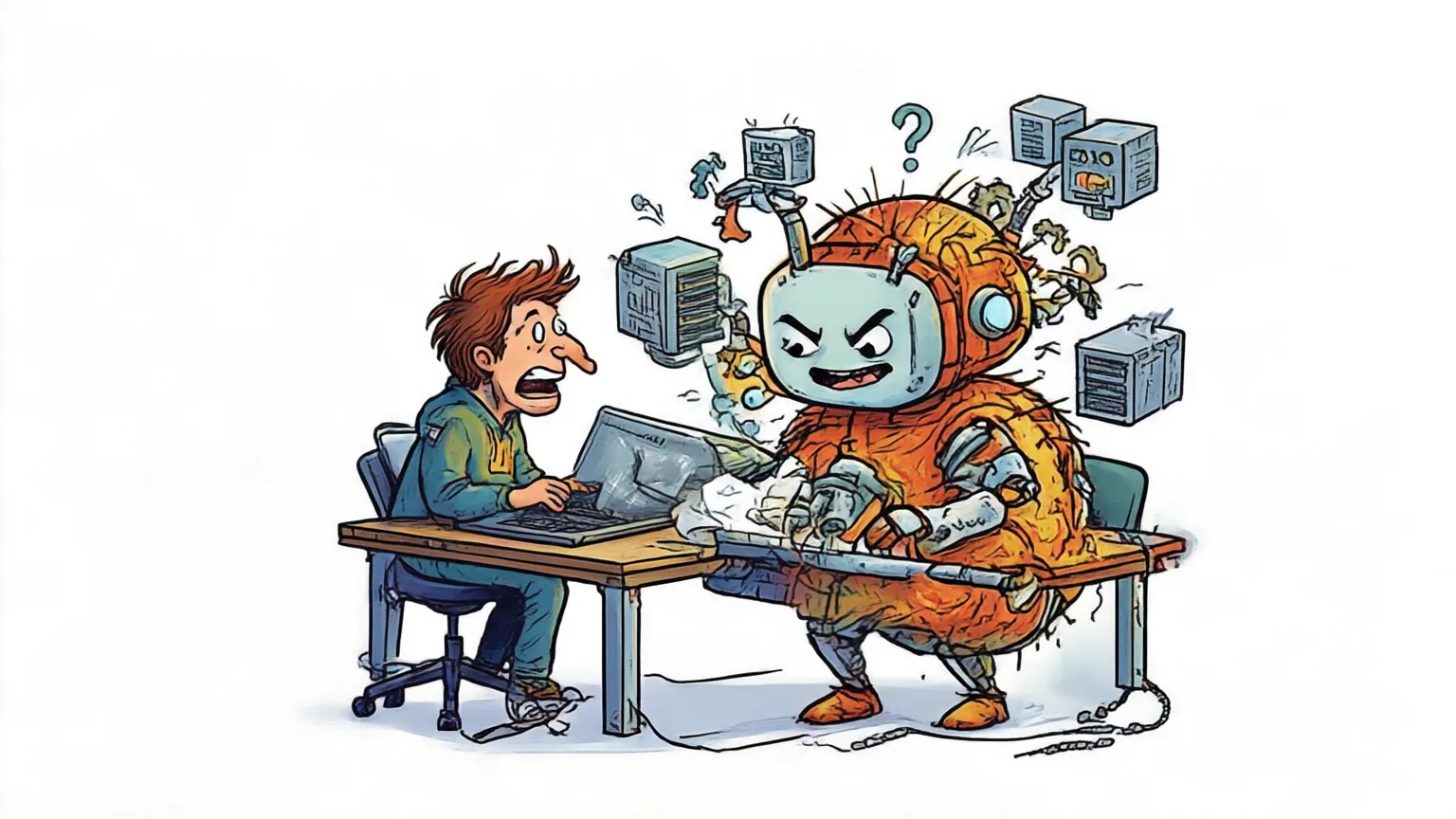
AI coding assistants can handle files and work through long tasks, but a research project still stretches across separate tools. Dr. Claw brings that work into a shared workspace around existing assistants. It aims to keep people in control while preserving enough history to inspect decisions and resume interrupted work.
- Problem: Research moves between conversations, code editors, terminals, and writing tools. Existing coding assistants can do substantial work, but the decisions connecting those steps are rarely saved in a form that makes the process easy to review.
- New idea: Dr. Claw adds a workspace around existing coding assistants, with people directing the work. It saves project state, meaning records of where the work stands, and links human decisions to the actions assistants take. A skill library stores reusable instructions, while coordination across executors, the systems that run the assistants, connects their work. These records join planning, execution, and writing into a process that can be reviewed and resumed.
- Simple example: Think of a shared research notebook that records the plan, the decisions, and where each piece of work stopped. If a task fails, the team can consult that notebook to recover its place and continue.
- Evidence: With the underlying executor held fixed, Dr. Claw scores higher on research completeness than a bare command-line agent and retains a process record that supports review and recovery. The paper also presents an interactive three-view demonstration and a failure-recovery walkthrough. The abstract gives no numerical scores.
- Limitation: The comparison tests the whole workspace at once, so it does not establish which part produces the improvement. The abstract also omits the size of the improvement.
- Why it matters: Preserving decisions alongside AI work makes research easier to inspect and resume.
- Paper: Dr. Claw: An AI Scientist Workspace for Vibe Research
The Attention Triangle in Audio-Video Models
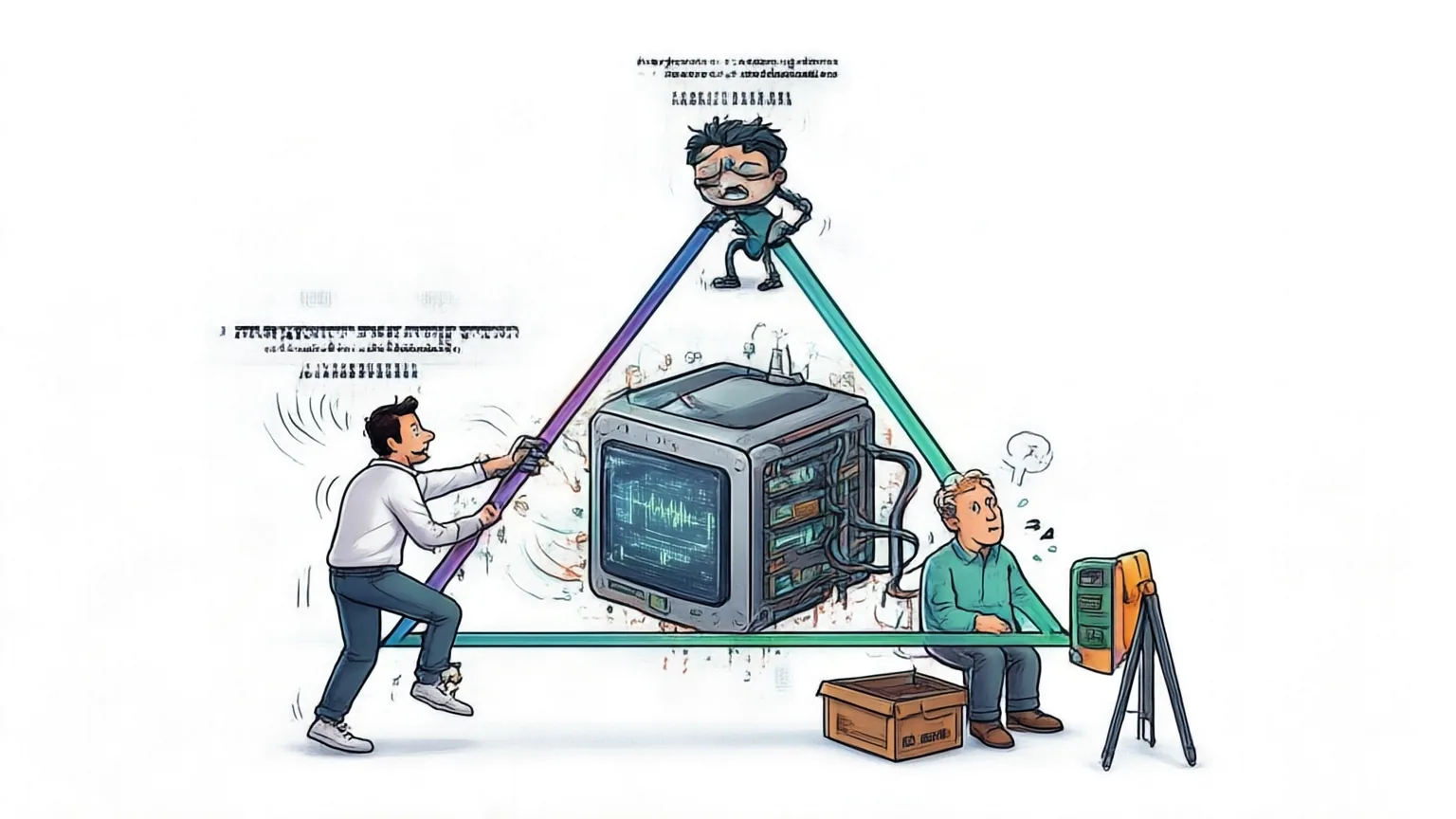
AI systems that generate sound and video can let one part of a scene pull another away from the request. This paper examines the internal connections that allow that to happen. It uses those connections to diagnose errors and guide generation toward a more faithful result.
- Problem: The connections that help a model coordinate words, sound, and images can also carry meaning to the wrong place. When a request conflicts with patterns the model has learned, those patterns can override the intended result. Treating this only as attention spreading too widely misses the role of specific connections and learned biases.
- New idea: The paper studies an attention triangle, meaning the three connections through which text, sound, and video influence one another. It finds that the sound-video connection carries influence in both directions and can let learned associations distort the request. The researchers extract attention signals, internal indicators of those connections, to trace and deliberately trigger such errors in controlled tests. They then use the signals to guide changes during generation that improve agreement across sound, video, and the request.
- Simple example: Imagine a sound editor and a video editor working from the same brief. Each adjusts their work after seeing or hearing the other's choices. If a familiar association outweighs the brief, their choices can reinforce an incorrect result.
- Evidence: The experiments support influence flowing both ways between sound and video and identify that connection as a major source of meaning leaking across them. Changes guided by attention signals improve how generated content matches its intended meaning while preserving generation quality. The abstract reports no numerical results.
- Limitation: The abstract does not identify the tested models, give numerical improvements, or specify where the intervention fails. That leaves its effectiveness across other models and requests unresolved.
- Why it matters: Tracing how sound and video influence each other can help explain and correct departures from a user's request.
- Paper: The Attention Triangle in Audio-Video Models
Trending AI Repositories
Ranking source: GitHub Trending.
heygen-com/hyperframes
HyperFrames is a TypeScript project from heygen-com with a package on npm. It connects agent workflows with video creation.
- What it is: It is a developer package published on npm as hyperframes.
- What it does: Write HTML. Render video. Built for agents.
- Who it helps: It helps developers building agents that create video. They can use HTML as the starting material.
- Limitation: The supplied README excerpt requires Node.js >=22 but does not include setup instructions or further rendering details.
- Repository: heygen-com/hyperframes
mksglu/context-mode
Context Mode is a TypeScript project for managing the information coding agents work with. It addresses both tool responses and continuity between sessions.
- What it is: It is an npm package that sits between coding agents and their tools, using MCP and hooks.
- What it does: Context window optimization for AI coding agents. Sandboxes tool output (98% reduction), persists session memory, and enforces routing across 17 platforms via MCP + hooks.
- Who it helps: It helps developers working with AI coding agents. They can retain session information while keeping large tool responses out of the agent's immediate context.
- Limitation: The supplied excerpt does not explain how the stated reduction in tool output was measured.
- Repository: mksglu/context-mode
jo-inc/camofox-browser
camofox-browser is a JavaScript browser server powered by Camoufox. Its MIT license gives readers a concrete starting point for assessing reuse.
- What it is: It provides a server layer around Camoufox for agent-driven browsing. The project advertises capabilities to bypass Cloudflare, bot detection, and anti-scraping protections, along with Puppeteer and Playwright compatibility.
- What it does: Stealth headless browser for AI agents , bypass Cloudflare, bot detection, and anti-scraping. Drop-in Puppeteer/Playwright replacement.
- Who it helps: It helps developers whose AI agents need to browse websites. They can use a Camoufox-powered server for that browser work.
- Limitation: The supplied README excerpt does not establish which sites it can successfully access.
- Repository: jo-inc/camofox-browser
Sources
- 01Hugging Face Papers · Hugging Face Papers
- 02GitHub Trending · GitHub Trending
- 03Opaque recurrence, and other AI terms that you should probably know · TechCrunch
- 04Anthropic reportedly signs $517 billion in compute deals after Dario Amodei warned rivals about reckless risk · The Decoder
- 05GPT-6 Astra beat Portal start to finish without human help in under 24 hours · The Decoder
- 06Bilevel Coordinated Reflection: A Game-Theoretic Approach to Multi-Agent LLM Systems · arXiv
- 07Dr. Claw: An AI Scientist Workspace for Vibe Research · arXiv
- 08The Attention Triangle in Audio-Video Models · arXiv