Creative agents gain control as courts and companies redraw AI’s boundaries
Get this by email →
Amazon links creative agents to fal, Gemini adds tighter video controls, and a judge overturns Anthropic’s blacklist. TechCrunch sets its enterprise AI agenda, while Nvidia’s Jensen Huang declares AGI and dismisses the label.
News
Build agentic creative workflows with Amazon Quick and fal
Amazon has shown how to build reusable creative agent workflows with Amazon Quick and fal through the Model Context Protocol. The setup lets teams turn one request into coordinated media work without manually moving context between tools. Its two examples produce an eight-panel storyboard and a music-video concept prototype.
A four-layer harness keeps decisions and tools connected
The harness has four layers: Amazon Quick, Skills, MCP, and fal. Amazon Quick interprets requests and plans the work. It also retains approved decisions and presents outputs for review. Skills give the agent reusable instructions for each workflow. MCP gives Amazon Quick a consistent way to discover and invoke fal tools. Fal supplies production-ready access to more than 1,000 models spanning image, video, audio, 3D, and other media tasks. (AWS Machine Learning)
thinkidiot take: Access to more than 1,000 media models makes tool selection a workflow problem, not a model-shopping exercise. I would start with the storyboard process because eight panels expose whether approved decisions carry cleanly across repeated generations. Creative teams have spent enough time transferring context between fragmented tools. A reusable harness is valuable when it preserves those decisions, not merely when it calls more models.
Gemini Omni 1.1 Flash lets you build with more control
Google DeepMind introduced Gemini Omni 1.1 Flash on August 27, 2026. The model gives builders more control over generated video through longer scene awareness and new framing options. It can analyze up to 10 seconds of prior context, rather than the final second used by previous models.
Longer memory gives each extension more visual context
Videos can be extended in 10-second increments. The cumulative length can reach 40 seconds. Start-and-end-frame interpolation gives creators control over both boundaries of a generated sequence. The model also supports 360p previews for reviewing work. Finished results can be upscaled to 4K. It is available through the Gemini API in Google AI Studio and through the Gemini Enterprise Agent Platform. (Google DeepMind)
thinkidiot take: Moving from one second of prior context to 10 seconds changes how I would build an extended scene. I would use the start-and-end frames to set the destination, review the sequence at 360p, and reserve 4K upscaling for the selected result. Ten-second extensions still require deliberate construction to reach 40 seconds. That is real control because it improves the working process, not just the final resolution.
Anthropic was illegally blacklisted by the Trump administration, court rules
Judge Rita F. Lin ruled the Pentagon’s blacklisting of Anthropic unconstitutional, The Verge reported on August 28, 2026. The decision gives Anthropic a win in its dispute with the Trump administration. The company had challenged the blacklist in a lawsuit filed in March in a California district court.
The dispute centered on limits Anthropic refused to remove
Anthropic maintained two restrictions on the use of its systems. It opposed mass surveillance of Americans and lethal autonomous weapons without human oversight. The Pentagon designated Anthropic a supply chain risk less than 24 hours after CEO Dario Amodei said the company would not change its stance. Judge Lin temporarily blocked the blacklist in March. The Pentagon signed deals with seven other AI labs. Those companies included Google, Microsoft, OpenAI, and SpaceX. (The Verge)
thinkidiot take: A supply chain risk designation less than 24 hours after Dario Amodei refused to change Anthropic’s two restrictions made this conflict bigger than a procurement disagreement. If I were choosing an AI provider, I would treat enforceable limits on mass surveillance and lethal autonomous weapons as part of the product contract. The Pentagon had seven other lab deals available, yet the blacklist still crossed a constitutional line. Judge Lin’s ruling is the right result because refusing those uses should not trigger unlawful retaliation.
Anthropic and OpenAI are joining the AI stage at TechCrunch Disrupt 2026
Anthropic and OpenAI leaders will join the AI Stage at TechCrunch Disrupt 2026. The event runs October 13 to 15 at Moscone Center in San Francisco. Cat de Jong of Anthropic and Tara Seshan of OpenAI will address how companies deploy and commercialize AI.
The agenda moves beyond pilots into deployment and security
Cat de Jong, Anthropic’s Head of Applied AI, will discuss enterprise deployments of Claude. Tara Seshan, OpenAI’s Head of Productivity, will present a session on AI-native go-to-market engineering. The article says organizations can stay in enterprise AI pilots for eighteen months. Security will also have a dedicated discussion. Databricks co-founder and SVP Arsalan Tavakoli will join Okta President of Product and Technology Ric Smith to discuss enterprise and agent security. Google for Startups is presenting the AI Stage, and the current ticket window advertises savings of up to $200. (TechCrunch)
thinkidiot take: Eighteen months in an enterprise AI pilot is long enough to make deployment the real subject. I would go straight to the sessions on Claude deployments, go-to-market engineering, and agent security because together they cover operation, adoption, and control. The agenda reflects an industry that has spent years discussing AI while organizations stay stuck in pilots. A useful enterprise AI event should be judged by whether those sessions explain how to leave that loop.
Jensen Huang says Nvidia achieved AGI, again , not that it matters
Nvidia CEO Jensen Huang said on the company’s Wednesday earnings call that Nvidia had already achieved AGI for many tasks. He offered no precise definition or benchmark for the claim. Huang then called such milestones senseless, turning the supposed finish line into a dispute over what AGI means.
Competing definitions make the milestone impossible to pin down
Huang made a similar claim in March on the Lex Fridman podcast, when he said he thought AGI had been achieved. He also put the odds of 100,000 agents building Nvidia at zero percent. OpenAI’s charter defines AGI as highly autonomous systems that outperform humans at most economically valuable work. Its separate financial definition with Microsoft reportedly requires systems capable of generating at least $100 billion in profits. OpenAI’s Mark Chen estimated that the company was 80% of the way to AGI. These measures describe different finish lines rather than one shared test. (The Verge)
thinkidiot take: Zero percent odds that 100,000 agents could build Nvidia sits awkwardly beside a claim that AGI already exists for many tasks. I would ignore the label until a speaker supplies a definition and a benchmark I can run against actual work. OpenAI’s charter, its reported $100 billion financial threshold, and Mark Chen’s 80% estimate already point in different directions. Huang is right that the milestone is senseless when every organization gets to move the finish line.
Trending AI Papers
Ranking source: Hugging Face Papers for 2026-08-28.
Training Agents to Evolve with Their Harness: TaoLive Digital Avatar Agent Technical Report

Digital hosts must speak with shoppers, explain products, and adjust sales tactics as a live stream unfolds. Their instructions and tools may change without warning. This work trains a small, fast model to keep working well when that surrounding setup changes.
- Problem: Large models can handle new setups without extra training, but respond too slowly. Smaller models are fast enough, yet tend to memorize one fixed set of instructions and tools.
- New idea: Harness-Aware Training teaches a compact model to adjust when its working setup changes. A harness is the collection of instructions, tools, prompts, and automatic functions surrounding the model. Harness-State Augmentation makes harmless changes to names, wording, formats, and functions while preserving the task. Training then combines examples from a strong model, further learning from the model's own behavior, and rewards for success across altered setups.
- Simple example: It is like training a shop assistant to work well even when the shelves are rearranged, the forms are redesigned, and familiar buttons receive new labels.
- Evidence: Across four evaluation sets, the method scored 94.8 on Live-Stream QA, compared with 80.3 for the base model and 93.0 for the strongest general LLM. It scored 94.6 on Harness-Variant QA, compared with 75.4 for the base model, and reached 83.5 on IFEval without the 7.7-point drop caused by fixed-harness training. On one NVIDIA H20 GPU, median latency was 3.4 seconds and P95 latency was 8.1 seconds. A Taobao Live deployment also produced positive A/B test results for GMV and item-page views.
- Limitation: The abstract does not report how the method handles changes that alter the task itself rather than preserving it.
- Why it matters: Fast agents become more useful when their instructions and tools can evolve without breaking them.
- Paper: Training Agents to Evolve with Their Harness: TaoLive
PAWBench: How Far Are We from Probabilistically Aligned World Modeling?
A video model may show one believable future while missing many other outcomes that could also occur. This paper asks whether repeated generations reflect how likely each possible outcome really is. It introduces a way to measure that gap across physical scenarios.
- Problem: Current evaluations mainly judge whether each generated video looks plausible. They do not check whether many runs together reproduce both the possible outcomes and their correct probabilities.
- New idea: The paper defines probabilistic alignment as matching the full spread and likelihood of valid outcomes from the same starting point and action. PAWBench is a benchmark that tests video generators against this requirement. PAWEval is its evaluation method, which repeats video generation and turns the observed outcomes into an estimated probability distribution. The authors also examine whether prompts, starting noise, or training can change that distribution.
- Simple example: A fair coin simulator should not merely produce believable heads and tails. After many flips, it should also produce each outcome at the right rate.
- Evidence: Across 50 scenarios and eleven current systems, no model consistently matched the reference probabilities while also recovering the range of valid behaviors.
- Limitation: The abstract establishes the gap but does not report a method that consistently closes it.
- Why it matters: A useful world model must represent uncertainty correctly, not just create one convincing future.
- Paper: PAWBench: How Far Are We from Probabilistically Aligned
What Makes Good Agentic Data? An ACE Lens on Data Generation for LLM Agents
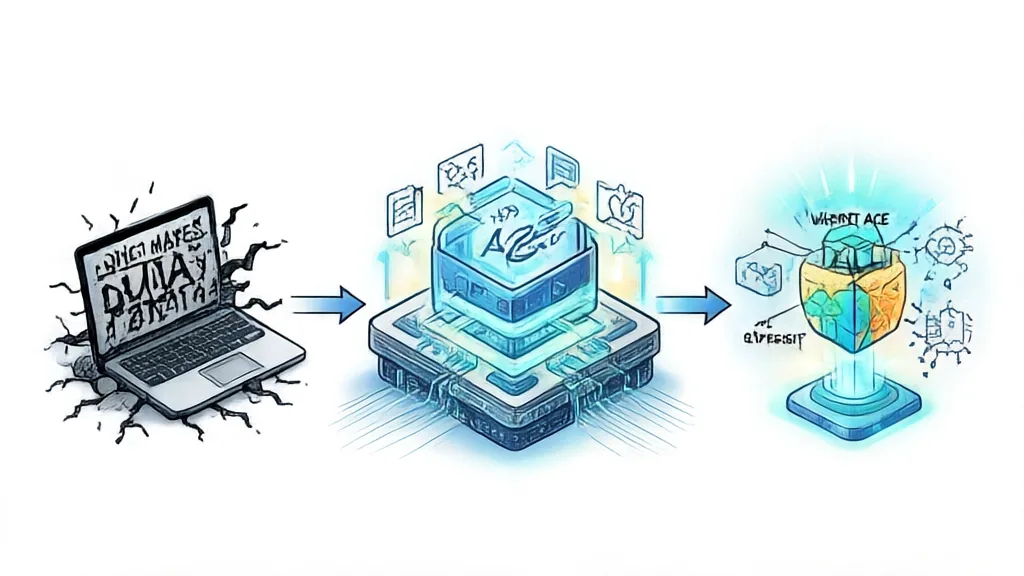
Agents learn from records of tasks, actions, and outcomes in external environments. Producing more of these records does not guarantee useful learning. This work offers a shared framework for judging whether generated experience is valid, appropriately difficult, and meaningfully varied.
- Problem: Research on agent training data is split across domains and uses inconsistent evaluation methods. This hides common generation patterns and often mixes the creation of candidate data with checking and choosing it.
- New idea: The framework represents each data item with four parts: an environment, a task, an interaction, and an optional checker of success. It then uses the Accuracy-Complexity-divErsity lens, called ACE, to guide data generation. Accuracy means the experience is grounded and internally consistent. Complexity means its difficulty suits the named learner and setup, while diversity means it covers distinct useful behavior without excessive repetition.
- Simple example: It is like preparing practice problems for a student: each answer must be correct, the difficulty must fit the student, and the set should teach different skills instead of repeating one pattern.
- Evidence: The abstract reports no numerical experiment. Its review identifies a shift toward accuracy checked through execution, difficulty measured relative to the learner, and diversity that goes beyond wording changes or dataset size.
- Limitation: The framework is based on organizing and interpreting prior work, and the abstract does not report a direct test showing that ACE-guided data improves agent performance.
- Why it matters: Better training data comes from choosing useful experience, not simply producing more of it.
- Paper: What Makes Good Agentic Data? An ACE Lens on Data
Trending AI Repositories
Ranking source: GitHub Trending.
bilawalsidhu/gods-eye-view
God's Eye View brings public spatial data into one globe-based interface. It stands out by combining live sources, modeled views, and hands-free voice control.
- What it is: It is a JavaScript browser project built around a photorealistic 3D globe. It presents aircraft, ships, satellites, earthquakes, traffic, and public cameras in one place.
- What it does: A spy satellite simulator in your browser, except the data is real. Live open source spatial intelligence on a photorealistic 3D globe.
- Who it helps: It helps people explore public spatial intelligence without jumping between separate sources. They can track activity around the globe and control the experience by voice.
- Limitation: Some views are modeled because a live feed is not available.
- Repository: bilawalsidhu/gods-eye-view
JetBrains/go-modern-guidelines
Modern Go Guidelines is a JetBrains repository of coding guidance for agents. It matters because the examples steer generated code toward current language and library features.
- What it is: It is a Go-focused guideline repository for code agents. Its guidance lives in an Agent Skill file.
- What it does: Help AI coding agents write modern Go
- Who it helps: It helps developers who use code agents on Go projects. Their agents can choose built-ins and standard library helpers instead of longer manual patterns.
- Limitation: A code agent must use the supplied guidelines for them to affect its output.
- Repository: JetBrains/go-modern-guidelines
K-Dense-AI/scientific-agent-skills
Scientific Agent Skills is a Python library of reusable scientific capabilities for AI agents. It is worth attention because its validated skills span several research-heavy fields and work with multiple agent systems.
- What it is: It is an MIT-licensed Agent Skills library for scientific work. It follows the open Agent Skills standard and integrates with Cursor, Claude Code, Codex, Pi, and Antigravity.
- What it does: Turn any AI agent into an AI Scientist. The #1 Agent Skills library for science, used by 175,000+ scientists worldwide. 163 ready-to-use validated skills plus 100+ scientific databases covering biology, chemistry, medicine, and drug discovery. Compatible with Cursor, Claude Code, Codex, Pi, Antigravity, and the open Agent Skills standard.
- Who it helps: It helps scientists working in biology, chemistry, medicine, and drug discovery. They can equip compatible agents with ready-to-use skills and access to scientific databases.
- Limitation: It requires an agent that supports one of the listed systems or the open Agent Skills standard.
- Repository: K-Dense-AI/scientific-agent-skills
Sources
- 01Hugging Face Papers · Hugging Face Papers
- 02GitHub Trending · GitHub Trending
- 03Build agentic creative workflows with Amazon Quick and fal · AWS Machine Learning
- 04Gemini Omni 1.1 Flash lets you build with more control · Google DeepMind
- 05Anthropic was illegally blacklisted by the Trump administration, court rules · The Verge
- 06Anthropic and OpenAI are joining the AI stage at TechCrunch Disrupt 2026 · TechCrunch
- 07Jensen Huang says Nvidia achieved AGI, again , not that it matters · The Verge
- 08Training Agents to Evolve with Their Harness: TaoLive Digital Avatar Agent Technical Report · arXiv
- 09PAWBench: How Far Are We from Probabilistically Aligned World Modeling? · arXiv
- 10What Makes Good Agentic Data? An ACE Lens on Data Generation for LLM Agents · arXiv