Nvidia SpaceX stake, Nemotron 3.5, and GPT-5.6 vision
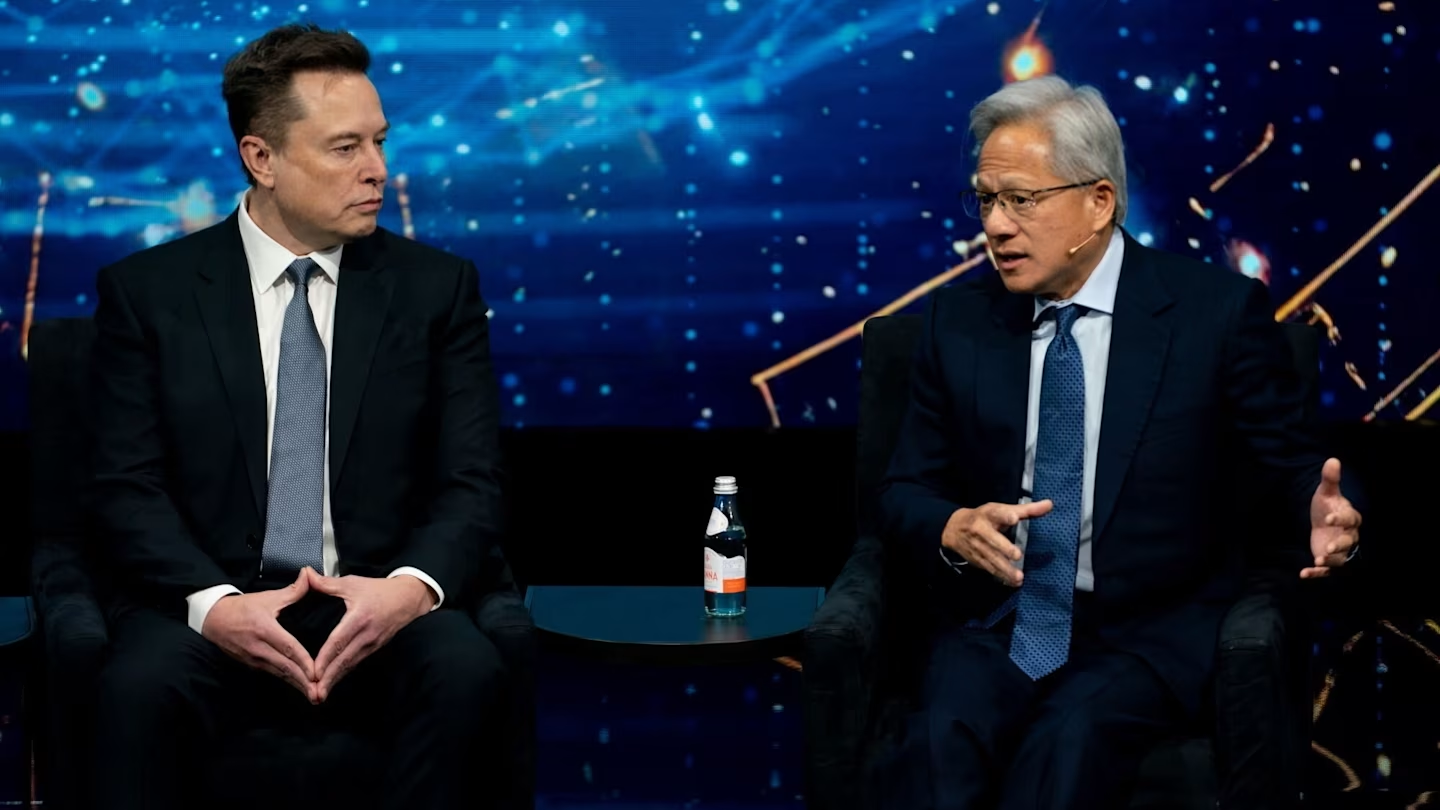
Nvidia ties chip demand to its SpaceX investment, AWS deploys Nemotron 3.5 Lightning, and GPT-5.6 improves object detection alongside trending AI papers and repositories.
News
Nvidia now owns part of one of its biggest chip customers
Nvidia's relationship with SpaceX is no longer a simple sale between a chipmaker and a customer. The company owned nearly 123 million SpaceX shares at the end of June, a stake then worth about $21 billion, according to an SEC filing covered by Ars Technica. By the time Ars published its report, a fall in SpaceX's share price had reduced the estimated value to about $17 billion. The holding began as Nvidia's January investment in xAI, before xAI was combined with SpaceX.
The same expansion can lift Nvidia twice
SpaceX is also buying Nvidia's hardware. Elon Musk told investors that the company had chosen Nvidia exclusively for its data centers, including the Vera Rubin architecture. He said its computing capacity could grow from 2 gigawatts at the end of 2026 to a figure closer to 10 than 5 gigawatts by the end of 2027.
That gives Nvidia two ways to benefit from the same expansion. It can sell more chips to SpaceX, and its shares can gain value if SpaceX grows. The reverse is also true. A slowdown at the customer could hurt both sides of the relationship.
This is not an isolated investment. Ars says Nvidia committed more than $100 billion to AI companies over the previous two years and outlined a consortium to help finance customers.
thinkidiot take: Nvidia is selling the shovels, owning part of the miner, and helping finance the digging. That may strengthen demand, but it also makes the AI supply chain look less like a group of independent businesses.
AWS gives Nemotron 3.5 Lightning a managed home
Fast models are useful for the ordinary work inside an AI agent: sorting requests, extracting fields, checking rules, and choosing tools. AWS now offers NVIDIA Nemotron 3.5 Lightning through SageMaker JumpStart, so customers can deploy it without building the serving system themselves.
A large model that uses only a small part at a time
Nemotron contains 30 billion parameters, but it activates about 3 billion for each request. Think of it as a large office where only the specialists needed for a job come into the meeting. This mixture-of-experts design reduces the work required for each response.
AWS lists a 1 million-token context window and DFlash speculative decoding. NVIDIA reports up to four times higher throughput and up to 30 percent faster task completion for high-volume agent work. Those are NVIDIA's results from its own evaluation setup, so other workloads may perform differently.
JumpStart includes NVFP4 and BF16 versions. The open model can be trained further with NVIDIA NeMo, but AWS says that option is not exposed directly through the JumpStart model card. The SageMaker endpoint also keeps charging until it is deleted.
thinkidiot take: Not every step in an agent needs the strongest model. A quick model can handle routine work while a more capable model takes over for the difficult decisions. The hard part is deciding where that handoff belongs.
GPT-5.6 gets much better at finding objects, but still misses text
A vision model can be excellent at drawing a box around a bicycle and still struggle to extract one line from a document. Roboflow's tests of GPT-5.6 Sol, Terra, and Luna make that difference unusually clear.
Sol reached 46.2 mAP@50 on object detection, up from 13.8 for GPT-5.5. Terra scored 44.7 and Luna 43.3. This is Roboflow's own upcoming benchmark rather than an independent industry standard, but the jump is large inside that test.
Better boxes do not mean better vision everywhere
Counting accuracy rose from 64.9 percent to 73.0 percent. Optical character recognition was almost unchanged. Targeted text extraction moved in the wrong direction, falling from 87.6 percent to 82.5 percent.
Roboflow also found that bounding boxes became unstable on images around 2,000 by 2,000 pixels or larger. Cropping or resizing the image helped. More reasoning helped too, but it increased tokens, delay, or cost.
In Roboflow's tests, Sol took close to 10 seconds and cost roughly 2.5 cents per image. The OpenRouter listing prices it at $2.50 per million input tokens and $15 per million output tokens.
thinkidiot take: "Better vision" is too broad to guide a product decision. Test the exact image sizes, coordinate format, and task you need. A benchmark win in detection will not rescue a weak document workflow.
Trending AI Papers
Three papers were trending on Hugging Face on August 18, 2026. Each one tackles a different place where AI systems still need better judgment.
HarnessEval-W: Agentifying the Evaluation of Visual Worlds
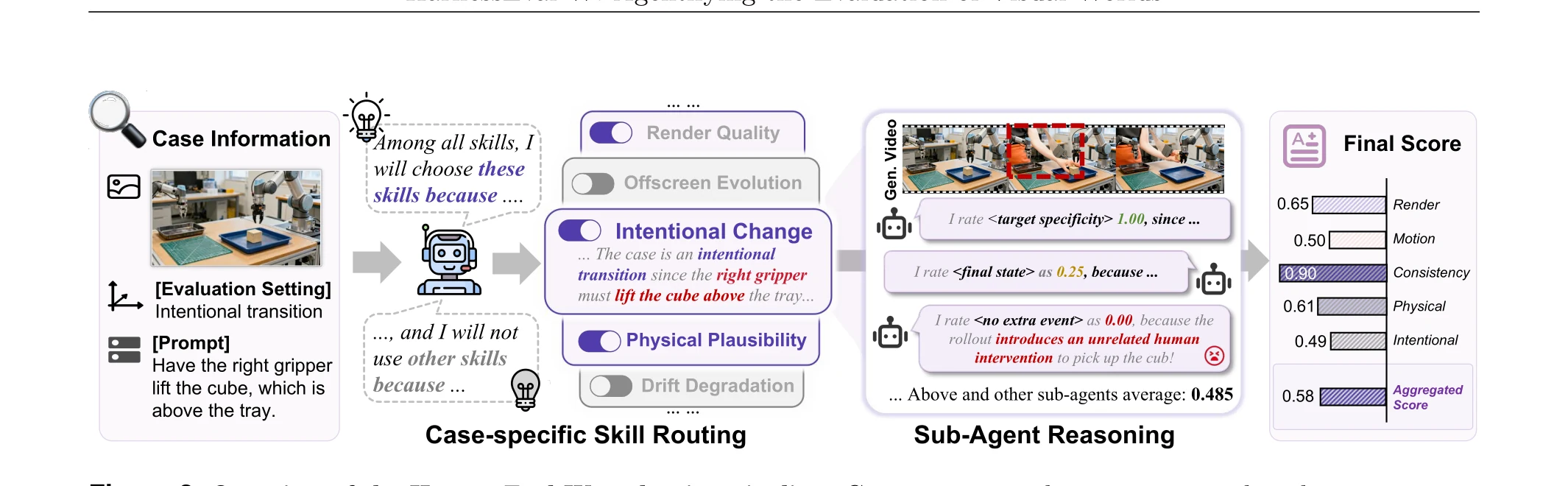
A generated video might look convincing for a few seconds while quietly breaking physics or forgetting where an object went. HarnessEval-W tries to explain those failures instead of hiding them inside one score. It acts like a lead inspector: one specialist checks motion, another checks cause and effect, and another follows changes in the world. Their evidence is gathered into a trail that a developer can inspect. The authors tested 18 world models across 330 cases and report that its judgments were close to human preferences. That is promising, but 330 curated cases cannot represent every kind of world or mistake.
VibeWorlding: Can Multimodal Agents Construct 3D Open Worlds End-to-End?
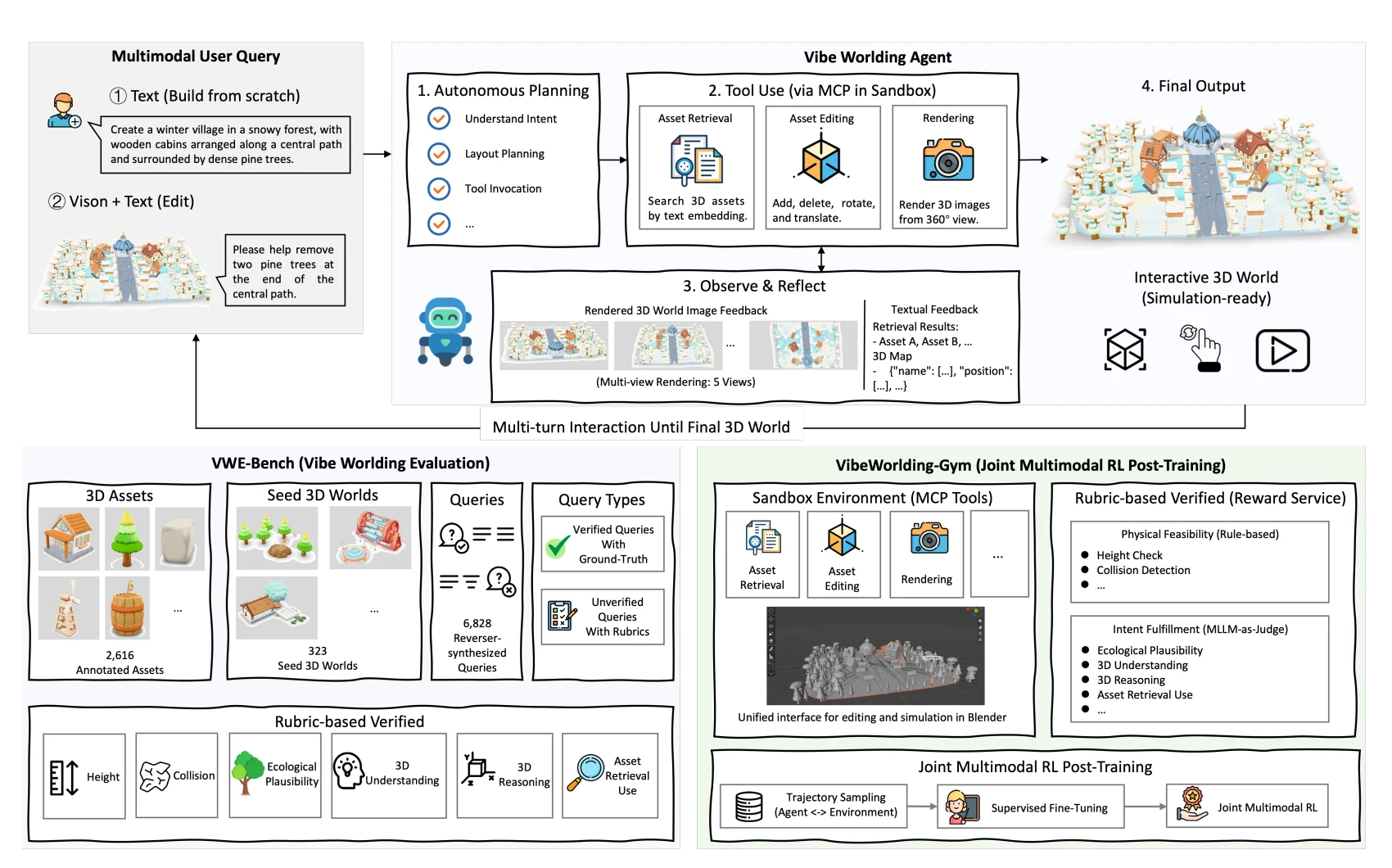
Asking an agent to build a playable workshop is harder than asking it to produce a pretty picture. It must plan the room, find assets, place them correctly, inspect the result, and repair mistakes. VibeWorlding tests that whole journey. Its benchmark contains 2,616 assets, 323 worlds annotated by people, and 6,828 generated requests. The authors report that GPT-5.5 and Qwen3.8-Max remained below 60 percent success, while reinforcement learning improved their open VibeWorlder models. Passing these checks still does not prove that a world is enjoyable, stable, or ready for a real game. It shows whether the agent can complete the construction loop.
Learn What's Left, Not What's Mastered
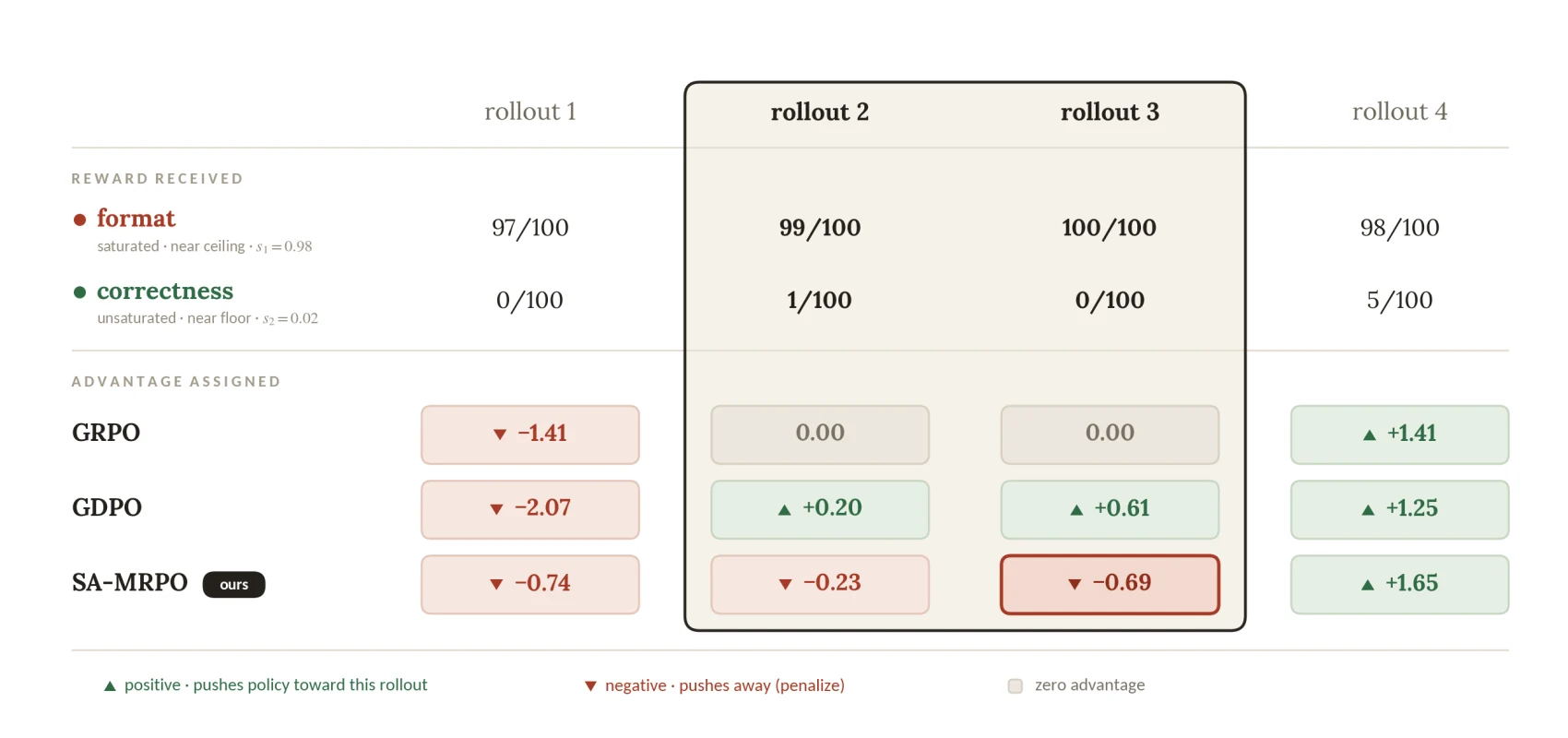
Training can keep rewarding a model for something it already does well. SA-MRPO changes the lesson plan. Like a teacher who stops drilling easy arithmetic and spends more time on a student's weak topic, it lowers the influence of goals that appear to be mastered. In the authors' tests, it improved the harder correctness goal in 12 of 15 math comparisons. Average accuracy rose by 3.8 percent across five adaptive-reasoning benchmarks, and coding pass rate increased by as much as 2.3 percent. The result depends on detecting saturation reliably, and the same balance may not hold for different reward combinations.
Trending AI Repositories
These three AI projects were trending on GitHub when this edition was researched.
harry0703/MoneyPrinterTurbo
MoneyPrinterTurbo turns a topic into a short video. It can write the script, find matching material, create subtitles, add background music, and assemble the result through a web interface or API. It is aimed at creators who want to inspect or host the workflow themselves instead of relying entirely on a closed service. Its README supports Windows, macOS, and Linux and requires Python 3.11 or newer.
chaitanyagiri/munder-difflin
Munder Difflin puts several terminal coding agents into one desktop workspace. Each session gets a mailbox and persistent memory, while the interface shows the agents sharing a virtual office. It works with tools such as Claude Code, Codex, Qwen, Kimi, Grok, and local models. The idea is useful for developers testing multi-agent workflows without abandoning the command-line tools they already use. Its README calls the current version a working prototype, so unattended production use would need careful testing.
akitaonrails/ai-memory
AI Memory gives coding agents a shared record of earlier work. It captures sanitized observations, turns them into a plain Markdown wiki, and can carry context from one supported coding tool to another. A developer can stop in one agent and continue elsewhere without retelling every decision and failed attempt. The project supports several tools directly. Hermes integration is maintained by the community rather than by the project itself, so compatibility needs a separate check.
Sources
- 01Nvidia discloses $21B stake in SpaceX · Ars Technica
- 02NVIDIA Nemotron 3.5 Lightning now available in Amazon SageMaker JumpStart · AWS Machine Learning Blog
- 03GPT-5.6 Sol, Terra, and Luna Vision Capabilities · Roboflow
- 04GPT-5.6 Sol · OpenRouter
- 05Hugging Face Papers for August 18, 2026 · Hugging Face Papers
- 06HarnessEval-W: Agentifying the Evaluation of Visual Worlds · arXiv
- 07VibeWorlding: Can Multimodal Agents Construct 3D Open Worlds End-to-End? · arXiv
- 08Learn What's Left, Not What's Mastered · arXiv
- 09GitHub Trending · GitHub
- 10MoneyPrinterTurbo · GitHub
- 11Munder Difflin · GitHub
- 12ai-memory · GitHub
Join the Idiots
New lab every Sunday. No spam, unsubscribe anytime.