By ThinkIdiot
Apple studies health AI, Bharat Semi raises $24M, and Huang's return draws speculation
Get this by email →
Apple launches an app to study AI use for health. Bharat Semi raises $24 million as it targets the global AI sensor market. Meanwhile, speculation grows around a possible return for Jensen Huang.
News
Apple launches new app to study how people use AI for health
Apple and OpenEvidence have launched a health AI study app that answers everyday medical questions. It is available to U.S. users over 21 who have an iPhone 15 or later, iOS 26 or later, and Apple Intelligence enabled. Apple aims to enroll up to 200,000 participants for a study lasting more than 12 months.
Personal health data is optional, and answers are open to feedback
The app draws on clinical sources including The New England Journal of Medicine, JAMA, and Nature. Participants can rate its answers and complete monthly surveys. They can also share HealthKit data for more personalized suggestions. That data includes resting heart rate, activity, sleep, and lab results. Apple says data is anonymized before transmission to a secure third-party cloud provider and is not used to train AI models. OpenEvidence deletes query and response data after 24 hours. (TechCrunch)
thinkidiot take: Participants can share lab results and sleep data to get more personalized suggestions. I would start with that sharing switched off and use the answer ratings to record how well the app handles everyday questions. The optional sharing makes personalization a separate decision from joining the study. That separation is a better starting point for a health app than treating more data as an automatic benefit.
Indian chip startup Bharat Semi lands $24M seed round as it eyes global AI sensor market
Bharat Semi has raised $24 million in an all-equity seed round led by Info Edge Group, South Park Commons, and Indus Bridge Ventures. The pre-revenue Indian chip startup reports design wins with General Atomics and Kaynes Semicon. Its programmable image sensors combine image capture, processing, and AI on one chip, with initial commercial production targeted for 2027.
Prototype schedules put the cost claim ahead of commercial production
Co-founder Vrinda Kapoor says the integrated design offers potential system cost reductions of at least 70% versus conventional separate-component setups. First-generation sensors are in prototyping. Second-generation sensors with more advanced AI capabilities are expected to reach prototyping by mid-2027 and customers by the end of 2027. Bharat Semi has about 75 employees, including 10 to 12 in U.S. operations. It plans to increase U.S. headcount to around 20 by mid-2027. The company plans to remain fabless and outsource chip manufacturing. Its proposed Indian fabrication project involving a U.S. Space Force technology partnership is separate and still under development. (TechCrunch)
thinkidiot take: Bharat Semi reports design wins while its first-generation sensors are still in prototyping. I would use those prototypes to test Kapoor's claimed cost reduction of at least 70% against a separate-component setup. With commercial production targeted for 2027, that saving is still a proposition to test. The integrated design deserves engineering attention, but I would keep the advertised saving out of a production budget until measured.
Jensen Huang might be plotting a return and more of the latest Nvidia drama
Jensen Huang has resigned as Nvidia CEO, according to The Verge's November 15, 2026 report. The Financial Times reports that he discussed a possible return to the role with close allies. Some Silicon Valley insiders and employees have pressured the board as a return enters discussion.
Public endorsements come with an unverified signature count
Elon Musk publicly supported a letter calling for Nvidia to reinstate Huang. Epic Games CEO Tim Sweeney also backed the letter. It has over 150,000 signatures. The article says their authenticity is difficult to verify. Separately, Megaspeed says Alice Huang left effective August 30, 2025. The company says she currently has no role there. (The Verge)
thinkidiot take: The reinstatement letter has over 150,000 signatures whose authenticity is difficult to verify. I would give more weight to the reported discussions with close allies than to that count. Musk and Sweeney's endorsements establish their own support, not the authenticity of everyone else's. A leadership decision deserves a stronger basis than an unverified tally.
Anthropic's Claude Fable 5.2 doesn't generate images, it paints them
Anthropic's Claude Fable 5.2 creates paintings by writing Python code that controls simulated brushstrokes. The strokes simulate bristle texture and paint application. Anthropic developer Jake Eaton demonstrated a shopping cart in a parking garage rendered with roughly 700,000 strokes.
Painting over mistakes puts the process on display
According to Eaton, each painting is a 1,000- to 2,000-line Python program driving a simulated paint engine. The process uses no external image model or pre-rendered or traced source images. In Michael Graczyk's bird-painting experiment, Fable 5.2 produced exactly 111 strokes in a 21-second video. It had no undo capability and painted over mistakes. Fable 5.2 scored 64.9% on Anthropic's internal RoboDojo Sim benchmark, versus 29.8% for GPT-6 Astra. In a physical robot-arm test, however, it trailed that competitor in speed and fine motor control. (The Decoder)
thinkidiot take: Fable 5.2 painted over mistakes without undo in the 111-stroke bird experiment. I would inspect that sequence before spending time on the roughly 700,000-stroke parking garage demonstration. The shorter experiment gives me a concrete process to examine, including its corrections. For judging how the model handles painting, I find that more useful than the larger stroke count.
Australia's central bank finds AI hitting young workers first, especially in software and customer service
Australia's central bank has found weaker employment outcomes for workers aged 15 to 24 and young graduates in highly AI-exposed occupations than for older workers. The analysis identifies early signs in fields including software development and customer service. It measures theoretical exposure and does not establish that AI caused the weaker outcomes.
Hiring declines sit alongside evidence that predates ChatGPT
An August 2025 Stanford study found relative employment declines since late 2022 of 13% among 22- to 25-year-olds in AI-exposed occupations and nearly 20% among young software developers. A March 2026 Anthropic study found job-finding rates down about 14% among 22- to 25-year-olds in exposed occupations, without a systematic rise in overall unemployment. Anthropic's internal review says junior hires fell from 27% to 9% of technical hires since early 2025. In August 2026, its AI agents logged six times as many hours as human employees. A study of 25,000 Danish workers found no measurable changes in wages or hours despite 64% AI adoption, with average time savings of 2.8%. A January 2026 analysis of 10.6 million LinkedIn profiles and U.S. unemployment data found that problems in exposed occupations began in early 2022, before ChatGPT launched. (The Decoder)
thinkidiot take: Anthropic says junior hires fell from 27% to 9% of its technical hires since early 2025. I would track that hiring share alongside any count of agent hours, because the two measures describe different things. The Danish study's lack of measurable wage or hour changes also gives me no basis for treating adoption alone as proof of job losses. My judgement is to scrutinize access to junior jobs without turning these findings into a settled claim about AI causation.
Trending AI Papers
Ranking source: Hugging Face Papers for 2026-11-16.
Envisioning Agentic Robotics: A New Era of Robotic Systems
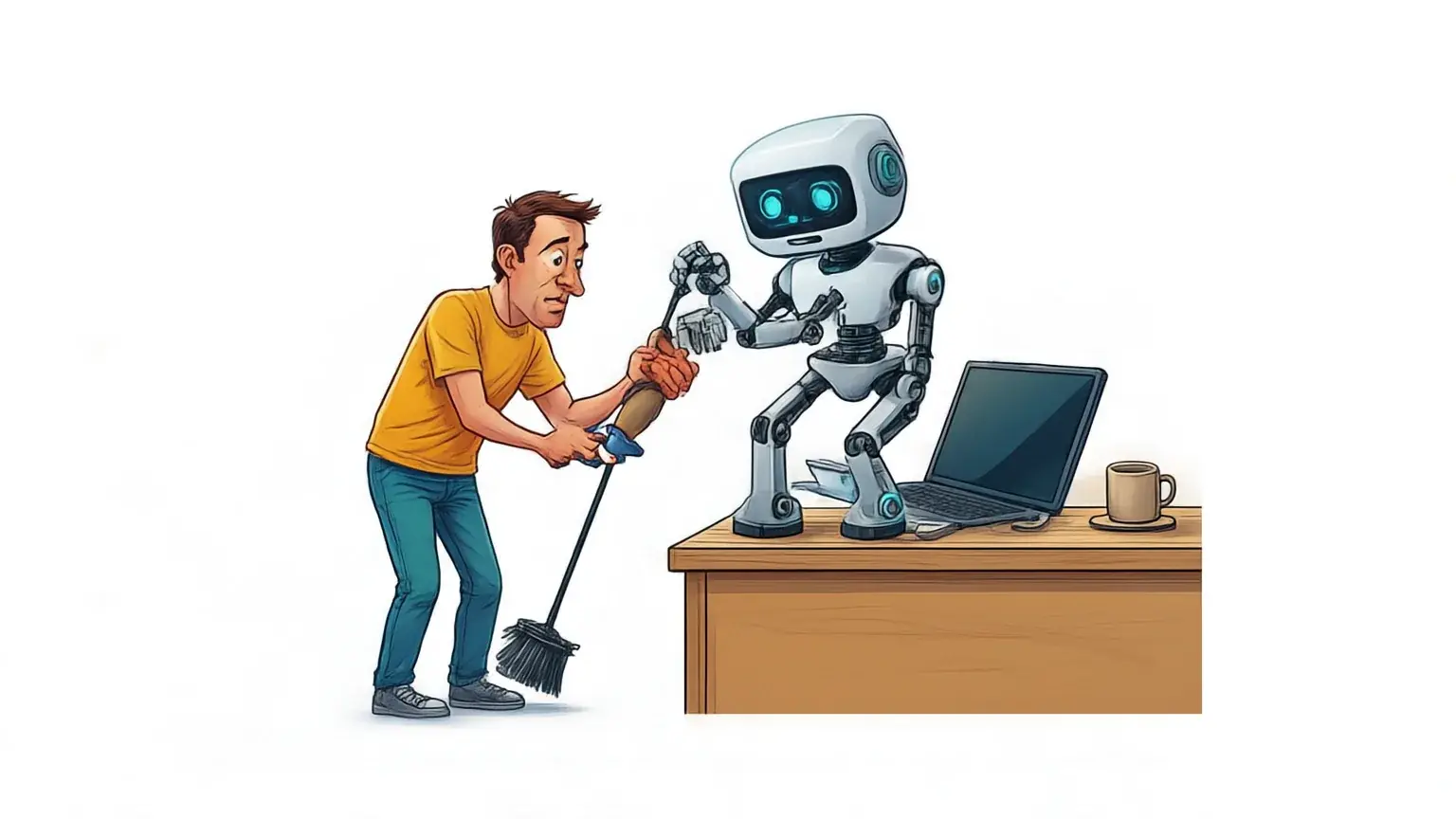
This paper asks how robots could use a broadly trained AI model to handle varied jobs. The model would guide actions, check what happened and change course when needed. The authors propose a way to describe and test these systems, with the aim of giving robots more responsibility over time.
- Problem: Training a separate controller for each kind of job limits how broadly a robot can work. General AI reasoning does not by itself solve the problems of acting through machinery, where time is limited and mistakes can be irreversible. Researchers also lack an agreed definition and dependable tests for these systems.
- New idea: The proposed decision maker pairs a foundation model, an AI model trained for broad use, with an embodied harness, the supporting system that connects it to a robot's observations, skills and tools. Together, they interpret requests, choose actions and check the results before continuing. The proposed evaluation measures both the model's abilities and how well the whole robot completes work. The research plan moves from individual actions toward ongoing responsibilities.
- Simple example: Think of asking a robot to keep a room tidy rather than giving it a fixed sequence of movements. It would need to inspect the room, choose what to move and check whether each action helped. This illustrates the proposed goal, not a demonstrated result.
- Evidence: The abstract reports that, within weeks of GPT-6 Astra's release, frontier models with agentic harnesses matched or exceeded task-specific policies on many embodied benchmarks. It gives no benchmark names, scores or counts.
- Limitation: The abstract proposes a framework and research agenda but does not demonstrate that robots can safely and reliably carry out ongoing responsibilities.
- Why it matters: Robots need a way to turn broad reasoning into actions they can check before taking on more responsibility.
- Paper: Envisioning Agentic Robotics: A New Era of Robotic Systems
Gamer: A Generalist Vision-Language-Action Foundation Model for Long-Horizon Real-Time Game Agent
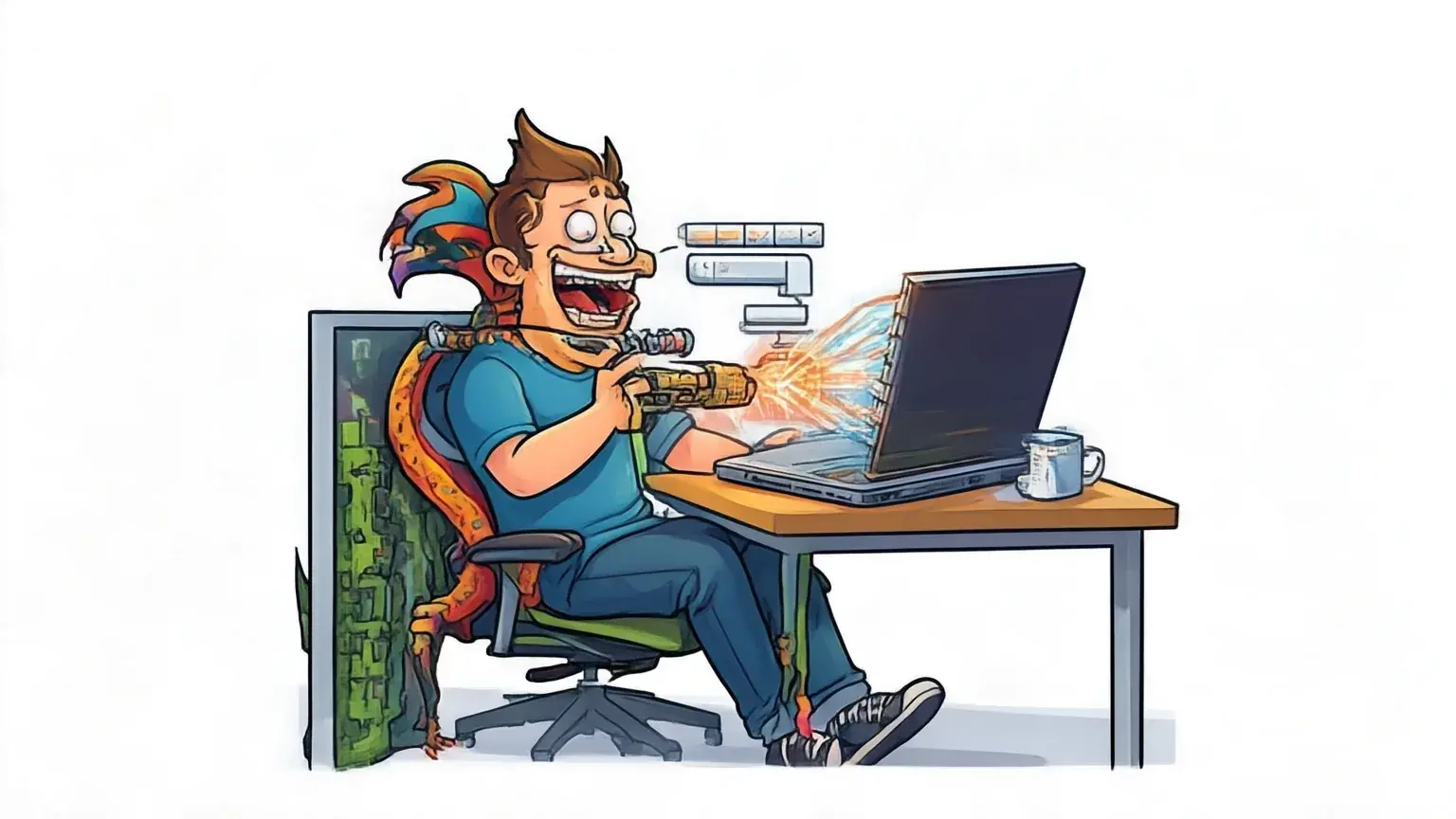
Gamer is an AI system designed to keep playing through complex games while responding quickly. It learns from recorded keyboard and mouse use and combines what it sees with memory and planning. The work explores whether this training can support one agent across varied games and interfaces.
- Problem: An agent working through a long task must remember earlier events, recover from mistakes and respond in time. Limited memory capacity, errors that compound and infrequent rewards make that difficult. Spending computation on unnecessary reasoning also slows interaction.
- New idea: Gamer combines visual perception, memory management and reasoning about sequences of actions in one system. It learns from recorded keyboard and mouse interactions, then receives training that reduces unnecessary reasoning. Reinforcement learning, training through rewards from interaction, helps it handle extended tasks despite limited context and accumulating errors. A cloud-edge engine, which divides computation between remote servers and local devices, supports fast responses and continued operation beyond a fixed context window.
- Simple example: Imagine playing a game where you must remember an earlier discovery while responding to what is happening on screen. Routine movements need quick decisions, while an unfamiliar situation needs more thought. Gamer's design aims to make that distinction.
- Evidence: Training uses tens of thousands of hours of keyboard and mouse interaction. The abstract reports generalization across multiple 3D open-world games and operational efficiency comparable to skilled players, plus competitive results on 2D game benchmarks. It supplies no individual scores or measured response times.
- Limitation: The reported evaluations concern games; they do not establish that Gamer can control physical systems successfully. The abstract also gives no detailed scores to quantify its reported performance.
- Why it matters: Learning from ordinary keyboard and mouse use could help agents handle varied interactive tasks over longer periods.
- Paper: Gamer: A Generalist Vision-Language-Action Foundation Model
Loopback Transformer: Towards a Unified View of Residual Looped Transformers

This paper studies how an AI model can reuse the same processing components without losing track of what each pass adds. Its proposed design, Loopback Transformer, keeps new changes separate from the information they modify. The aim is to improve results while storing fewer learned values.
- Problem: Reusing processing blocks reduces the number of learned parameters, but it leaves open how later passes should use earlier results. A complete block output contains both old information and a new change, so giving that output more weight also amplifies its inherited history.
- New idea: Loopback Transformer stores each update, the change produced by a processing pass, separately from the starting input. It independently controls the strength of that input, the combined weight of the updates and the share assigned to each update. Geometric decay, a rule that reduces weight by a constant proportion with age, sets the combined update weight and favors recent changes. Attention, a learned weighting mechanism, decides how to distribute that weight among updates.
- Simple example: Think of revising a document while keeping the original and a list of edits. You can decide how much each edit should matter without repeatedly counting the original text. Mixing complete drafts together would repeatedly include material shared by those drafts.
- Evidence: On ClimbMix, Loopback achieves lower validation loss, a measure of prediction error on held-out data, using 40-75% of the baseline Transformer parameters, excluding token embeddings and the output head. Comparisons cover reference scales from 191M to 3B, with training tokens and executed depth matched. Mean accuracy across thirteen downstream tasks is higher at 1.4B and 3B. At 191M, 374M and 778M, it has the lowest validation loss and highest thirteen-task mean among the standard Transformer and seven looped residual designs.
- Limitation: The parameter comparison excludes token embeddings and the output head. The abstract reports no measured speed or total memory savings, so fewer parameters alone do not establish faster or cheaper operation.
- Why it matters: Separating new changes from accumulated history could help models achieve better results with fewer learned parameters.
- Paper: Loopback Transformer: Towards a Unified View of Residual
Trending AI Repositories
Ranking source: GitHub Trending.
google-labs-code/stitch-skills
Stitch Design Skills packages skills and plugins for Google Stitch. Its quick start recommends a global plugin setup and includes instructions for Codex.
- What it is: This TypeScript repository sits alongside Google Stitch as a collection of coding-agent plugins.
- What it does: A library of Agent Skills designed to work with the Stitch MCP server. Each skill follows the Agent Skills open standard, for compatibility with coding agents such as Antigravity, Gemini CLI, Claude Code, Cursor.
- Who it helps: It helps Codex users set up Stitch plugins through a marketplace. OpenCode users can also use the collection through manual installation.
- Limitation: OpenCode requires manual installation.
- Repository: google-labs-code/stitch-skills
ggml-org/ggml
ggml is a C++ library in the ggml-org repository collection. Its README links to an MIT license, releases and continuous integration, giving readers starting points for checking the project.
- What it is: ggml is a dependency-free C/C++ tensor library for machine learning, with a commented matrix-multiplication example.
- What it does: Tensor library for machine learning
- Who it helps: It is relevant to C++ developers working on machine learning. They can follow the README links to inspect releases and licensing.
- Limitation: The excerpt provides source-build instructions and a minimal example but does not provide performance measurements.
- Repository: ggml-org/ggml
elementalsouls/Claude-BugHunter
Claude-BugHunter brings engagement-folder scaffolding and Burp MCP integration into a Claude skill bundle. Its README says 433 disclosed-report patterns are individually cited and auditable, giving readers references they can check.
- What it is: This Python repository packages Claude skills with commands, report patterns and attack matrices for security work.
- What it does: A Claude Code skill bundle for bug hunting and external red-team work - 82 skills, 15 slash commands, 681 disclosed-report patterns curated across 24 core vulnerability classes, plus enterprise identity + infrastructure attack matrices.
- Who it helps: It helps bug hunters and red teams working on authorized engagements. They can use its folder scaffolding to structure engagements and inspect the individually cited report patterns.
- Limitation: The supplied description lists 82 skills, while the README lists 83.
- Repository: elementalsouls/Claude-BugHunter
Sources
- 01Hugging Face Papers · Hugging Face Papers
- 02GitHub Trending · GitHub Trending
- 03Apple launches new app to study how people use AI for health · TechCrunch
- 04Indian chip startup Bharat Semi lands $24M seed round as it eyes global AI sensor market · TechCrunch
- 05Jensen Huang might be plotting a return and more of the latest Nvidia drama · The Verge
- 06Anthropic's Claude Fable 5.2 doesn't generate images, it paints them · The Decoder
- 07Australia's central bank finds AI hitting young workers first, especially in software and customer service · The Decoder
- 08Envisioning Agentic Robotics: A New Era of Robotic Systems · arXiv
- 09Gamer: A Generalist Vision-Language-Action Foundation Model for Long-Horizon Real-Time Game Agent · arXiv
- 10Loopback Transformer: Towards a Unified View of Residual Looped Transformers · arXiv