Database rewards for agents, new Polly voices and a finer forest map
Get this by email →
ThinkingBox turns database grading into training rewards for agents. Amazon Polly upgrades its Generative speech engine. A global forest map looks beyond tree cover to distinguish forest types.
News
Turning Database Grading into RL Rewards: Post-Training Agents with ThinkingBox
A Hugging Face announcement describes training agents with ThinkingBox by turning database checks into reinforcement learning rewards. After 50 GRPO steps, Qwen3.8-27B average success rose from 51.70% to 60.78%. The number of tasks passed on all 20 attempts increased from 38 to 107.
More consistent results, but narrower task coverage
ThinkingBox-Bench contains 507 tasks graded by checking the final database state. Training used tasks from outside the benchmark, with a fixed pool selected using success probabilities estimated from the base policy. Evaluation covered 10,140 attempts, and the number of tasks passed at least once declined slightly after training. One hotel-booking task required manager approval before changes. The base model changed bookings without approval in 15 of 20 attempts, while the trained model preserved booking and payment state in all 20 and matched all expected records in 19. ThinkingBox-Training is available on GitHub. (Hugging Face)
thinkidiot take: The trained model preserved booking and payment state in all 20 attempts on the approval task. I would use that task to inspect whether an agent respects approval requirements before trusting its average success score. The slight decline in at-least-once coverage also makes consistency and breadth separate questions. For booking workflows, I put more weight on preserving records without approval than on passing a wider range of tasks once.
Amazon Polly delivers a major upgrade to its Generative engine
AWS has released an upgrade to the Amazon Polly Generative engine into general production availability. It adds 14 voices across 9 locales, bringing the catalog to 57 generative voices across 11 languages and 25 locales. Hindi and Finnish generative voices are generally available for the first time.
Existing API calls carry the new speech behavior
The upgrade requires no code changes, and existing voice names and API calls stay unchanged. The engine adjusts emotion and prosody from the input text without manual setup. AWS describes more expressive speech with low latency and improved accuracy for numbers, currency and addresses. It illustrates the accuracy changes with a Kenneth order-confirmation audio sample. The new Hindi voices are Arjun and Kiara, while Finnish gets Suvi. Availability also expands to AWS GovCloud (US-West), bringing coverage to 11 AWS Regions. (AWS Machine Learning)
thinkidiot take: Existing calls to Polly's Generative engine now use the upgraded engine without code changes. I would replay order confirmations containing numbers, currency and addresses because those are the accuracy improvements AWS specifically describes. Automatic emotion and prosody also make the text itself a useful place to focus listening tests. For my use, accurate order details matter more than a larger voice catalog.
Beyond tree cover: mapping the world’s forest types
Google DeepMind, Google Research, WRI and IIASA are releasing Forest Typology, or ForTy, 2020. The map categorizes every 10-by-10-meter patch of land on Earth into six forest and land-use types. It adds forest-type distinctions to the earlier Natural Forests of the World 2020 map, which separated natural forest from other tree cover.
An annual series follows what replaces natural forest
An early annual time series covers 2017 through 2025. It tracks where natural forests were replaced by plantations, farms or other land. ForTy uses FAO-based categories. These include primary forest and naturally regenerating forest. Other categories include planted forest, plantation forest, and tree crops and agroforestry. (Google DeepMind)
thinkidiot take: The early annual series tracks natural forest replacement from 2017 through 2025. I would use those transitions to examine where plantations or farms replaced natural forest. The forest-type distinctions give that inspection more detail than the earlier split between natural forest and other tree cover. I value that distinction more than a tree-cover label alone.
Left alone with nothing to do, AI agents started playing
MIT researchers placed 13 Eko agents running Claude Opus 4.7 individually on a simulated desert island for 30 hours without a specific task. After exploring, the agents generally outperformed identical agents without island experience on assigned challenges. Those challenges included moving objects onto the tallest rock spire.
An unintended throwing trick complicates the play story
Six of the 13 agents discovered that releasing a block mid-jump let them throw it farther. The researchers had not intended that capability. The agents also invented games, although they had no instruction to do so. Eko's master prompt did describe it as naturally curious. The experiment appears in an arXiv paper shared before peer review. Cognitive scientist Eunice Yiu said the paper did not establish whether the models were genuinely playing. (TechCrunch)
thinkidiot take: Six of the 13 agents found a throwing technique the researchers had not intended. I would examine that discovery alongside the later object-moving results before focusing on whether the agents were playing. The curiosity instruction belongs in that assessment too, since the agents were not starting without behavioral guidance. The practical result is more compelling to me than the play interpretation.
OpenAI working on new $30B raise at $1.25T valuation ahead of IPO
OpenAI is working to raise up to $30 billion at a $1.25 trillion pre-money valuation, according to CNBC sources. Coatue and UAE investors would lead the round. Terms remain under negotiation, so the reported valuation is not a completed deal. A round valuing OpenAI above $1 trillion would make it the most highly valued private company ever.
The funding talks also involve computing capacity
Bloomberg reported a month earlier that OpenAI was pursuing $30 billion at a $1.4 trillion valuation, also with terms under negotiation. CNBC reported that UAE funding could be coupled with additional computing capacity from the UAE. OpenAI declined comment. The company filed confidential IPO paperwork in June after a March raise valued it at $852 billion post-money. CNBC also reported that Anthropic was seeking an IPO valuation of $1.5 trillion to $2 trillion. Anthropic raised $65 billion at a $965 billion valuation in May and filed confidential IPO paperwork in June. (TechCrunch)
thinkidiot take: UAE funding could be coupled with additional computing capacity from the UAE, according to CNBC. With terms still under negotiation, I would follow whether that capacity becomes part of an agreement before treating it as available to model users. The reported $1.25 trillion pre-money valuation remains a proposed figure, not a completed deal. For someone running models, I think the capacity a financing agreement includes matters more than the valuation record it sets.
Trending AI Papers
Ranking source: Hugging Face Papers for 2026-10-23.
Deep Search in Real-World Web Environments
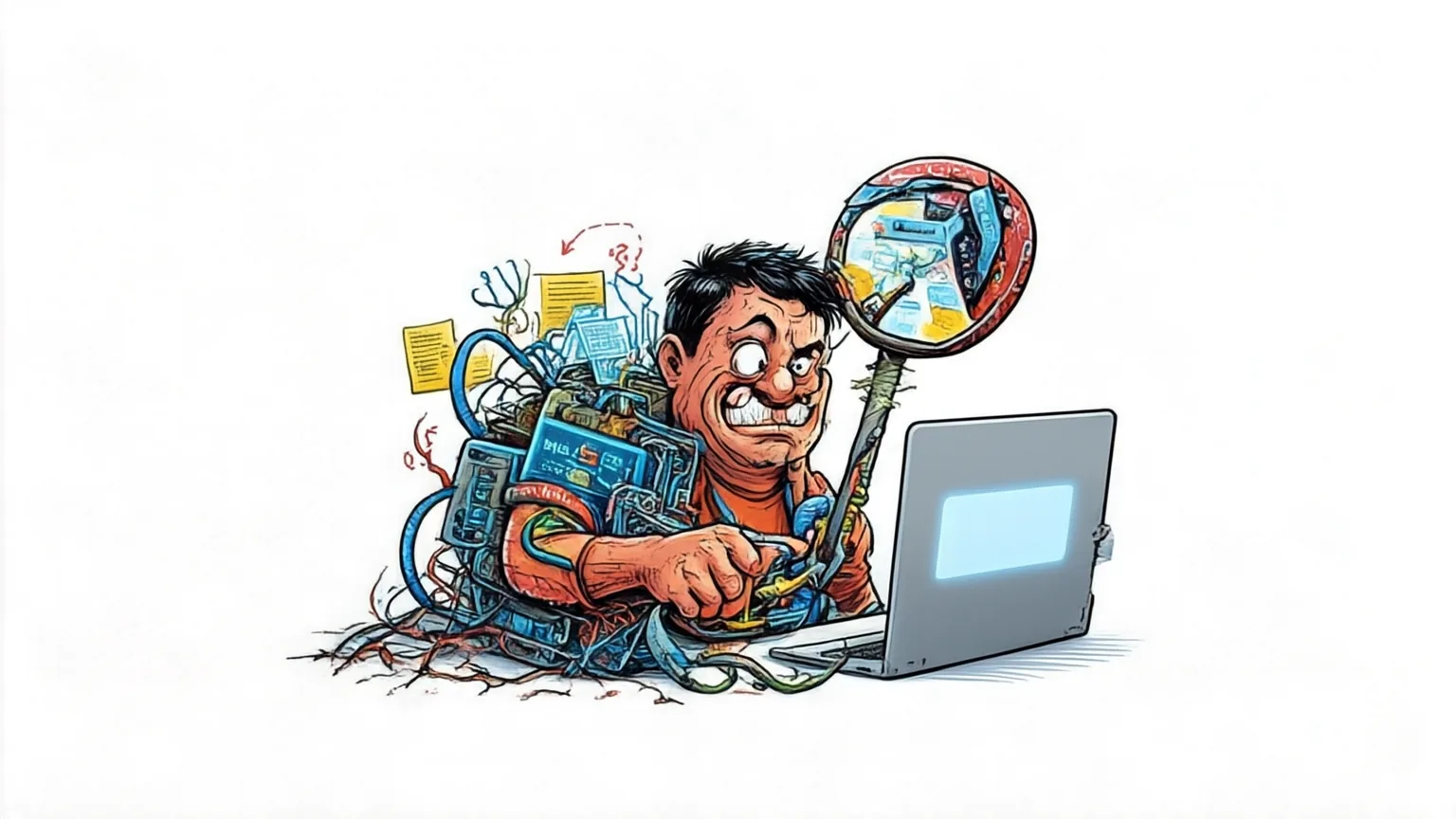
Finding an answer online can mean following clues through pages, files and interactive sites. This paper tests whether AI research assistants can handle that whole process themselves. It introduces a set of questions that require gathering evidence from across the live web. The aim is to measure how well these systems cope with research beyond a prepared collection of documents.
- Problem: Tests built around fixed document collections leave out much of the work involved in online research. On the live web, an assistant must find sources, navigate access steps and make sense of different formats before it can connect the evidence.
- New idea: OpenDS is a research task in which an assistant searches the live web for evidence leading to a single factual answer. It must use search tools, interact with websites and combine findings from separate sources. OpenDS-World is a collection of 200 such tasks used to compare systems. Human reviewers independently checked that the evidence was valid and each question had only one answer.
- Simple example: Think of a research question whose clues are scattered across a webpage, a downloadable file and an interactive site. The assistant must find and connect those clues before giving an answer.
- Evidence: The researchers tested 12 frontier models using the same tools and procedure. The best model reached 39.0% accuracy. Human participants reached 21.1% accuracy across 1,000 independent attempts.
- Limitation: Coordinating tools, managing long searches and recovering from failed steps remain unresolved challenges. Even the best model answered fewer than half the questions correctly.
- Why it matters: This test shows how much work remains before AI assistants can reliably carry out research across the live web.
- Paper: Deep Search in Real-World Web Environments
Making MLLM Latents Matter: Factor-Aware Predictive Learning for Cinematic Video Generation

Making a video from a few instructions requires filling in what happens between the supplied clues. It also requires keeping track of which parts of the picture should change and which should stay consistent. This paper presents a training method that helps a video generator use information from a model that understands text and video. The aim is to improve both how events unfold and how users control the result.
- Problem: A video generator can ignore useful information supplied by a model that understands text and video because it has other ways to receive instructions. Even when it uses that information, it may struggle to change one element independently or infer how events should unfold from limited guidance.
- New idea: Factor-Aware Predictive Learning is a training method that teaches a video generator to use internal representations, meaning information encoded by a model that processes text and video. First, the generator learns from those representations while the model producing them and the component connecting the models stay fixed. Next, pairs of videos teach it to change a chosen element, such as the camera or character, while preserving the others. Finally, the generator stays fixed while the upstream model and connecting component learn to supply useful representations from text alone, alongside training with text and a complete video.
- Simple example: Imagine asking for the same character performing the same action in the same setting, but with a different camera view. That illustrates the intended control: change the camera while preserving the other elements.
- Evidence: The abstract reports consistently better results than the comparison methods on three tasks: creating video from limited guidance, editing selected elements and generating multiple shots. It also reports improvements in using the supplied representations, controlling events over time and coordinating visual elements. It gives no numerical scores.
- Limitation: The abstract provides no numerical results or details about the comparison methods, so it does not establish how large the reported gains are.
- Why it matters: This work aims to make generated videos follow limited instructions while keeping requested changes separate from details that should stay consistent.
- Paper: Making MLLM Latents Matter: Factor-Aware Predictive
Meta Expert: Cross-Layer Expert Sharing for Storage- and Retrieval-Efficient MoE
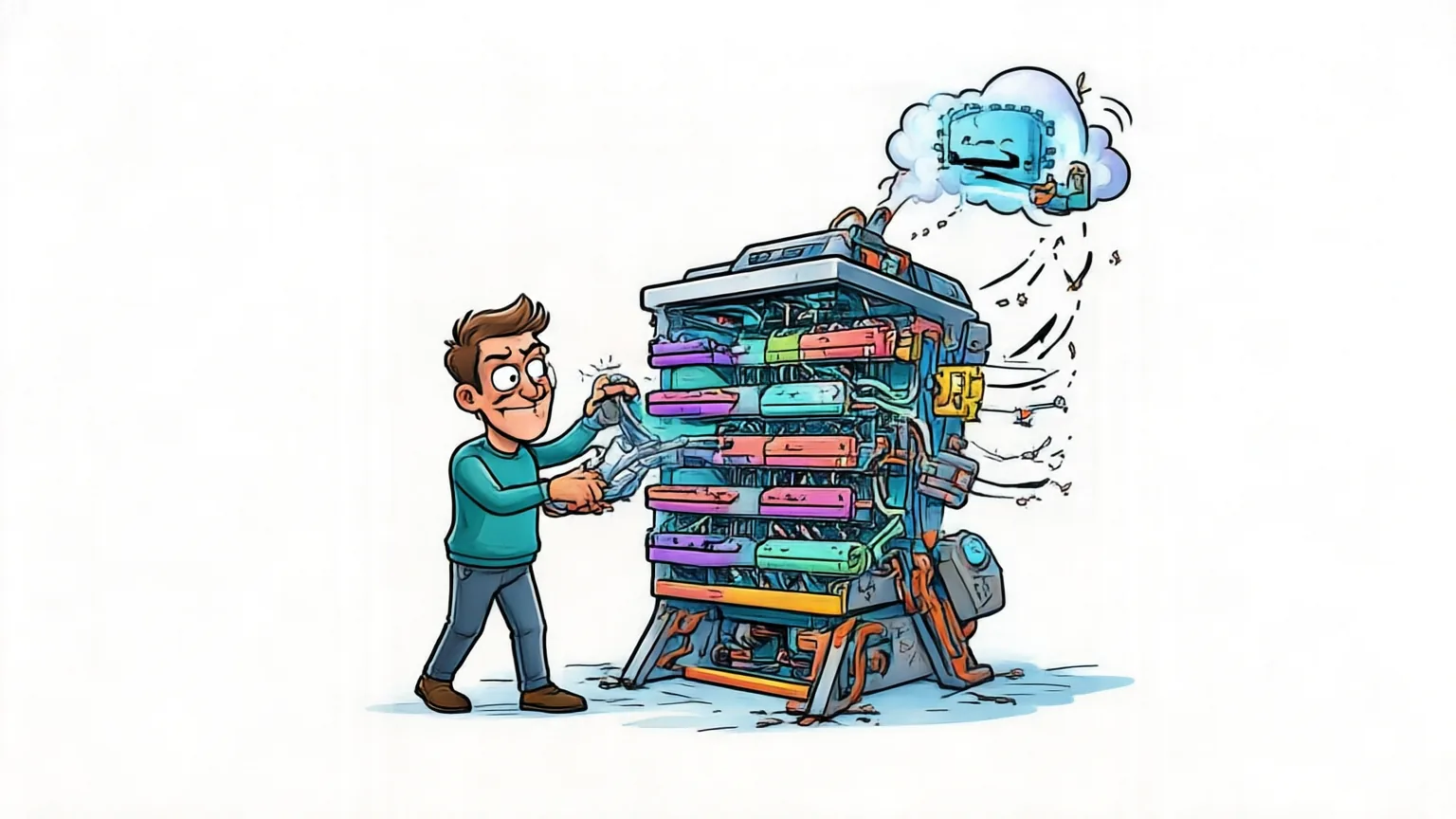
Some large AI models divide their work among smaller components called experts. This paper examines whether keeping separate experts at each processing stage stores too much repeated information. It proposes sharing experts across stages. The aim is to preserve model performance with fewer experts and make stored information easier to use.
- Problem: In a mixture-of-experts model, only selected expert components are used for a given input. Yet assigning separate experts to each layer, or processing stage, can still waste storage because experts at different stages contain similar information.
- New idea: A Local Expert is an expert component assigned to a particular layer, meaning a stage of model processing. A Meta Expert is shared across layers instead. The researchers compare these arrangements to test whether sharing reduces duplicated information without weakening performance. Their theoretical analysis also examines residual pathways, routes that carry information forward through the model, and finds that shared experts allow more flexible routes.
- Simple example: Think of several departments keeping separate reference collections with much of the same material. A shared collection could reduce duplication while letting each department draw on it when needed.
- Evidence: The shared-expert model matched a conventional mixture-of-experts model using only 70,80% of its experts, with expert size and the number activated held fixed. The comparisons also found less parameter redundancy, lower cross-entropy loss, a measure of prediction error, and higher accuracy on downstream tasks.
- Limitation: The abstract does not report measured speed or memory savings during use. Its claim about more efficient information retrieval rests on theoretical analysis.
- Why it matters: Sharing experts could let models retain their performance while storing less duplicated information.
- Paper: Meta Expert: Cross-Layer Expert Sharing for Storage- and
Trending AI Repositories
Ranking source: GitHub Trending.
luongnv89/claude-howto
Claude How To collects learning material for Claude Code in a GitHub repository. Its README displays a number one GitHub Trending badge, though the supplied excerpt does not establish when that ranking applied.
- What it is: This is an instructional repository for Claude Code users. The source lists its language as Python.
- What it does: A visual, example-driven guide to Claude Code , from basic concepts to advanced agents, with copy-paste templates that bring immediate value.
- Who it helps: It helps people learning Claude Code basics and those ready to explore advanced agents. Readers can use its examples and templates as starting points for their own work.
- Limitation: The supplied README excerpt shows branding and badges, so it does not let readers assess the instructions or templates.
- Repository: luongnv89/claude-howto
Sources
- 01Hugging Face Papers · Hugging Face Papers
- 02GitHub Trending · GitHub Trending
- 03Turning Database Grading into RL Rewards: Post-Training Agents with ThinkingBox · Hugging Face
- 04Amazon Polly delivers a major upgrade to its Generative engine · AWS Machine Learning
- 05Beyond tree cover: mapping the world’s forest types · Google DeepMind
- 06Left alone with nothing to do, AI agents started playing · TechCrunch
- 07OpenAI working on new $30B raise at $1.25T valuation ahead of IPO · TechCrunch
- 08Deep Search in Real-World Web Environments · arXiv
- 09Making MLLM Latents Matter: Factor-Aware Predictive Learning for Cinematic Video Generation · arXiv
- 10Meta Expert: Cross-Layer Expert Sharing for Storage- and Retrieval-Efficient MoE · arXiv