Southeast Asia’s digital growth, fixed-memory AI and simulated surgery
Get this by email →
Southeast Asia’s digital economy is projected to hit $368 billion. i14 trains and serves Laplace 3B on AWS Trainium2 with native PyTorch. NVIDIA brings generative simulation to clinical surgery with Cosmos3-H-Dreams.
News
Southeast Asia’s digital economy to hit $368 billion
Google’s report projects Southeast Asia’s digital economy will reach $368 billion in gross merchandise value in 2026, up 17% year on year. It puts generative AI use at 243 million people, or 58% of the region’s working population. Widespread adoption is bringing AI into shopping and travel planning.
AI adoption outpaces the mobile internet rollout
Generative AI adoption is scaling four times faster than the rollout of mobile internet. The report projects a 60-fold increase in regional AI usage, measured in tokens, over the next five years. It also projects the digital economy will exceed $1 trillion by 2035. E-commerce accounts for $226 billion in gross merchandise value. Personalized experiences are driving 10% higher conversions and order-volume increases as large as 75%. For complex travel itineraries, generative AI has overtaken social media as the second-most used organizing tool, behind traditional search engines. (Google)
thinkidiot take: Generative AI adoption is scaling four times faster than the mobile internet rollout. I would use that pace as a reason to test AI in shopping and travel workflows, where the report already identifies concrete uses. The reported conversion and order-volume gains give those tests something measurable to target. To me, those workflow results matter more than the projected token count.
Beyond the KV cache: Training and serving i14’s Laplace 3B linear attention model on AWS Trainium2 with native PyTorch
i14 trained and served its Laplace 3B linear attention model on AWS Trainium2 using native PyTorch. Its recurrent state stays fixed at 29.5 MB per sequence regardless of context length, keeping that part of serving memory predictable. On one trn2.48xlarge instance, the model trained at about 120,000 tokens per second and served 11,544 output tokens per second across 1,280 concurrent sequences.
Predictable memory comes with compressed history
The team used the beta version of TorchNeuron Native while preserving the model’s Gated Linear Attention design and Muon optimizer. It replaced a GPU-specific Triton attention kernel with standard PyTorch operators. That implementation used 16 chunks of 128 tokens. Two all_to_all collectives in MuonFSDP2 reduced per-rank traffic by 24 times and increased throughput by 1.63 times. Laplace 3B changes training attention scaling from O(T²) to O(T). It compresses history instead of retaining every key and value, so retrieval requires evaluation against the intended workload. (AWS Machine Learning)
thinkidiot take: A fixed 29.5 MB recurrent state per sequence removes context length as a source of growth for that state. I would test retrieval on my intended workload before choosing it for serving. Compressed history makes that test part of assessing the memory benefit. I would choose this design when those retrieval results hold up, because predictable state memory is a concrete operational advantage.
NVIDIA Cosmos3-H-Dreams: Bringing Clinical Surgery to Life Through Generative Simulation
NVIDIA’s Cosmos3-H-Dreams learns from clinical cholecystectomy video and robot kinematics recorded on the CMR Surgical Versius platform. Powered by Cosmos 3 and accelerated with FlashDreams, the simulator runs interactively on a single NVIDIA RTX PRO 6000 GPU. It brings those surgical recordings into an interactive generative simulation.
Two instruments define the training view
The simulator builds on Cosmos3-H-Embodied-Nano, a 16-billion-parameter model pretrained on Open-H-Embodiment. Training sample selection targets two visible, engaged instruments. These are a left Cadiere grasper and a right monopolar hook. The model uses 28 action dimensions covering both arms’ pose and gripper information, energy controls, thumbstick axes and thumbstick buttons. Training uses 832 × 480 video with actions aligned at 10 Hz. That sampling rate is distinct from runtime generation throughput. (Hugging Face)
thinkidiot take: Cosmos3-H-Dreams runs interactively on a single NVIDIA RTX PRO 6000 GPU. I would focus an evaluation on how the simulation responds to the two instruments and their action inputs. The 10 Hz training alignment does not supply a runtime throughput figure, so I would measure that separately. For this simulator, I would put action response ahead of visual polish.
Judge dismisses Sam Altman’s sister’s sexual abuse lawsuit
US District Judge Zachary Bluestone dismissed Ann Altman’s lawsuit against her brother, OpenAI CEO Sam Altman, The Verge reported on October 20, 2026. The lawsuit alleged that he sexually abused her throughout her childhood. The dismissal was with prejudice, meaning the lawsuit cannot be refiled in that court.
Missed examination and deadlines drove the dismissal
Ann Altman filed the case last year. The judge cited her failure to attend an independent medical examination. He also cited missed deadlines despite warnings of dismissal. Bluestone denied Sam Altman’s request for attorney fees and costs. When the case was filed, Sam Altman, his mother and his brothers issued a statement denying the allegations. (The Verge)
thinkidiot take: The dismissal with prejudice prevents Ann Altman from refiling this lawsuit in that court. I would keep the judge’s stated procedural reasons attached to any account of that outcome. The reported reasons concern the missed examination and deadlines, while the family’s statement denies the allegations. Treating the dismissal itself as a finding about those allegations would go beyond the supplied account. That distinction belongs at the center of coverage.
Anthropic pitches AI safety bill that may block a model if 50+ people could be killed
Anthropic circulated a draft AI safety bill for possible congressional consideration, TechCrunch reports. The proposal would allow model distribution to be blocked over a foreseeable, imminent risk of more than 50 deaths or more than $1 billion in property damage. It would require the Commerce Department to seek a judge’s permission to halt a model’s release.
Evaluators get a reporting deadline, agencies get a restriction
Qualifying catastrophic risks must arise from biological weapons, a model evading its developer’s controls or a cyberattack. Independent evaluators would register with the U.S. Commerce Department. AI labs would be allowed to pay them. Payment would have to be independent of the evaluation results. Evaluators identifying an imminent catastrophic risk would have 72 hours to notify the department. Requests to halt release would go to a D.C. judge. Federal agencies would be expressly barred from halting distribution on their own. (TechCrunch)
thinkidiot take: Federal agencies would be barred from halting model distribution on their own under this draft. I would assess the proposal by tracing the full path from an evaluator’s risk finding through the 72-hour notification window to a judge’s decision. That puts a required court step between the department and a release halt, even for a qualifying imminent risk. I judge that restriction to be as consequential as the bill’s catastrophic-risk thresholds.
Trending AI Papers
Ranking source: Hugging Face Papers for 2026-10-21.
Focused Omni-Modal GUI Agents
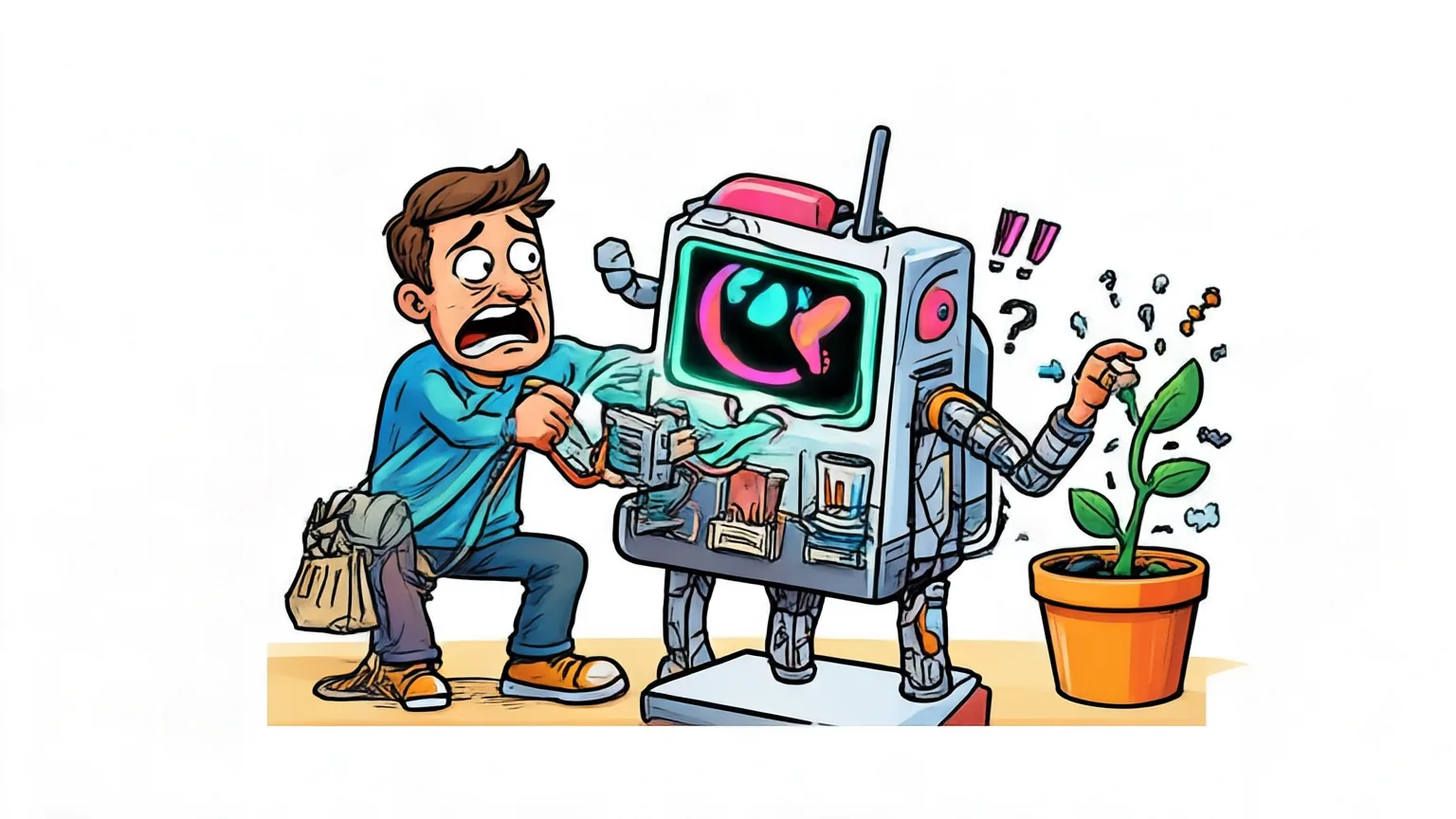
An assistant using a computer can receive pictures, sound and a record of earlier actions all at once. The useful clue changes as the task moves forward. FocusGUI helps the assistant pick out what matters for its next move. It aims to keep irrelevant information from sending the task off course.
- Problem: Giving an assistant every available input at every step makes it harder to separate useful clues from distractions. A mistaken action then becomes part of the information used for later decisions, allowing errors to build on one another.
- New idea: FocusGUI adds a small trainable component to an existing model while keeping that model's settings fixed. At each step, this component gives priority to the input sources most relevant to the next decision. It turns the selected information into a compact internal signal that guides how the model processes its inputs. It learns from examples of actions, without needing labels that say which input source matters.
- Simple example: Think of following directions while driving: a spoken instruction matters before a turn, while the view ahead matters as you make it. Replaying every earlier instruction would add clutter. FocusGUI applies a similar choice of attention to an assistant using a computer.
- Evidence: Across four models that accept multiple kinds of input, FocusGUI reports an average Type Match gain of +33.2 and Exact Match at 3.0 times the level of the unchanged models. It also reports a Type Match gain of +30.1 over the strongest existing enhancement method.
- Limitation: The abstract reports action-matching scores but does not say how often FocusGUI completes whole tasks or avoids irreversible mistakes.
- Why it matters: Choosing the right information at each step matters because one mistaken action can distort everything that follows.
- Paper: Focused Omni-Modal GUI Agents
Sage-A1.5: From Long-Horizon Execution to Scientific Exploration with Capability Composition
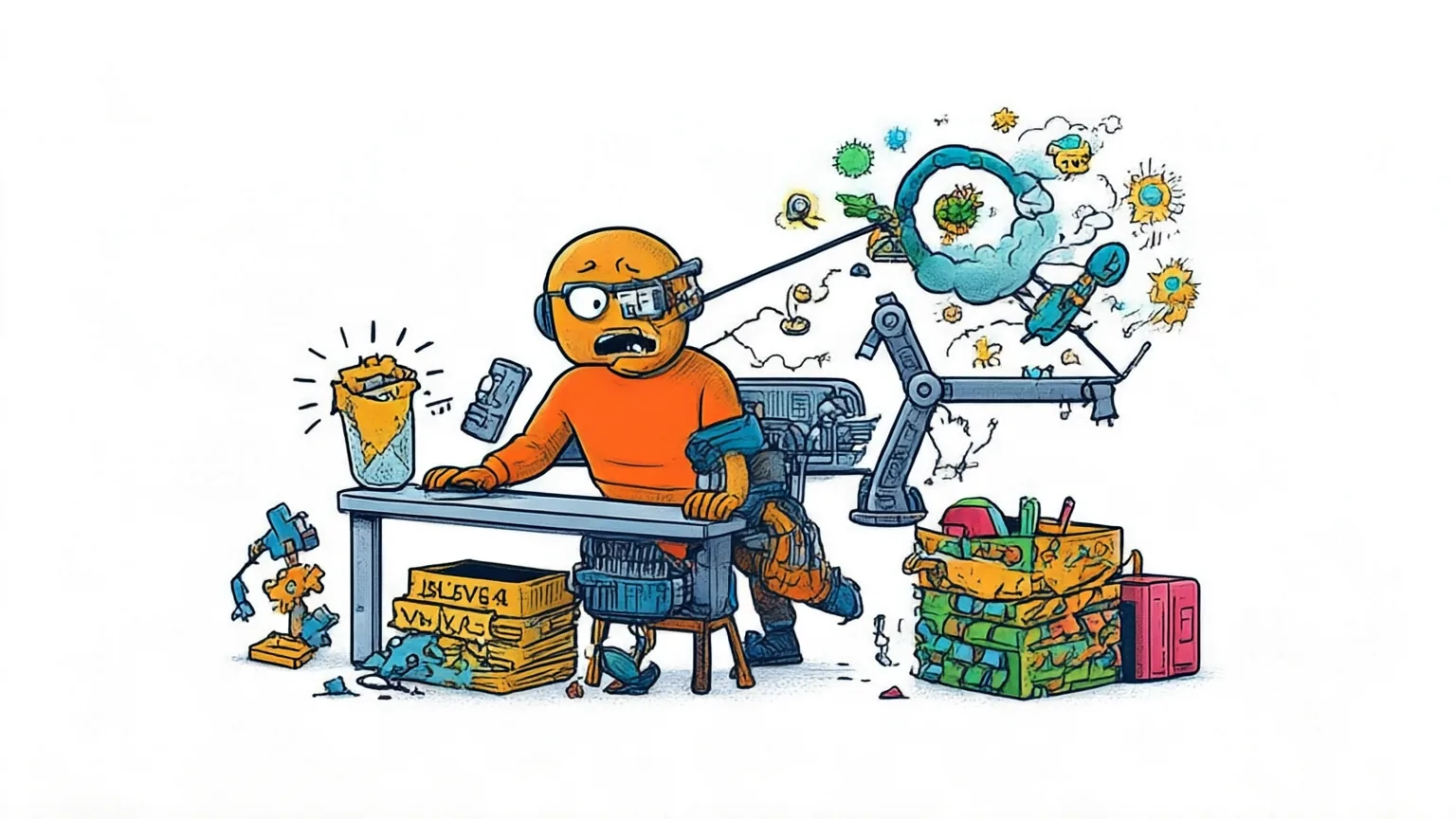
Sage-A1.5 is an AI model built to manage work that takes many steps. It divides work among helpers, checks what they find and changes course when an approach stops being useful. The report also explores using these abilities for scientific research where the questions are still taking shape.
- Problem: Solving separate tasks is not enough to carry a long project through to completion. The report seeks to extend A1 with ways to organize work, check evidence and revise an approach during execution.
- New idea: Sage-A1.5 combines its abilities according to what the work needs. It delegates parts of a task to subagents, which are AI helpers that work in parallel with separate working information. It checks progress and evidence, then revises its approach when a line of investigation is unproductive. For exploratory research, it combines analysis that can be guided during the work with research outputs that others can inspect.
- Simple example: Imagine a research team splitting a question into separate investigations. Each researcher keeps their own notes, while a coordinator checks the findings and redirects work when a lead goes nowhere. That is an analogy for the model's delegation and review process.
- Evidence: The report presents demonstrations on complex tasks and scientific applications across disciplines. It identifies Sage-A1.5 as a 35B Mixture-of-Experts model, but the abstract gives no numerical performance results or measured gains over A1.
- Limitation: Without numerical comparisons or detailed evaluation results, the abstract does not establish how much delegation and checking improve reliability or scientific discovery.
- Why it matters: Long research tasks need a system that can organize work and question its own progress.
- Paper: Sage-A1.5: From Long-Horizon Execution to Scientific
SolarRenderer: Few-Step Generative Reference Rendering

SolarRenderer turns rough descriptions of a moving scene into realistic video. It uses the supplied layout and movement to guide the result while filling in visual detail. The work aims to make this process fast and usable with different kinds of scene input.
- Problem: A scene's layout, motion and camera position leave much of its appearance unspecified. Existing systems can be tied to one game engine's format or require many rounds of image refinement or costly extra training to reduce them. Their training inputs can also be out of step with the videos they are meant to produce.
- New idea: SolarRenderer keeps an existing video model fixed and adds two LoRAs, small sets of trainable adjustments. It feeds videos showing scene structure into the model's existing reference input, matching the structural frames to the output frames they describe. One set of adjustments teaches the model to follow different structural formats described in plain text. The other starts from an existing shortcut for video generation and is trained to produce the result in four refinement steps while retaining that control.
- Simple example: Imagine giving an animator a moving stick-figure sketch. The sketch specifies how a person moves, while the animator supplies the finished appearance. SolarRenderer reports handling pose skeletons as one of its previously unseen input formats.
- Evidence: SolarRenderer reports four-step generation that is 12.3 times faster than 50-step sampling, plus a streaming version that produces 768p video in real time. Training uses 136K clips with corresponding frames aligned. The abstract reports state-of-the-art results on both a test set resembling the training data and a benchmark covering 16 structural representations, with generalization to 11 unseen representations.
- Limitation: The abstract does not specify the hardware behind its real-time result or give numerical quality scores, which limits assessment of speed requirements and visual quality.
- Why it matters: Fast rendering from different kinds of rough scene input could make realistic video easier to produce from layouts and motion already defined.
- Paper: SolarRenderer: Few-Step Generative Reference Rendering
Trending AI Repositories
Ranking source: GitHub Trending.
Graphify-Labs/graphify
Graphify is a Python project for exploring the connections in a codebase. Its focus on explaining each connection gives readers a way to inspect how the pieces fit together.
- What it is: Graphify turns code and supporting files into a searchable graph that explains the connections between them.
- What it does: Turn any codebase, with its docs, SQL schemas, configs, and PDFs, into a queryable knowledge graph. A /graphify skill for Claude Code, Cursor, Codex, and Gemini CLI: local deterministic AST parsing, every edge explained, no vector store.
- Who it helps: It helps developers working with code alongside documentation and database schemas. They can query relationships across those materials and inspect the explanation for each link.
- Limitation: The supplied excerpt does not describe setup requirements or parsing coverage.
- Repository: Graphify-Labs/graphify
wshobson/agents
This repository collects reusable components for AI coding work. Its coverage extends from Python and JavaScript development to review, testing, infrastructure, and security.
- What it is: The repository supplies plugins, agents, skills and commands for supported AI coding tools.
- What it does: Multi-harness agentic plugin marketplace for Claude Code, Codex, Cursor, OpenCode, GitHub Copilot, Google Antigravity, and Pi
- Who it helps: It helps developers who use AI coding tools across different kinds of work. They can use one collection for development, code review, testing, and infrastructure tasks.
- Limitation: The components need a supported coding tool to load and run them.
- Repository: wshobson/agents
sickn33/agentic-awesome-skills
Agentic Awesome Skills is a library of installable instruction playbooks. It puts emphasis on reading the full instructions and keeping an exact selection that can be reviewed and reused.
- What it is: AAS Core lets an agent search a local skill catalog, record and validate its selections, and preview a plan.
- What it does: AAS Core is the local, agent-first control plane for complete catalog discovery, agent-owned selection, stack validation, and planning, backed by 2,600+ agentic skills. Includes CLI, local MCP, catalog, plugins, and Workbench.
- Who it helps: It helps people using Codex or Claude find reusable instructions for their projects. They can inspect the complete files and review the skill set their agent selects.
- Limitation: The described search workflow uses a local catalog.
- Repository: sickn33/agentic-awesome-skills
Sources
- 01Hugging Face Papers · Hugging Face Papers
- 02GitHub Trending · GitHub Trending
- 03Southeast Asia’s digital economy to hit $368 billion · Google
- 04Beyond the KV cache: Training and serving i14’s Laplace 3B linear attention model on AWS Trainium2 with native PyTorch · AWS Machine Learning
- 05NVIDIA Cosmos3-H-Dreams: Bringing Clinical Surgery to Life Through Generative Simulation · Hugging Face
- 06Judge dismisses Sam Altman’s sister’s sexual abuse lawsuit · The Verge
- 07Anthropic pitches AI safety bill that may block a model if 50+ people could be killed · TechCrunch
- 08Focused Omni-Modal GUI Agents · arXiv
- 09Sage-A1.5: From Long-Horizon Execution to Scientific Exploration with Capability Composition · arXiv
- 10SolarRenderer: Few-Step Generative Reference Rendering · arXiv