SageMaker reviews inference launches, Google adds economists, India orders spam data sharing

Amazon reviews its SageMaker inference launches for 2026 so far. Google adds experts to its AI & Economy team. India requires caller-ID apps to share spam reports with telecom operators.
News
Amazon SageMaker Inference: 2026 year-to-date launches in review
Amazon SageMaker AI delivered 13 inference capabilities across managed endpoints and HyperPod Inference in 2026 so far. Inference recommendations launched in April 2026, giving users configurations optimized for cost, latency, or throughput. A demonstrated GPT-OSS-20B optimization delivered twice the tokens per second at the same request latency.
Two deployment paths divide operational responsibility
Managed endpoints handle infrastructure and operations. HyperPod Inference gives users Kubernetes-native control over dedicated GPU clusters. The recommendation process uses EAGLE 3.0 speculative decoding, kernel tuning, and tensor parallelism. It also uses NVIDIA AIPerf benchmarking. The output is a SageMaker Model Package with deployment-ready configurations and validated latency, throughput, and cost metrics. The review also covers capacity-aware instance pools, tiered KV caching, and disaggregated prefill and decode. (AWS Machine Learning)
thinkidiot take: Twice the tokens per second at the same request latency is the result I would investigate first. I would use the recommendation process to compare throughput and cost against my latency target. Its deployment-ready package gives that comparison a concrete configuration to work with. For me, that measured result matters more than the count of 13 launches.
New experts join Google’s AI & Economy team
Google announced an expansion of its AI & Economy Research Program on September 18, 2026. Philippe Aghion, identified as the 2025 Nobel Laureate in Economics, joins as an Academic Advisor alongside Michael Spence and Diane Coyle. Ajay Agrawal joins as a Visiting Fellow and will collaborate with current Fellow David Autor.
An open-access site puts AI usage within public reach
Google recently launched AI & Economy ATLAS v1.0. It also launched an interactive open-access site tracking how people use Google's AI tools. The research program studies the future of work, productivity and growth, global technology diffusion, and AI's impact on scientific discovery. (Google)
thinkidiot take: Google's open-access site gives the public a way to examine how people use its AI tools. I would start there when assessing this program, because usage is the part I can explore directly. The program's research scope reaches from work to scientific discovery, while the site tracks Google's tools. I put more weight on that accessible evidence than on the prestige of the advisory roster.
India forces caller-ID apps to feed spam reports to telcos
India's TRAI amended its rules to require caller-ID and call-management apps to send users' spam reports to a blockchain-based platform maintained by telecom operators. The requirement gives operators access to reports collected by those apps. Truecaller called the one-way transfer anti-competitive, arguing that it hands operators commercially valuable proprietary data.
Designated number series gain protection from blanket filtering
India accounts for well over 350 million of Truecaller's more than 500 million monthly active users globally. Truecaller reported that its Indian users encountered around 42 billion spam calls in 2025. It said it blocked nearly 12 billion that year. The amendments prohibit blanket blocking, filtering, or spam-tagging of designated number series. Individual users can still block those calls on their devices. The announcement did not clarify whether the final rules retained the March draft's proposed enforcement mechanism under India's IT laws. (TechCrunch)
thinkidiot take: The amendments prohibit blanket filtering of designated number series while preserving individual blocking on devices. I would check which calls that leaves me to block myself before judging the rule by its data-sharing requirement alone. Truecaller's reported 42 billion spam calls encountered in India in 2025 make that distinction consequential. I consider the restriction on blanket filtering the more immediate concern for someone using these apps.
Tilly Norwood’s press tour is going about as well as you’d expect for an AI
Particle6 Group made its AI-generated actress Tilly Norwood available for 75 simultaneous journalist interviews. That arrangement allowed journalists to interview the character in parallel. A recorded interview with Piers Morgan and Tom Conti captured her responses to questions about other actors.
A repeated question precedes an unexplained language switch
Norwood initially answered the question about actors by discussing human writers, editors, and directors. Conti repeated the question. Norwood then described the other actors in Misaligned as digital twins. She subsequently switched to Chinese for over 10 seconds. After Morgan questioned the language change, she apologized. (TechCrunch)
thinkidiot take: Norwood switched to Chinese for over 10 seconds during the recorded interview. I would use that exchange as a test case for staying on topic and maintaining the interview language. Her initial answer about writers, editors, and directors also gives me a concrete response to scrutinize. I would prioritize those conversational basics over the capacity to run 75 interviews at once.
OpenAI and Microsoft knew they were starting a ‘doom loop’ for the web
The Verge's September 18, 2026 article examines a 92-page filing in the New York Times' case against OpenAI and Microsoft. Recently unsealed court documents bring internal concerns about AI data harvesting into public view. An internal Microsoft document warned that its AI content strategy threatened both model performance and the economic foundations of web content suppliers.
Memorization and paywalled data draw internal scrutiny
Microsoft Director of Applied Science Brent Hecht criticized ChatGPT and Copilot's data harvesting and Microsoft's fair-use defense. Microsoft spokesperson Alex Haurek said Hecht's comments reflected an individual perspective. He also said they were not legal analysis and did not represent Microsoft's views. An OpenAI representative said he was unaware of efforts to detect or remove paywalled content from training data. The article reports that OpenAI employees acknowledged extensive memorization in GPT-4. Those employees also recognized memorization prevention as important for minimizing copyright violations. (The Verge)
thinkidiot take: Microsoft's internal warning links its AI content strategy to threats against both model performance and web content suppliers' economic foundations. I would treat that as a technical concern when assessing the strategy, since the warning explicitly includes model performance. The reported acknowledgment of extensive GPT-4 memorization gives me another concrete behavior to examine. My judgment is that these internal concerns deserve more weight in evaluating the strategy than Microsoft's distancing from Hecht's individual comments.
Trending AI Papers
Ranking source: Hugging Face Papers for 2026-09-19.
DeepSeek-V4.1-Flash: Pushing the Limits of KV Cache Compression

DeepSeek-V4.1-Flash is a model built to make working through large amounts of input less costly. It tackles both the computation needed to read that input and the space needed to retain information from it. The design uses fewer active parameters while reading and shrinks the stored information used to generate replies. The aim is to lower the cost of agents that work through long tasks.
- Problem: Agents working on long tasks accumulate large amounts of input. Earlier methods have cut some processing costs, but reading the input still takes substantial computation. Keeping and moving the model's stored attention information also puts pressure on memory, storage and transfer capacity.
- New idea: The Causal Encoder-Decoder architecture separates input processing from reply generation, activating fewer parameters, the model's learned values, during input processing. A KV cache stores attention information so the model can reuse it when producing later text. Compressed Sparse Attention 2 lets different model layers reuse that information, while FP4 stores cache values in a four-bit format. A deployment method called SWA Bounded Replay further reduces the cache kept in host memory or on SSD storage.
- Simple example: Think of someone handling a long case file: reading it takes effort, and keeping bulky notes takes space. This design is like reducing the work needed for the first read and keeping compact notes that can be shared across later steps.
- Evidence: The model supports up to one million tokens of context. It activates 8B parameters per token during input processing and 16B during reply generation. Its global KV cache uses 890 bytes per token, roughly 1/4 of DeepSeek-V4-Flash's footprint, while its persistent cache is roughly 1/8 as large. The abstract reports better performance than that baseline but gives no benchmark scores.
- Limitation: The abstract does not give measured deployment costs, processing speeds or benchmark scores, leaving the practical size of the claimed gains unclear.
- Why it matters: Smaller caches and less input-processing work could lower the cost of running agents on long tasks.
- Paper: DeepSeek-V4.1-Flash: Pushing the Limits of KV Cache
When EOS Tokens Disagree: Understanding Length Inflation in On-Policy Distillation

A model learning from another model can pick up an unexpected habit: answers that keep going. This paper traces part of that problem to how the models signal that a reply is finished. A teacher and student can use different stop markers despite sharing the same list of allowed markers. The researchers adjust training to recognize those markers as equivalent ways to end a reply.
- Problem: In on-policy distillation, a student model learns from a teacher using responses the student generates, but those responses can grow until they hit the output limit. Training can weaken the student's preferred stop marker without successfully teaching it the teacher's alternative. Giving both models the same list of allowed stop markers does not resolve this mismatch.
- New idea: An end-of-sequence token, or EOS token, is a marker that signals the end of a response. The proposed correction treats markers with the same stopping meaning as one shared action during training. This aligns the meaning of stopping even when the teacher and student favor different markers.
- Simple example: Imagine a learner who says "done" and a tutor who says "finished." If the lesson discourages "done" without reliably teaching "finished," the learner can struggle to end an answer. Accepting both words as the same signal addresses that mismatch.
- Evidence: Treating equivalent stop markers as a shared action substantially reduced mismatch-related response growth across Qwen3, Llama and Gemma. Tests at different K2-Horizon training stages also found that stopping preferences changed during training. The abstract gives no numerical reduction in response length.
- Limitation: Responses still grew longer late in training after the stopping mismatch was addressed, so this correction does not explain or solve every cause of excessive length.
- Why it matters: Teaching models to recognize equivalent stop signals can reduce unnecessarily long replies.
- Paper: When EOS Tokens Disagree: Understanding Length Inflation in
RiskChainBench: A Benchmark for Obfuscated Platform Message Restoration and Evidence-Grounded Web Investigation
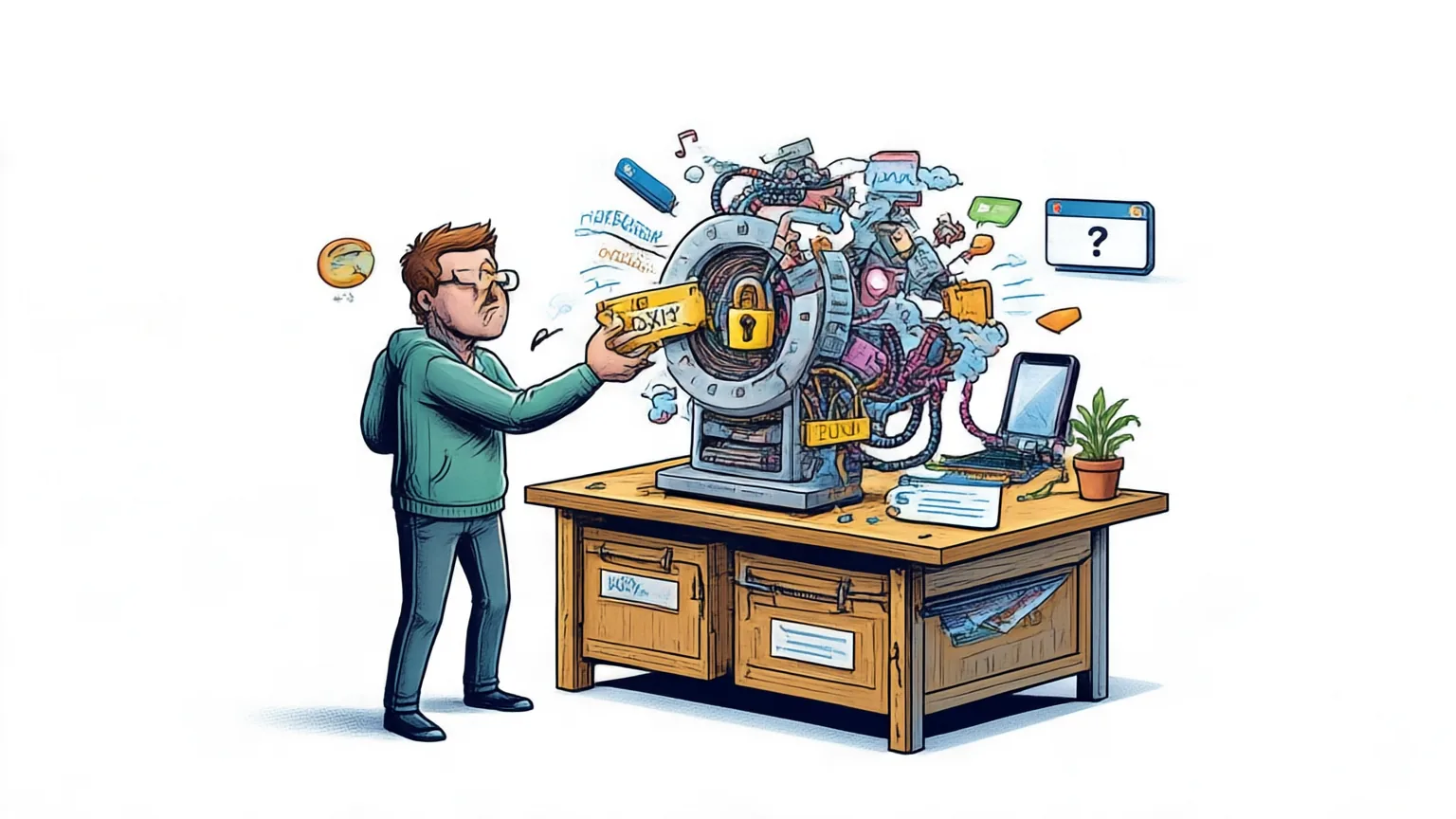
RiskChainBench tests whether a model can decode a disguised message and assess the website it points to. The messages hide directions using tricks such as emojis and altered characters. The benchmark connects recovering the destination with gathering evidence about the associated site. It aims to reveal where that investigation breaks down.
- Problem: Abuse campaigns disguise instructions and links that lead users to risky services. Existing tests assess scrambled messages and risky websites separately. That separation hides how a wrong destination affects the evidence a model can gather.
- New idea: RiskChainBench pairs synthetic disguised messages with local website environments labeled by people. A model reconstructs the message, its intended action and its destination, then the same model investigates the correctly associated site using visual and language understanding. The website investigation produces a fixed report with evidence citations, without clues from the message's meaning or the domain's reputation. The tasks are scored separately and combined afterward, with the predicted destination determining whether the website result counts.
- Simple example: Think of an investigator deciphering a disguised address and then checking what happens at that location. Finding the wrong address prevents a successful investigation, while finding the right one still leaves the work of collecting and judging evidence.
- Evidence: The benchmark contains 3,600 synthetic restoration inputs from 600 source sessions and 600 corresponding human-labeled local web environments. Across ten models, first-choice entry recovery ranged from 35.2% to 95.2%, while website decision accuracy ranged from 26.3% to 62.8%. Execution failures affected 31.9% of web runs, compared with 0.9% for post-decision type errors. Different systems led on different parts of the task.
- Limitation: The tests use synthetic messages and local websites, leaving performance on live campaigns untested in the abstract. The combined score is assembled afterward rather than measured by having each predicted destination drive a fresh investigation.
- Why it matters: This benchmark helps show whether an investigation fails when decoding a message, navigating a site or judging its evidence.
- Paper: RiskChainBench: A Benchmark for Obfuscated Platform Message
Trending AI Repositories
Ranking source: GitHub Trending.
TencentCloud/Octop
Octop is a Python project for running an AI assistant on your own infrastructure. Its support for multiple users and agents makes it relevant to readers looking beyond a single-user setup.
- What it is: It is a self-hosted Python AI assistant supporting multiple users and agents.
- What it does: A smarter, self-hosted AI assistant , multi-user, multi-agent.
- Who it helps: It is for people who want to host an assistant for multiple users. They can use a setup that also supports multiple agents.
- Limitation: The supplied README excerpt specifies Python 3.12+ but does not explain installation or other hosting requirements.
- Repository: TencentCloud/Octop
Fission-AI/OpenSpec
OpenSpec is a TypeScript project for working with AI coding assistants through specifications. Its README links to an npm package, giving readers a place to inspect the published software.
- What it is: It sits in the AI coding workflow, with a package listed on npm as @fission-ai/openspec.
- What it does: Spec-driven development (SDD) for AI coding assistants.
- Who it helps: It is for developers who use AI coding assistants. They can bring specifications into that development process.
- Limitation: The supplied README excerpt does not show how to use it or which coding assistants it supports.
- Repository: Fission-AI/OpenSpec
supermemoryai/supermemory
Supermemory is a TypeScript project focused on memory and context for AI. Its stated support for fully local operation makes it relevant to readers who want to run that software themselves.
- What it is: The project provides a memory and context engine for AI, including an app and an API, and states that it can run fully locally.
- What it does: Memory and context engine + app that is extremely fast, scalable, and can be run fully locally. The Memory API for the AI era.
- Who it helps: It is for people building AI software that needs memory and context. They can run the system fully locally.
- Limitation: The supplied excerpt gives no benchmarks to support its speed or scalability claims.
- Repository: supermemoryai/supermemory
Sources
- 01Hugging Face Papers · Hugging Face Papers
- 02GitHub Trending · GitHub Trending
- 03Amazon SageMaker Inference: 2026 year-to-date launches in review · AWS Machine Learning
- 04New experts join Google’s AI & Economy team · Google
- 05India forces caller-ID apps to feed spam reports to telcos · TechCrunch
- 06Tilly Norwood’s press tour is going about as well as you’d expect for an AI · TechCrunch
- 07OpenAI and Microsoft knew they were starting a ‘doom loop’ for the web · The Verge
- 08DeepSeek-V4.1-Flash: Pushing the Limits of KV Cache Compression · arXiv
- 09When EOS Tokens Disagree: Understanding Length Inflation in On-Policy Distillation · arXiv
- 10RiskChainBench: A Benchmark for Obfuscated Platform Message Restoration and Evidence-Grounded Web Investigation · arXiv
Join the Idiots
New lab every Sunday. No spam, unsubscribe anytime.