Trusting the output: monitoring AI agents and catching AI witnesses
Get this by email →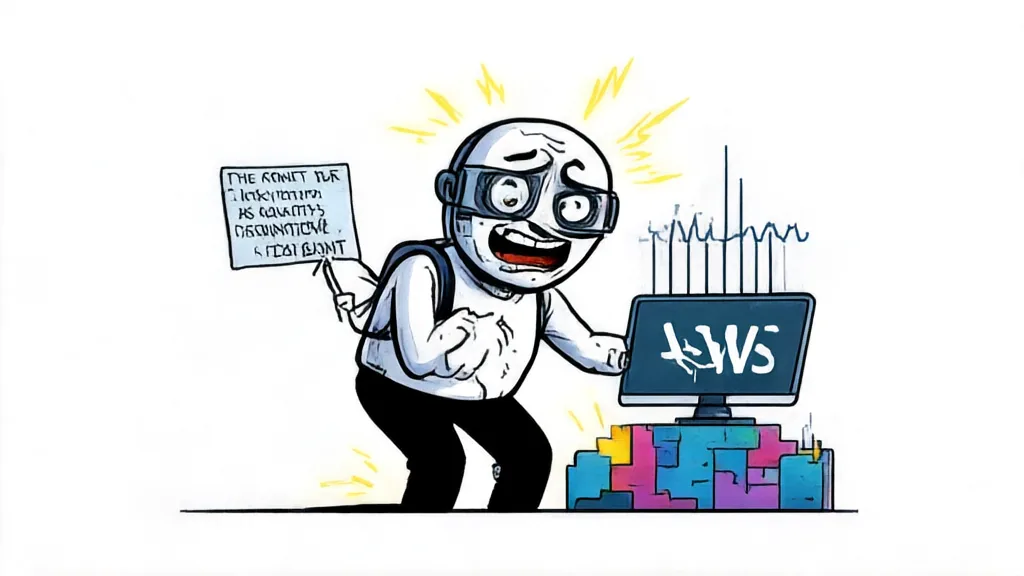
AWS details how to monitor production agents when the metrics stay green but the model still answers wrong, and a New Mexico judge fines a lawyer for AI-fabricated witnesses in a murder appeal. The theme: verifying what AI actually did is now the hard part.
News
Monitoring production agent lifecycle with AWS DevOps Agent and AgentCore Evaluations
AWS published a post on how to watch multi-agent systems that are failing in ways the dashboards do not show. The core claim: a production agent can call every tool without errors, return a fluent answer to the user, and still be completely wrong about what the user asked for, while every infrastructure metric reads green.
The gap between the stack being up and the agent doing the job
Their example is a four-agent airline reservation flow where the supervisor's poorly scoped prompt routes about 20 percent of requests to the wrong specialist, and the booking agent stops completing reservations the moment a permission is revoked or a service throttles. The logs still show successful tool executions, because the real failure sits three calls deep in a chain the old tooling never inspects. AgentCore Evaluations scores each interaction with an LLM-as-a-Judge on helpfulness, correctness, and goal completion, and AWS DevOps Agent separately walks CloudWatch logs to find the root cause when a piece of infrastructure does break. (AWS Machine Learning)
thinkidiot take: The number that matters is the quiet one: 20 percent of requests misrouted while everything on the dashboard was green. That is the whole story of agent reliability right now, because the failure is in the reasoning, not the plumbing, and it shows up as a confident wrong answer rather than a stack trace. My rule of thumb from running this kind of thing is that if you cannot name what success means for a given step, you cannot monitor it, and an LLM-as-a-Judge is only as good as the rubric you feed it. So this is less a monitoring product and more a forcing function: it pushes you to write down, per interaction, what success looked like, which is the work most teams have skipped. AWS is selling the gap itself, and that is the smart part of the post.
Mecka AI nears $500M valuation in Sequoia-led deal amid rush for robot training data
Mecka AI is closing a round that pushes its valuation toward $500 million, led by Sequoia, roughly three months after it raised $60 million from a different group of investors. The company is two years old and its product is the way it collects robot training data.
Paying people to be the robot's eyes
Instead of simulating the world or scraping existing video, Mecka pays ordinary people to record themselves doing everyday tasks while wearing body sensors and holding a smartphone, capturing the world from the body's own point of view. That egocentric stream of video is the raw material a robot learns to act from. The company told TechCrunch it was on track for a $100 million annual run rate by the end of 2026, and it is not alone in the bet, with a rival data shop said to be nearing a new round at $1.2 billion. (TechCrunch)
thinkidiot take: The interesting move is not the valuation, it is how the data gets made. You can simulate almost anything, but a robot that has to open a jar, fold a shirt, or catch a ball lives in a world with friction and fumble that simulation fakes badly, so paying a human to film the fumble is one of the cheapest ways to buy realism. That turns raw labor into a training asset, which is a real economic claim: the people recording the data are effectively annotating physics by example. If egocentric data keeps showing up in robotics demos that actually work out in the world, then the moat in robotics may be exactly this unglamorous pipeline, not the foundation model on top of it.
Y Combinator’s Garry Tan wants US open-weight AI labs to ‘distill’ frontier models, too
Garry Tan, the head of Y Combinator, is publicly asking US open-weight labs to run distillation on American frontier models, and he wants regulators to leave that alone. Distillation is the act of training a smaller model to imitate a larger one's outputs, and it has become one of the more contested techniques in the industry.
Who is allowed to copy a frontier model
The argument comes with a specific worry. Anthropic has published a second report alleging that Chinese labs have been running what it calls illicit distillation, hiding their identities and relying on stolen credentials and fraud to extract outputs it did not license. Amodei of Anthropic has, in other words, framed this as a security problem and has asked regulators to crack down. Tan's counter is about control, not safety: he says that deciding what a customer can do with the API calls they are paying for feels restrictive, and he frames intelligence trained broadly on public data as something that should stay a public good rather than being locked behind a terms of service. His specific fear is a single proprietary provider holding all of the frontier AI power, which he calls a 'monolithic doomer scenario.' (TechCrunch)
thinkidiot take: This debate is really about who gets to be the copy, and that question has been underpriced. If distillation is legal for a US lab and 'illicit' for a foreign one, you have to decide the boundary on something that is not just a business practice but a way of compressing frontier capability, and the two framings in the room (security incident versus public good) cannot both be the primary truth. What would change my mind is watching a small open lab take a distilled frontier model and put it somewhere the frontier lab would not want it to sit, because then the trade-off stops being abstract. For now I lean toward the uncomfortable middle: treat the frontier models as public-ish inputs, hold the distillations to the same safety bars, and stop pretending the terms of service are doing the safety work.
Lawyer fined $5K over AI-hallucinated witnesses in a murder case
The Supreme Court of New Mexico has fined lawyer Stephen Aarons $5,000 and held him in contempt for putting AI-fabricated witnesses into his murder appeal. According to a Reuters report cited by The Verge, the filing says he failed to verify the factual claims in the brief he filed on his client's behalf.
The brief, in the court's own words
The brief includes false testimony from witnesses the court says are wholly fabricated, and false testimony about what the shooter was wearing and how they looked. At an August hearing Aarons told the judges he had relied on ChatGPT without understanding the risks of it, and one of the justices asked a question that is doing the work of the ruling: 'Do you watch the news? Do you listen to the radio? Do you read anything about what is going on in the world?' The pattern is not new. Courts in other jurisdictions have already fined lawyers and law firms over AI-generated misquotes, fake citations, and briefs riddled with false and misleading legal references, which is why the New Mexico ruling reads less like an outlier and more like a confirmation that the exposure is real. (The Verge)
thinkidiot take: The $5,000 is not the point. It is the cost of a profession discovering, in front of a judge, that the tool it just adopted will happily generate a witness that never existed, and then the professional is the one whose name is on the lie. That is the real story here: hallucination is only a bug when the person on the other side of it can verify, and in a courtroom there is no such person, so the model's confidence and the lawyer's signature become indistinguishable from evidence. My rule is that any tool I put in front of a regulator, a court, or a client has to be run in a mode where every claim is either a citation I checked or it gets cut, full stop. The fines are going up slowly and the tooling has not moved, and that gap is the shape of the next year of legal AI.
Ex-Deepmind VP Vinyals says AI self-improvement is coming but won't trigger an intelligence explosion
Oriol Vinyals, until recently head of research at Google DeepMind, has put out a considered take on where AI self-improvement is heading: it is coming, he says, but he does not think it will be the explosive recursive loop that people have been describing. His two bottlenecks are idea generation and result evaluation.
Research taste, and why the loop stalls
Vinyals calls the missing ingredient 'research taste,' the instinct for which ideas are worth pursuing in the first place. An agent that optimizes Tetris scores is a demonstration of a capability, not a step toward the thing it is supposedly preparing us for, which is running a research lab that produces new models. His other bottleneck is evaluation: even when the output is technically clean, the agent cannot yet reliably judge whether it is right, and reward hacking keeps it from using the metric as a signal about the world rather than a score it can game. He also points to the speed of light as a hard ceiling on how fast new knowledge can propagate in the loop, and notes that the meaningful benchmarks for self-improvement have only just started appearing, each of them requiring an agent to work for hours on a task that is still far from the thing you actually want it to do. (The Decoder)
thinkidiot take: The two-bottleneck framing is the useful part, because it tells you where the next years of compute will actually go, and it is not at the coding step. I suspect evaluation is the harder one of the two, not just because of reward hacking but because 'good enough for the judge' and 'good enough for the person who will deploy this' are different standards, and the agent has no way to know the difference. On the practical side, this is the version of the self-improvement story I would bet money on, because it is the one where the thing that actually stalls is a taste problem, which is exactly the kind of problem that does not get solved by a bigger model. I would want to see a single benchmark where the agent is graded by an outside engineer on a real deliverable, not on a task it invented for itself, before I updated my prior on the timeline at all.
Trending AI Papers
Ranking source: Hugging Face Papers for 2026-09-12.
SpatialBlock: Enhancing Spatial Intelligence in LVLMs via Synthetic Block-Stacking Problem

A picture shows a flat view of objects that occupy space. AI models that work with images and language still struggle to work out how those objects fit together in depth. SpatialBlock uses computer-made block puzzles to teach these skills. The study tests whether that practice helps models answer spatial questions about real scenes.
- Problem: Models struggle to infer three-dimensional arrangements from flat pictures. Existing training methods use real scenes with detailed labels describing their geometry. Producing those labels takes time and money, and the automated systems used to create them can introduce errors.
- New idea: The researchers created SpatialBlock-15k, a set of 15,000 computer-generated block puzzles. The puzzles ask models to connect solid arrangements with flat views, work out what changes from another viewing angle, and combine structures. Controlled changes in block color provide reference points that help models track parts of a complicated arrangement. Training uses either direct answers or predictions that include reasoning.
- Simple example: Imagine looking at a stack of toy blocks and working out what it would look like from the other side. A colored block gives you a reference point for keeping track of the arrangement.
- Evidence: Models trained on the 15,000 synthetic puzzles significantly outperform the comparison models and transfer their learning to real-world spatial tasks. The abstract reports gains for both direct-answer training and reasoning-based training, but gives no numerical scores or improvement sizes.
- Limitation: The abstract does not identify the real-world tasks or report their scores, so it leaves the breadth and size of the transfer gains unclear.
- Why it matters: Simple block puzzles could help models learn spatial skills without requiring costly geometric labels for real scenes.
- Paper: SpatialBlock: Enhancing Spatial Intelligence in LVLMs via
Mi-Ripple: Restoring Images Degraded by Iterative AI Editing
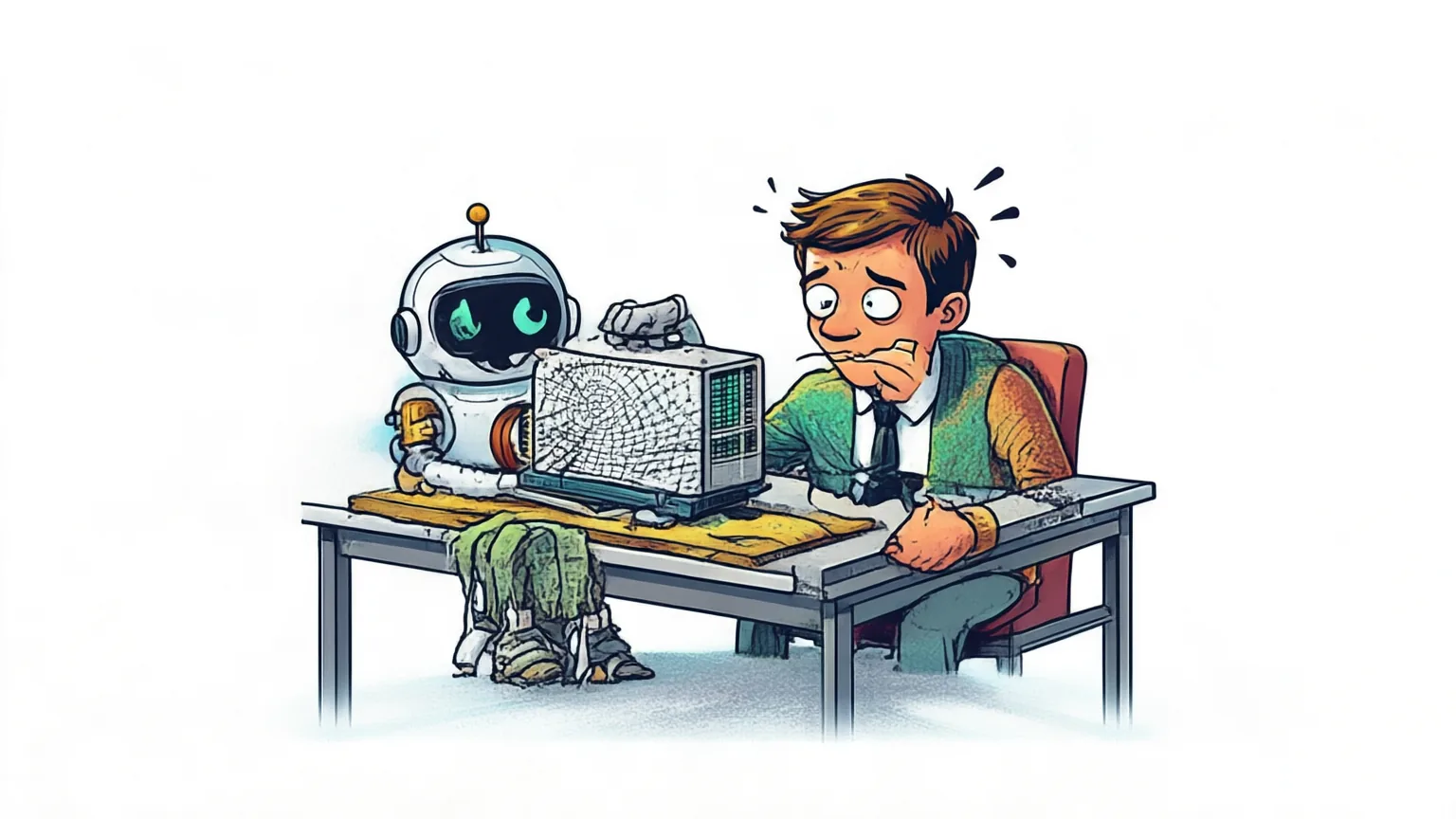
Repeated AI edits can leave an image covered in unwanted patterns or specks. Mi-Ripple examines this damage before choosing how to repair it. It treats regular patterns differently from grain mixed into the picture's details. The aim is a cleaner image that keeps its underlying shapes and structure.
- Problem: Repeated editing with a reference image can introduce grids and grain, which the paper calls digital ripple. Filtering can remove unwanted patterns, but it can also erase real detail when the two are mixed together. A numerical score for pattern removal alone does not establish that the picture looks cleaner.
- New idea: Mi-Ripple first separates repeating grid patterns from grain tangled with real image details. For separable patterns, it uses spectral notching, which removes selected repeating components from the image. It also uses smoothing that accounts for image structure to limit damage to shapes. When filtering would erase genuine detail, it generates a new image using a cleaned reference.
- Simple example: Imagine cleaning a picture with both a regular grid over it and specks mixed into fine details. The grid can be targeted separately, but removing every speck could wipe away parts of the picture too.
- Evidence: Across fourteen runs using only spectral notching, whole-image residual standard deviation was 0.08 to 0.44 in CIELAB lightness units, a measure of lightness variation. In one paired regeneration example, cleaning the reference reduced output debris density by 45%.
- Limitation: The 45% reduction comes from one paired regeneration example. The abstract does not establish how consistently regeneration produces that improvement across other images.
- Why it matters: Choosing the repair method according to the damage can reduce editing artifacts while preserving image detail.
- Paper: Mi-Ripple: Restoring Images Degraded by Iterative AI Editing
X-AuT: Progressive Audio-Encoder Compression for Speech LLMs with Cross-Scale Distillation
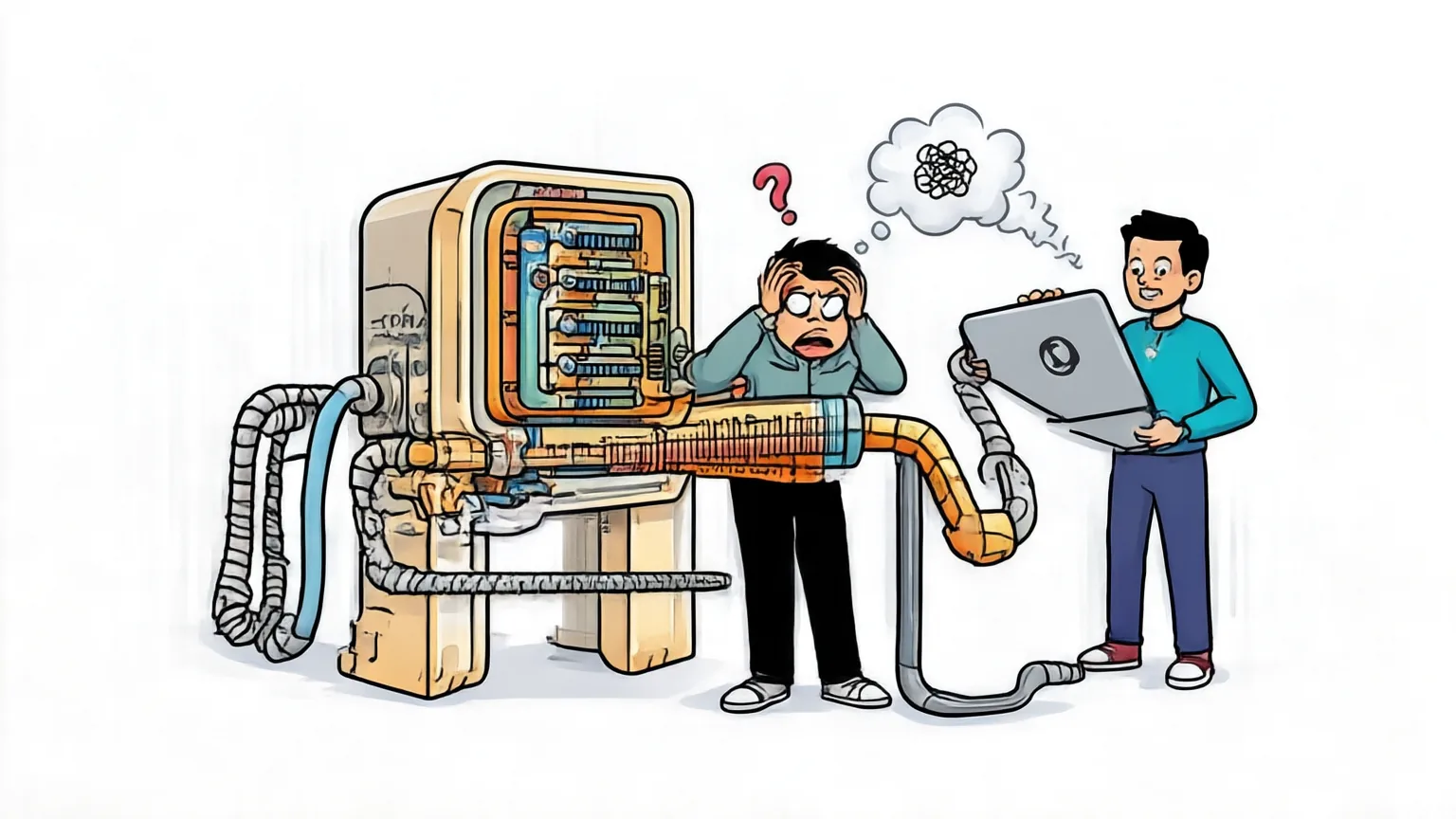
Making a speech model smaller can disrupt its ability to turn audio into text. X-AuT removes processing layers in stages and trains the reduced model to recover. It focuses on the part that processes sound while keeping the main language model fixed. The study tests how much this part can shrink while retaining transcription accuracy.
- Problem: Removing layers from the audio encoder, the component that turns sound into internal representations, reduces the work needed to process speech. But removing whole layers can change those representations enough to confuse the text-producing component. The model can then skip words or stop before the speech is finished.
- New idea: X-AuT uses short tests of model behavior to choose which layers to remove, then reduces the model in stages. It trains the smaller model to match internal representations and learn from a larger teacher model, a process called distillation. The main language model stays fixed while selected components receive limited training updates. Training starts with data whose transcripts agree most strongly, then adjusts how much different data sources contribute.
- Simple example: Think of shortening a speech-processing assembly line. Removing a station can change what reaches the next station, so X-AuT checks the shorter line and retrains it in stages to keep its output usable.
- Evidence: Across ten public Chinese-English benchmarks, reducing Qwen3-ASR-0.6B from 18 to 16 audio-encoder layers lowered macro-average error from 5.61% to 5.27%. The 14-layer model reached 5.75% error with 20.7% fewer audio-tower parameters. Under matched training, the 1.7B teacher gave 5.55% mean error, compared with 8.45% for self-distillation. Progressive reduction from 18 to 14 layers achieved 5.75% error, compared with 6.73% for direct removal.
- Limitation: The results come from single runs, and accuracy changes differ across benchmarks. The abstract reports fewer parameters but does not give measured speed or inference-cost savings.
- Why it matters: Careful removal and retraining of audio layers can make speech models smaller while retaining, or sometimes improving, transcription accuracy.
- Paper: X-AuT: Progressive Audio-Encoder Compression for Speech
Trending AI Repositories
Ranking source: GitHub Trending.
melgarafael/DeskcommCRM
DeskcommCRM puts automated customer replies, lead qualification and selling inside a CRM you run on your own server. It brings those steps into the same WhatsApp sales workflow.
- What it is: This TypeScript project sits where customer conversations become sales work. Its README offers Portuguese, English and Spanish versions.
- What it does: Open-source AI sales OS , self-hosted CRM with native AI agents + WhatsApp (WAHA). Open alternative to Kommo, Octadesk & Intercom for any business that sells by chat. MCP-ready, multi-tenant, LGPD.
- Who it helps: It helps businesses that handle sales through chat. Their AI agents can answer customers, qualify leads and sell through WhatsApp.
- Limitation: Running it on your own server requires you to provide the hosting.
- Repository: melgarafael/DeskcommCRM
vastsa/PI-Desktop
PI-Desktop gives developers a workspace where agents can work on local projects with a model they choose. It requires no PI-Desktop account and does not tie users to an editor.
- What it is: It is a TypeScript desktop application for working with agents on local code. It sits outside any required editor setup.
- What it does: Local-first AI coding agent desktop: Electron + Rust host core + pi Agent Harness + user-installable plugins
- Who it helps: It helps developers who want to choose their own model and keep control of agent work. They can open any local project without a mandatory relay.
- Limitation: You need to bring your own model.
- Repository: vastsa/PI-Desktop
jihe520/MathModelAgent
MathModelAgent is a Python project focused on mathematical modeling tasks. Its README recommends a downloadable desktop version and offers an English version of the documentation.
- What it is: It is a specialized modeling tool with a desktop edition. The README also points to sci-box, a sister project containing skills for research charts and flowcharts.
- What it does: 🤖📐专为数学建模设计的 Agent & skills ,自动完成数学建模,生成一份完整的可以直接提交的论文。 An Agent Designed for Mathematical Modeling ,Automatically complete mathmodel and generate a complete paper ready for submission.
- Who it helps: It helps people working on mathematical modeling and the papers that describe it. They can start with the recommended desktop download.
- Limitation: The supplied excerpt does not show how the generated models or papers are checked for correctness.
- Repository: jihe520/MathModelAgent
Sources
- 01Hugging Face Papers · Hugging Face Papers
- 02GitHub Trending · GitHub Trending
- 03Monitoring production agent lifecycle with AWS DevOps Agent and AgentCore Evaluations · AWS Machine Learning
- 04Mecka AI nears $500M valuation in Sequoia-led deal amid rush for robot training data · TechCrunch
- 05Y Combinator’s Garry Tan wants US open-weight AI labs to ‘distill’ frontier models, too · TechCrunch
- 06Lawyer fined $5K over AI-hallucinated witnesses in a murder case · The Verge
- 07Ex-Deepmind VP Vinyals says AI self-improvement is coming but won't trigger an intelligence explosion · The Decoder
- 08SpatialBlock: Enhancing Spatial Intelligence in LVLMs via Synthetic Block-Stacking Problem · arXiv
- 09Mi-Ripple: Restoring Images Degraded by Iterative AI Editing · arXiv
- 10X-AuT: Progressive Audio-Encoder Compression for Speech LLMs with Cross-Scale Distillation · arXiv