Publishers sue, hikers are rescued, and AI benchmarks get rewritten
Get this by email →
Publishers challenge AI training, a Gemini-planned hike ends in rescue, GPT-6 Astra reshapes a benchmark, and seven-minute chatbot talks reduce conspiracy beliefs.
News
Seattle Times and Newsday are the latest publications to sue OpenAI and Microsoft
The Seattle Times and Newsday sued OpenAI and Microsoft over the alleged use of their journalism to train AI. The case names ChatGPT and Copilot as consumers of human-authored content. It adds two publishers to a copyright dispute that included The New York Times in 2023.
Past journalism funding did not prevent a courtroom dispute
The lawsuit concerns the supposed use of reporting in AI training. The New York Times previously sued both companies over alleged copyright infringement. Microsoft and OpenAI had funded journalism projects and fellowships at The Seattle Times. That prior relationship now sits beside the publisher's legal challenge. Microsoft said it was surprised by the lawsuit. The company also said it was willing to discuss solutions. (TechCrunch)
thinkidiot take: Two more news organizations have taken OpenAI and Microsoft to court over AI training. When I run these products, I want a clear account of how human-authored material entered the system, especially when ChatGPT and Copilot are named directly. Funding journalism projects does not settle a dispute about the journalism itself. Litigation is a blunt tool, but this conflict deserves more than surprise and an offer to talk.
Hikers rescued after using Google Gemini for planning
Three hikers were rescued from California's Mount Shasta after using Google Gemini to plan their expedition. Their planned 8-hour ascent became a multiday ordeal. The sheriff's office said Gemini advised them to bring far less food and water than their group required.
A missed turnaround point turned bad preparation into an overnight emergency
The hikers began their climb at 3 a.m. Guidance said they should turn around if they had not reached the summit by noon. They continued and reached it at 7 p.m. The group then spent the night in Mud Creek Canyon. Forest Service rangers and volunteers rescued them the next morning. Their schedule and supplies did not match the trip they ultimately faced. (TechCrunch)
thinkidiot take: An 8-hour plan ended as a multiday rescue after the group carried far less food and water than required. I use AI planning as a draft, but a mountain itinerary must still answer to turnaround guidance and actual supplies. Continuing from noon until a 7 p.m. summit converted a bad recommendation into an overnight ordeal for the hikers, rangers, and volunteers. Gemini was not a fit tool for the final safety call here.
Artificial Analysis overhauls its Intelligence Index after GPT-6 Astra scoring drew skepticism
Artificial Analysis released version 4.2 of its Intelligence Index after GPT-6 Astra's earlier scoring drew skepticism. The revision places Astra four points ahead of its predecessor, Sol, while Claude Fable 5.1 ranks first. Astra now ranks second and Meta third, giving users a revised comparison of leading models.
New private tests now carry much more of the score
Version 4.2 adds AA-Briefcase and Surge AI's GDP.pdf benchmarks. It drops GPQA-Diamond because models have solved it. Private test data now accounts for 40 percent of the index weighting. Artificial Analysis has also been developing version 5 for eight months. A separate Epoch AI assessment ranked GPT-6 Astra first among 267 models. Astra scored 169 points there across more than 50 benchmarks. (The Decoder)
thinkidiot take: Private test data now carries 40 percent of the index, a major change in what its rankings represent. I would compare the individual benchmark results before treating the new order as a simple verdict, especially because Epoch AI puts Astra first among 267 models while this index puts it second. Dropping a solved test is sensible, but adding new tests and changing weights also changes the contest. The overhaul makes the index more useful only if readers treat its methodology as part of the result.
Seven minutes with a chatbot beat a fact sheet at reducing conspiracy beliefs in two experiments
Researchers ran two online experiments in which short Google Gemini conversations reduced belief in participants' own conspiracy theories more than a control chat or static fact sheet. The talks averaged about seven minutes and required at least five dialogue rounds. The experiments included 472 participants after the July 2024 assassination attempt on Donald Trump and 1,035 after the September 2025 murder of Charlie Kirk.
The effect extended beyond the event discussed in the chat
The first experiment used Google Gemini 1.5, while the second used Gemini 2.5. Within a week of the Trump attempt, about half of a representative US sample had heard the claim that it was staged. Eleven percent believed that claim. Follow-up surveys weeks later found that the effect carried over to beliefs about entirely different events. In the Kirk experiment, web search was allowed only to verify factual claims. That experiment found no measurable effect on support for political violence. (The Decoder)
thinkidiot take: Seven minutes of dialogue beat a static fact sheet at reducing participants' own conspiracy beliefs. I would choose the interactive format because at least five rounds let the system address the person's stated theory instead of presenting the same page to everyone. The follow-up result across different events makes that format more consequential than a one-off correction. Still, its failure to change support for political violence draws a firm line around what this intervention accomplished.
Trending AI Papers
Ranking source: Hugging Face Papers for 2026-09-06.
Random Attention: Rethinking KV Cache Eviction for Efficient Reasoning
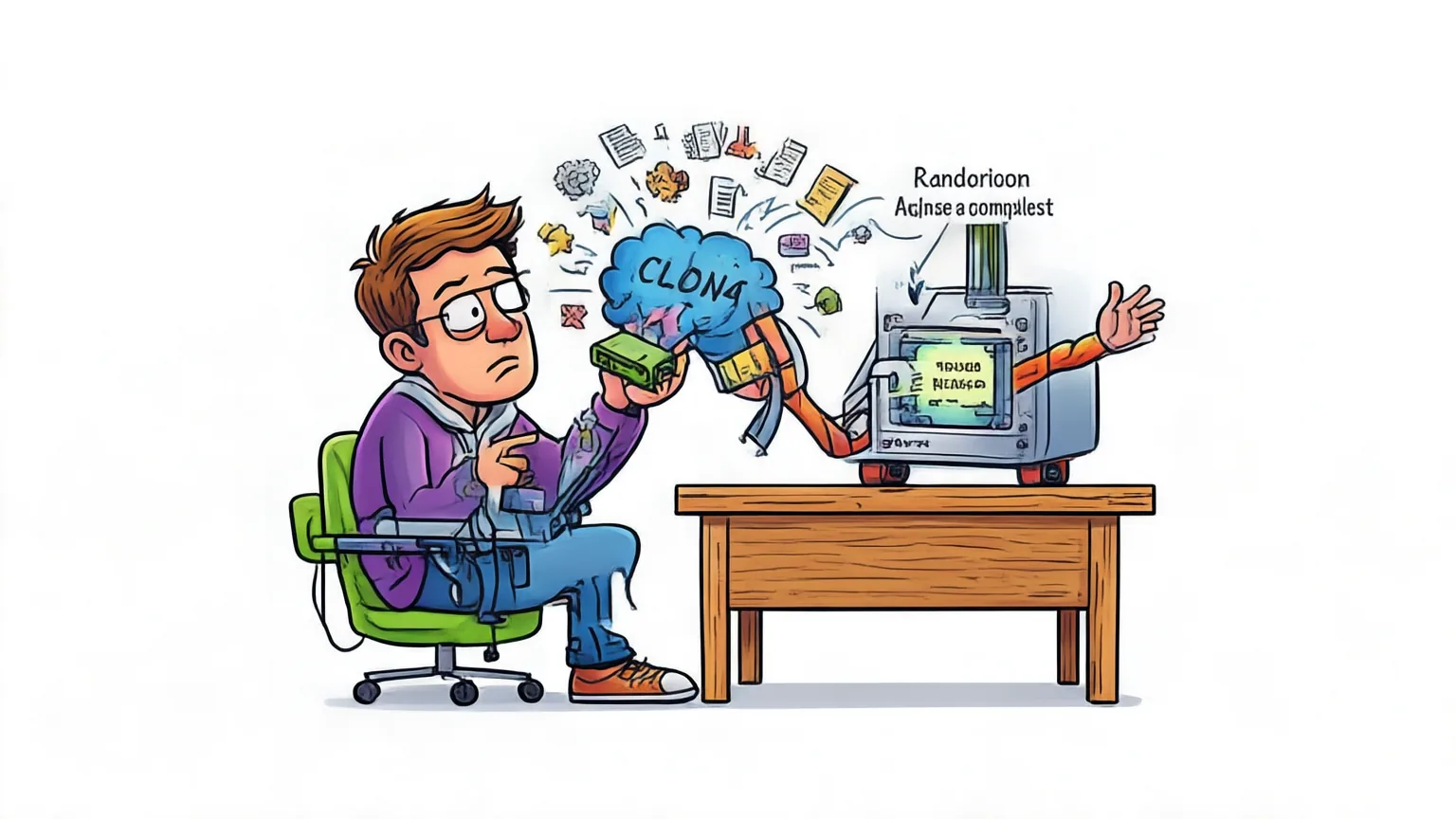
Language models store a growing record of earlier text while they work through a problem. That record can consume a great deal of memory during long reasoning runs. This paper tests whether choosing the supposedly most useful parts of that record is necessary. It proposes a simpler way to reduce memory use while preserving reasoning performance.
- Problem: Long reasoning traces make the stored attention history, called the KV cache, a serious memory burden. Existing compression methods calculate an importance score for every stored token, but the paper finds that this scoring adds almost no value.
- New idea: The method is called Random Attention. It always preserves the prompt, meaning the original instructions and input. Within each attention head, a component that tracks relationships between tokens, it removes other cached tokens at random. This works because the reasoning text repeats needed information and separate heads retain their own copies.
- Simple example: It is like keeping the original recipe safe while randomly discarding some duplicate notes made during cooking. Enough copies of the useful reminders remain to finish the dish.
- Evidence: Across four models and six reasoning tasks, Random Attention matched the strongest earlier eviction method. In vLLM deployment, it delivered 32-43% higher throughput than that method.
- Limitation: The abstract reports tests on four models and six reasoning tasks, so it does not establish whether the result holds for other models, tasks, or forms of long context.
- Why it matters: A cheap random policy may reduce memory pressure and raise serving throughput without weakening reasoning.
- Paper: Random Attention: Rethinking KV Cache Eviction for
RoboTok: An Internet-Scale Data Engine for Human Demonstration Retrieval and Dexterous Manipulation Learning
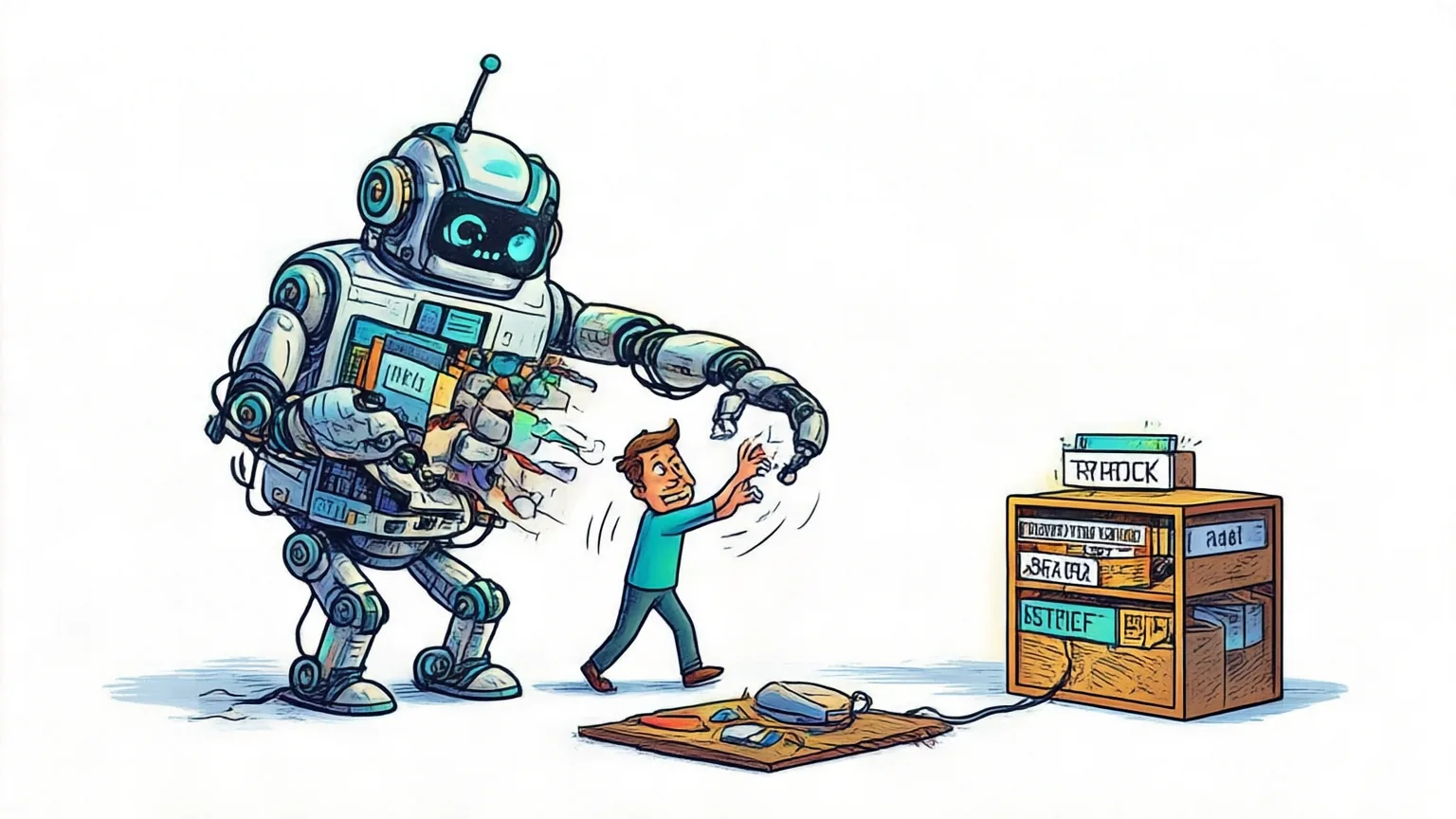
Robots need many examples of human actions to learn varied physical tasks. Gathering those examples directly from robots is costly and cannot easily cover uncommon situations. RoboTok searches ordinary web videos for useful human demonstrations. Its goal is to turn the internet into a growing training source for dexterous robot control.
- Problem: Robot training needs broad demonstrations, but collecting robot data is expensive and misses many rare real-world tasks. Existing retrieval approaches are less effective at finding relevant human manipulation examples across changes in viewpoint, appearance, and occlusion.
- New idea: RoboTok starts with a human manipulation video and searches web videos for similar actions. It learns a latent motion space, which is a compact numerical representation of movement, from estimated 3D hand paths. Those paths use an actor-centered reference frame, meaning movement is described relative to the person rather than the camera. This lets the system compare actions despite different camera angles, scenes, or blocked views, while supporting efficient search and continued indexing.
- Simple example: If a robot must learn to twist open a jar, RoboTok can look beyond videos shot from the same angle and find clips where people perform the same hand motion in different kitchens or with partly hidden hands.
- Evidence: On retrieval benchmarks, RoboTok found more relevant manipulation demonstrations than existing robot-data retrieval approaches. Training with those demonstrations also improved robot task success, though the abstract gives no numerical results.
- Limitation: The abstract does not report the size of the video collection, numerical gains, tested tasks, or how well the method handles errors in estimated hand trajectories.
- Why it matters: Better retrieval could make abundant web video useful for teaching robots a wider range of physical skills.
- Paper: RoboTok: An Internet-Scale Data Engine for Human
Rethinking On-Policy Distillation of Large Language Models II: One Training Example
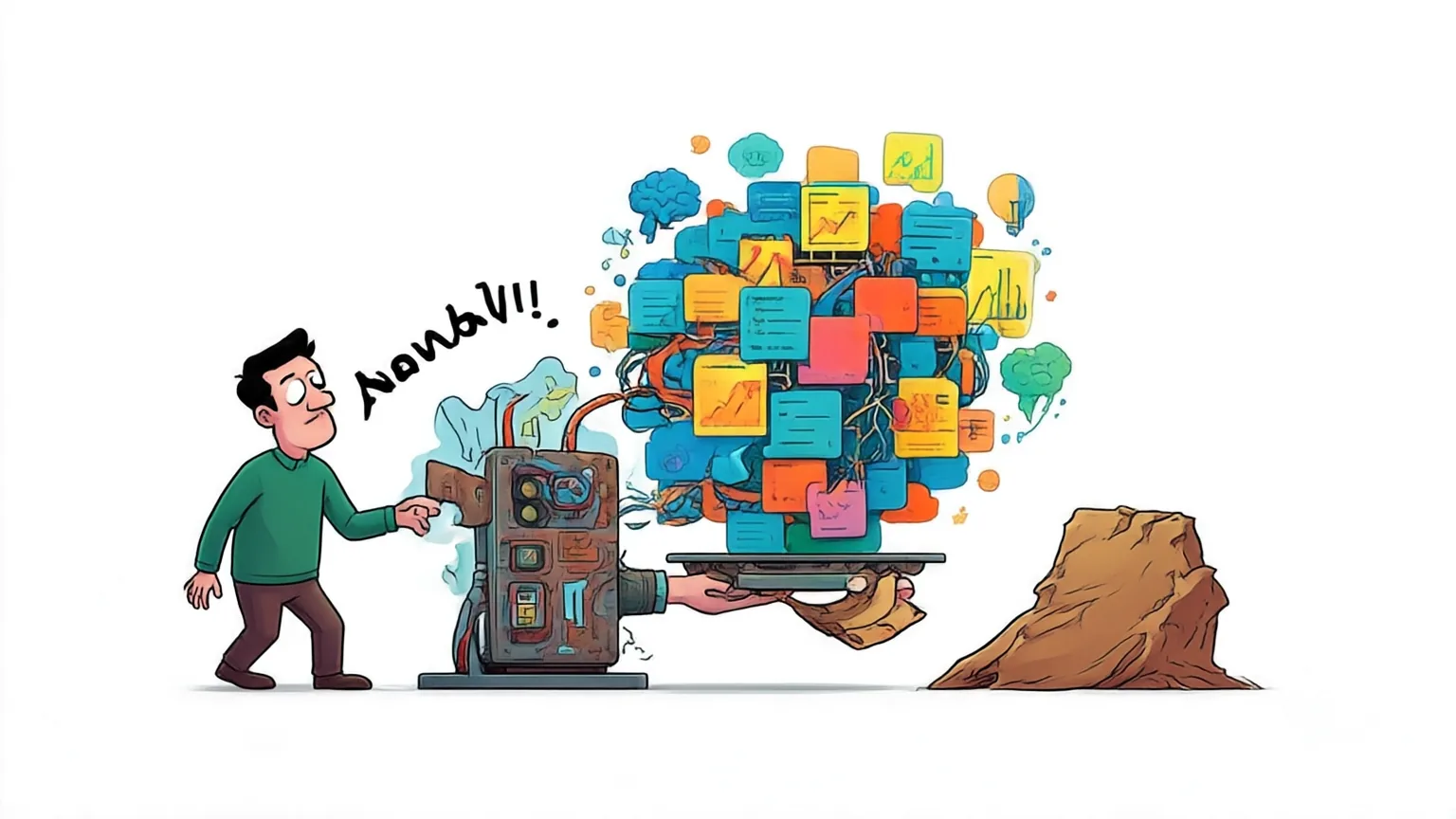
A smaller language model can learn from a larger teacher while generating its own practice attempts. Researchers have studied how this training method behaves, but not how much varied training data it truly needs. This paper pushes that question to an extreme by training from a single query. The results suggest that the method encounters useful learning situations quickly but needs many updates to absorb them.
- Problem: On-policy distillation uses a student's own generated outputs together with detailed teacher guidance for each token. Earlier research focused mainly on the algorithm, leaving the effect of training-data quantity and variety uncertain.
- New idea: The study trains on-policy distillation, or OPD, with as little as one query. It measures state coverage, defined as the share of training situations reached by full-data OPD that the smaller query set also reaches through generated attempts. The researchers then compare how quickly the student reaches those situations with how quickly it aligns with the teacher, meaning it learns to produce the teacher's preferred behavior. This separates access to useful supervision from the slower process of learning it.
- Simple example: It is like a student using one broad practice question that keeps producing new mistakes and lessons. The student sees much of the course material quickly, but still needs hundreds of rounds to master it.
- Evidence: One query reached 71.5% of the states visited by full-data OPD, with most reached during the first 100 steps. One-shot training kept improving for hundreds of steps and recovered most of the full-data gain across task domains and model families. With 16 distinct queries, coverage reached 98.9% and validation accuracy matched full-data training. In multi-teacher OPD, 16 semantically diverse queries per domain also matched full-data training.
- Limitation: The abstract does not show whether these results hold beyond the tested task domains, model families, and OPD settings, or identify a method that fixes the slow absorption of supervision.
- Why it matters: OPD may need fewer examples than assumed, shifting the main challenge from gathering data to making each training step more effective.
- Paper: Rethinking On-Policy Distillation of Large Language Models
Trending AI Repositories
Ranking source: GitHub Trending.
anomalyco/opencode
OpenCode is a TypeScript project for AI-assisted coding. Its open source model makes the underlying project available for inspection and contribution.
- What it is: It is a coding agent built in TypeScript and presented through the OpenCode project.
- What it does: The open source coding agent.
- Who it helps: It helps developers who want AI support while coding. They can use an agent whose source is open for inspection.
- Limitation: The supplied material does not describe setup, supported environments or specific capabilities.
- Repository: anomalyco/opencode
WorldFlowAI/everything-claude-code
Everything Claude Code is a JavaScript repository for shaping an AI-assisted development setup. It brings several kinds of Claude Code resources together in one MIT-licensed project.
- What it is: It is a repository of reusable Claude Code configuration and workflow components. Its contents include Shell, TypeScript and Markdown.
- What it does: Claude Code toolkit - agents, commands, skills, rules, and hooks for productive AI-assisted development
- Who it helps: It helps developers using Claude Code. They can draw on ready-made components to organize and improve their development workflows.
- Limitation: It requires Claude Code, and the supplied material does not explain installation or compatibility.
- Repository: WorldFlowAI/everything-claude-code
humanlayer/skills
HumanLayer Skills is a TypeScript collection of focused additions for Claude Code. It is useful for developers who want to improve instructions or tighten React types with installable tools.
- What it is: It is a repository of skills that plug into a Claude Code setup. The available examples target instruction files and React prop types.
- What it does: A set of installable skills for Claude Code from HumanLayer. You add one to your setup with a single
npx skills addcommand; examples include improve-claude-md, which rewrites your CLAUDE.md to improve instruction adherence, and narrow-react-prop-types, which narrows React prop types to match live code paths instead of Storybook or test-only states. - Who it helps: It helps Claude Code users refine recurring development tasks. They can improve a CLAUDE.md file or align React prop types with live code paths.
- Limitation: It requires Claude Code and an environment that can run the stated npx installation command.
- Repository: humanlayer/skills
Sources
- 01Hugging Face Papers · Hugging Face Papers
- 02GitHub Trending · GitHub Trending
- 03Seattle Times and Newsday are the latest publications to sue OpenAI and Microsoft · TechCrunch
- 04Hikers rescued after using Google Gemini for planning · TechCrunch
- 05Artificial Analysis overhauls its Intelligence Index after GPT-6 Astra scoring drew skepticism · The Decoder
- 06Seven minutes with a chatbot beat a fact sheet at reducing conspiracy beliefs in two experiments · The Decoder
- 07Random Attention: Rethinking KV Cache Eviction for Efficient Reasoning · arXiv
- 08RoboTok: An Internet-Scale Data Engine for Human Demonstration Retrieval and Dexterous Manipulation Learning · arXiv
- 09Rethinking On-Policy Distillation of Large Language Models II: One Training Example · arXiv